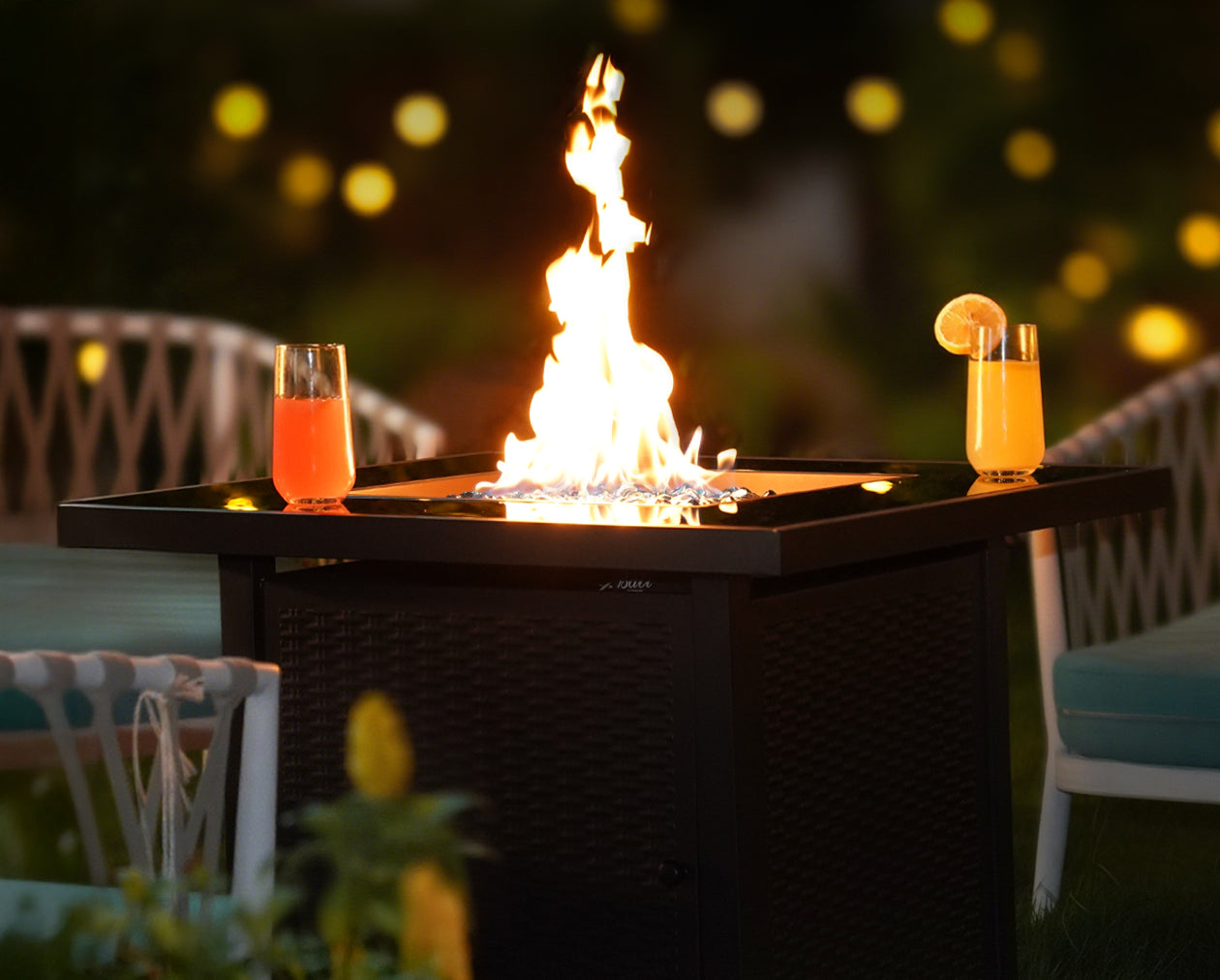


When we think of winter, we think of thick snow, cold temperatures, and chilly wind outside—all of which drive us inside. But what if you could enjoy your patio even when it's 30°F outside? With the right patio heater, winter outdoors can be warm and inviting.
How to Select the Best Patio Heater for Your Space
Choosing the right patio heater depends on how you'll use it.
Check the BTU Rating
BTU (British Thermal Unit) measures heat output. For winter use, you generally want a unit with high output, typically between 40,000 and 48,000 BTUs for a standard freestanding unit.
In calm conditions around 40-50°F, this power warms a circle about 15-20 feet across. But in freezing weather with wind, the effective radius can be smaller.
Freestanding vs. Tabletop Models
- Freestanding Propane Heaters: These provide the most heat and work well for larger patios. Propane heaters with wheels offer powerful overhead heat and easy repositioning. The addition of wheels makes positioning simple in winter, allowing you to move the unit to block wind easily.
- Tabletop Heaters: Perfect for intimate dining, these sit directly on your outdoor table. While they output fewer BTUs (often around 10,000-11,000), they provide immediate warmth to your upper body and hands.
Propane vs. Electric Options
Propane heaters put out more heat—usually 40,000 to 48,000 BTUs. They run without cords, so you can set them up anywhere on your patio without worrying about outlets. They also keep working when temperatures drop below freezing.
Electric heaters, on the other hand, are easier to control with adjustable settings, and they work fine in mild weather or covered spots near a power source. But the downside is you get stuck wherever your cord can reach, and they don't put out as much heat when it gets really cold. For more details, see our guide on choosing heaters for humid conditions.
How to Place the Heater for Maximum Warmth
Where you place your heater matters as much as which model you choose. Heating an outdoor patio efficiently requires understanding wind patterns.
Block the Wind
Wind blows warm air away before it reaches you. Place your heater where a wall, fence, or dense hedge shields it. Maintain at least 36 inches of clearance from combustible materials like wood siding, and 24 inches from non-combustible surfaces like brick. Keep 24-36 inches of vertical clearance from overhead structures.
Keep guests at least 3 feet from the heater. Children and pets should stay at least 5 feet back to avoid burns.
Create a Heat Zone
If you have a large patio, one heater might not suffice. Instead of trying to heat the whole yard, create a focused "heat zone." Arrange your furniture in a semi-circle around the heater so everyone benefits from the warmth while leaving the backside open to prevent overheating. If you're using a freestanding mushroom-style heater, the heat reflects downward, so keep seating within 6-8 feet of the central pole for the best effect.

Position It Centrally
Place the heater in the center of your gathering space rather than at the edge. While the heater has 360-degree heat output, positioning it centrally within your seating arrangement puts warmth where people actually sit.
How to Safely Use Propane Tanks in the Cold
Cold weather affects propane performance. As the temperature drops, the pressure inside your propane tank decreases, which can affect your outdoor patio heater's performance.
Start with a Full Tank
In near-freezing temperatures, a tank that is 20% full struggles to maintain enough pressure for consistent gas flow and might act like it is empty.
Tips: For more details, see our guide on winter fire pit storage tips.
- Always start a winter party with a full tank.
- Keep a spare full tank stored in a safe, well-ventilated area so you can swap it out immediately if the pressure drops too low.
Watch for Frost
You might see frost building up on the outside of the tank or regulator when you've been running the heater for a while. Don't worry—this is normal.
Never try to warm up the tank with hot water or blankets while it's hooked up to the heater. This can be dangerous.
If the pressure drops and your heater starts putting out less heat, swap in a fresh tank. Let the cold one sit and warm up on its own. If you need to speed things up, you can disconnect the tank and bring it inside for 30 minutes before hooking it back up. For more details, see our guide on winterizing your fire table.
Create a Cozy Winter Oasis with Your Outdoor Heater
To stay comfortable in the cold, combine your outdoor patio heater with elements of comfort.
Layer the Warmth
A heater warms the air and surfaces, but your body loses heat to the cold ground and furniture.
- Add Rugs: Place an outdoor rug under your seating area to insulate your feet from the freezing concrete or stone.
- Textiles: Provide thick wool blankets and throw pillows. When your guests are wrapped in a blanket and sitting under a heater, they retain significantly more body heat.
Add Lighting and Ambiance
Warm lighting makes the space feel cozier. The orange glow from the heater helps, but adding string lights or a fire pit alongside your heater can enhance the atmosphere. If you're using a Bali Outdoors® fire pit table in conjunction with a standing heater, you create a dual-heat source setup that warms guests from both head and toe.
Serve Warm Drinks
Serve hot drinks. A thermos of hot cocoa, mulled wine, or hot cider keeps your guests' internal temperature up, complementing the external heat from the propane unit.

Essential Safety Checks for Your Patio Heater
Before you light up your propane patio heater, perform a few critical checks to ensure safety.
Test for Gas Leaks
If your heater has been sitting unused since autumn, check for leaks. Mix equal parts water and dish soap, then spray on the gas hose and connections.
If you see bubbles forming when you open the gas valve, you have a leak.
Turn off the gas immediately, tighten the connection, and test again. If bubbles persist, replace the hose before use.
Clear the Burner
Spiders and insects love to nest in burner tubes during the off-season. These blockages can prevent ignition or cause the flame to burn yellow instead of blue. Use a pipe cleaner or compressed air to clear the venturi tubes and burner ports.
Check the Tilt Switch
Bali Outdoors patio heaters come equipped with an anti-tilt safety switch. This device automatically cuts the gas supply if the heater tips over, which prevents accidents during windy winter days. Verify the heater is on solid, level ground to prevent accidental shut-offs or tipping.
Conclusion
With the right patio heater, smart placement to block wind, and basic safety checks, let's turn your freezing patio into a warm space for winter gatherings.
Ready to upgrade your setup? Bali Outdoors® patio heaters come with wheels for easy moving, tip-over protection, and weather-resistant builds that hold up through winter. Check out our collection to find what works for your space.
3 FAQs about Patio Heater Safety and Care
Q1: Can I use my patio heater under a covered porch?
Yes, but check your manual for clearance requirements. Most freestanding propane heaters need at least 24 to 36 inches between the top and your ceiling or any wood/fabric materials above it. This prevents fire hazards and heat damage. Also make sure the area has good airflow to prevent carbon monoxide buildup.
Q2: Why is my heater hard to light in freezing temperatures?
Propane needs to turn from liquid to gas to power the burner. When it's really cold, the tank can't maintain enough pressure to do this consistently. Start with a full tank (more pressure helps) and block the wind while you're lighting it. If it still won't start, disconnect the tank, bring it inside to warm up for 30 minutes, then reconnect it.
Q3: Do I need to cover my heater when not in use?
Yes. Snow, ice, and rain will rust the metal parts and clog the burner. Once the heater cools down completely, put a weather-resistant cover on it. If you can, move it to a garage or shed when there's a big storm coming.