

The chiminea vs fire pit decision usually comes down to three factors: space, smoke, and how you want to use it. The short answer: a fire pit heats more people across a wider area, while a chiminea handles smoke better, burns more efficiently, and is safer in tight spaces. Most backyards lean toward one or the other for a reason.
This guide compares both on heat output, smoke control, safety, materials, cooking, fuel cost, and the kind of yard each one fits. If you are leaning chiminea, the cast iron versions covered here are what BALI OUTDOORS actually builds — clay and steel are mentioned for context, not as products we sell.
Quick Verdict
| Pick a chiminea if… | Pick a fire pit if… |
|---|---|
| Patio is small or partially enclosed | You entertain 4+ people regularly |
| Smoke from a campfire bothers your guests | You want 360° warmth and visible flames |
| You want to grill, bake, or cook in it | You want a low-effort propane setup |
| You like the look of a vertical chimney piece | You want a fire feature that doubles as a table |
| Wood-burning is what you want | You prefer a smokeless or gas fire |

Heat Output: Coverage vs. Concentration
Fire pits and chimineas heat your patio in fundamentally different ways.
A fire pit is open on all sides. Heat radiates 360 degrees, which makes it the better choice when you have several people sitting around it. Most outdoor guides put the usable warmth radius at roughly 6 to 8 feet from the flame for a typical residential fire pit, depending on BTU and weather.
A chiminea is enclosed except for a single front opening. Heat is concentrated in a forward-facing zone of about 2 to 3 feet in front of the mouth. Anyone seated to the side or behind the chiminea will feel almost no direct warmth.
| Factor | Chiminea | Fire Pit |
|---|---|---|
| Heat direction | Forward, single zone | 360° radial |
| Usable warmth radius | ~2–3 ft in front | ~6–8 ft around |
| Best group size | 2–4 people | 4–8+ people |
| Time to reach full heat | Slower (restricted airflow) | Faster (open flame) |
| Fuel efficiency | High — enclosed chamber burns hotter and longer per log | Lower — open burn loses heat upward |
If you only have one or two people on a small balcony, the chiminea's tighter heat zone is actually an advantage — you spend less fuel warming empty air. For a patio dinner with six guests, a fire pit will keep everyone comfortable; a chiminea will leave the back row cold.
Smoke Handling
This is where chimineas earn their reputation.
The chimney is not just decoration. Air is drawn in through the front opening, pulled up through the burn chamber, and vented out the top of the stack. Smoke leaves several feet above seated head height, so the people sitting around it stay out of the smoke column.
An open fire pit has no such control. Wind direction decides whose dinner the smoke ends up in. Wood-burning fire pits spit embers; even smokeless designs like a double-wall stainless steel fire pit only mitigate smoke, they do not redirect it upward the way a chimney does.
If your patio is partially enclosed, attached to a building, or close to neighbors, a chiminea is almost always the better neighbor. If you are in an open backyard with a propane or natural gas fire, smoke is a non-issue from the start.
Safety: Sparks, Embers, and Clearance
A chiminea is generally the safer wood-burning option. The fire is enclosed, so embers cannot pop sideways into furniture, and the front opening is small enough to keep curious hands and pets away from direct flame. Many manufacturers recommend a clearance of at least 3 feet on each side and 5 feet above the chimney mouth.
An open fire pit needs more space. Wood-burning fire pits typically require at least 25 feet from any structure or combustible material per NFPA 1 and the International Fire Code. Gas fire pits are often allowed at reduced clearances — sometimes 10 feet — depending on local code. Our fire pit distance guide walks through the exact rules by fuel type.
For wood decks specifically, a chiminea is not automatically safer. Both need a non-combustible base — a fire pad, brick pavers, or stone. The chiminea's weight (cast iron models can hit 100+ lb) demands a stable, level surface. Fire pit on wood deck safety applies to chimineas as well.
Materials and Lifespan
The biggest hidden difference between these two products is what they are made of and how long they last.
Chiminea Materials
- Clay (terracotta): The traditional Mexican design. Aesthetically distinctive but cracks in freeze-thaw cycles or if heated too fast. Realistic lifespan with proper covering and curing: 3 to 4 years.
- Cast iron: Heavy, no curing required, retains heat far longer than clay, and ready to burn the first night. Will surface-rust over time but, with periodic high-heat paint or a thin oil coat, lasts 10 to 15 years easily.
- Steel: Lighter and modern-looking. Mid-range durability, but lower thermal mass means heat fades faster after the fire dies down.
Fire Pit Materials
- Steel: Most common for wood-burning bowls and propane fire pits. Powder-coated finishes resist rust if covered.
- Stainless steel: Used in smokeless designs and premium fire pits; longer life, higher price.
- Cast iron + tempered glass: Standard for propane fire tables. Tempered glass tabletops, internal propane storage, and pulse ignition are typical features on a propane fire pit or fire table.
BALI OUTDOORS chimineas are cast iron. We do not stock clay or steel chimineas — they are mentioned here so you understand the trade-off, not because they are part of our line.
Cooking: Pizza, Grilling, Slow Heat
If you ever want to use your fire feature as a cooking tool, the chiminea is the more versatile choice.
The enclosed chamber works like a small wood-fired oven. With a pizza stone resting on a grate over the coals, the dome of the chiminea reflects heat downward — the same physics as a brick pizza oven. Cast iron retains the heat longer than clay, which makes consistent cooking easier. Wood-fire grilling on a grate near the mouth is also straightforward.
An open fire pit is fine for marshmallows, hot dogs, and direct skewer cooking. For anything that needs ambient heat — pizza, bread, slow-cooked stew — a chiminea wins.
Full pizza and grilling walkthrough lives in our chiminea cooking guide.
Fuel and Running Cost
| Fuel Type | Chiminea | Fire Pit |
|---|---|---|
| Wood | Standard. Hardwoods like oak, ash, and apple recommended. | Wood-burning fire pits. Real flames, real smoke, real ash cleanup. |
| Propane | Not common. Most chimineas are wood-only by design. | Most popular outdoor option. Push-button start, no smoke, easy shutoff. |
| Natural gas | Rare. | Available for permanent installs. Lower per-hour cost than propane. |
| Smokeless / wood pellet | No. | Yes — double-wall stainless steel fire pits. |
Wood-burning chimineas have the lowest equipment cost but require firewood storage and ash disposal. Propane fire pits trade fuel cost for convenience. If you want a deeper fuel-cost breakdown, our propane vs natural gas fire pit guide covers running costs and conversion.
Aesthetic and Layout Fit
A chiminea is a vertical statement piece. The chimney draws the eye up, and the silhouette reads more like an outdoor fireplace than a campfire. It works well in a corner, against a wall, or as a single anchor in a Spanish, Southwest, or rustic-finish patio design.
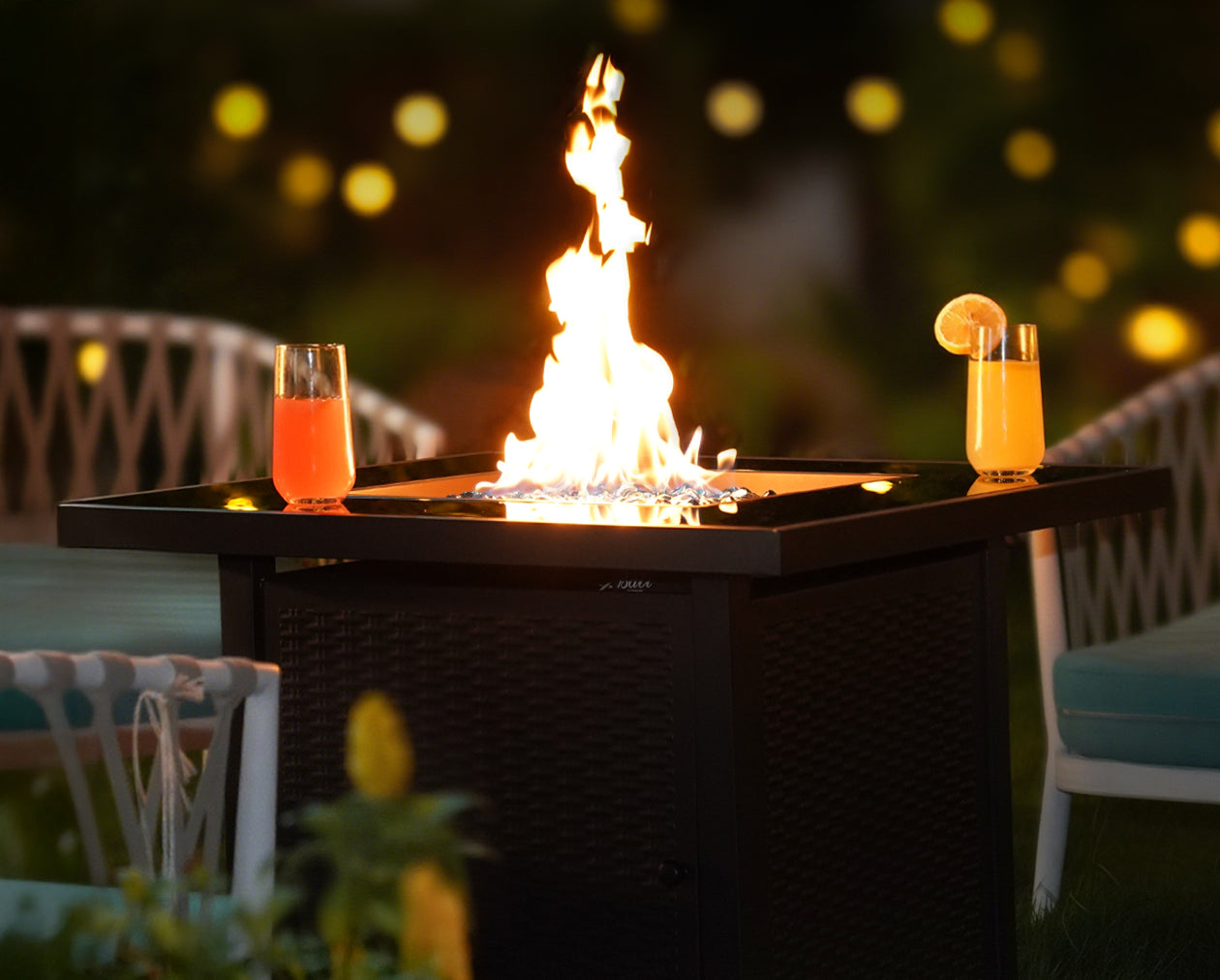
A fire pit is horizontal. It becomes the center of a seating arrangement — chairs in a ring, conversation across the flame. A propane fire table goes one step further by doubling as functional surface for drinks and plates, which is why it is the most popular DTC fire feature for modern patios.
Which One Fits Your Yard?
| Your situation | Better choice | Why |
|---|---|---|
| Townhouse or condo patio under 200 sq ft | Chiminea | Smoke control + smaller footprint |
| Open backyard, 4+ people most nights | Fire pit / fire table | 360° warmth + table surface |
| Want to cook pizza or bake | Cast iron chiminea | Acts like a wood-fired oven |
| Hate ash cleanup, want push-button fire | Propane fire pit | No wood, no ash, instant on/off |
| HOA bans wood burning | Propane fire pit or fire table | Most HOAs allow gas, ban wood |
| Coastal or windy region | Chiminea | Enclosed flame is more wind-stable |
| You already have a dining table outdoors | Fire table | Replaces or extends the table |
The BALI OUTDOORS Pick
Our line is built around two product types here:
- Cast iron chimineas for buyers who want the wood-fire look, smoke control, and an option that doubles as a wood-fired oven. See the chiminea collection.
- Propane fire pits and fire tables for buyers who want low-effort, smoke-free 360° warmth and a usable table surface. See the propane fire pit collection and fire table collection.
We do not sell clay or steel chimineas. If smoke control is the deciding factor and you specifically want clay aesthetics, that is a different product entirely — buy from a brand that makes them. If you want the chiminea form factor with a 10-to-15-year service life, a cast iron chiminea is the right pick.
Bottom Line
Chimineas win on smoke control, fuel efficiency, cooking, and small-space safety. Fire pits win on heat coverage, group entertaining, fuel options (especially propane), and double-duty designs like fire tables. Most patios end up with one or the other based on three questions:
- How big is the space, and how many people gather?
- Do you want wood-fire or push-button gas?
- Will smoke be a problem for neighbors, pets, or guests with sensitivities?
Answer those three, and the right pick is usually obvious.