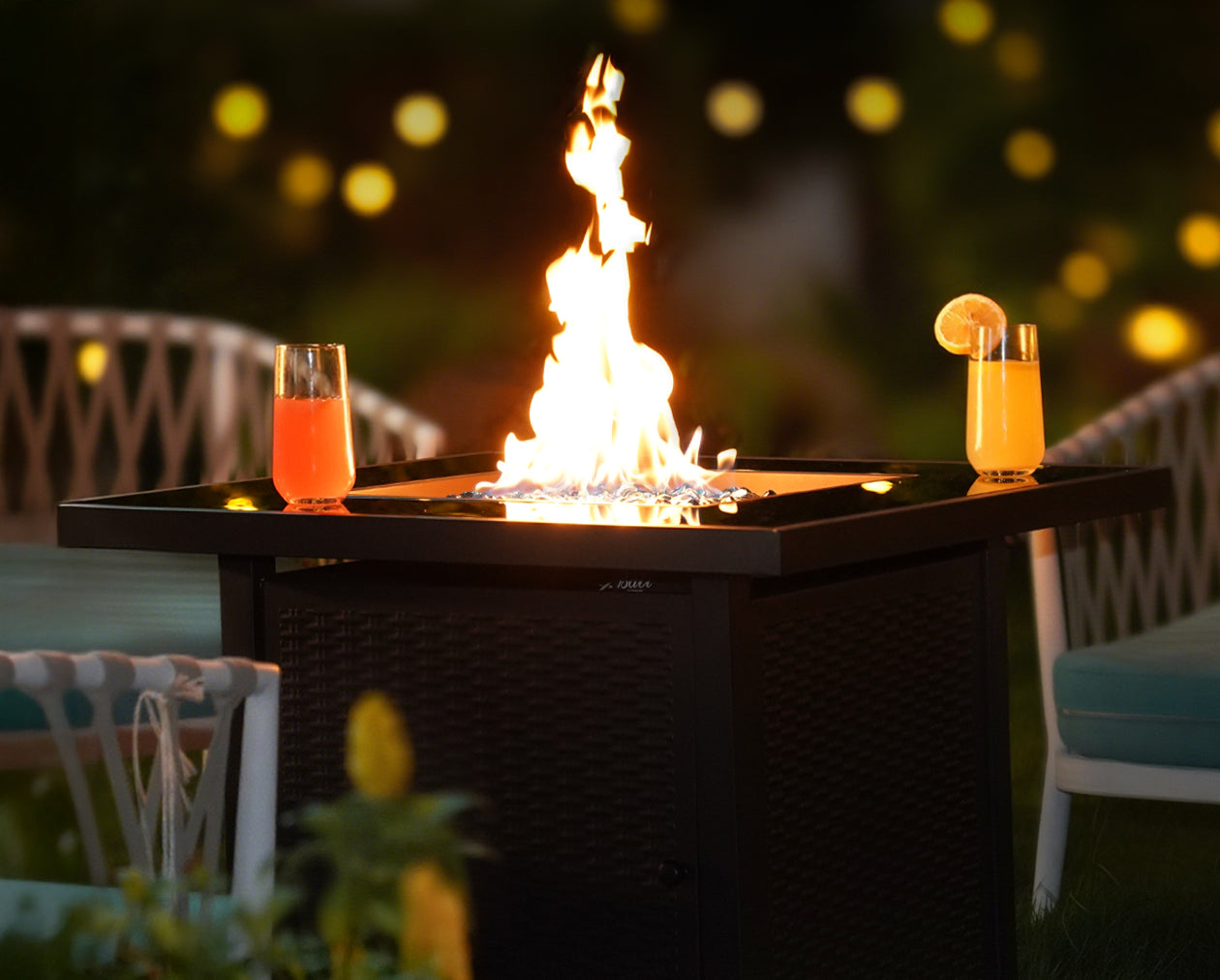


A fire pit on a wood deck is one of those ideas that sounds great until something goes wrong. The appeal is obvious: you already have a deck, you want a fire feature, and carrying a fire pit out to the yard every time feels like a hassle. But wood and composite decking are combustible materials, and fire produces heat, sparks, and embers that can damage or ignite the surface underneath.
The good news is that you can safely use certain fire pits on a deck with the right setup. The bad news is that not all fire pits are deck-safe, and skipping the precautions can scorch your boards, void your insurance, or start a fire. This guide covers what works, what does not, and exactly how to protect your deck.
Can You Put a Fire Pit on a Wood Deck?
The short answer: it depends on the fire pit type and the precautions you take.

Propane fire pit tables are the safest option for decks. The flame is contained in a burner pan, there are no sparks or embers, and the enclosed base provides some insulation between the heat source and the deck surface. Most propane fire pit tables are designed with an air gap between the burner and the bottom panel that limits heat transfer downward.
Wood-burning fire pits are the riskiest option for decks. They produce embers that fall below the fire bowl, radiate intense heat downward, and can spit sparks that land several feet from the pit. Most fire safety codes either prohibit or strongly discourage placing wood-burning fire pits on combustible decking.
Smokeless fire pits reduce smoke but still burn wood. They produce less airborne debris than open-bowl designs, but the base still gets hot. They carry the same deck risks as any wood-burning fire pit.
| Fire Pit Type | Deck-Safe? | Key Risks | Minimum Precautions |
|---|---|---|---|
| Propane fire pit table | Yes, with protection | Radiant heat to deck surface | Heat-resistant mat or pad; check clearance specs |
| Natural gas fire pit (built-in) | Yes, with professional install | Heat transfer; gas line requires permit | Non-combustible surround; licensed gas fitter |
| Smokeless wood-burning | Not recommended | Base heat, embers through bottom vents | Elevated stand + fire pit mat at minimum |
| Open wood-burning bowl | No | Sparks, embers, extreme base heat | Use on ground only (concrete, gravel, or pavers) |
How Heat Damages Decking
Even without open flames touching the surface, heat alone can damage decking material. Understanding how this happens helps you choose the right protection.

Wood Decking
Wood ignites at approximately 450°F to 500°F, but it starts to char and discolor well before that. Sustained temperatures above 200°F will darken and weaken wood fibers over repeated exposures. A wood-burning fire pit can push base temperatures above 600°F in the area directly beneath the bowl. That is why even a single use without protection can leave a permanent scorch mark.
Composite Decking
Composite boards (Trex, TimberTech, and similar products) are made from a wood-plastic blend. They soften and deform at lower temperatures than solid wood, typically around 176°F for some products. A hot fire pit base can leave a visible dent or warped area on composite decking after just one session. Our composite deck fire pit safety guide covers the specific risks and solutions for these materials.
Heat Transfer Zones
Heat does not just go straight down. Radiant heat spreads outward from the fire pit base in a cone shape. A fire pit mat needs to extend at least 24 inches beyond the fire pit perimeter on all sides to cover the full heat zone. Larger mats (36–48 inches beyond the edge) are better for wood-burning models.
How to Protect Your Deck
If you are using a propane fire pit table on a deck (the recommended option), these steps will protect your decking and keep you within code:
1. Use a Fire Pit Mat or Heat Shield
A fire pit mat is a non-combustible pad that goes between the fire pit base and the deck surface. Good mats use materials like silicone-coated fiberglass, carbon felt, or ceramic fiber. They absorb and dissipate heat before it reaches the deck boards.
What to look for in a fire pit mat:
- Temperature rating of at least 1,000°F (higher for wood-burning fire pits)
- Size that extends 24–36 inches beyond the fire pit base on all sides
- Water-resistant backing that will not trap moisture against the deck and cause rot
- Non-slip surface so the fire pit does not slide when bumped
2. Check the Manufacturer's Clearance Specs
Every fire pit has a clearance specification in its manual. For a BALI OUTDOORS propane fire pit table, the manual lists the required distance from the bottom of the base to the deck surface and the minimum clearance from combustible materials on all sides. Follow these specs even if you are also using a mat. The mat is an added layer of safety, not a replacement for proper clearance.
3. Elevate the Fire Pit (Optional but Recommended)
Adding height between the fire pit base and the deck reduces heat transfer significantly. Options include:
- Fire pit stand: A metal stand that lifts the fire pit 4–6 inches off the deck. The air gap lets heat dissipate before reaching the surface.
- Paver blocks: Place a few thick concrete pavers under the fire pit (on top of a mat) to create a non-combustible platform.
- Purpose-built deck protectors: Some manufacturers sell deck protector kits that combine a heat shield with an elevated platform.
4. Position Away from Railings and Walls
Deck railings are combustible structures. Maintain the clearance required by your local fire code, and at minimum keep the fire pit at least 3 feet from any railing, wall, or furniture. Our fire pit distance from house guide covers the full list of clearance requirements for structures.
5. Inspect the Deck Before and After Each Use
Before each fire pit session, check the deck boards directly beneath and around the fire pit for:
- Warping or soft spots from previous heat exposure
- Loose boards or gaps where embers could fall through
- Accumulated leaves, pine needles, or debris that could ignite
After each use, let the fire pit cool completely before touching or moving it. Check the mat and deck surface for discoloration. If you see darkening or char marks, your current setup is not providing enough protection. Add elevation, switch to a thicker mat, or both.
Fire Code Requirements for Decks
Most fire codes do not ban fire pits on decks outright, but they impose conditions that are stricter than ground-level placement. The NFPA outdoor fire safety guidelines provide the baseline that most local codes build on:
- Non-combustible barrier required: Many jurisdictions mandate a fire-rated barrier between the fire pit and any combustible surface. A fire pit mat rated to 1,000°F or higher satisfies this in most areas.
- Elevated decks face stricter rules: Second-story decks and balconies often have additional restrictions. Some codes prohibit any open flame on elevated structures. Gas fire features may be allowed with conditions.
- HOA rules may override: Even if your local fire code allows a fire pit on a deck, your HOA may prohibit it. Check both.
- Insurance implications: Some homeowner's insurance policies exclude fire pit damage or require notification that you use a fire pit on your deck. Call your insurer and document their guidance.
For a full breakdown of fire codes and how they apply to different fuel types, read our fire pit laws by state guide.
Why Propane Fire Pit Tables Are the Best Deck Option
There is a reason propane fire pit tables dominate the deck fire pit market. They check every box that matters for deck safety:
- No embers or sparks: The propane flame is contained in a burner pan. Nothing falls below the fire pit.
- Controlled heat output: You can adjust the flame height and BTU output with a valve. Turn it down when heat builds up, turn it off instantly when you are done.
- Enclosed base: The cabinet base creates an air gap between the burner and the deck, reducing direct heat transfer.
- Smoke-free: No smoke means no complaints from neighbors and no buildup on your deck ceiling or pergola if you have one overhead.
- Fewer code restrictions: Gas fire pits face less regulatory friction than wood-burning models on decks. Many jurisdictions that ban wood fires on decks still allow propane.
Browse the BALI OUTDOORS propane fire pit and fire table collections for models designed with deck-friendly enclosed bases and adjustable heat output.
What to Never Do with a Fire Pit on a Deck
- Never use a wood-burning fire pit directly on deck boards. No mat or stand eliminates the risk of ember damage to exposed wood.
- Never leave a fire pit unattended on a deck. Wind shifts, tipped drinks, and curious children or pets create risks that require an adult present.
- Never place a fire pit under a fabric awning or umbrella. Fabric ignites easily and drips burning material. Retract or remove any overhead fabric before lighting the fire.
- Never move a hot fire pit. Picking up or sliding a fire pit while it is hot can burn you and scrape the deck surface. Let it cool completely.
- Never store propane tanks inside the deck storage area. Propane cylinders should be stored upright in a ventilated outdoor area, away from the fire pit and any heat source.
Frequently Asked Questions
Will a propane fire pit damage my deck?
Not with proper protection. A heat-resistant mat rated to 1,000°F or higher, placed beneath the fire pit table, prevents heat damage to both wood and composite decking. Follow the manufacturer's clearance specifications and add elevation (a stand or pavers) for extra protection. Without a mat, even a propane fire pit table can discolor composite boards after repeated use.

How thick should a fire pit mat be?
Effective fire pit mats are typically 0.5 to 1 inch thick. Thicker is better for heat insulation. The material matters more than thickness: silicone-coated fiberglass and carbon felt rated to 1,000°F+ perform well. Avoid thin generic grill mats, which are designed for lower temperatures and may not provide adequate deck protection under a fire pit.
Can I use a fire pit on a Trex deck?
Trex and other composite decking manufacturers generally advise against placing fire pits directly on their products. However, with a proper fire pit mat, an elevated stand, and a gas fire pit (not wood-burning), most composite deck owners use fire pits without problems. Always check the decking manufacturer's specific guidance and your local fire code.
Is it safe to use a fire pit on a covered deck?
Propane fire pit tables can be used under a covered deck or patio with at least 10 feet of clearance between the flame and the overhead surface, provided the ceiling is non-combustible. Wood-burning fire pits should never be used under any overhead structure due to the 21-foot vertical clearance requirement and the risk of spark ignition. For covered deck setups, our clearance guide for covered patios has the full details.
Do I need a fire pit cover when not in use on a deck?
Yes. A fire pit cover protects the burner and fire media from rain, debris, and moisture when the fire pit is not in use. On a deck, moisture trapped in the burner pan can also drip onto the deck surface and promote rot or mold growth. A cover prevents both fire pit corrosion and deck damage.