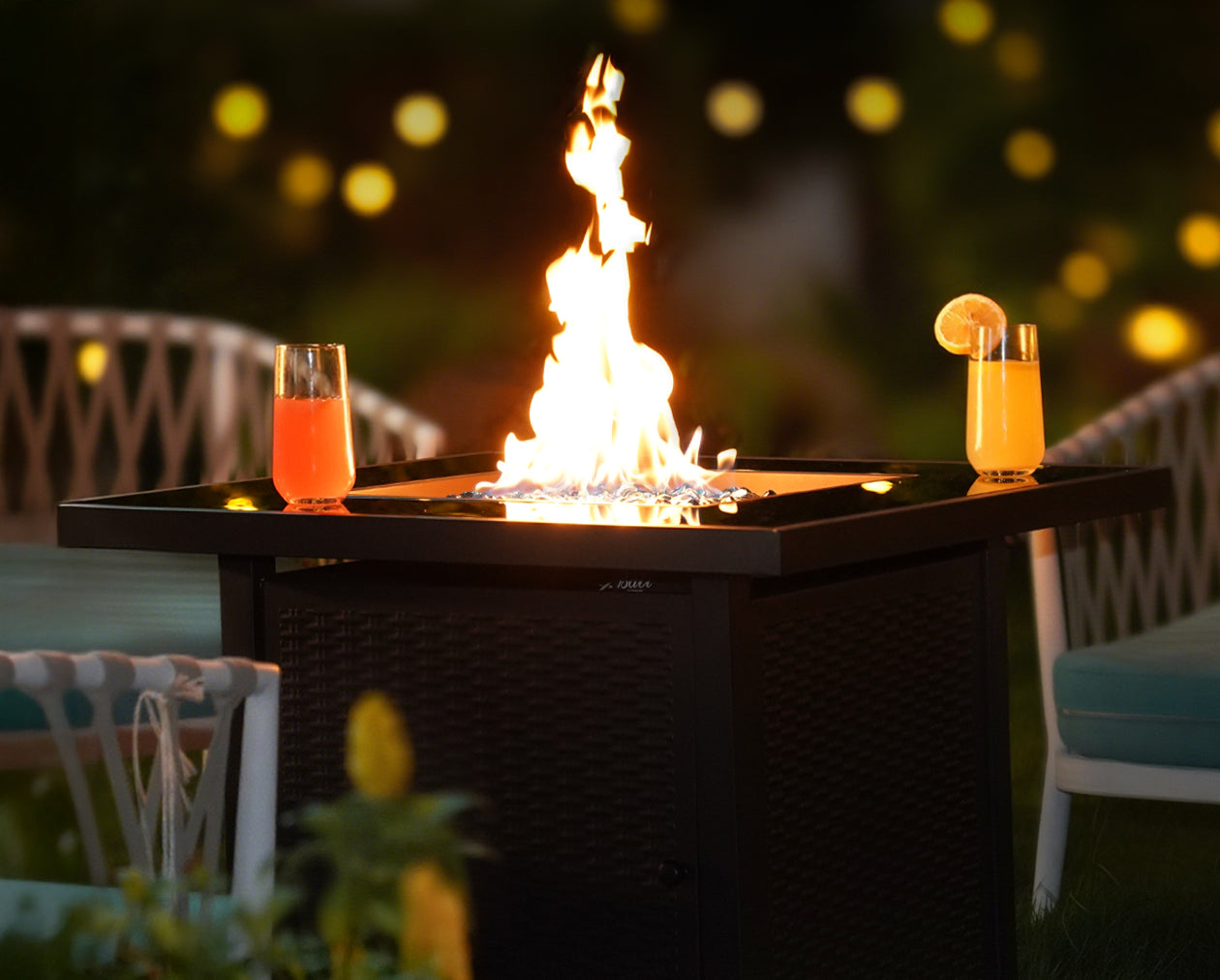


The most-cited number in fire pit safety is 25 feet. Place your fire pit at least 25 feet from your house, garage, fence, shed, and any other structure or combustible material. That distance comes from the NFPA 1 Fire Code and the International Fire Code, and it applies to most residential fire pits in the United States.
But "25 feet from the house" is the starting point, not the whole picture. Clearance requirements change depending on your fuel type, local codes, overhead obstructions, property lines, and what is on the ground beneath the fire pit. This guide covers all of it so you can set up your fire pit safely and within code.
Where the 25-Foot Rule Comes From
The NFPA 1 Fire Code classifies a residential fire pit as a "recreational fire" when the fuel area measures 3 feet or less in diameter and 2 feet or less in height. Recreational fires must be positioned at least 25 feet from any structure or combustible material, with a responsible adult present and a means of extinguishing the fire within reach.

The International Fire Code (IFC) uses the same 25-foot minimum. Most US municipalities adopt one of these two codes as their baseline, then add local amendments. Some jurisdictions reduce the distance to 10 or 15 feet for gas fire pits. Others increase it in wildfire-prone areas. Always check your local code for the exact number that applies to your property.
Clearance Requirements by Fire Pit Type
Not all fire pits produce the same level of risk. The type of fuel and the design of the fire pit affect how much clearance you actually need.
| Fire Pit Type | Typical Clearance from Structures | Overhead Clearance | Notes |
|---|---|---|---|
| Wood-burning (open bowl) | 25 ft minimum | 21 ft (no overhead obstructions) | Sparks and embers travel; this is the most restricted type. |
| Smokeless wood-burning | 25 ft minimum | 21 ft | Less smoke but still produces sparks. Same code classification as open wood-burning. |
| Propane fire pit table | 10–25 ft (varies by jurisdiction) | 10 ft from overhead combustibles | No sparks. Many local codes allow reduced clearance. Check manufacturer specs. |
| Natural gas fire pit (built-in) | 10–25 ft (varies) | 10 ft | Permanent installation may require a plumbing permit and code inspection. |
| Chiminea (wood-burning) | 15–25 ft | 15–21 ft | Enclosed design contains sparks better than open bowls. Some jurisdictions allow closer placement. |
Propane fire pits consistently get the most favorable clearance treatment because they produce no sparks, no embers, and no smoke. If tight spacing is a concern for your patio, a propane fire pit gives you the most placement flexibility.
Measuring Clearance: What Counts
The 25-foot measurement is not just the distance from the fire pit to your house wall. It applies to every combustible item and structure in the area. Here is what counts:

Horizontal Clearances
- House walls and siding: Vinyl siding can melt and warp at temperatures well below the heat a wood fire produces at 15 feet. The 25-foot minimum protects against radiant heat and stray embers.
- Fences: Wood fences are combustible structures under fire code. Measure from the fire pit edge to the nearest fence panel.
- Sheds, garages, and outbuildings: Same 25-foot rule applies, including detached structures.
- Vehicles: Cars, boats, and RVs parked near the fire pit should be at least 25 feet away. Gas tanks and tires are fire hazards.
- Vegetation: Dry grass, mulch beds, hedges, and overhanging tree branches all count as combustible material. Trim branches that extend into the clearance zone and keep ground fuel (leaves, pine needles) cleared in a 10-foot radius.
- Property lines: Some municipalities require a minimum setback from property lines independent of the structure clearance. This is typically 10–15 feet. Check your local zoning code.
- Propane tanks: Keep spare propane cylinders at least 10 feet from any active flame. Our propane fire pit tank sizing guide covers storage and connection safety.
Vertical Clearances
- Tree branches: The NFPA specifies 21 feet of overhead clearance for recreational fires. Even if branches are high, heat rises and can dry out and ignite leaves faster than you expect.
- Pergolas and covered patios: Wood-burning fire pits should not be used under any overhead structure. Propane fire pit tables may be used under non-combustible pergola covers with at least 10 feet of vertical clearance, depending on local code. Read our fire pit clearance guide for patios for specifics.
- Awnings and umbrellas: Fabric awnings and patio umbrellas are combustible. Retract or remove them when the fire pit is in use.
- Power lines: If overhead power lines cross your yard, verify clearance. Contact your utility company if lines are within 25 feet of where you plan to place a fire pit.
The Ground Surface Matters Too
Fire codes address what is around and above the fire pit, but the surface beneath it also affects safety.
- Concrete and stone pavers: The safest base for any fire pit. Non-combustible and heat-resistant. No additional protection needed in most cases.
- Gravel or crushed stone: Good base material. Use a 3-inch gravel bed extending at least 2 feet beyond the fire pit perimeter for extra protection.
- Grass: Technically allowed but not ideal. Heat from a wood-burning fire pit will scorch and kill grass beneath it. Place a fire pit pad or heat shield under the fire pit to protect the lawn.
- Wood or composite decking: This is where things get complicated. Most fire codes require a non-combustible barrier between the fire pit and the deck surface. Our propane fire pit on a deck guide walks through the options, from heat-resistant mats to elevated stands.
What If You Do Not Have 25 Feet?
Many patios and backyards simply cannot accommodate a 25-foot clearance in every direction. Here are your options:
Switch to Gas
If your municipality allows reduced clearance for gas fire pits (many do), a propane fire pit table can work in spaces where wood-burning is not practical. Check the manufacturer's clearance specs along with local code. Most propane fire tables require 3–5 feet of clearance from combustible surfaces on all sides, plus any additional local requirements.
Use a Smaller Fire Feature
Tabletop fire pits and small propane fire bowls produce less heat and require less clearance than full-size fire pits. Some are rated for use on tables with minimal clearance above. If your patio is tight, a smaller fire feature may be the only option that meets code.
Create a Dedicated Fire Pit Area
If you have the space somewhere in your yard but not on the patio, consider building a dedicated fire pit area with a gravel or paver base set 25 feet from all structures. It takes more work upfront but gives you full code compliance for any fuel type.
Request a Variance
In rare cases, you can apply for a fire code variance through your local fire marshal or building department. This typically requires demonstrating that your setup includes additional safety measures (non-combustible barriers, spark screens, or fire-rated materials) that compensate for the reduced distance. Variances are not guaranteed and usually involve a formal application and inspection.
Common Mistakes That Violate Clearance Rules
These are the setups fire marshals see most often during inspections:
- Fire pit pushed against a fence: A fence is a structure. The full clearance requirement applies.
- Wood-burning fire pit under a pergola: The vertical clearance requirement exists specifically for this situation. Move the fire pit out from under the structure or switch to gas with proper overhead clearance.
- Stacking firewood next to the fire pit: Firewood storage within the clearance zone is a combustible material violation. Stack wood at least 25 feet from the fire pit.
- Ignoring mulch beds: Mulch is organic material that can ignite from stray embers. Clear mulch in a 3-foot radius around a wood-burning fire pit, or use gravel as ground cover in the fire pit zone.
- Measuring from the flame, not the pit edge: Clearance is measured from the outer edge of the fire pit structure, not from the center of the flame. A 4-foot-wide fire pit table needs 25 feet from its edge to the nearest structure, not from the burner center.
Quick Reference: Fire Pit Clearance Checklist
- Measure 25 feet (or your local code requirement) from the fire pit edge to the nearest wall, fence, or structure.
- Check 21 feet of vertical clearance above the fire pit. No branches, awnings, or overhead structures within that zone for wood-burning fires.
- Clear combustible ground material (leaves, mulch, dry grass) in a 10-foot radius.
- Place the fire pit on a non-combustible surface or use a fire pit pad on decks and grass.
- Verify property-line setbacks with your local zoning code.
- Keep spare propane tanks 10 feet from any flame source.
- Position the fire pit where wind will not push smoke and heat toward structures. Check typical wind patterns for your location.
- Have an extinguishment method within arm's reach: garden hose, fire extinguisher, or bucket of sand.
For a full overview of regulations by state, including burn bans and permit requirements, see our fire pit laws by state guide. And if you are setting up on a wood deck specifically, the deck fire pit safety guide covers heat shields, mats, and deck-safe configurations.
Frequently Asked Questions
Is 10 feet far enough for a propane fire pit?
It depends on your local code. Some jurisdictions allow 10 feet for gas fire pits because they produce no sparks or embers. Others require the full 25 feet regardless of fuel type. Check with your local fire marshal. The manufacturer's installation guide will also specify a minimum clearance for your specific model.
Do I need clearance from my neighbor's house too?
Yes. The clearance requirement applies to all structures, not just yours. If your neighbor's house, fence, or shed is within 25 feet of your fire pit, you need to move the fire pit or verify that your local code allows a shorter distance for your fire pit type.
Can I reduce clearance by using a spark screen?
A spark screen reduces the risk of flying embers but does not change the code-required clearance distance in most jurisdictions. It is a good safety practice on top of proper clearance, not a substitute for it. Some fire marshals may consider it when reviewing a variance request.
What about a fire pit with a wind guard?
A wind guard helps contain the flame and prevents wind from pushing heat sideways. It is a worthwhile safety accessory, especially for gas fire pit tables in windy locations. However, like spark screens, a wind guard does not reduce the code-required clearance distance on its own.
How far should a fire pit be from a propane tank?
Spare propane cylinders (the ones not connected to the fire pit) should be stored at least 10 feet from any open flame. The 20 lb tank connected to your fire pit table is designed to be in close proximity and sits inside the fire pit base, which is engineered for that purpose. Never store extra cylinders next to a running fire pit.