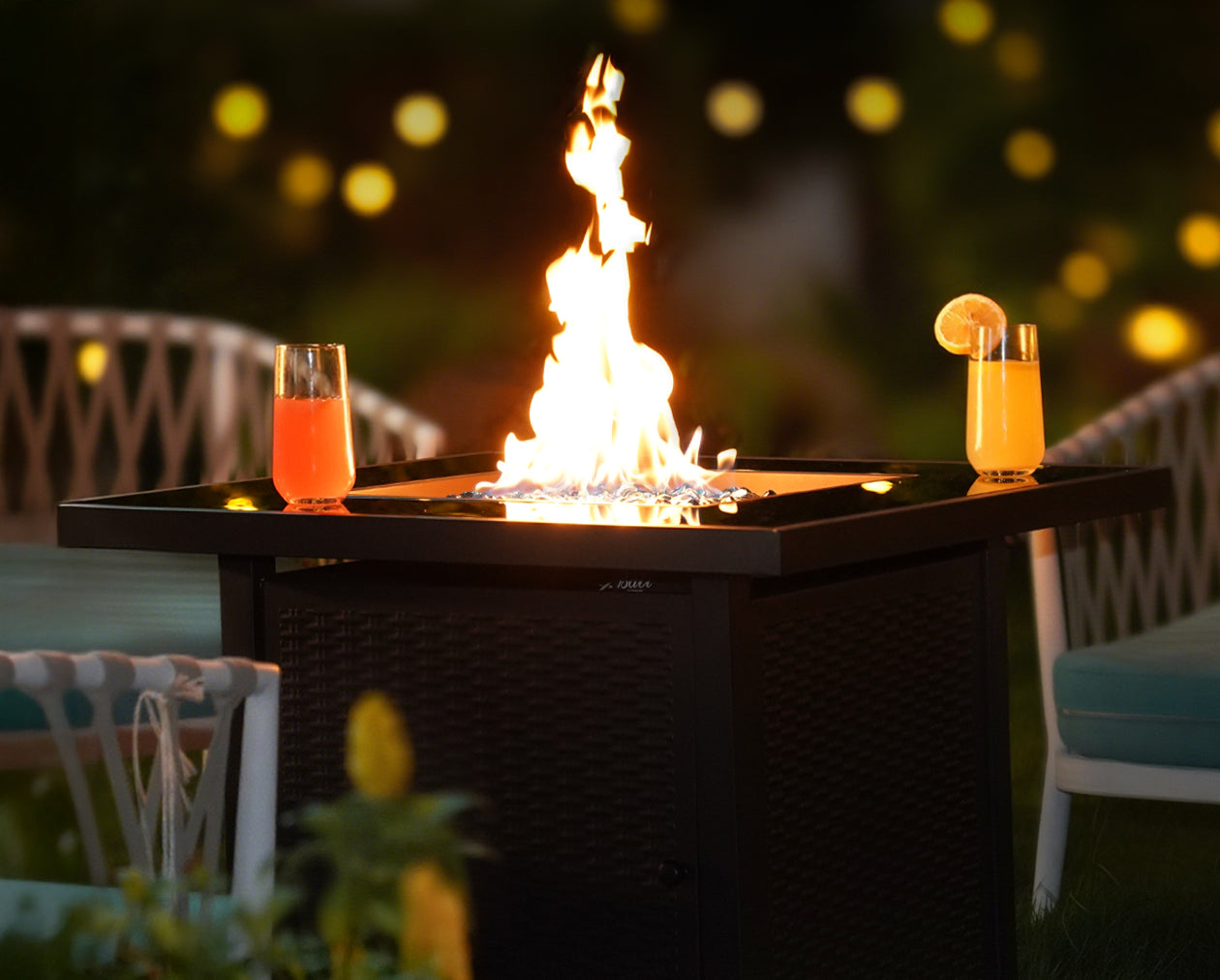


Fire pit regulations in the United States are not set at the federal level. Instead, they come from a patchwork of state fire codes, county ordinances, city bylaws, and homeowners association rules. What is perfectly legal in a rural Texas backyard might require a permit in suburban Denver or be banned outright on a Los Angeles apartment balcony.
This guide covers the regulatory framework that applies to most residential fire pits, breaks down how rules vary by state, and explains the critical distinction between gas and wood-burning fires. If you own a fire pit or plan to buy one, knowing your local fire pit laws prevents fines, neighbor disputes, and genuine safety problems.
The National Fire Code Baseline
Two model codes form the foundation that most states and municipalities build on:

NFPA 1 Fire Code
The National Fire Protection Association (NFPA) Fire Code defines a "recreational fire" as an outdoor fire burning materials other than rubbish where the fuel area is 3 feet or less in diameter and 2 feet or less in height. Under Section 10.11, recreational fires must maintain a 25-foot clearance from structures and combustible materials. An adult must be present and supervising at all times, and a means of extinguishment (garden hose, fire extinguisher, or bucket of water) must be within reach.
International Fire Code (IFC)
Published by the International Code Council, the IFC uses similar definitions and distance requirements. Most US jurisdictions adopt either NFPA 1 or the IFC as their base fire code, then add local amendments. The practical result is that the 25-foot rule and the 3-foot diameter limit are the closest thing to a national standard, even though no federal agency enforces them directly.
These codes apply primarily to wood-burning fires. Gas and propane fire pits fall under a different regulatory category in most jurisdictions, which brings us to the single most important distinction in fire pit law.
Gas Fire Pits vs. Wood-Burning: Why the Rules Are Different
This is the point that trips up most homeowners. Propane and natural gas fire pits are regulated differently from wood-burning fire pits in almost every jurisdiction. The reasons are practical:

- Instant shutoff. A gas fire pit turns off with a valve. A wood fire has to burn down or be extinguished.
- No sparks or embers. Propane and natural gas produce a controlled flame with no flying debris.
- No smoke. Gas combustion produces minimal particulate matter, so air quality burn bans typically do not apply.
- Lower wildfire risk. Without embers or radiant ground heat from burning wood, the ignition risk to surrounding vegetation is significantly lower.
In practice, this means gas fire pits are usually exempt from seasonal burn bans that restrict wood-burning fires. During Stage 2 or Stage 3 fire restrictions in western states, you can often still operate a propane fire pit table legally while all wood fires are prohibited. The same logic applies to smokeless fire pits, though wood-burning smokeless models are still classified as wood fires and subject to burn bans regardless of their reduced smoke output.
If you want a fire feature that works year-round without worrying about seasonal restrictions, a propane fire pit or fire table is the most regulation-friendly option.
Fire Pit Laws by State: Overview
Every state either adopts the IFC, NFPA 1, or its own fire code as a baseline. Local municipalities then modify these with their own ordinances. The table below summarizes the general regulatory climate in states with the largest outdoor living markets.
| State | Base Code | Typical Clearance | Permit Required? | Burn Ban Frequency | Notes |
|---|---|---|---|---|---|
| California | California Fire Code (based on IFC) | 10–25 ft from structures | Often yes (varies by county) | High (drought/wildfire) | LA, San Diego, Bay Area have strict local codes. Gas fire pits generally exempt from air quality burn bans. |
| Texas | IFC (local adoption) | 25 ft from structures | Rarely at state level | Low to moderate | One of the most permissive states. Local rules vary in Austin, Houston, Dallas. |
| Florida | Florida Fire Prevention Code | 10–25 ft from structures | Rarely | Moderate (dry season) | Year-round outdoor living; HOA restrictions more common than state-level limits. |
| Colorado | IFC with state amendments | 15–25 ft from structures | Sometimes (gas install may need plumbing permit) | High (wildfire zones) | Mountain communities have stricter rules. Fire pit must be under 3 ft wide, 2 ft high. |
| New York | NYS Uniform Fire Prevention Code | 25 ft from structures | Varies by municipality | Low | NYC prohibits open fires; gas fire features allowed on private property with conditions. |
| Arizona | IFC (local adoption) | 10–25 ft from structures | Rarely | Moderate to high (fire season) | Maricopa County has specific recreational fire rules. Gas pits popular due to fire risk. |
| Georgia | IFC (state-adopted) | 25 ft from structures | Rarely | Low | Most counties follow the base IFC without major amendments. |
| Washington | Washington State Fire Code | 25 ft from structures | Varies | Moderate (summer/fall) | Puget Sound area has air quality burn bans. Gas fire pits typically exempt. |
| Ohio | Ohio Fire Code (IFC-based) | 25 ft from structures | Rarely | Low | Some townships require notification to fire department before burning. |
| Pennsylvania | IFC (local adoption) | 25 ft from structures | Varies by township | Low | Philadelphia and Pittsburgh have stricter urban fire codes. |
Important: This table reflects general state-level patterns. Your specific city, county, or township may have stricter rules. Always verify with your local fire marshal before installing or operating any fire pit.
Common Municipal Restrictions
Beyond state codes, cities and counties add their own layers. Here are the most common restrictions you will encounter at the local level:

Burn Bans and Air Quality Restrictions
Seasonal burn bans are the most common restriction affecting fire pit owners. These are activated during high fire risk periods (dry summers in the West, windy fall conditions in many regions) or during poor air quality days. Wood-burning fires of any kind, including fire pits, are prohibited during active burn bans. Propane and natural gas fire pits are typically exempt because they produce negligible particulate emissions.
Fuel Type Rules
Many municipalities specify what you can burn. Seasoned hardwood is usually allowed. Treated lumber, painted wood, construction debris, and yard waste are almost universally prohibited in residential fire pits. Some areas restrict or ban charcoal. Propane and natural gas are allowed in virtually all jurisdictions that permit fire pits at all.
Size and Height Limits
The standard limit for a recreational fire is 3 feet in diameter and 2 feet in height. Fires exceeding these dimensions may be reclassified as "open burning" or "bonfires," which require permits, advance notification to the fire department, and sometimes professional supervision.
Time-of-Day Restrictions
Some municipalities limit burns to specific hours, often banning fires between 11 PM and 7 AM. Others restrict burning to daylight hours only. These rules are more common in dense suburban areas and almost always apply only to wood-burning fires.
Supervision and Extinguishment
Nearly every fire code requires a responsible adult present whenever a fire is burning. You also need a way to put the fire out quickly: a connected garden hose, a charged fire extinguisher, or a bucket of sand or water within arm's reach. This applies to both gas and wood-burning fire pits, though a gas fire pit's shutoff valve counts as a built-in extinguishment method.
Fire Pits on Decks: A Special Case
Placing a fire pit on a wood or composite deck introduces additional code considerations. Most fire codes require a non-combustible surface or heat shield beneath any fire pit on a combustible deck. Some jurisdictions prohibit open-flame devices on elevated decks entirely.
Propane fire pit tables with enclosed bases and proper clearance are generally the safest option for deck use, since the flame is contained and the base provides insulation from the deck surface. For a detailed breakdown of deck-safe setups, see our guide to using a propane fire pit on a deck.
If you use any fire feature on a deck, check both your local fire code and your homeowner's insurance policy. Some insurers require specific clearances or exclude fire pit damage from coverage.
HOA Fire Pit Rules
Homeowners associations can impose rules that are stricter than local fire codes. If your property is in an HOA-governed community, the Covenants, Conditions, and Restrictions (CC&Rs) may include fire pit provisions such as:
- Fuel type limits: Many HOAs allow gas fire pits only and prohibit wood-burning models.
- Minimum distance from buildings: Often 10 feet or more from any structure, including shared walls in townhome communities.
- Size restrictions: Diameter limits of 3 feet or less are common.
- Prior approval: Some HOAs require written approval from an architectural review committee before you install a permanent fire feature.
- Liability: The homeowner is typically held responsible for any damage caused by their fire pit, regardless of HOA approval.
Violating HOA rules can lead to fines that escalate with repeat offenses, and in extreme cases, the HOA can place a lien on your property. Check your CC&Rs before purchasing or installing any fire pit. Gas models and enclosed fire features like chimineas tend to have an easier path through HOA approval processes.
How to Check Your Local Fire Pit Laws
Finding the exact rules for your property takes a few steps, but the process is straightforward:
- Start with your city or county website. Search for "fire code," "outdoor burning," or "recreational fire" in the municipal code section. Most jurisdictions post their codes online.
- Call your local fire marshal. If the online code is hard to interpret, the fire marshal's office can tell you the specific rules for residential fire pits in your area, including any seasonal restrictions currently in effect.
- Check for active burn bans. Your county or state forestry department website will list current fire restrictions. Many states also have phone hotlines or apps that report real-time burn ban status.
- Review your HOA documents. If applicable, check the CC&Rs and any amendments for fire pit or outdoor fire provisions.
- Contact your homeowner's insurance. Ask whether fire pit use affects your coverage or premiums. Some insurers offer guidance on safe installation practices.
- Check setback requirements. Your local building code may have property-line setbacks that are more restrictive than the standard 25-foot-from-structures rule. Our fire pit distance from house guide covers common clearance requirements in detail.
Tips for Staying Compliant
Once you know your local rules, a few habits keep you on the right side of fire pit regulations year-round:
- Choose propane or natural gas for maximum flexibility. Gas fire pits face fewer restrictions than wood-burning models in every jurisdiction we reviewed. They are exempt from most burn bans, produce no smoke complaints, and meet HOA requirements more easily. Browse propane fire pits or fire pit covers to keep your setup compliant and protected.
- Measure your clearances before the first burn. Use a tape measure to confirm 25 feet (or your local requirement) from your house, fence, shed, overhanging branches, and neighbor's property.
- Keep an extinguishment method handy. A garden hose connected and within reach satisfies most codes. For gas fire pits, the shutoff valve is your primary control, but having a backup is still good practice.
- Monitor burn ban status seasonally. Bookmark your county's fire restriction page and check it before lighting a wood fire between May and October (or year-round in drought-prone areas).
- Document your setup. Take photos showing clearances from structures. If a neighbor or HOA raises a concern, having documentation saves time and conflict.
Frequently Asked Questions
Are propane fire pits legal everywhere?
Propane fire pits are legal in the vast majority of US jurisdictions. Some dense urban areas (parts of NYC, downtown Chicago) restrict open-flame devices on balconies or rooftops, and certain HOAs may require approval. But compared to wood-burning fire pits, propane models face the fewest regulatory barriers. They are usually exempt from burn bans and do not trigger air quality restrictions.
Do I need a permit to have a fire pit in my backyard?
For a portable, above-ground fire pit (gas or wood), most jurisdictions do not require a permit. Permanent built-in fire pits connected to a natural gas line may need a plumbing or building permit. Fire pits exceeding the 3-foot diameter or 2-foot height recreational fire threshold often require a burn permit. Check with your local building department.
Can my neighbor complain about my fire pit?
Yes, and the complaint may lead to a fire department inspection. Smoke is the most common trigger for neighbor complaints, which is another reason gas fire pits avoid problems. If you use a wood-burning fire pit, burn only dry seasoned wood, keep fires small, and be mindful of wind direction. If your fire pit meets all local codes, a complaint alone will not force you to stop, but repeated complaints can lead to nuisance citations in some jurisdictions.
What happens if I violate fire pit laws?
Penalties range from a verbal warning on a first offense to fines of $100–$500 or more for repeat violations. During active burn bans, penalties are steeper — sometimes $1,000 or more. If a fire pit violation leads to property damage or a wildfire, the fire pit owner can face civil liability for damages and potentially criminal charges for reckless burning. The U.S. Consumer Product Safety Commission (CPSC) publishes general fire pit safety guidance worth reviewing alongside your local codes.
Are smokeless fire pits treated differently under the law?
Smokeless fire pits that burn wood are still classified as wood-burning fires under fire codes. They reduce smoke significantly but are not exempt from burn bans or open-fire regulations. If you want a fire pit that avoids burn ban restrictions entirely, a propane or natural gas model is the only option that consistently qualifies for exemptions.
Can I use a fire pit on an apartment balcony?
In most cities, wood-burning fires are prohibited on apartment balconies. Small tabletop propane or electric fire features may be allowed depending on the building code, your lease, and the balcony construction material. Check with your landlord and local fire code before placing any fire feature on an apartment balcony. Our fire table setup and safety guide covers placement considerations for various surfaces.