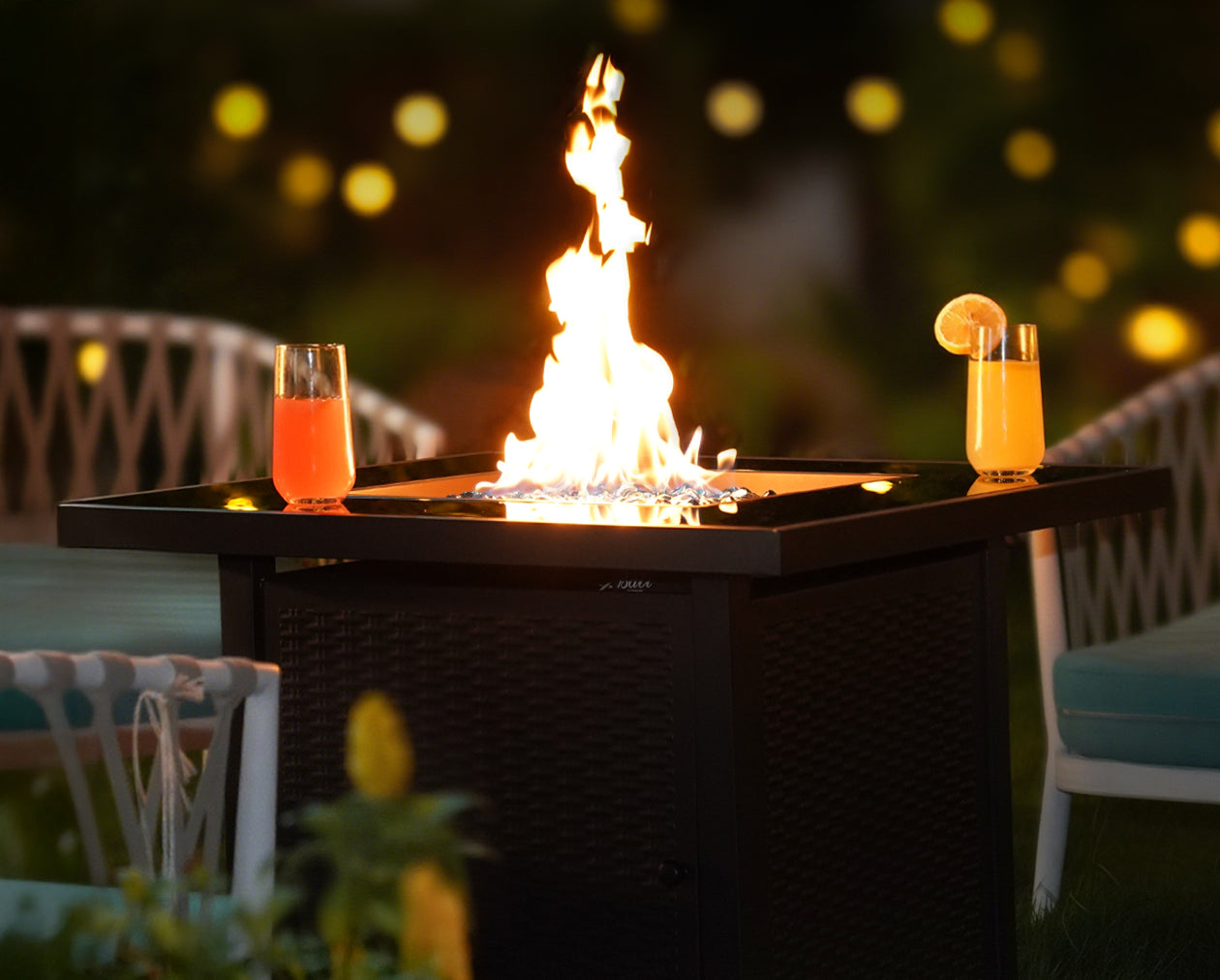


A propane fire pit turns a bare patio into the spot where everyone wants to sit. It lights in seconds, produces no smoke or ash, and shuts off with a dial. But the category covers everything from a $150 portable bowl to a $2,000 dining table, so picking the right one takes some homework.
This guide walks through the decisions that actually matter: heat output, tank life, materials, shape, and where you can safely place the unit. By the end you will know exactly what to look for and what to skip.
What Counts as a Propane Fire Pit?
The term "propane fire pit" is an umbrella. It includes any outdoor fire feature that runs on liquid propane gas (LPG) rather than wood, natural gas, or electricity. Within that umbrella you will find three distinct form factors:
- Fire pit bowls: Round, low-profile units that sit on a stand or directly on the ground. Most are portable and weigh under 30 lb. They work well on small patios and for camping trips.
- Fire pit tables: Rectangular, square, or round tables with a burner recessed in the center. They double as furniture and typically produce more heat (40,000–60,000 BTU). This is where most buyers in the $300–$600 range end up.
- Drop-in burner kits: Components you install into a custom surround built from stone, concrete, or block. Best for permanent hardscape projects.
If you want a unit that works as both a heat source and a gathering surface, a propane fire pit table is the most practical choice for most backyards.
BTU Output: How Much Heat Do You Actually Need?
BTU (British Thermal Unit) measures heat output per hour. Higher numbers mean more warmth, but also faster fuel consumption. Here is a rough framework:

| BTU Range | Heat Radius | Best For | Tank Life (20 lb) |
|---|---|---|---|
| 10,000–30,000 | 3–5 ft | Ambiance, tabletop units, mild climates | 15–40+ hours |
| 30,000–50,000 | 5–8 ft | Most patios, 4–6 person seating | 8–15 hours |
| 50,000–70,000 | 8–12 ft | Large decks, cold-climate entertaining | 6–8 hours |
A 40,000–50,000 BTU fire pit table hits the sweet spot for most homeowners. It puts out enough heat to keep a circle of chairs comfortable on a 50 °F evening without burning through a tank in one night. For a deeper breakdown of heat math, see our propane fire pit BTU guide.
Propane Tank Sizing: 20 lb vs. Larger Options
The standard 20 lb propane tank (the same cylinder used for gas grills) holds about 4.7 gallons of fuel. According to the National Propane Gas Association, one gallon of propane contains about 91,500 BTU. That gives you roughly 430,000 total BTU per fill. Divide by your burner's hourly rating to estimate run time:

- 40,000 BTU burner: about 10–11 hours on a full 20 lb tank
- 50,000 BTU burner: about 8–9 hours
- 60,000 BTU burner: about 7 hours
Most fire pit tables are designed around the 20 lb tank, with a hidden compartment in the base. If you use your fire pit several nights a week, buying a second tank to swap avoids mid-evening trips to the refill station. For exact runtime calculations, check our guide on how long a 20 lb propane tank lasts on a fire pit table.
Larger options exist. A 30 lb tank extends burn time by about 50% but may not fit inside the fire pit's base. Some homeowners connect to a permanent 100+ lb tank via a longer hose for setups that run frequently. For a detailed breakdown of every tank size, see our propane fire pit tank sizing guide.
Materials and Durability
The frame, tabletop surface, and burner pan each face different stresses. Here is what to look for:
Frame
Powder-coated steel is the most common frame material in the $200–$500 range. It handles heat well and resists corrosion when the coating stays intact. Look for frames with a thicker gauge (16–18 gauge) and multi-step coating rather than single-layer paint. Aluminum frames weigh less and resist rust, but they cost more and conduct heat differently.
Tabletop Surface
Tempered glass, tile, and faux stone are the three main options. Tempered glass cleans easily and shows off the flame, but it can crack under rapid temperature swings if water pools on a hot surface. Tile resists heat well. Faux stone panels give a natural look at lower weight than actual stone.
Burner
Stainless steel burners last the longest. Avoid units where the burner pan material is not disclosed. A ring burner produces an even flame pattern; an H-burner spreads heat across a wider area, which works better under log sets.
Fire Media
Most propane fire pits ship with either fire glass or lava rocks. Fire glass reflects light and comes in multiple colors. Lava rocks retain heat longer. Both are safe for propane burners, and you can mix or swap them later. We compared the two in detail in our fire glass vs. lava rocks breakdown.
Shapes and Sizes: Matching Your Space
Shape is more than looks. It affects seating capacity, traffic flow, and how the fire pit fits into your existing furniture layout.

- Rectangular: Seats 6–8 along the sides. Fits well against a wall or railing, making it a good pick for narrow patios and outdoor dining setups. See our rectangular fire pit table guide for sizing tips.
- Square: Seats 4–6 and balances well in corner arrangements. More compact footprint than rectangular.
- Round: Seats 4–6 evenly and encourages conversation because everyone faces the center. Works best in open areas with seating pulled around the pit.
Before you order, measure your available space and subtract 3 feet on every open side for chair clearance and safe distance from walls or railings. Our fire table footprint guide has a step-by-step method for mapping this out.
Ignition Systems
There are three main types:
- Match-lit: You hold a long lighter to the burner while turning on the gas. Cheapest, but least convenient. Wind can make lighting tricky.
- Spark ignition (piezo): A push-button generates a spark. No batteries or wiring needed. Reliable in most conditions, though the spark module can wear out after a few years.
- Electronic ignition: Battery or hardwired system with a push-button or remote start. Most convenient, but adds cost and another component that may need replacement down the road.
For most buyers, spark (piezo) ignition offers the best balance of convenience and reliability. Electronic ignition is a nice upgrade if you plan to use the fire pit frequently or want remote control.
Propane Fire Pit vs. Other Fuel Types
Propane is one of four common fuel sources for outdoor fire pits. Here is how it stacks up:
| Factor | Propane | Natural Gas | Wood | Gel / Ethanol |
|---|---|---|---|---|
| Setup | Plug in tank, ready to go | Requires gas line installation | None (just add wood) | Pour fuel, light |
| Portability | Yes (with tank) | No (fixed location) | Varies by weight | Yes |
| Heat Output | 30,000–70,000 BTU | 30,000–100,000+ BTU | Variable, hard to control | 5,000–15,000 BTU |
| Smoke / Ash | None | None | Yes | Minimal |
| Operating Cost | ~$1.50–$3/hr | ~$0.50–$1.50/hr | ~$2–$5/hr (firewood) | ~$2–$4/hr |
| Flame Control | Adjustable dial | Adjustable dial | None | Limited |
Propane wins on convenience and portability. Natural gas costs less per hour but locks you to one spot. Our propane vs. natural gas comparison digs deeper into the trade-offs. Wood delivers the campfire experience at the cost of smoke, ash, and unpredictable heat. For a side-by-side of propane and wood options, read our propane vs. wood fire pit comparison.
Safety Rules You Need to Follow
Propane fire pits are safer than wood-burning alternatives in most ways, but they still involve an open flame and pressurized fuel. Follow these rules:

Clearance
Keep the fire pit at least 10 feet from your house, garage, fence, or any combustible structure. The National Fire Protection Association (NFPA) recommends this as a minimum. Check your local fire code because some jurisdictions require 15 feet or more. If you live in an apartment or condo, review your building's rules first. Our clearance guide for patios and balconies covers the specifics.
Deck Use
You can use a propane fire pit on a wood or composite deck, but place a heat-resistant pad or fire pit mat underneath to protect the surface. Avoid running the burner at maximum for extended periods directly on composite decking, as trapped heat can cause warping. Our propane fire pit on a deck guide covers mat placement, ventilation, and material-specific advice.
Tank Handling
- Store tanks upright and outdoors, never in a garage or enclosed space. The U.S. Consumer Product Safety Commission (CPSC) publishes detailed storage and handling guidelines.
- Check the connection hose for cracks at the start of each season. Apply soapy water to fittings and watch for bubbles that indicate a leak.
- Transport tanks in a ventilated vehicle (truck bed, not trunk).
Wind
Wind above 10–15 mph can push flames sideways, reducing heat and creating a hazard. A tempered glass wind guard blocks gusts while keeping the flame visible. In strong wind, turn the fire pit off.
Maintenance and Seasonal Care
Propane fire pits need less upkeep than wood burners, but they are not zero-maintenance. A few habits keep the unit running well for years:
- After each use: Turn off the gas valve at the tank (not just the control knob). Cover the fire pit once it cools.
- Monthly: Remove fire media and brush debris from the burner ports with a soft brush. Clogged ports cause uneven flames.
- Before each season: Inspect the regulator hose and fittings. Test the igniter. Clean the fire media with warm water (fire glass) or replace pieces that have crumbled (lava rocks).
- End of season: Disconnect the tank, cover the unit or move it to a sheltered area, and store the tank upright outdoors. Our winter storage guide walks through the full process.
For a complete maintenance schedule, see our gas fire pit maintenance guide.
How Much Does a Propane Fire Pit Cost?
Prices vary widely based on type, size, and materials:
| Category | Price Range | What You Get |
|---|---|---|
| Portable fire pit bowl | $100–$250 | Lightweight, 10,000–30,000 BTU, basic ignition |
| Mid-range fire pit table | $250–$600 | 40,000–55,000 BTU, hidden tank, wind guard included or available |
| Premium fire pit table | $600–$1,500 | Thick aluminum or stone, 50,000–70,000 BTU, electronic ignition, included cover |
| Custom built-in | $1,500–$5,000+ | Professional installation, natural gas option, permanent hardscape |
Beyond the unit itself, budget for a properly fitted cover ($30–$80), a spare propane tank ($30–$40), and optionally a wind guard ($50–$100). Propane refills run about $15–$25 for a 20 lb tank depending on your area.
Quick Buyer's Checklist
Use this checklist when comparing models:
- Measure your space. Subtract 3 ft on each side for chairs and clearance from structures.
- Decide on BTU. 40,000–50,000 BTU covers most patios. Go higher only if you entertain in cold weather regularly.
- Check materials. Stainless steel burner, powder-coated steel or aluminum frame, tempered glass or tile top.
- Confirm tank fit. Make sure a standard 20 lb tank fits inside the base. Measure the compartment opening.
- Pick your shape. Rectangular for dining, round for conversation, square for compact corners.
- Look for included accessories. Cover, wind guard, and fire media save $100–$200 if they come in the box.
- Check local regulations. HOA rules, building codes, and lease terms can restrict open-flame use on balconies and decks.
Frequently Asked Questions
Can I use a propane fire pit on a covered patio?
Yes, if the ceiling is at least 8–10 feet above the flame and there is open airflow on at least two sides. Never use one in a fully enclosed space. Check your local fire code for specific clearance requirements.
How often do I need to refill the tank?
With a 40,000 BTU fire pit used 3–4 hours per session, a 20 lb tank lasts roughly 2–3 sessions. At two sessions per week, expect to refill every 1–2 weeks during peak season.
Do propane fire pits produce carbon monoxide?
Propane combustion does produce small amounts of CO. Outdoors with normal airflow, concentrations stay well below dangerous levels. The EPA notes that CO becomes a concern mainly in enclosed spaces with poor ventilation, which is why propane fire pits should only be used outdoors or under open-air covers.
Can I convert a propane fire pit to natural gas?
Some models sell conversion kits. This requires swapping the orifice, regulator, and sometimes the burner. Do not attempt a conversion without a manufacturer-approved kit, as incorrect gas pressure can cause dangerous flame behavior. Hiring a licensed plumber for the gas line connection is recommended.
Is a propane fire pit cheaper to run than a wood fire pit?
Per hour, propane typically costs $1.50–$3.00 depending on BTU and local propane prices. A bundle of firewood costs $5–$8 and burns for 2–3 hours, putting wood at roughly $2–$4 per hour. The costs are similar, but propane avoids the cleanup time and smoke damage to furniture and clothing.
What is the lifespan of a propane fire pit?
With proper maintenance and seasonal covering, a quality propane fire pit table lasts 5–10 years. The burner and ignition system are the components most likely to need replacement first. Frames and tabletops last longer when kept covered and dry.
Ready to start shopping? Browse our full propane fire pit collection to see what fits your patio and budget.