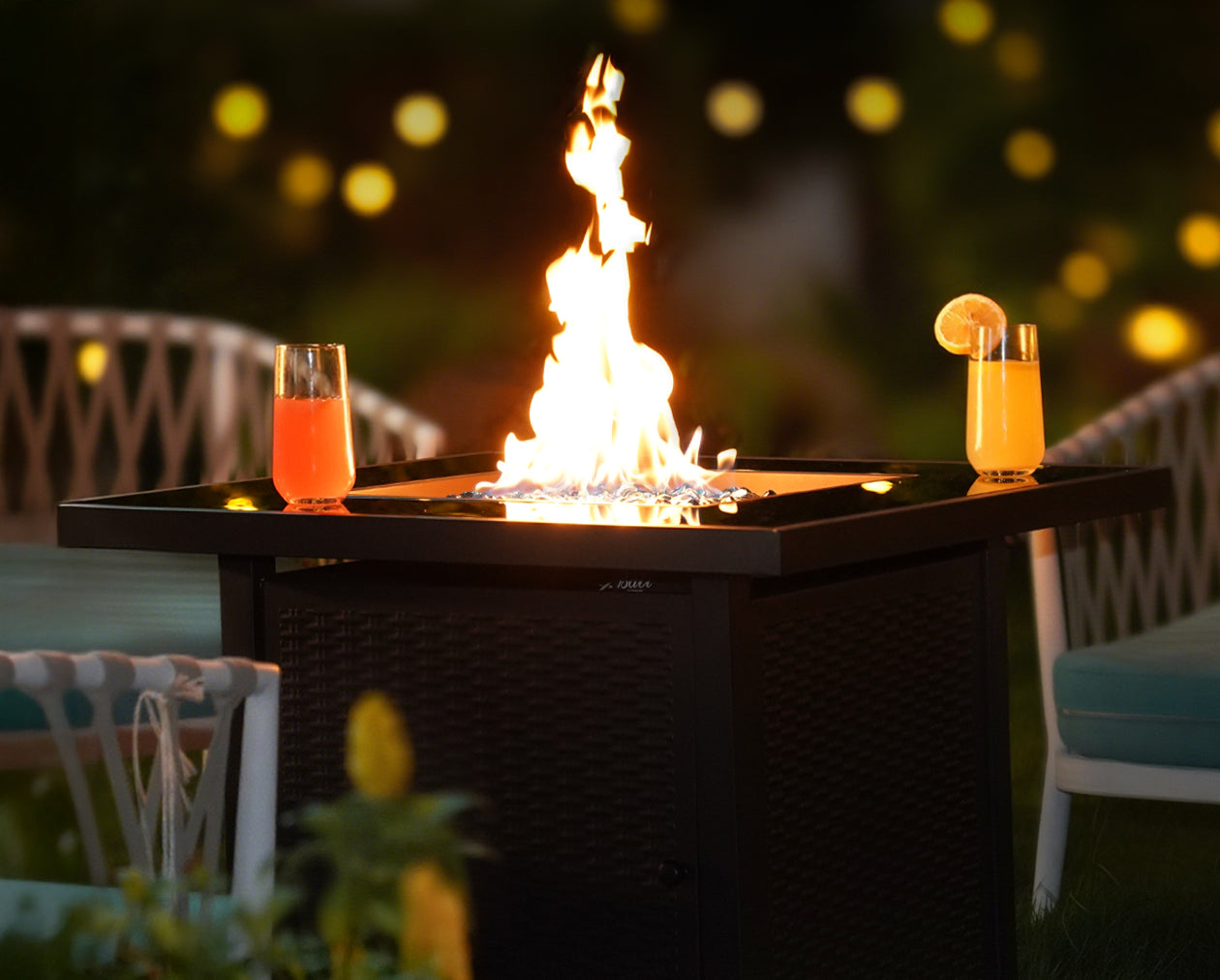


A propane fire pit table does double duty: live flame centerpiece and functional surface for drinks, plates, and conversation. But picking the right one involves more than choosing a style you like. Size, heat output, ignition type, materials, and safety clearances all affect whether your new fire table actually works in your space.
This guide walks you through every decision point so you can buy with confidence the first time. Whether you're furnishing a compact condo patio or a sprawling backyard, you'll know exactly what to look for and what to skip.
How to Size a Propane Fire Pit Table for Your Patio
The single biggest mistake first-time buyers make is choosing a fire pit table that's too large (or too small) for their space. A table that crowds your patio feels claustrophobic. One that's undersized looks lost.
Measure Your Available Space First
Before browsing any product page, grab a tape measure and record your patio's length and width. Then subtract the clearance zones:
- 10 feet from combustible structures. The NFPA recommends keeping fire features at least 10 feet (3 meters) from anything combustible: siding, deck railings, fences, and overhanging branches.
- 3 feet of walking clearance on each side where people will pass behind chairs.
- 24-30 inches between the table edge and seating, enough legroom to sit comfortably without being too far from the flame.
What remains after subtracting these zones is your usable footprint. That's the space your fire pit table and chairs need to fit within.
Minimum Patio Dimensions by Table Size
| Fire Pit Table Size | Typical Dimensions | Seating Capacity | Minimum Patio Size |
|---|---|---|---|
| Small square | 28″ × 28″ | 4 chairs | 10 × 10 ft |
| Medium square | 32″ × 32″ | 4 chairs | 12 × 12 ft |
| Rectangular | 44″ × 32″ | 6 chairs | 12 × 14 ft |
| Large rectangular | 56″ × 38″ | 6–8 chairs | 14 × 16 ft |
| Round | 32″ diameter | 4–6 chairs | 10 × 10 ft |
These minimums assume a freestanding patio away from the house. If your fire pit table will sit on an attached deck or near exterior walls, you need additional buffer to meet the 10-foot combustible clearance.
Browse all BALI OUTDOORS fire pit tables to see the exact dimensions listed on each product page.
Understanding BTU: How Much Heat Do You Actually Need?
BTU stands for British Thermal Unit, the amount of energy needed to raise one pound of water by one degree Fahrenheit. For fire pit tables, it's the standard measure of heat output. Higher BTU means more heat, but more isn't always better.
BTU Ranges and What They Mean
| BTU Range | Heat Level | Effective Coverage | Best For |
|---|---|---|---|
| 30,000–40,000 | Moderate | ~100–150 sq ft | Mild climates, small patios, ambiance-focused use |
| 40,000–50,000 | Medium-high | ~150–200 sq ft | Most backyards, 3-season use in temperate zones |
| 50,000–60,000 | High | ~200–250 sq ft | Larger patios, cooler climates, extended evening use |
| 60,000+ | Very high | 250+ sq ft | Commercial settings, very cold regions, open-air areas |
Most residential propane fire pit tables fall in the 40,000-50,000 BTU range, and for good reason. At 50,000 BTU, you'll feel comfortably warm sitting 8–10 feet from the flame on a cool evening. That's enough heat for a 6-person gathering without turning your patio into a sauna.
Climate Matters More Than You Think
If you live in the South or Southwest, a 40,000 BTU table handles fall and spring evenings with ease. In the Midwest or Northeast, where autumn temperatures regularly dip into the 40s°F, aim for 50,000 BTU to stay comfortable without layering up.
Wind is the other variable. Open, unsheltered patios lose heat faster. A wind guard can reduce heat loss by shielding the flame, effectively boosting the warmth you feel without increasing BTU.
Why More BTU Isn't Always Better
A 60,000+ BTU fire pit on a small patio will push guests back from the heat, defeating the purpose of a table you're supposed to gather around. It also burns through propane faster and costs more to run. Match BTU to your space size and climate rather than chasing the highest number on the spec sheet.
Choosing a Shape: Square, Rectangular, or Round
Shape affects more than aesthetics. It determines how many people can sit around the table, how well it fits your furniture layout, and how evenly heat reaches each seat.
Here's the quick take:
- Square fire pit tables work best for dedicated 4-person seating on medium patios. Their symmetry pairs naturally with matching chair sets.
- Rectangular fire pit tables suit larger or narrow spaces and pair well with sectional sofas or dining sets for 6–8 people. They offer the most usable surface area for drinks and plates along the edges.
- Round fire pit tables create the most even heat distribution and natural conversation flow since every seat is equidistant from the center. They work well with curved seating and Adirondack chairs.
If you're still deciding, our shape comparison guide covers the differences in depth, including layout diagrams for each option.
Ignition Types: Pulse, Match-Lit, and Electronic
How your fire pit table lights up matters more than most buyers expect. It affects day-to-day convenience, safety, and long-term cost. There are three main ignition systems used in propane fire pit tables:
Match-Lit Ignition
The simplest and cheapest option. You turn on the gas valve and hold a long match or lighter over the burner to ignite it. Match-lit systems have no moving parts and rarely break, but they require you to put your hand near the burner opening, which some people find intimidating.
Best for: Budget-conscious buyers who don't mind the manual step.
Pulse (Piezo Spark) Ignition
Push a button, and a piezoelectric element generates a spark to light the gas. No matches, no batteries, no wiring. The spark mechanism is entirely self-contained, so there's nothing to charge or replace. BALI OUTDOORS fire pit tables use pulse ignition for this reason: it's reliable, low-maintenance, and keeps your hands well away from the flame.
Best for: Most homeowners. It balances convenience, reliability, and cost.
Electronic Ignition
The premium tier. Electronic systems use a powered igniter (battery or hard-wired) and often include remote control, wall switch, or smartphone integration. Many feature automatic flame monitoring: if the flame goes out unexpectedly, the system shuts off gas flow to prevent buildup. The trade-off is price. Electronic systems add hundreds to the cost and require either batteries or an electrician for installation.
Best for: Built-in custom installations or buyers who want remote-control convenience.
Materials: What Your Fire Pit Table Is Made Of

The frame and tabletop material affects weight, durability, and how much maintenance you'll do over the years.
Steel
The most common frame material in the mid-range price bracket. Powder-coated steel resists rust and holds up well in most climates. It's heavier than aluminum, which keeps the table stable in wind but makes repositioning harder. Look for tables with a rust-proof finish. Bare steel will corrode after a few seasons of rain and humidity.
Aluminum
Lightweight, naturally rust-resistant, and easy to move. Aluminum fire pit tables work well for people who rearrange their patio seasonally or need to store the table in winter. The downside: aluminum is less rigid, so cheaper aluminum tables can feel flimsy. Cast aluminum is the sturdier option.
Concrete / Faux Stone
Heavy, durable, and weather-resistant. Concrete and stone-composite tables deliver a high-end look and stay put in storms. The weight (often 80–120+ lbs) makes them essentially permanent installations. Concrete can crack in extreme freeze-thaw cycles, so sealing it before winter is a good practice in cold-climate states.
Tempered Glass Tabletops
Many propane fire pit tables feature a tempered glass tabletop around the burner area. Tempered glass is heat-resistant, easy to clean, and adds a sleek look. BALI OUTDOORS uses rust-proof tempered glass tabletops across its fire pit table lineup, which eliminates the surface corrosion issues common with all-metal tops.
Propane Tank: Size, Burn Time, and Storage
Every propane fire pit table runs on either a standard 20 lb tank (the same type used for gas grills) or a smaller 1 lb camping cylinder. Almost all full-size fire pit tables use the 20 lb tank.
How Long Does a 20 lb Propane Tank Last?
Here's the math. A 20 lb propane tank holds roughly 4.7 gallons of propane, which provides approximately 430,000 BTU of total energy (20 lbs × ~21,500 BTU per pound).
| Fire Pit BTU Rating | Estimated Burn Time (High) | At Medium Flame |
|---|---|---|
| 30,000 BTU | ~14 hours | ~20–25 hours |
| 40,000 BTU | ~10 hours | ~15–20 hours |
| 50,000 BTU | ~8 hours | ~12–15 hours |
| 60,000 BTU | ~7 hours | ~10–12 hours |
At the most common 50,000 BTU setting on high, expect roughly 8 hours per tank, enough for two to three evenings of 3-hour use. Running at medium flame stretches that significantly. A 20 lb tank refill typically costs $3–5 at most hardware stores and gas stations.
Tank Storage: Hidden Base vs. External
Fire pit tables handle propane tanks in two ways.
- Hidden base compartment: The tank slides into the table's enclosed base, completely out of sight. This is the cleaner look and protects the tank from weather. BALI OUTDOORS fire pit tables feature a built-in compartment sized for a standard 20 lb tank.
- External hose connection: The tank sits outside the table (sometimes behind it or underneath), connected by a longer hose. This is more common in budget models and built-in installations. It's less visually appealing but makes tank swaps marginally faster.
For most buyers, a hidden base is the better option. It keeps the look clean and the tank protected.
Essential Accessories
A few accessories make a real difference in how long your fire pit table lasts and how much you enjoy using it.
Fire Pit Table Cover
UV exposure, rain, and winter snow degrade any outdoor furniture over time. A fitted fire pit table cover is the single cheapest way to extend the life of your table by years. Look for covers made from 600D or heavier polyester with waterproof coating and tie-down straps. Always measure your table before buying. Covers are not one-size-fits-all.
Wind Guard
A tempered glass wind guard shields the flame from gusts, keeping it lit and reducing gas waste. It also directs heat upward and outward more efficiently. On a breezy evening, a wind guard can mean the difference between a steady flame and one that keeps blowing out.
Fire Glass vs. Lava Rocks
The media that fills your burner pan is both decorative and functional:
- Fire glass: Tempered glass pieces that reflect and refract light for a vibrant, modern flame effect. Fire glass doesn't produce soot or ash, doesn't decompose, and comes in dozens of colors. It's the preferred choice for contemporary fire pit tables.
- Lava rocks: Natural volcanic rock that absorbs and radiates heat. Lava rocks create a more rustic, natural look and retain heat slightly better than glass. Over time, they can crumble and need replacing (typically every 1–2 years with heavy use).
Most propane fire pit tables ship with one or the other included. Either works safely. The choice is purely aesthetic and maintenance-related.
Safety: Clearances, Codes, and Surface Requirements

Propane fire pit tables are safer than wood-burning fire pits. No flying sparks, no smoke, and you get instant shutoff. But they still involve an open flame and pressurized fuel, so following safety guidelines is non-negotiable.
NFPA Clearance Guidelines
The National Fire Protection Association (NFPA) provides the baseline safety standards for outdoor fire features in the United States:
- 10 feet minimum from combustible materials — house siding, wooden fences, deck railings, pergola posts, tree branches, and fabric patio covers all count.
- No overhead obstructions within 6 feet above the flame. This includes patio umbrellas, string lights hung too low, and awning fabric.
- 3 feet of supervised clearance — keep children and pets at least 3 feet away from the table edge when the flame is on.
Check Your Local Codes
Many municipalities add their own rules on top of NFPA guidelines. Common local restrictions include:
- Bans on open-flame features in certain high-fire-risk zones (especially in California and the western US).
- Requirements for a permit or inspection before installation.
- Restrictions on use above certain floors in condo or apartment buildings.
- Seasonal burn bans during drought conditions.
Call your local fire department or check your city's fire code website before purchasing. It takes five minutes and can save you from buying something you can't legally use.
Surface Requirements
Place your propane fire pit table on a non-combustible, level surface:
- Concrete, pavers, stone, or brick — ideal surfaces.
- Composite decking — usually acceptable, but check the decking manufacturer's heat tolerance rating. A fire pit heat pad provides extra protection.
- Wood decks — use a fire-rated heat shield pad underneath. Never place a fire pit table directly on wood decking.
- Grass — not recommended. Uneven surfaces create tipping risk, and prolonged heat will kill the turf underneath.
Propane-Specific Safety
- Always check hose connections for leaks using soapy water before the first use of the season. Bubbles indicate a leak.
- Store spare propane tanks upright, outdoors, and away from heat sources. Never store propane indoors or in a garage.
- Turn the tank valve off completely when not in use. Don't rely solely on the table's control knob.
- Replace cracked or weathered hoses immediately. Most manufacturers recommend replacing the hose and regulator every 5–7 years regardless of visible condition.
Before You Buy: The Complete Checklist
Print this list or save it to your phone before you start shopping. Check off each item as you confirm it:
| ✓ | Item | Why It Matters |
|---|---|---|
| ☐ | Measured patio dimensions | Ensures the table + chairs + clearance actually fit |
| ☐ | Confirmed 10-ft clearance from structures | NFPA safety requirement for combustible materials |
| ☐ | Checked local fire codes and HOA rules | Some areas restrict or ban open-flame features |
| ☐ | Chosen BTU range for your climate | Underpowered = cold; overpowered = wasted fuel |
| ☐ | Decided on shape (square / rectangular / round) | Dictates seating layout and furniture pairing |
| ☐ | Verified surface is non-combustible or shielded | Wood decks need a fire-rated heat pad |
| ☐ | Confirmed propane tank storage (hidden base preferred) | Hidden = cleaner look and weather protection |
| ☐ | Checked ignition type | Pulse ignition is the best balance of convenience and reliability |
| ☐ | Planned for a cover and wind guard | Extends table life and improves flame performance |
| ☐ | Verified easy assembly (or professional installation) | Most propane fire pit tables are designed for DIY assembly |
| ☐ | Confirmed warranty and return policy | Protects your investment if something arrives damaged |
What to Look for in a Propane Fire Pit Table (Summary)
Here's what the ideal propane fire pit table looks like for most buyers:
- BTU: 50,000. Covers 3-season residential use across most US climates.
- Ignition: Pulse (piezo spark). Reliable, no batteries or wiring, hands-free lighting.
- Tank storage: Built-in 20 lb compartment. Clean look, weatherproof, no visible tank or hose.
- Tabletop: Tempered glass. Rust-proof, easy to wipe down, heat-resistant.
- Frame: Powder-coated steel or aluminum. Weather-resistant without annual sealing.
- Shape: Depends on your space and seating preference. square for 4, rectangular for 6-8, round for even conversation.
BALI OUTDOORS propane fire pit tables are built around this feature set: 50,000 BTU output, pulse ignition, hidden 20 lb tank storage, and rust-proof tempered glass tabletops. The price point undercuts premium brands by 40-60% without dropping the features that matter.
Frequently Asked Questions
Can I use a propane fire pit table on a covered patio?
Yes, as long as you maintain at least 6 feet of overhead clearance between the flame and any ceiling or covering material, and the area has adequate ventilation on at least two sides. Fully enclosed spaces are not safe for any open-flame propane appliance.
Is natural gas or propane better for a fire pit table?
Propane is more versatile: no gas line installation required, and the table can be moved anywhere. Natural gas is cheaper per BTU over time but requires a permanent gas line run by a licensed plumber. For most homeowners, propane is the simpler and more flexible choice.
Do propane fire pit tables work in winter?
Yes, but performance drops below about 0°F (−18°C) because propane doesn't vaporize efficiently at extreme cold. In most of the continental US, this isn't an issue. Use a fitted cover to protect the table when not in use during winter months.
How much does propane cost to run a fire pit table?
At current US propane prices, a 20 lb tank refill costs roughly $3–5. At 50,000 BTU on high, one tank lasts about 8 hours. That works out to approximately $0.50–0.65 per hour of use, far cheaper than a patio heater and comparable to a few logs of firewood.
Ready to find the right fire pit table for your space? Browse the full BALI OUTDOORS collection. Every table ships with free US delivery and is designed for easy, tool-minimal assembly.