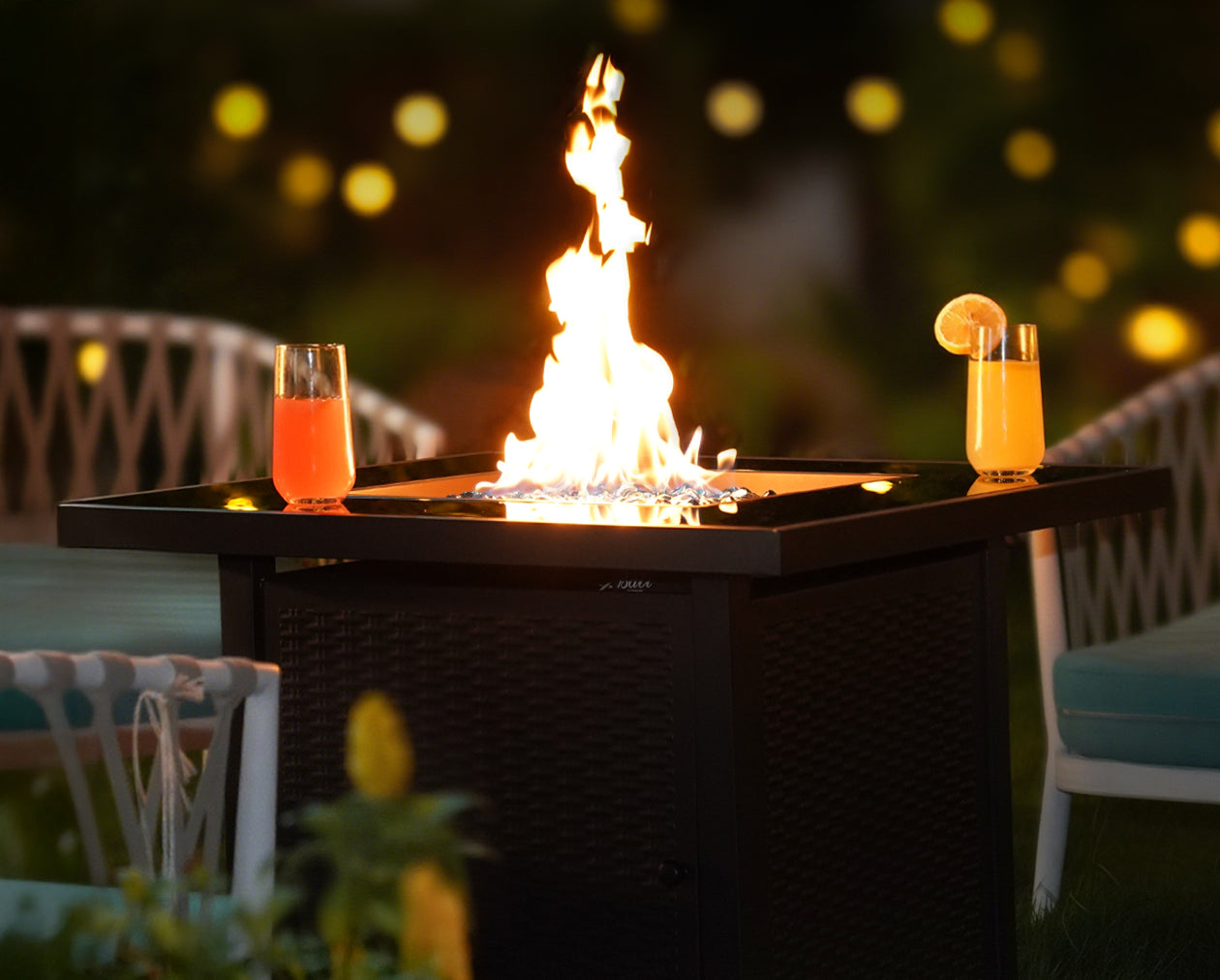


A quality fire pit is an investment. Leaving it exposed to rain, snow, and UV rays is the fastest way to cut its lifespan in half. The fix is simple: a well-fitted cover. But "well-fitted" is the key phrase. A cover that is too small won't stay on in the wind. One that is too large traps moisture and invites mildew.
This guide walks you through how to measure your fire pit, pick the right cover size, and avoid the mistakes that send most people back to the store for a replacement.
Why Your Fire Pit Needs a Cover
Even if your fire pit lives on a covered patio, it is still exposed to humidity, dust, pollen, and temperature swings. Here is what a cover actually protects against:
- Rain and moisture. Water sitting in a fire pit bowl causes rust on steel components and can crack ceramic or stone during freeze-thaw cycles. On propane models, water seeps into burner ports and ignition systems, leading to inconsistent flames or complete failure to light.
- UV degradation. Direct sunlight fades powder-coated finishes and breaks down rubber seals and gaskets over time. A season or two of unprotected sun exposure can make a table look five years old.
- Debris and pests. Leaves, pine needles, and insects love open fire pits. Clogged burner ports are the number one maintenance call for propane fire pit tables, and a cover eliminates the problem entirely.
- Extended lifespan. A $30-$50 cover can add years to a fire pit that cost ten times as much. The math is straightforward.
If you own a propane fire pit table, a smokeless fire pit, or a traditional wood-burning pit, the logic is the same. Cover it when you are not using it.
How to Measure Your Fire Pit for a Cover

Guessing does not work. Covers are not forgiving of even a two-inch error. Grab a tape measure and follow these steps based on your fire pit shape.
Round Fire Pits
- Measure the diameter. Stretch your tape measure across the widest point of the fire pit, from one outer edge straight across to the other. This is your diameter.
- Measure the height. Measure from the ground (or the bottom of the base) to the highest point of the fire pit, including any wind guard or raised edge.
- Add 1 to 2 inches to each dimension. This breathing room lets you slip the cover on and off easily and prevents moisture from getting trapped against the surface.
Example: a round fire pit table that measures 42 inches across and 24 inches tall needs a cover rated for approximately 44" diameter x 25" height.
Rectangular and Square Fire Pits
- Measure the length. The longest side, outer edge to outer edge.
- Measure the width. The shorter side, outer edge to outer edge.
- Measure the height. Ground to the highest point, same as round.
- Add 1 to 2 inches to length, width, and height.
For a rectangular fire pit table that measures 56" L x 28" W x 25" H, look for a cover around 58" x 30" x 26".
Irregular Shapes and Chimineas
For chimineas and unusually shaped fire pits, measure the widest point at every level (base, middle, top) and use the largest number as your width. For chimineas, the height from ground to the top of the chimney is critical since most people underestimate it by several inches.
Pro Tip: Measure the Fire Pit, Not the Old Cover
If you are replacing a cover that stretched out or shrank, do not use the old cover as your template. Measure the fire pit itself every time. Fabric changes shape after a season of sun and rain.
Fire Pit Cover Sizes: Quick Reference
Use this table to match common fire pit dimensions to standard cover sizes. If your fire pit falls between two sizes, go up, not down.
| Cover Size (Diameter) | Fits Fire Pits | Common Fire Pit Types |
|---|---|---|
| 30" | 28" – 29" diameter | Small tabletop fire bowls, portable fire pits |
| 36" | 34" – 35" diameter | Compact round fire pit tables, solo-style smokeless pits |
| 42" | 40" – 41" diameter | Mid-size round fire pit tables (most popular residential size) |
| 48" | 46" – 47" diameter | Large round fire pit tables, 4-6 person seating |
| 54" | 52" – 53" diameter | Oversized round fire pits, commercial-grade units |
| 60" | 58" – 59" diameter | Extra-large patio fire pit tables, estate-size installations |
For rectangular covers, sizing is listed as L x W x H. Standard rectangular covers typically come in 44" x 24", 56" x 28", and 64" x 30" options. Always check the manufacturer listing for exact interior dimensions.
Browse the full range of fire pit covers and fire table covers to find the exact match for your setup.
Types of Fire Pit Covers

Not all covers work the same way. The right type depends on your fire pit style and how much wind your patio gets.
Fitted Covers with Elastic or Drawstring
These wrap snugly around the fire pit with an elasticized hem or adjustable drawstring at the bottom. They are the most common choice for freestanding fire pits and fire pit tables because they stay put in moderate wind without additional hardware.
Best for: round and square fire pit tables, smokeless fire pits, and any unit that sits at a uniform height.
Flat Lid Covers
Flat covers sit on top of the fire pit like a lid rather than draping down the sides. They are designed specifically for fire pit tables where the tabletop surface needs protection but the base is enclosed. Many fire table owners use a flat lid cover when the table is doubling as a dining or serving surface between burns.
Best for: propane fire pit tables with enclosed bases, especially rectangular models used for dining.
Universal vs Custom-Fit
Universal covers come in standard sizes (30", 36", 42", etc.) and fit a range of fire pits within that size bracket. They are affordable and widely available. Custom-fit covers are made for a specific brand and model, so they hug every contour precisely.
The trade-off: universal covers cost less and are easy to replace, but custom-fit covers look cleaner and offer tighter protection against wind and moisture intrusion.
Material Matters
The most durable outdoor fire pit covers use 600D polyester with PVC backing. Here is why that combination works:
- 600D polyester is the same denier weight used in heavy-duty luggage and outdoor gear. It resists tears, abrasion, and punctures far better than lighter fabrics.
- PVC coating on the inner layer creates a true waterproof barrier, not just water resistance.
- Fade-resistant treatment prevents UV rays from breaking down the fabric color and structural integrity over multiple seasons.
Avoid thin nylon or polyethylene covers sold at steep discounts. They typically last one season before cracking or tearing, which means you end up spending more in the long run.
Cover Features That Actually Matter
Beyond size and shape, a handful of features separate a cover that lasts three seasons from one that lasts three months.
Waterproof vs Water-Resistant
These terms are not interchangeable. Water-resistant means the fabric repels light rain and splashes but will eventually soak through in sustained downpour. Waterproof means water cannot penetrate the fabric at all, usually achieved through a PVC or polyurethane inner coating.
For outdoor fire pits that sit in the open year-round, waterproof is the only practical choice. Water-resistant covers work fine for fire pits under a covered porch that only face occasional wind-driven rain.
UV Protection
UV rays break down fabric fibers over time, causing fading, brittleness, and eventual tearing. Look for covers that specifically mention UV-resistant or UV-treated fabric. According to the EPA's UV Index guidelines, even moderate UV exposure levels degrade unprotected materials over a single summer season. A UV-protected cover holds its color and tensile strength significantly longer.
Air Vents
This is the feature most people overlook. Sealed covers trap moisture from condensation and ground evaporation, creating a damp environment that promotes mold, mildew, and corrosion. Small mesh air vents near the top of the cover allow airflow without letting rain in.
If your cover does not have built-in vents, crack it open for an hour on dry days to let trapped moisture escape.
Secure Straps, Buckles, or Toggles
Wind is the enemy of unsecured covers. Elastic hems work in light breezes, but if your patio sees regular gusts, you need adjustable straps or buckle systems that cinch the cover tight to the base. Some covers use padded handles that double as tie-down points.
Handles
It sounds minor, but reinforced handles on opposite sides of the cover make a real difference in daily use. Without them, you end up grabbing the fabric edge and stretching the seams. Over a season of daily on-and-off cycles, that wear adds up.
Common Cover Mistakes to Avoid

Most cover failures are not product defects. They are user errors. Here are the four most common ones:
1. Buying Too Tight
A cover that fits like a glove sounds ideal, but it causes two problems. First, it is difficult to put on and take off, so you stop using it. Second, a skin-tight cover traps moisture directly against the fire pit surface with no air gap, accelerating rust and finish damage.
Always leave 1 to 2 inches of clearance on every side.
2. Covering While Still Hot
After you turn off a propane fire pit, the burner, fire glass, and metal components stay hot for 15 to 30 minutes. Putting a cover on too early can warp or melt the fabric, especially around the top where it contacts the hottest surfaces. Wait until the unit is cool to the touch before covering.
3. Ignoring Ventilation
Covering a fire pit that still holds residual heat or moisture and leaving it sealed for days creates a greenhouse effect underneath. The result: mold growth, musty smells, and surface corrosion that looks like the fire pit was never covered at all.
Make sure your cover has vents or periodically remove it on sunny days to air things out.
4. Not Securing the Cover in Wind
An unsecured cover that blows off in a storm provides zero protection and often ends up torn on a fence or lost entirely. Use the built-in straps or add bungee cords or clips if your cover only has an elastic hem. If you live in a high-wind area, this step is not optional.
Seasonal Cover Care Tips
Your cover protects your fire pit. A little maintenance protects your cover.
Cleaning
Clean your cover two to three times per year, or more often if it sits under trees that drop sap or pollen. The process is simple:
- Remove the cover and shake off loose debris.
- Lay it flat on a clean surface (a driveway or deck works fine).
- Mix mild dish soap with warm water and scrub gently with a soft brush.
- Rinse thoroughly with a garden hose.
- Let it air dry completely before putting it back on the fire pit.
Do not use bleach, harsh chemical cleaners, or pressure washers. They strip the waterproof coating and weaken the fabric.
Winter Storage Prep
If you store your fire pit for the winter, clean the cover first, let it dry fully, then fold it loosely and store it indoors in a dry space. Do not stuff it into a tight container while damp. Mildew will set in within days.
If you leave the fire pit outdoors through winter, the cover stays on, but check it monthly. Clear off heavy snow accumulation, which can stretch the fabric and stress the seams. Make sure the vents are not blocked by ice or debris. For a full winter preparation routine, see our propane fire pit table guide for storage best practices.
When to Replace Your Cover
A good 600D polyester cover should last two to four seasons with proper care. Replace it when you notice any of these signs:
- Visible cracking or flaking on the inner waterproof layer
- Seam separation at corners or around handles
- Persistent musty smell that does not go away after cleaning (indicates embedded mold)
- Fabric feels thin or papery compared to when it was new
- Water soaking through instead of beading on the surface
When it is time for a replacement, browse the complete cover collection to find the right fit. Covers are also available by category: fire pit covers, fire table covers, chiminea covers, and patio heater covers.
The Bottom Line
Getting the right fire pit cover comes down to three things: accurate measurements, the right material, and a fit that leaves a little breathing room. Measure your fire pit yourself rather than trusting a product listing from memory. Choose 600D polyester with PVC backing for genuine waterproof protection. And make sure the cover has vents, straps, and handles so you actually use it every time.
A cover that fits properly and gets used consistently is the single cheapest way to protect your outdoor investment. Spend the five minutes to measure, pick the right size, and your fire pit will look and perform like new for years to come.