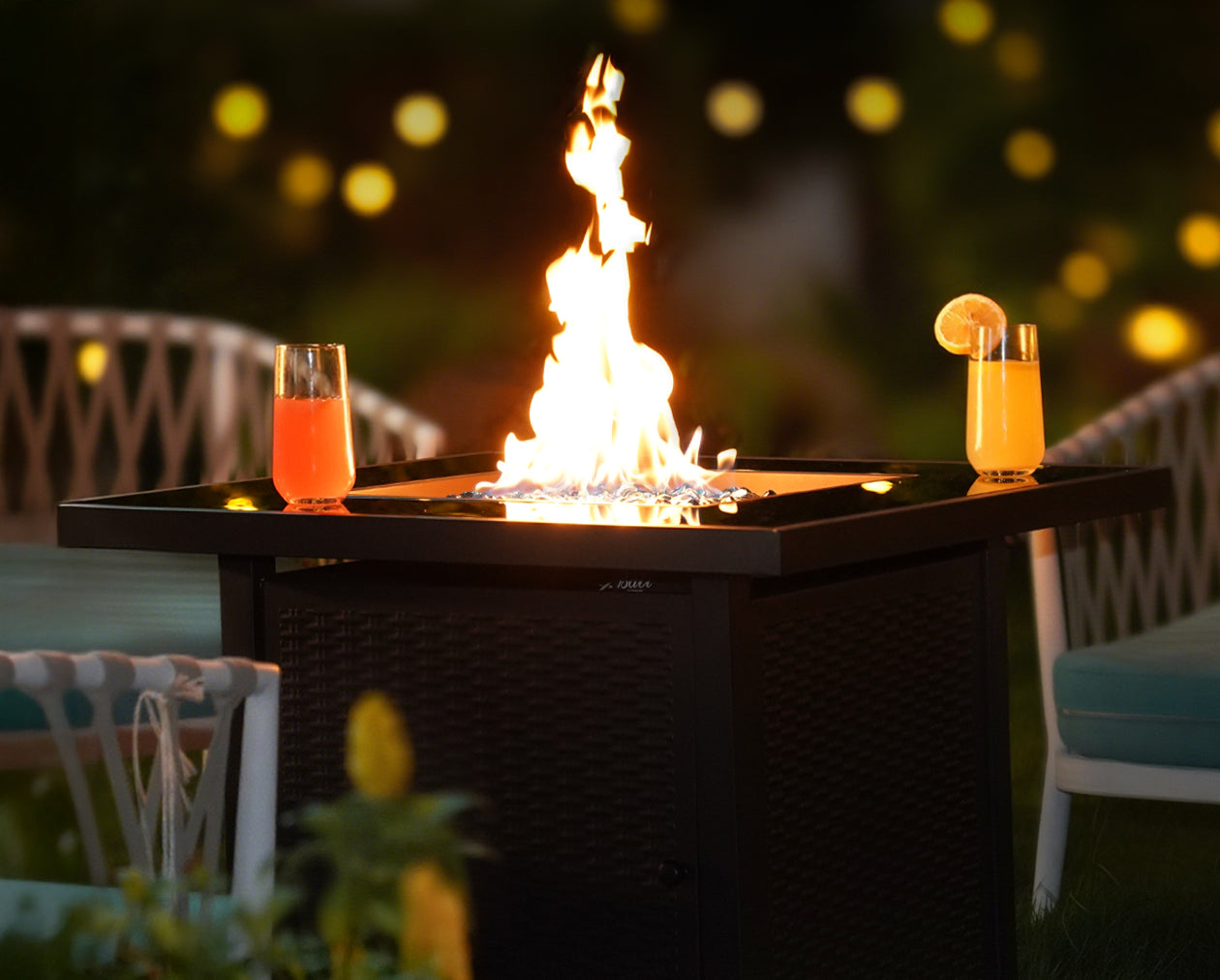


A propane fire pit table does double duty. It keeps your patio warm on cool evenings and gives you a usable surface for drinks, snacks, or board games when the flame is off. With dozens of shapes, sizes, and features on the market, narrowing the field can feel overwhelming.
This guide breaks down exactly what to look for in a propane fire pit table, then walks through the best options by patio size and entertaining style so you can buy with confidence.
Why Choose a Propane Fire Pit Table?
Propane fire pit tables have become the go-to choice for homeowners who want outdoor ambiance without the hassle of firewood. Here is why:
- Instant ignition. Push a button and you have a flame. No kindling, no lighter fluid, no waiting.
- Clean burning. Propane produces far less smoke and particulate than wood. No ash cleanup, no smoke-filled clothes.
- Dual-purpose design. The flat tabletop surface around the burner holds glasses and plates, so a heater becomes functional furniture.
- Portability. A standard 20 lb propane tank fits inside most table bases. No permanent gas line to install, and you can move the table wherever you need it.
- Consistent heat. Unlike wood fires that flare and fade, propane delivers steady, adjustable warmth rated in BTUs.
If you are ready to browse, explore the full propane fire pit table collection to see what is available across shapes and sizes.
What to Look for in a Propane Fire Pit Table
Before comparing specific styles, get clear on these seven factors. They will save you from buying a table that does not fit your patio or your routine.
1. BTU Output
BTU (British Thermal Unit) measures heat output. For most residential patios, 40,000 to 60,000 BTU is the right range: warm enough to extend your outdoor season into fall and early spring without overheating a small space. Fire pit tables above 60,000 BTU suit larger, open-air settings. A standard 20 lb propane tank holds roughly 90,000 BTU total, so ultra-high-BTU units burn through fuel faster. At 50,000 BTU and medium flame, expect 8 to 10 hours of burn time per tank.
2. Ignition Type
There are two common ignition systems:
- Pulse (piezo) ignition uses a mechanical spark generated by pressing a button. No batteries, no electrical hookup, and virtually nothing to break.
- Electronic ignition relies on a battery or wired connection. Convenient, but adds a component that can fail over time.

Pulse ignition is the more reliable, low-maintenance option for most homeowners.
3. Material and Build Quality
The table surface and frame need to handle rain, UV, and temperature swings. Look for:
- Tempered glass tabletops that resist thermal shock and will not rust or stain.
- Powder-coated steel or aluminum frames for corrosion resistance.
- Stainless steel burners that hold up season after season.
Avoid bare, uncoated metal. It may look fine in the showroom but will pit and rust within a year of outdoor exposure.
4. Shape and Size
Shape affects how you use the table day to day, not just how it looks:
- Square fire pit tables are compact and fit neatly into corners or small patios. Browse square fire pit tables.
- Rectangular fire pit tables anchor longer seating arrangements and work well for dining setups. Browse rectangular fire pit tables.
- Round fire pit tables encourage face-to-face conversation, since everyone sits at equal distance from the flame. Browse round fire pit tables.
5. Propane Tank Storage

The best fire pit tables hide the 20 lb propane tank inside the base with an access door for easy swaps. This keeps your patio looking clean and protects the tank from direct sun and weather. If a table requires the tank to sit outside the unit, you will need a separate cover or enclosure.
6. Wind Protection
Wind is the number-one flame killer outdoors. A glass wind guard shields the burner on all sides, keeping the flame steady and reducing gas waste. Many tables include one, but if yours does not, aftermarket guards are a worthwhile add-on. See wind guard options.
7. Cover and Accessories
A fitted cover protects the burner and tabletop when the fire pit is not in use. UV-resistant, waterproof covers prevent fading and water pooling that can damage ignition components over time. Check whether a cover is included or if you need to purchase one separately. Shop fire pit table covers.
Best Propane Fire Pit Tables by Use Case
There is no single "best" fire pit table. The right pick depends on your space, your seating layout, and how you entertain.
Best for Small Patios: Square Fire Pit Tables
If your outdoor space is under 150 square feet (apartment balcony, townhouse patio, small deck), a square fire pit table is your best bet. The compact footprint fits flush against furniture without overwhelming the area.
What to prioritize:
- 28- to 32-inch width for tight spaces
- Built-in tank storage so you do not lose floor space to an external tank
- 40,000 to 50,000 BTU; more than enough heat for a small, semi-enclosed area
- Pulse ignition for one-button starts on chilly evenings
Square tables also pair well with two- or four-chair bistro sets, creating an intimate fire-side setting without the bulk of a full patio suite. Explore square propane fire pit tables.
Best for Entertaining: Rectangular Fire Pit Tables
If you host dinners or weekend gatherings, a rectangular fire pit table functions like an outdoor dining table with a built-in centerpiece. The elongated shape seats six to eight people comfortably, with enough flat surface for plates and glasses alongside the flame.
What to prioritize:
- 44 inches or longer to accommodate group seating
- 50,000+ BTU to project heat across a wider area
- A tempered glass or stone tabletop that doubles as a serving surface
- Wind guard included, since larger flames are more vulnerable to gusts
A rectangular table also anchors a large patio visually. Set it parallel to a sofa-style seating arrangement and you have a defined outdoor living room. Browse rectangular fire pit tables.
Best for Conversation: Round Fire Pit Tables
Round fire pit tables are the classic campfire shape translated into patio furniture. Every seat faces the center, which naturally encourages conversation. Pick this shape if your evenings revolve around talking rather than dining.
What to prioritize:
- 36- to 42-inch diameter for a balance between surface area and intimacy
- Evenly distributed burner ring for consistent heat in every direction
- Matching Adirondack chairs or curved sectionals that follow the table's shape
Round tables also work well in the center of open yards where you want 360-degree access. Browse round propane fire pit tables.
Best for Versatility: Propane Fire Pit Bowls and Compact Units
Not every backyard calls for a full table. Compact propane fire pits and bowl-style units deliver the same clean-burning flame in a lighter, more portable package. Renters and campers tend to prefer these, and they also suit homeowners who rearrange their patio layout often.
What to prioritize:
- Under 40 lbs total weight for easy repositioning
- Compatible with both 1 lb camping cylinders and 20 lb tanks via adapter
- Lava rock or fire glass media included
See all propane fire pit options for both table and non-table styles.
Quick-Reference Buying Checklist
Use this checklist before you add any propane fire pit table to your cart:
| Factor | What to Check |
|---|---|
| BTU rating | 40,000–60,000 BTU for most patios; higher for large open spaces |
| Ignition | Pulse (piezo) is most reliable; electronic is convenient but has more parts |
| Tabletop material | Tempered glass or natural stone; avoid uncoated metal |
| Frame material | Powder-coated steel or aluminum for rust resistance |
| Tank storage | Built-in compartment with easy-access door for 20 lb tank |
| Wind guard | Included or available as add-on; tempered glass preferred |
| Cover | UV-resistant, waterproof; confirm fit for your exact model |
| Dimensions | Measure your patio first; leave 3+ feet of clearance on all sides |
| Assembly | Look for models that assemble in under 30 minutes with basic tools |
| Warranty | At minimum, one year on the burner and frame |
Propane Fire Pit Table Safety Essentials
Propane fire pit tables are safer than wood-burning alternatives, but they still produce real flame and heat. Follow these guidelines based on the National Fire Protection Association (NFPA):
- Clearance. Keep the fire pit table at least 10 feet from your home, fences, overhanging branches, and any combustible structure.
- Surface. Place the table on a flat, non-combustible surface such as concrete, stone pavers, or a fire-rated patio pad. Avoid wood decks unless the manufacturer explicitly rates the table for deck use.
- Supervision. Never leave a lit fire pit unattended. Keep children and pets at least three feet from the flame.
- Leak checks. Before each season, apply a soapy water solution to gas connections. Bubbles indicate a leak that needs tightening or a new fitting.
- Storage. Store propane tanks upright, outdoors, and away from direct heat sources.
- Shut-off. Always close the tank valve before the control knob to burn off residual gas in the line.
How to Get the Most Out of Your Fire Pit Table
Once your table is set up and connected, a few simple habits will keep it running well for years:
- Use a wind guard. Even on calm nights, a glass wind guard keeps the flame centered and reduces gas consumption by preventing heat from dispersing sideways.
- Cover it when not in use. A snug fire pit table cover blocks moisture, pollen, and UV damage. It is the single cheapest way to extend your table's lifespan.
- Clean the burner ports. Once a month during heavy-use season, turn off the gas and use a soft brush to clear debris from the burner holes. Clogged ports cause uneven flame and can trigger ignition problems.
- Rotate your fire media. Whether you use lava rock or fire glass, stir and rotate the media periodically to prevent soot buildup and maintain an even flame pattern.
- Keep a spare tank. Nothing ends a gathering faster than running out of propane. A backup 20 lb tank ensures you are never caught off guard.
Propane vs. Natural Gas vs. Wood-Burning Fire Pits
Propane is not the only fuel option. Here is how it stacks up against the alternatives:
| Feature | Propane | Natural Gas | Wood-Burning |
|---|---|---|---|
| Portability | High; tank-powered, move anywhere | None; fixed gas line required | Varies; heavy units are stationary |
| Installation | Minimal; connect tank and go | Professional gas line install needed | None needed |
| Smoke | Virtually none | Virtually none | Significant; varies by wood type |
| Heat control | Adjustable dial | Adjustable dial | Manual; add or remove wood |
| Ongoing cost | ~$15–25 per tank refill | Metered utility rate | Firewood at $5–8 per bundle |
| Cleanup | None | None | Ash removal after every use |
For most homeowners who want flexibility and low maintenance, propane is the strongest option. Natural gas makes sense if you already have a line run to your patio. Wood-burning appeals to people who love the crackle and smell of a real campfire and do not mind the cleanup. Compare propane fire pit styles and sizes here.
Frequently Asked Questions
How long does a 20 lb propane tank last in a fire pit table?
At a 50,000 BTU setting, expect roughly 8 to 10 hours of burn time from a full 20 lb tank. Lower the flame to medium and you can stretch that to 12 hours or more. According to Captain Patio's BTU guide, actual burn time varies based on altitude, wind conditions, and flame height.
Can I use a propane fire pit table on a wooden deck?
Only if the manufacturer explicitly rates the unit for deck use. Many fire pit tables radiate heat downward through the base, which can scorch or ignite wood decking. If you want to use one on a deck, place a non-combustible heat shield pad underneath and check your local fire code for any restrictions.
Do I need a wind guard?
Technically no, but practically yes. A wind guard keeps the flame visible and upright, reduces gas waste, and prevents hot embers from scattering. For around $30 to $60, it is one of the best upgrades you can add. Browse wind guards here.
What is the best BTU range for a residential fire pit table?
For most backyard patios, 40,000 to 60,000 BTU provides comfortable warmth without excessive fuel consumption. According to research from Fire Pit Surplus, a 40,000 BTU fire pit can effectively warm a 550-square-foot area in moderate conditions.
How often should I service my propane fire pit table?
Do a full inspection at the start of each outdoor season. Check all gas connections for leaks, clean the burner ports, inspect the ignition system, and verify the regulator hose has no cracks. During heavy-use months, a quick monthly burner cleaning is usually enough.
Finding the Right Fire Pit Table for Your Patio
The best propane fire pit table is the one that matches your space and your entertaining style. Measure your patio first, decide on a shape, then narrow by BTU output and build quality.
Whether you lean toward a compact square table for a cozy corner or a full-length rectangular table that anchors your outdoor living room, the right fire pit table turns your patio into a year-round gathering spot.
Ready to start? Browse the complete fire pit table collection and find the right one for your backyard.