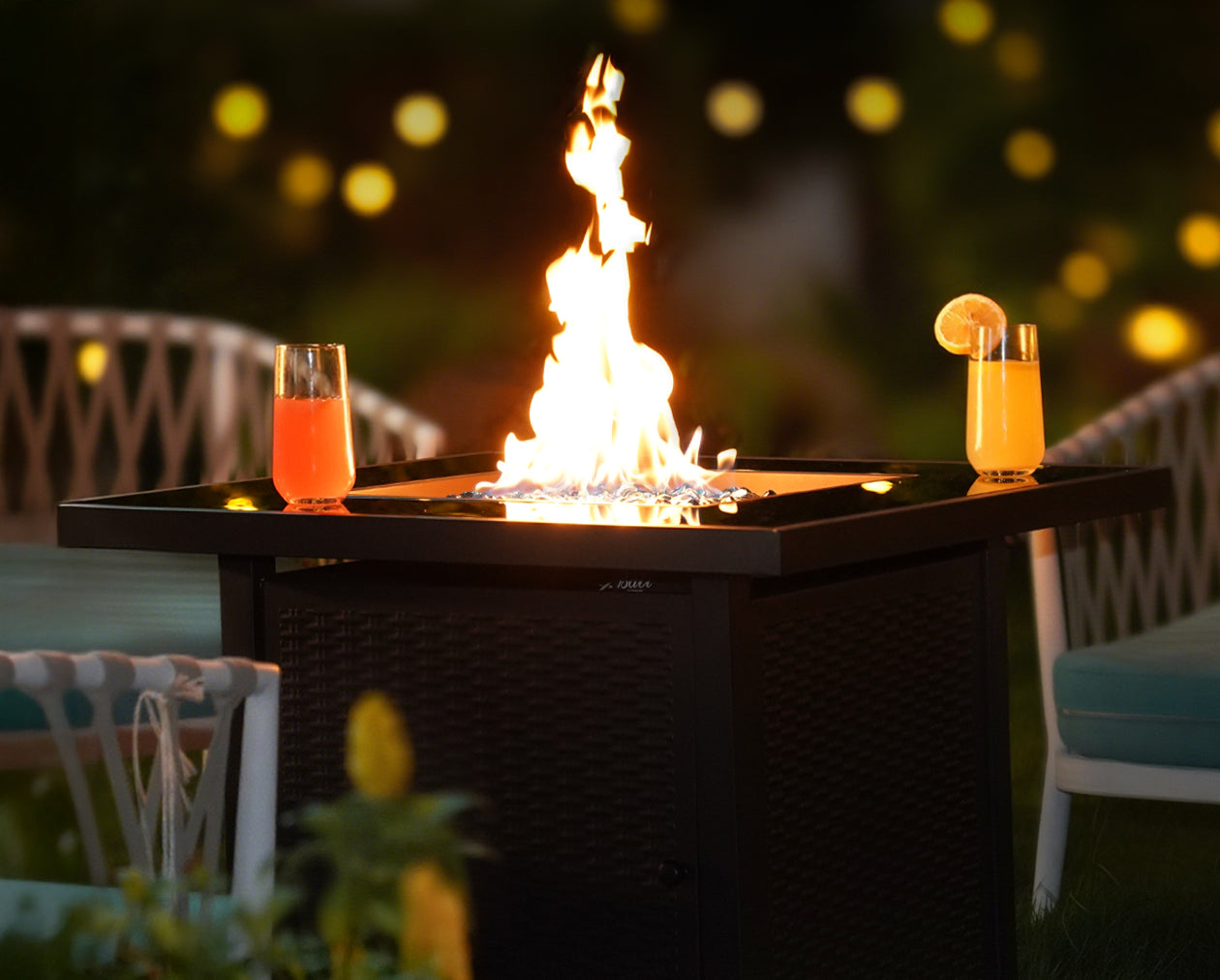


Propane and natural gas are the two most common fuel options for outdoor fire pits. Both produce clean flames with no smoke or ash, but they differ in cost, installation, portability, and long-term convenience. The right choice depends on how you use your outdoor space, whether you rent or own, and how much you want to spend upfront versus over time.
This guide compares propane and natural gas fire pits across every factor that matters so you can pick the fuel type that fits your setup.
How Propane and Natural Gas Fire Pits Work
Both fuel types burn clean and power the same style of burner, but they reach your fire pit differently.
A propane fire pit runs on liquid propane (LP) stored in a portable tank, usually the standard 20 lb cylinder you see at gas grills. The tank connects to the burner with a regulator and hose. You can set it up anywhere with no utility work. For a deeper look at how these units work, see our propane fire pit buying guide.
A natural gas fire pit connects directly to your home's natural gas supply through a permanent underground or above-ground gas line. Once installed, fuel flows on demand with no tanks to refill or swap.
The fuels themselves are different molecules. Propane (C₃H₈) contains about 2,516 BTU per cubic foot, while natural gas (mostly methane, CH₄) contains about 1,030 BTU per cubic foot. That energy density gap means propane burners use smaller orifices and different regulators than natural gas burners. You cannot simply swap fuels without converting the burner hardware.
Side-by-Side Comparison: Propane vs. Natural Gas Fire Pits
| Factor | Propane | Natural Gas |
|---|---|---|
| Fuel Source | Portable tank (20 lb standard) | Home gas line (permanent connection) |
| Installation | None; connect tank and use | Requires licensed plumber to run gas line |
| Portability | Fully portable; relocate anytime | Fixed to one location |
| Heat Output (Typical) | 30,000–60,000 BTU | 40,000–100,000+ BTU |
| Fuel Cost per Hour | ~$1.50–$3.00 | ~$0.50–$1.50 |
| Upfront Cost (Unit) | $200–$800 | $300–$1,500+ |
| Installation Cost | $0 | $500–$2,500 (gas line + labor) |
| Fuel Supply | Refill or exchange tank ($15–$25) | Unlimited; metered by utility |
| Best For | Renters, flexible layouts, budget setups | Permanent patios, frequent heavy use |
| Maintenance | Check hoses, replace tank O-rings | Annual line inspection recommended |
Installation and Setup
Propane: Ready Out of the Box
A propane fire pit needs no professional installation. You attach the regulator to a tank, open the valve, and light the burner. The entire setup takes under 10 minutes. Most propane fire pit tables hide the tank inside a base cabinet, keeping the look clean.

If you want a more permanent propane setup, you can run a longer hose to a larger tank stored out of sight. Our DIY propane fire pit installation guide covers hose routing and connection details.
Natural Gas: Professional Work Required
A natural gas fire pit requires a dedicated gas line from your home's meter to the fire pit location. This means hiring a licensed plumber or gas fitter, pulling a permit in most jurisdictions, and scheduling an inspection. The NFPA 58 and local building codes govern how gas lines must be installed and buried. For a full walkthrough of what this project involves, see our natural gas fire pit installation guide.
The timeline is typically 1–3 weeks from scheduling to a working fire pit, depending on permit turnaround in your area.
Cost Comparison: Upfront and Operating
Propane wins on upfront cost. Natural gas wins on per-hour operating cost. The crossover point depends on how often you use the fire pit.
| Cost Category | Propane Fire Pit | Natural Gas Fire Pit |
|---|---|---|
| Fire pit unit | $200–$800 | $300–$1,500+ |
| Installation / gas line | $0 | $500–$2,500 |
| Total upfront | $200–$800 | $800–$4,000 |
| Operating cost per hour | ~$1.50–$3.00 | ~$0.50–$1.50 |
| Annual cost (3 hrs/week, 30 weeks) | ~$135–$270 | ~$45–$135 |
Using mid-range numbers: a propane setup costs about $400 upfront and $200 per year to operate. A natural gas setup costs about $2,000 upfront and $90 per year. At that rate, the natural gas installation pays for itself after roughly 15 years of regular use. If you use your fire pit less frequently, the payback period stretches even longer.
According to the U.S. Energy Information Administration (EIA), residential propane prices average around $2.50–$3.00 per gallon nationally, while natural gas runs about $1.00–$1.50 per therm. These numbers shift by region and season. For a detailed look at propane pricing factors, read our propane costs and climate guide.
Heat Output and Performance
Both fuels produce real flames and meaningful heat. The differences come down to BTU capacity and fuel density.
Propane contains more energy per unit volume than natural gas, so propane burners deliver strong heat output even at moderate flow rates. A typical propane fire pit table puts out 40,000–60,000 BTU, enough to warm a seating circle of 4–6 people on a cool evening. For help sizing the right output, see our BTU guide for propane fire pits.
Natural gas fire pits can be plumbed for higher output because they draw from an unlimited supply. Models rated at 60,000–100,000+ BTU are common, and there is no tank running low mid-evening. This makes natural gas a better fit for large, permanent installations where maximum heat is the priority.
Flame appearance is nearly identical between the two fuels when the burner is properly tuned. Both produce a yellow-orange flame over fire glass or lava rock. A blue or hissing flame usually signals an air-to-fuel ratio that needs adjustment, not a difference in fuel type.
Portability and Flexibility
This is the clearest dividing line between the two options.

Propane fire pits go wherever you want them. Rearranging your patio for a party? Roll the fire pit table to a new spot. Moving to a new house? The fire pit goes with you. This flexibility also matters for seasonal storage. When winter arrives, you can move a propane unit into a garage or shed.
Natural gas fire pits stay where the gas line ends. Moving one means capping the old line and running a new one. If you redesign your patio layout five years from now, the fire pit location is essentially locked in.
For renters, propane is the only realistic option. Landlords rarely allow tenants to install permanent gas lines, and the investment would not follow you to your next home.
Safety Considerations
Both fuels are safe when used correctly, but each has specific risks to manage.
- Propane leak detection: Propane is heavier than air, so leaks pool at ground level. Always check hose connections with soapy water before each season. The National Propane Gas Association recommends replacing rubber hoses every 5 years.
- Natural gas leak detection: Natural gas is lighter than air and rises, dispersing more quickly outdoors. Utility companies add mercaptan (the rotten-egg smell) so you can detect leaks. Underground line damage from digging is the most common hazard.
- Clearance rules: Both fuel types require the same minimum clearances from structures, overhangs, and combustible materials. The NFPA recommends at least 10 feet from buildings and overhead structures.
- Tank storage: Propane tanks must be stored upright in ventilated areas, never indoors or in enclosed spaces. Natural gas has no storage requirement since fuel stays in the pipe.
Which Fuel Type Should You Choose?
The decision usually comes down to three questions:
Choose Propane If:
- You rent your home or may move in the next few years
- You want a fire pit you can set up today without hiring a contractor
- You like the option to rearrange your patio layout
- Your budget for the complete project is under $800
- You use the fire pit occasionally (1–2 times per week or less)
Choose Natural Gas If:
- You own your home and plan to stay long-term
- You already have a gas line near your patio (from a grill or pool heater)
- You use the fire pit 3+ nights per week throughout the season
- You want maximum BTU output without managing tank refills
- You are building a permanent hardscape and the gas line is part of the project
Many homeowners start with a propane fire pit to test how much they actually use it. If evening fires become a nightly habit, converting to natural gas later is always an option. Some propane fire pit tables can be converted with a natural gas conversion kit, though you should always check with the manufacturer and a licensed technician before making the switch.
Can You Convert Between Propane and Natural Gas?
Conversion kits exist for many fire pit models, but it is not a simple tank swap. Converting requires changing the burner orifices, regulator, and sometimes the gas valve to match the new fuel's pressure and flow rate. Propane operates at higher pressure (about 11 inches water column) than natural gas (about 7 inches water column), so the internal components are different.
A conversion done incorrectly can cause poor flame performance, gas leaks, or safety hazards. If you are considering a conversion, check whether the fire pit manufacturer offers an approved kit and have a licensed professional handle the work.
How Propane and Natural Gas Compare to Other Fuel Types
Wood-burning and electric fire pits round out the market. Wood produces the most traditional campfire experience but comes with smoke, ash, and fire bans in many areas. Electric fire pits offer LED flames with zero combustion, making them the safest option for covered spaces, though they produce very little heat. Our wood vs. propane fire pit comparison digs into that matchup, and our electric vs. propane heater guide covers the energy efficiency trade-offs.
Frequently Asked Questions
Is propane or natural gas cheaper to run?
Natural gas costs less per hour to operate, typically $0.50–$1.50 per hour compared to $1.50–$3.00 for propane. However, propane has a much lower upfront cost because there is no gas line to install. For casual use (1–2 evenings per week), propane is cheaper overall. For heavy use (4+ evenings per week over many years), natural gas eventually costs less.
How long does a 20 lb propane tank last on a fire pit?
A standard 20 lb tank lasts roughly 8–12 hours on a fire pit running at 40,000–50,000 BTU. That works out to 2–4 evenings of use. Our 20 lb propane tank burn time guide has exact calculations for different BTU levels.
Can I use a propane fire pit on a deck?
Yes, most propane fire pits can be used on composite or wood decks as long as you maintain the clearances listed by the manufacturer and place a heat-safe pad underneath. Check your local fire codes and your deck's warranty before setting up.
Do propane fire pits need to be covered when not in use?
A cover is strongly recommended. Rain, pollen, and debris can clog burner ports, corrode metal finishes, and degrade ignition components. A fitted cover adds years to the unit's lifespan.
Is natural gas fire pit installation a DIY project?
No. Running a gas line requires a licensed professional, a building permit, and a post-installation inspection in most jurisdictions. Incorrect gas line work is a serious safety hazard. Even if you are building the fire pit surround yourself, the gas connection should be done by a pro.
Do propane and natural gas fire pits produce the same flame?
The visible flame looks nearly identical when both burners are properly adjusted. Propane tends to produce a slightly taller flame at the same BTU rating because of its higher energy density per cubic foot. The color, warmth, and ambiance are effectively the same.