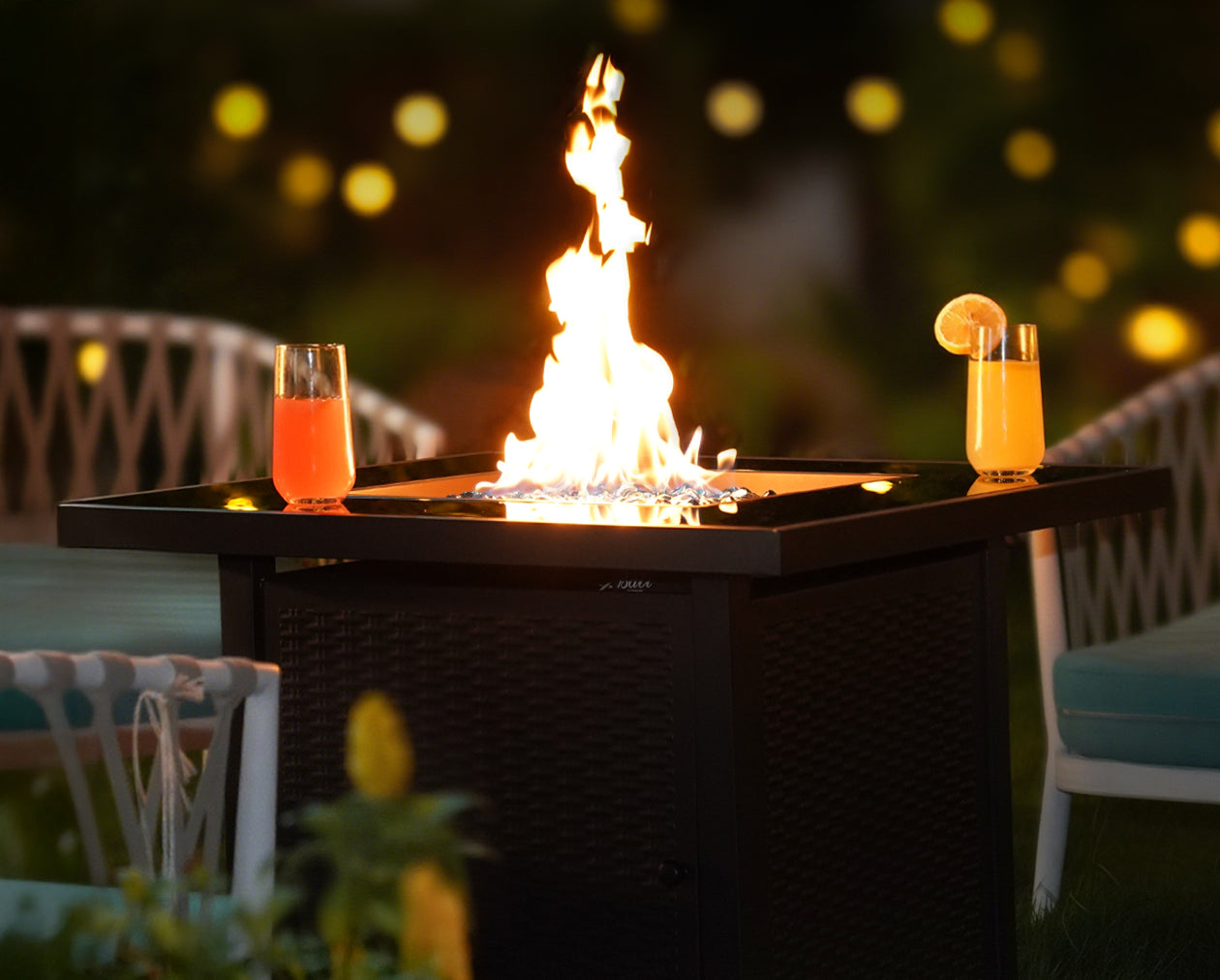


Propane fire pits look great on a deck. They produce no sparks, leave no ash, and shut off instantly. But a live flame still generates serious heat, and decks are made of combustible materials. That combination raises a fair question: is it actually safe?
The short answer is yes, with the right setup. This guide covers deck material compatibility, clearance rules, weight limits, heat shielding, and the specific steps you need to take before lighting up. Follow them and you can enjoy a fire pit on your deck without damaging the surface or voiding your homeowner's insurance.
Why Deck Safety Is Different from Patio Safety
A concrete patio can handle direct radiant heat with no extra protection. A deck cannot. Three factors make decks riskier:
- Combustible surface: Wood and composite boards can scorch, discolor, or ignite if exposed to sustained high heat. The National Fire Protection Association (NFPA) lists decks among high-risk areas for outdoor fire incidents.
- Elevated structure: Most decks are raised off the ground. Heat radiating downward through gaps between boards can dry out framing lumber underneath, creating a hidden fire hazard.
- Weight concentration: A stone-surround fire table can weigh 150 lb or more. Deck joists need to support that load in a concentrated area, which is different from distributed foot traffic.
None of these problems are dealbreakers. They just mean you need a plan. For the full list of safety codes and setups, see our fire pit on deck safety rules guide.
Deck Material Comparison: What Can Handle a Fire Pit?
Not all deck surfaces respond to heat the same way. The table below compares the four most common materials:

| Deck Material | Fire Resistance | Heat Pad Required? | Scorch Risk | Notes |
|---|---|---|---|---|
| Pressure-Treated Wood | Low | Yes, always | High | Most common deck material. Dries out over time and becomes more flammable with age. Always use a heat-rated pad underneath. |
| Cedar / Redwood | Low to Moderate | Yes, always | High | Natural oils resist rot but not fire. Treat the same as pressure-treated lumber for fire pit placement. |
| Composite (Trex, TimberTech) | Moderate | Yes | Moderate | Won't ignite as easily as wood, but can melt, warp, or discolor under sustained heat. Check manufacturer guidelines; most require a barrier. See our fire pit tables on composite decking guide for brand-specific rules. |
| Concrete / Pavers | High | Optional (recommended) | Low | Non-combustible surface. A pad still helps prevent staining from heat discoloration. Best option for ground-level patios adjacent to a deck. |
The takeaway: if your deck is wood or composite, a fire-rated heat pad is not optional. It is the single most important piece of safety equipment for running a fire pit on a deck.
Clearance Requirements You Cannot Skip
Building codes and manufacturer instructions both specify minimum clearances. The International Residential Code (IRC) and local fire codes set baseline distances, but your fire pit's manual may require more. Always follow whichever number is larger.
Standard minimums for most propane fire pits:
- Overhead clearance: At least 10 feet between the top of the flame and any overhead structure (pergola, awning, umbrella, tree branches).
- Side clearance: At least 3 feet from the edge of the fire pit to any combustible wall, railing, furniture, or planter.
- Below the unit: Minimum 2 inches of air gap between the fire pit base and the deck surface when using a heat shield or pad.
- Propane tank: Keep the tank and hose connections accessible and at least 3 feet from the open flame.
Small decks and balconies have tighter constraints. Our fire pit clearance guide for small patios and balconies walks through how to measure your space and determine whether a fire pit fits safely.
Weight Limits: Can Your Deck Hold a Fire Table?
A lightweight propane fire pit bowl (20–35 lb) is rarely a concern. A full-size rectangular fire table (80–200 lb), on the other hand, concentrates a lot of weight in a small footprint. Add a full 20 lb propane tank and four guests leaning against the table, and you are looking at 400+ lb in a 4-by-2-foot area.
Most residential decks built to code can handle a live load of 40 lb per square foot. A 200 lb fire table on an 8-square-foot base works out to 25 lb per square foot, which is well within limits. But older decks, cantilevered sections, and second-story balconies may not meet current code.
Before placing a heavy fire table, check:
- Joist spacing (12-inch centers are stronger than 16- or 24-inch centers)
- Joist condition (look for rot, splitting, or insect damage from below)
- Ledger board and post connections (these are common failure points on aging decks)
For a detailed breakdown of load ratings and how to calculate them, read our deck weight capacity guide for fire tables.
Step-by-Step: Setting Up a Propane Fire Pit on Your Deck
Follow these steps in order. Skipping any one of them increases your risk of deck damage or a safety incident.

- Check local codes and HOA rules: Some municipalities ban open flames on elevated decks entirely. Others require a permit or specific setups. Call your local fire marshal's office or check the U.S. Consumer Product Safety Commission (CPSC) fire safety resources for federal guidelines. If you rent, review your lease; our fire table and security deposit guide covers what landlords typically require.
- Measure clearances: Map overhead, side, and below-unit distances using the minimums listed above. Mark the placement zone on the deck with painter's tape before buying.
- Install a heat-rated pad or fire mat: Place a UL-listed fire pit pad rated for at least 1,400 °F directly under the planned location. The pad should extend at least 6 inches beyond the fire pit's footprint on all sides.
- Verify deck condition and weight capacity: Inspect joists, posts, and the ledger board from underneath. If anything looks questionable, hire a structural inspector before proceeding.
- Choose a fire pit designed for deck use: Look for a unit with a fully enclosed base (no open bottom), built-in heat shields, and adjustable legs or leveling feet. Propane fire tables with concealed tank compartments keep the fuel source contained and reduce heat transfer to the deck surface. Browse the BALI OUTDOORS propane fire pit collection for deck-friendly options.
- Connect the propane tank properly: Hand-tighten the regulator fitting (never use a wrench). Apply a soapy water solution to all connections and watch for bubbles to confirm there are no leaks. Keep the tank upright at all times.
- Test on a calm day: Light the fire pit at low flame for 15–20 minutes. Check the deck surface temperature underneath using an infrared thermometer. If it exceeds 120 °F at the deck board, add a thicker pad or raise the unit higher.
- Add a wind guard: A tempered glass wind guard keeps the flame contained, reduces heat scatter, and prevents wind from pushing the flame toward combustible materials. This is especially important on windy decks and balconies.
- Keep a fire extinguisher within reach: A 5 lb ABC-rated dry chemical extinguisher is the minimum. Know how to use it before you need it.
- Never leave the fire pit unattended: Turn off the gas and close the tank valve after every use. Cover the unit with a properly sized fire pit cover to protect it from weather between uses. Covers are available in the BALI OUTDOORS cover collection.
Propane vs. Wood-Burning Fire Pits on Decks
Wood-burning fire pits are a much bigger risk on decks. They throw sparks and embers, produce unpredictable heat levels, and leave hot ash that can blow onto the deck surface. Most deck manufacturers and many local codes prohibit wood-burning fires on elevated decks entirely.
Propane fire pits avoid all of those problems. The flame is contained, heat output is adjustable, and there are no flying embers. That is why propane is the only fuel type most experts recommend for deck use. For a broader comparison of fuel types, check our propane fire pit buying guide.
Ventilation and Carbon Monoxide
Propane burns cleanly, but it still produces carbon monoxide (CO) as a byproduct of combustion. On an open deck, natural air circulation disperses CO safely. The risk increases in enclosed or semi-enclosed spaces: screened porches, covered patios with walls on three sides, or sunrooms.
Rules to follow:
- Never use a propane fire pit in a fully enclosed room or garage.
- If your deck has a roof and more than two walls, treat it as semi-enclosed and ensure at least 25% of the wall area is open for ventilation.
- Position the fire pit as far from walls and corners as clearance rules allow to maximize airflow.
For detailed CO safety guidance in covered outdoor spaces, see our carbon monoxide safety for enclosed patios guide.
Insurance and Liability Considerations
Homeowner's insurance policies vary, but most do not exclude propane fire pits by default. What they do require is that you follow manufacturer instructions and local codes. If a fire starts because you skipped the heat pad or ignored clearance rules, the insurer may deny the claim.
Steps to protect yourself:
- Review your policy: Look for exclusions related to outdoor fire features or deck modifications.
- Notify your insurer: Some companies offer guidance or require notification for fire features. A quick phone call can prevent a coverage dispute later.
- Document your setup: Take photos showing clearances, the heat pad, and the fire pit's manufacturer label. Keep the manual and purchase receipt.
- Follow every rule: Using the fire pit exactly as the manufacturer specifies is your strongest legal defense.
Common Mistakes That Damage Decks
Even experienced homeowners make these errors:
- Placing the fire pit directly on boards: Without a heat pad, radiant heat from the base can scorch wood in under an hour and warp composite boards permanently.
- Using the wrong mat: A generic grill mat or rubber pad is not rated for fire pit temperatures. Only use pads specifically rated for open-flame fire pits (typically 1,200–1,500 °F).
- Ignoring wind: A gust can push the flame sideways toward railings or furniture. A wind guard solves this. So does choosing a sheltered spot on the deck.
- Running at full blast for hours: Extended use at maximum BTU output heats the deck surface more than short sessions. Dial back the flame during long gatherings.
- Storing the propane tank improperly: Never store a propane tank indoors, in a shed, or under the deck. Store it upright in a well-ventilated outdoor area away from heat sources.
Frequently Asked Questions
Can I put a propane fire pit on a wooden deck?
Yes, but only with a fire-rated heat pad underneath, proper clearances on all sides, and a fire pit that has an enclosed base. Never place a fire pit directly on bare wood. Check your fire pit's manual and your local fire code before setting up.
What should I put under a fire pit on a deck?
Use a UL-listed fire pit pad rated for at least 1,200 °F. These pads are typically made of volcanicite fiber or similar non-combustible material. The pad should extend 6 inches beyond the fire pit's edges. Pavers or stone tiles also work as a secondary barrier beneath the pad.
How far should a fire pit be from the house?
The NFPA recommends at least 10 feet from any structure. On a deck attached to your house, this may mean placing the fire pit at the far edge of the deck, away from the exterior wall. Always maintain at least 3 feet of clearance from railings and combustible furniture.
Do I need a permit for a fire pit on my deck?
It depends on your municipality. Some cities require a permit for any outdoor fire feature. Others exempt small propane appliances under a certain BTU threshold (often 100,000 BTU). Call your local fire department or building department to find out what applies in your area.
Is it safe to use a fire pit on a second-story balcony?
Many building codes restrict or prohibit open flames on upper-floor balconies, particularly in multi-family buildings. Even where it is allowed, you need to confirm the balcony's weight capacity and ensure adequate overhead clearance. Compact, low-BTU propane fire pits (under 40,000 BTU) with a wind guard are the safest option for elevated spaces.
Can a propane fire pit be used under a covered patio or pergola?
Only if the overhead structure is at least 10 feet above the flame and the space is well-ventilated. Solid roofs with poor airflow can trap heat and CO. A pergola with open slats is generally safer than a fully covered porch. When in doubt, check with your local fire authority.
Setting Up for the Long Term
A propane fire pit on a deck is a legitimate year-round upgrade, not a risky workaround. The key is treating the setup as an installation, not just dropping a unit on the boards and lighting it. Measure your clearances, install a proper heat pad, verify your deck can handle the weight, and follow the manufacturer's instructions to the letter.
Once those boxes are checked, you get the benefit of a fire feature right where you spend your evenings. No sparks, no ash cleanup, no trips across the yard. Just a controlled flame that turns on when you want it and off when you are done.