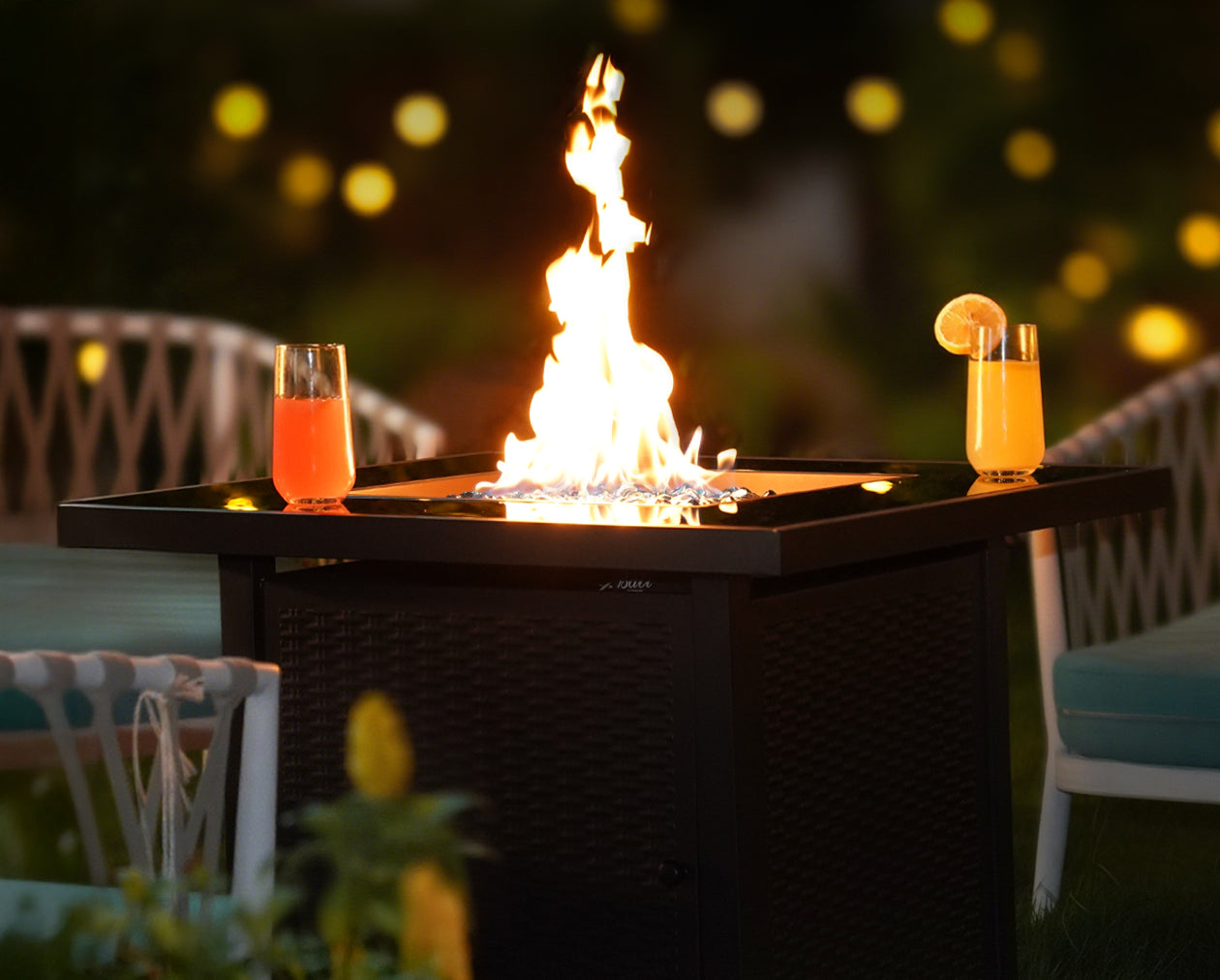


A gas fire pit table can last for years with very little work—if you set it up right and do basic upkeep. Get the setup wrong, and you'll deal with the same problems over and over. Skip the simple care tasks, and small issues turn into big repairs.
First, Safe Setup in 3 Steps
Most problems later can be avoided by setting it up correctly. These three steps take about half an hour and make sure that everything is safe.
Step 1: Pick the Right Spot
Place your gas fire pit table on a level, fireproof surface, such as concrete, pavers, or composite deck planks. Allow at least 10-15 feet of open space around it, away from your house's walls, fences, tree branches, and porch roof.
Consider which way the wind normally blows. Place the table so that the wind does not force flames toward where people are sitting or make it difficult to regulate the fire.
Check with your local fire department before installing. Some localities have particular rules regarding the placement of fire tables.
Step 2: Hook Up the Gas Line
For propane tanks:
- Make sure the tank valve is closed all the way
- Screw the regulator onto the tank valve by hand (turn it clockwise)
- Give it a gentle quarter-turn with a wrench—don't tighten too much or you'll break the seal
For natural gas fire table hookups: Hire a professional gas technician. Natural gas connections need a pro and must follow local building codes.
Step 3: Do the Bubble Test
This is the most important safety check. Put half dish soap and half water in a spray bottle. Open the valve on the propane tank and spray the gas line connections, the regulator, the tank, and the hose all the way along the hose.
And then look for bubbles. Even tiny bubbles mean there's a gas leak.
If you do see bubbles:
- Turn off the tank right away
- Tighten the connection
- Test again with fresh soapy water
- If bubbles keep showing up, replace that part before you use the fire table
Never use your fire table if you find a gas leak.
Once your fire table is set up right, keeping it working well takes just a few minutes each week.

5-Minute Weekly Care
Things like dust, pollen, rain, and bugs are always working against your fire table. This quick routine stops small problems from becoming big ones.
Wipe Everything Down
Use a wet cloth to wipe off dust, pollen, and dirt from the table top and sides. For sticky spots from spilled drinks or food, use a little dish soap and water. Doing this regularly stops stains from setting in permanently.
Clean the Burner
Wait until everything is completely cool. Look at the burner for leaves, spider webs, or dust. Use a soft brush (an old toothbrush works great) or canned air to gently clear out the burner holes. Clogged holes cause weak flames and lighting problems.
Check the Gas Hose
Look at the whole hose for cracks, kinks, or damage. Pay extra attention where it connects and where it bends. Replace a damaged hose right away.
Use a Cover
A good fire table cover protects against rain (which makes metal parts rust) and sun (which fades and cracks the finish). This one simple thing makes your fire table last much longer.
Even if you do all this care, you'll sometimes run into small problems. Here's how to fix the most common ones. For more details, see our guide on maintaining powder-coated surfaces.
How to Fix 3 Common Problems
Three problems cause about 90% of fire table issues. All of them are easy to fix in less than 10 minutes.
Problem 1: Won't Light
Check the easy stuff first:
- Is the propane tank empty? Pick it up—does it feel light?
- Is the tank valve turned all the way on?
Check the igniter: Push the ignition button. You should hear a clicking sound. No clicking means the battery is dead. Replace it—most fire tables use one AA or AAA battery.
Reset the safety valve (this fixes it 80% of the time):
Propane tanks have a safety feature that cuts off gas flow if something seems wrong. It often gets triggered when you open the tank valve too fast.
Here's how to reset it: Browse our fire table covers to find the perfect fit for your outdoor space.
- Turn your fire table's knob to OFF
- Close the propane tank valve all the way
- Unscrew the regulator from the tank
- Wait 5 full minutes
- Screw the regulator back on
- Open the tank valve really slowly—just a tiny turn at first, then slowly open it all the way
- Try lighting it normally
If this doesn't work after trying twice, you probably need replacement fire table parts—usually a bad regulator or clogged burner.

Problem 2: Weak or Flickering Flame
- Try the safety valve reset first. The steps above often fix weak flames too.
- Check how much gas is left. When a tank is almost empty, the flame gets weaker and weaker.
- Clean the burner holes. Clogged holes make uneven, flickering flames. Use canned air or a soft brush to clear out any dirt.
Problem 3: Whistling or Hissing Noise
A quiet, low hum is normal. A loud whistle means you need to check things right away.
Check for gas leaks first:
- Turn off the fire table and close the tank valve
- Do the soapy water bubble test on all connections
If you see bubbles forming, don't use the fire table. Tighten the connections or replace broken parts. For more details, see our guide on winterizing your fire table.
If there's no leak: The whistling might be from too much gas pressure. Turn the flame control down a bit. If the noise stops, that was the problem. Some gas fire table kit setups are more sensitive to pressure than others.
If you live somewhere with cold winters, there's one more thing you need to do: get your fire table ready for winter each fall.
Propane Gas vs. Wood: Which One Makes Sense?
Quick Comparison
| Gas | Wood | |
| Time to Start | 30 seconds | 15-20 minutes |
| Cleanup | None | 10-15 minutes |
| Smoke | None | A lot |
| Cost Per Year | $50-100 | $200-400 |
Why Most People Pick Gas
With a gas fire table, you turn a knob and you have fire in 30 seconds. When you're done, turn it off. No ash to clean up the next day, no leftover wood to throw away, no smoke blowing in your face.
Wood fires take planning. You need a place to store dry wood, you need to prepare kindling, and it takes 15-20 minutes to get a fire going. Smoke is always there and seems to follow people around. Many cities and towns now limit or ban wood fires because of air quality rules.
A regular 20-pound propane tank costs $15-20 to refill and lasts 10-15 hours. For most people, that's a whole season for less than $100. Buying firewood costs $200-400 per year in most places, and you need space to store it and keep it dry.
When Wood Is Better
Wood fires have their charm. If you like building fires from scratch, enjoy the crackling sound and smoky smell, and can get free firewood easily, a wood fire pit might be better for you.
But if you want a fire you can start any time—like coming home from work and relaxing in minutes—gas is easier.
Getting Your Fire Table Ready for Winter
Freezing weather can damage fire tables in three ways: water trapped inside can crack gas lines when it freezes, snow and ice cause rust, and bugs can build nests in the burner when you're not using it.
Getting it ready for winter takes about 15 minutes and stops these problems. Do this before it freezes hard—usually in late fall.
Winter Prep Checklist
- Clean it completely - Get rid of all dirt and water. Make sure the burner area is totally dry.
- Unhook the gas - Close the propane tank valve all the way, then unscrew the regulator hose.
- Store the propane tank outside - Never store tanks inside your house, garage, or shed. Keep the tank standing up in an outdoor spot with good air flow, away from direct sun and anything that makes sparks. This is a safety rule and the law in most places.
- Protect the gas line - Put a small plastic bag over the end of the hose where you disconnected it and wrap a rubber band around it. This keeps water and bugs out.
- Put on a weatherproof cover - Use a weather-resistant cover made for fire tables. Make sure it's tied down so winter wind won't blow it off.
These steps protect your fire table through the coldest months. When spring comes, just do everything backwards—your fire table will work just like it did last year.

Keep Your Fire Table Working Great
Setting it up right and doing simple care keeps your gas fire pit table working well for years. Most problems either won't happen if you do basic care, or are easy to fix in less than 10 minutes using the steps above.
Whether you're putting in a new gas fire table kit or taking care of one you already have, these tips protect what you paid for and make sure it works great season after season.
For propane gas fire tables built to last outdoors with very little care needed, check out the Bali Outdoors® collection. We specialize in propane fire tables and also carry replacement parts andcovers to keep your propane fire table in top shape.