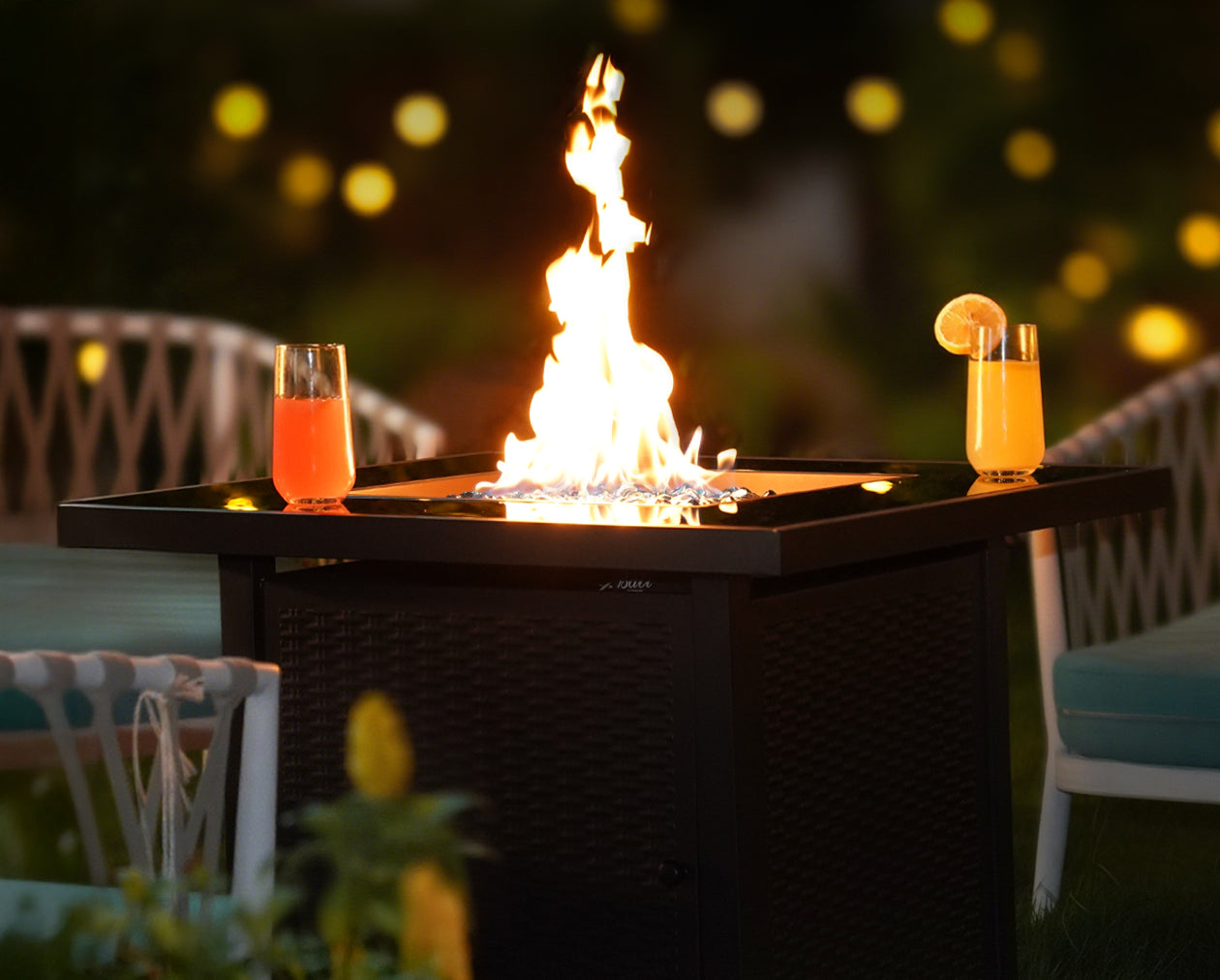


Propane is one of the safest fuels for outdoor heating when handled correctly. It has been used in gas grills, patio heaters, and fire pit tables for decades with a strong safety record. But propane is still a pressurized, flammable gas, and mishandling it causes roughly 1,000 home fires per year in the United States according to the National Fire Protection Association (NFPA). Most of those incidents trace back to a small number of avoidable mistakes: bad connections, damaged hoses, improper storage, and ignoring the smell of a leak.
This guide covers what every propane fire pit and patio heater owner should know about safe handling, storage, leak detection, and what to do in an emergency.
How Propane Works (Quick Basics)
Propane (C₃H₈) is stored as a liquid under pressure in steel or aluminum cylinders. When you open the valve, propane flows through a regulator that drops the pressure, converting it to gas. That gas travels through a hose to the burner, where it mixes with air and ignites.
Key properties that affect safety:
- Heavier than air. Propane gas sinks and pools in low-lying areas: basements, enclosed decks, storage boxes, and ground-level depressions. This is why propane should never be used in enclosed indoor spaces.
- Flammable range: 2.1% to 9.5% concentration in air. Below 2.1%, there is not enough gas to ignite. Above 9.5%, there is too much gas and not enough oxygen. Leaks are dangerous in the 2–10% concentration zone.
- Odorized for detection. Pure propane is odorless. Manufacturers add ethyl mercaptan, which produces a strong rotten-egg or sulfur smell. If you smell it near your fire pit or propane tank, you have a leak.
- Boiling point: -44°F. Propane works in virtually all outdoor temperatures. It does not freeze in residential storage conditions.
Propane Tank Safety
Standard Tank Sizes for Fire Pits
Most portable propane fire pit tables use a standard 20 lb (4.7 gallon) cylinder, the same size used for gas grills. Some larger fire tables can also connect to 30 lb or 40 lb tanks. Our propane tank sizing guide covers which size fits your fire pit and how long each lasts.

Inspection Checklist
Before connecting any propane tank to a fire pit or patio heater, check the following:
- Manufacture and requalification dates: Propane tanks are stamped with a manufacture date. Standard DOT cylinders must be requalified 12 years after manufacture, then every 5 years after that. Expired tanks should be exchanged, not refilled.
- Visible damage: Look for dents, bulges, rust, or corrosion on the tank body. Minor surface rust is cosmetic, but deep pitting or structural dents mean the tank should be replaced.
- Valve condition: The valve handwheel should turn freely. The safety relief valve (the small brass fitting on the valve body) should be intact and not leaking. If the valve is damaged or stuck, do not force it. Have it inspected by a propane dealer.
- Hose and regulator: Check the rubber hose for cracks, dry rot, cuts, or signs of animal chewing (squirrels and mice are known to chew propane hoses). Replace any damaged hose before use.
Proper Storage
- Always store upright. Propane tanks are designed to function vertically. Storing them on their side can allow liquid propane to reach the safety valve, potentially causing a release.
- Always store outdoors. Never bring a propane tank inside your house, garage, or any enclosed space. Propane gas is heavier than air and will accumulate in low areas if a leak occurs.
- Keep away from heat sources. Store tanks at least 10 feet from any fire pit, grill, heater, or open flame. Avoid direct sun exposure in temperatures above 120°F, which can increase tank pressure.
- Transport in ventilated space. When driving with a propane tank, place it upright in the truck bed or a well-ventilated area of your vehicle. Do not leave a propane tank in a closed car trunk on a hot day.
- Cap the valve when not in use. The plastic safety cap protects the valve from damage and dirt. Replace it after every disconnection.
Connecting Propane to Your Fire Pit
A secure connection prevents leaks at the most common failure point: the tank-to-regulator joint.

- Make sure the fire pit is off. All control knobs should be in the OFF position before connecting the tank.
- Attach the regulator to the tank valve. Hand-tighten the regulator coupling onto the tank valve. Propane fittings use a left-hand (reverse) thread, so turn counterclockwise to tighten. Do not use tools to overtighten; hand-tight plus a quarter turn is enough.
- Check for leaks. Apply a soapy water solution (dish soap mixed with water) to the connection point. Open the tank valve slowly. If you see bubbles forming at the connection, you have a leak. Close the valve, disconnect, and retry the connection. Persistent bubbles indicate a damaged fitting.
- Open the tank valve slowly. Turn the handwheel counterclockwise to open. Open it fully (all the way), then close it one-quarter turn back. This prevents the valve from seizing in the fully open position.
- Light the fire pit according to the manufacturer's instructions. Most BALI OUTDOORS fire pit tables use a pulse ignition system. Hold the igniter button while turning the control knob to the PILOT or LIGHT position. If the fire pit does not light within 5 seconds, turn the control off, wait 30 seconds for gas to dissipate, and try again.
Leak Detection and Response
Propane leaks are the primary safety risk. Knowing how to detect and respond to a leak is non-negotiable.

Signs of a Propane Leak
- Smell: The rotten-egg or sulfur odor added to propane is detectable at concentrations well below the flammable range. If you smell it, take it seriously.
- Hissing sound: A leak at a connection point or along the hose may produce an audible hiss.
- Dead vegetation: A slow, persistent leak near ground level can kill grass or plants in the area.
- Frost on connections: Propane absorbs heat as it expands from liquid to gas. A leak at a fitting may produce visible frost or ice on the connection point, even in warm weather.
What to Do If You Smell Propane
- Do not ignite anything. No lighters, matches, or spark-producing devices. Do not operate light switches or electronic devices in the immediate area.
- Shut off the tank valve. If you can safely reach the propane tank, turn the valve clockwise to close it.
- Move away from the area. Walk upwind and away from the suspected leak. Remember that propane is heavier than air and pools in low spots.
- Call 911 or your fire department from a safe distance. Do not use your phone near the suspected leak. Move at least 50 feet away before calling.
- Do not return until cleared. Let emergency responders determine that the area is safe before going back.
Safe Operation of Propane Fire Pits and Patio Heaters
Once your propane fire pit or heater is connected and leak-free, these operating practices keep it safe throughout the season.
- Use outdoors only. Propane fire pits and patio heaters are designed for open-air use. Using them in enclosed spaces, garages, or tents creates carbon monoxide and explosion risks. Even a partially enclosed patio needs adequate airflow. For more on this topic, read our carbon monoxide and outdoor fire safety guide.
- Never leave it unattended. Turn off the fire pit or heater when you go inside, even briefly. Wind shifts, tipped furniture, or curious children and pets can create hazards in seconds.
- Maintain clearance. Keep the fire pit at least 10 feet from structures, combustible materials, and other propane tanks. Our fire pit distance from house guide covers the full clearance requirements.
- Do not move while lit. Never move a fire pit or patio heater while the burner is on. The hose can disconnect, the tank can tip, and you risk burns from the hot surfaces.
- Shut down properly. Turn the control knob to OFF first, then close the tank valve. This allows residual gas in the hose to burn off. After the flame goes out, leave the control in the OFF position.
- Protect from weather. Use a fire pit cover when not in use. Rain and moisture can corrode burner ports and connections, leading to poor performance or leaks at the next use.
Propane Safety with Children and Pets
Children and pets do not understand the risks of pressurized gas and open flames. Keep these rules in place whenever a propane fire feature is in use:
- Establish a 3-foot "no-go zone" around the fire pit or heater. Mark it with chairs or planters so it is visually clear to children.
- Teach children that propane tanks and hoses are not toys. The valve handwheel especially attracts curious hands.
- Keep propane tanks and connection points out of reach. The enclosed base of a propane fire pit table does this naturally. Stand-alone tanks next to heaters do not.
- Supervise actively. Adult supervision is required by fire code, but it is also the most effective safety measure.
For a detailed guide on child and pet safety around fire features, see our fire pit safety with kids and pets article.
End-of-Season Storage
When the fire pit season ends, proper shutdown and storage protect your equipment and prevent problems next spring.
- Disconnect the tank. Close the tank valve, turn the fire pit control to OFF, then disconnect the regulator. Cap the tank valve.
- Clean the burner. Brush out the burner ports with a soft-bristle brush to remove any debris, insect nests, or spider webs. Blocked ports cause uneven flames and can trap gas.
- Store the tank outdoors. Even during winter, the propane tank stays outside. An unheated shed or covered outdoor area works. Never store in a garage or basement.
- Cover the fire pit. A fitted cover keeps moisture, debris, and pests out of the burner area during storage.
- Inspect hose and regulator. Check for wear and replace if needed. Hoses and regulators have a typical lifespan of 5–10 years depending on use and climate exposure.
Frequently Asked Questions
How do I know if my propane tank is expired?
Check the collar stamp on the tank. You will see a date in a format like "04-14" (April 2014). Standard DOT cylinders are good for 12 years from the manufacture date. After that, they need requalification (a visual inspection and re-stamp) to be refilled. Most propane exchange programs (Blue Rhino, AmeriGas) only accept tanks within their valid date range. If your tank is expired, exchange it rather than trying to refill it.
Can I store a propane tank in my garage?
No. The NFPA 58 Liquefied Petroleum Gas Code prohibits storing propane cylinders in enclosed spaces including garages, basements, and sheds without adequate ventilation. A slow leak in an enclosed space allows gas to accumulate to dangerous levels. Store tanks outdoors, upright, and protected from direct sun.
Is it safe to use a propane fire pit on a deck?
Yes, with proper protection. Use a heat-resistant mat beneath the fire pit, maintain clearance from railings and walls, and follow the manufacturer's deck placement guidelines. Our fire pit on wood deck safety guide covers the full setup.
Can propane explode?
A propane tank rupture (called a BLEVE: boiling liquid expanding vapor explosion) is extremely rare in residential settings. It requires the tank to be exposed to sustained external fire that heats the liquid propane beyond the capacity of the safety relief valve. Normal fire pit and heater use does not create these conditions. The safety relief valve on every DOT-certified tank is designed to vent gas before pressure reaches dangerous levels.
What if I cannot smell propane due to a medical condition?
Some people cannot detect the mercaptan odorant in propane due to age, medical conditions, or medications. If this applies to you, install a propane gas detector near your fire pit area. Battery-powered detectors are available for $30–$60 and provide an audible alarm when propane is detected in the air.