

A fire pit is one of the best things you can add to a backyard. But if kids or pets are part of your household, it also becomes the most dangerous thing in your outdoor space the moment you light it. Burns from fire pits send thousands of people to emergency rooms every year, and children under 5 account for a disproportionate share of those injuries.
The U.S. Consumer Product Safety Commission (CPSC) has flagged portable fire pits as a growing source of burn injuries in children. Most of these incidents are contact burns: a child touches the rim, the glass fire media, or the hot metal base while the fire pit is in use or still cooling down. Dogs suffer similar injuries, often from investigating the interesting smells coming from the fire pit area.
None of this means you cannot use a fire pit with kids and pets around. It means you need a plan.
The 3-Foot Safety Zone
The single most effective safety measure is a physical boundary around the fire pit. The NFPA and pediatric burn centers consistently recommend a minimum 3-foot clear zone around any fire feature where children and pets are not allowed.

Three feet is not arbitrary. It accounts for the reach of a toddler who stumbles forward, the lunge distance of a dog investigating a new smell, and the heat radius that can cause burns without direct contact.
How to Mark the Zone
- Physical barriers: Arrange chairs, planters, or decorative stones in a circle 3 feet from the fire pit perimeter. This creates a visible boundary that children can understand and pets cannot easily cross.
- Fire pit safety screen: A metal mesh screen over the fire pit opening prevents hands and paws from reaching into the fire. This matters most for wood-burning fire pits where the flame is open and accessible.
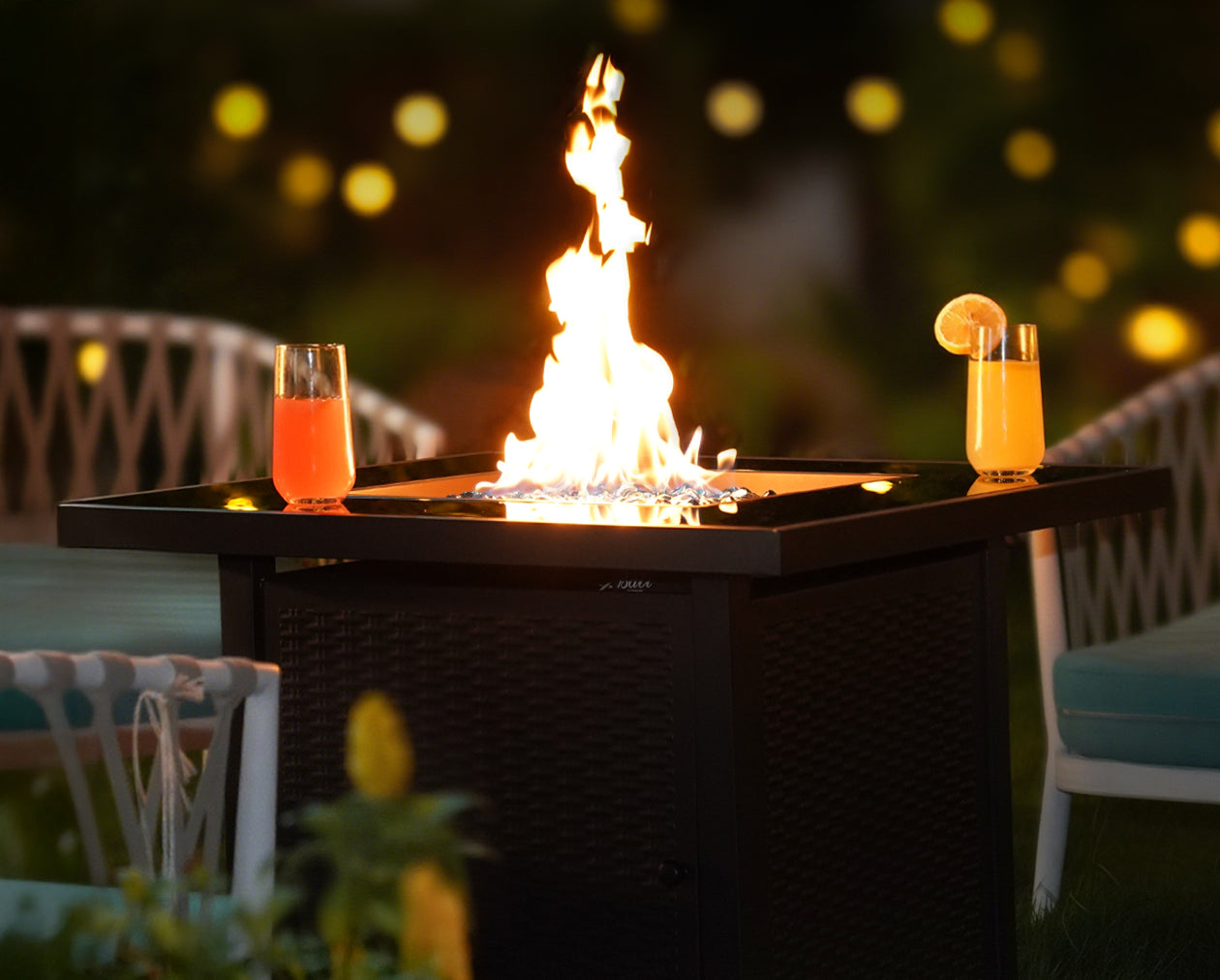
- Raised fire pit table design: Propane fire pit tables place the flame at table height (roughly 24–28 inches), well above the reach of most toddlers and dogs. The flame is also contained within a burner pan, making accidental contact with the fire itself much harder. Browse propane fire pit tables to see how enclosed designs reduce access to the flame.
Child Safety: Age-Specific Risks
Toddlers (1–3 Years)
Toddlers are the highest-risk group. They are mobile, curious, and have no concept of "hot." The most common injury pattern is a toddler walking or crawling to the fire pit and placing a hand on the glass fire media, the metal rim, or the base. Fire glass beads retain heat for 30–45 minutes after the flame is turned off and can cause second-degree burns on contact.
Key precautions:
- Never leave a toddler unattended within sight of a fire pit, even when the fire is off and the pit is cooling down.
- Use a physical barrier they cannot climb over. Low garden fencing or a ring of heavy planters works better than chairs, which toddlers can push aside.
- Consider timing your fire pit use for after bedtime when toddlers are inside.
Preschool and Elementary Age (4–10 Years)
Children in this age range can understand rules but do not always follow them, especially in a group. Running and playing near a fire pit is the primary risk. A child running past the fire pit can trip and fall onto it, or bump into the fire pit table and knock hot fire glass or embers onto the ground.
Key precautions:
- Set clear, simple rules: "Do not run near the fire pit. Do not touch the fire pit. Tell an adult if something falls near the fire."
- Designate a play area away from the fire pit zone. If kids are playing in the yard, the fire pit area should be off-limits for active play.
- Teach the "stop, drop, and roll" concept. Children old enough to understand should know what to do if clothing catches fire.
Preteens and Teenagers (11+)
Older kids understand fire safety in principle but tend to push boundaries. Feeding the fire, roasting marshmallows unsupervised, and experimenting with accelerants (lighter fluid, aerosol cans) are the risks at this age.
Key precautions:
- Supervised marshmallow roasting is fine with proper tools (long roasting forks, not sticks). Our marshmallow roasting guide covers safe technique for fire tables.
- Make it clear that adding any fuel, accelerant, or material to the fire is an adult-only task.
- Include teens in the shutdown routine so they learn proper fire pit operation for when they are old enough to use it independently.
Pet Safety Around Fire Pits
Dogs
Dogs are drawn to fire pits by warmth, food smells, and the activity of people gathering around them. The most common dog injuries are:

- Paw pad burns: Dogs walk on hot surfaces around the fire pit, including the fire pit base, metal stands, and ground that has been heated by radiant energy.
- Nose and face burns: Dogs investigate the fire pit with their nose first. Contact with the hot rim or a lick at dripping food near the fire can cause mouth and nose burns.
- Tail burns: Large dogs walking past a fire pit can sweep their tail through the flame.
Key precautions:
- Keep dogs on a leash or behind a barrier during fire pit use. Even well-trained dogs can be startled by a popping ember or drawn in by the smell of food.
- Do not feed dogs near the fire pit. Dropping food near the fire creates a reason for the dog to approach the hot zone.
- Monitor the ground temperature. On a paved patio, the area near the fire pit can get hot enough to burn paw pads. Test with the back of your hand: if it is too hot for your skin after 5 seconds, it is too hot for paws.
Cats
Cats are less commonly injured by fire pits because they tend to avoid the noise and activity. However, outdoor or indoor-outdoor cats may investigate a cooling fire pit after guests leave. Fire glass beads and metal surfaces retain heat long after the flame goes out. If your cat has outdoor access, block access to the fire pit area until it has fully cooled, which can take 45 minutes or more after a gas fire pit is turned off.
Choosing a Safer Fire Pit Design
Some fire pit designs are inherently safer around children and pets than others.

| Feature | Why It Matters for Child/Pet Safety | Fire Pit Types with This Feature |
|---|---|---|
| Enclosed base | No exposed hot surfaces at ground level. Toddlers and dogs cannot crawl under or touch the heat source. | Propane fire pit tables |
| Table-height flame | Flame is 24–28 inches off the ground, above toddler and dog reach. | Fire pit tables (rectangular, round, square) |
| Wind guard | Glass barrier around the flame prevents hands and paws from reaching the fire. Also prevents fire media from being knocked out. | Fire pit tables with wind guard accessory |
| Instant shutoff | Turn the fire off immediately if a child or pet enters the safety zone. No waiting for a wood fire to die down. | All propane and natural gas fire pits |
| Cool-touch base | Insulated base stays cool enough to touch, reducing contact burn risk. | Some propane fire pit tables with double-wall base construction |
The safest combination for families with young children or active dogs is a propane fire pit table with an enclosed base and a wind guard. The flame is elevated, contained, and can be shut off in one second.
Emergency Response: Burns
Despite precautions, accidents happen. Knowing the correct first aid for burns can prevent a minor injury from becoming a serious one.
For Minor Burns (Redness, Small Blisters)
- Cool the burn under cool (not cold) running water for 10–20 minutes. Do not use ice. The American Red Cross recommends cool water only.
- Do not apply butter, toothpaste, or home remedies. These can trap heat and increase damage.
- Cover with a sterile, non-stick bandage after cooling.
- Over-the-counter pain relief (ibuprofen or acetaminophen) for discomfort.
For Serious Burns (Deep blistering, white or charred skin, burns larger than 3 inches)
- Call 911 immediately.
- Do not remove burned clothing stuck to the skin.
- Cover the burn loosely with a clean, dry cloth or sterile bandage.
- Keep the person warm and calm while waiting for emergency services.
For Pet Burns
- Cool the burned area with cool running water for 10 minutes.
- Do not apply any ointments or home remedies.
- Contact your veterinarian or an emergency animal hospital. Burns on paw pads especially need professional assessment because they affect the dog's ability to walk.
Fire Pit Rules for Family Gatherings
When hosting a gathering with multiple families, the risk multiplies because supervision gets diluted. Establish these ground rules at the start of the evening:
- Designate a fire pit supervisor. One adult is responsible for the fire pit at all times. They do not leave the fire pit area. Rotate the role if needed, but there is always someone in charge.
- Announce the safety zone. Point out the 3-foot boundary to all parents and guests when they arrive. Make it clear that children are not to enter the zone without an adult.
- Keep the fire pit area clear of toys and games. Balls, frisbees, and other toys that roll or bounce near the fire pit create reasons for children to enter the safety zone.
- Set a shutdown time. Decide when the fire pit goes off and stick to it. As the evening goes on and adults relax, supervision becomes less reliable. Turn off the fire pit before that happens.
- Keep a first aid kit accessible. A basic burn kit (sterile gauze, cool water access, over-the-counter pain relief) should be within reach of the fire pit area.
Frequently Asked Questions
At what age can kids sit near a fire pit?
There is no universal age cutoff. A child who can follow instructions and understands "do not touch" can sit near a fire pit with direct adult supervision. For most children, that starts around age 5–6. Younger children should be behind a physical barrier, not just told to stay back. Even at ages 5+, adult supervision is required every time the fire pit is in use.
Are gas fire pits safer than wood-burning for families?
Yes. Gas fire pits have instant shutoff, no sparks or flying embers, no smoke that irritates children's lungs, and fire pit tables place the flame above child and pet height. They are the recommended fire pit type for families with young children. Our propane fire pit buying guide covers the family-friendly features to look for.
Can fire glass burn a child?
Fire glass (tempered glass beads used as fire media in gas fire pits) does not burn or melt, but it absorbs and retains heat from the flame. While the fire pit is running, fire glass can reach temperatures above 400°F. After the fire pit is turned off, fire glass stays hot for 30–45 minutes. Children should never touch fire glass at any time during or after fire pit use.
Should I get a fire pit screen or a wind guard?
For wood-burning fire pits, a spark screen is essential. It keeps embers contained and prevents small hands from reaching into the fire. For gas fire pit tables, a wind guard serves a similar purpose: it creates a glass barrier around the flame that blocks wind, prevents contact, and keeps fire glass in the burner pan. Both are worthwhile investments for family safety.
My dog got burned on a fire pit. What should I do?
Cool the burn with running water for 10 minutes. Do not apply any creams or ointments. Contact your veterinarian as soon as possible. Paw pad burns can become infected and are painful for dogs to walk on. Even if the burn looks minor, a vet check is recommended because the severity of a burn is not always visible on the surface immediately.