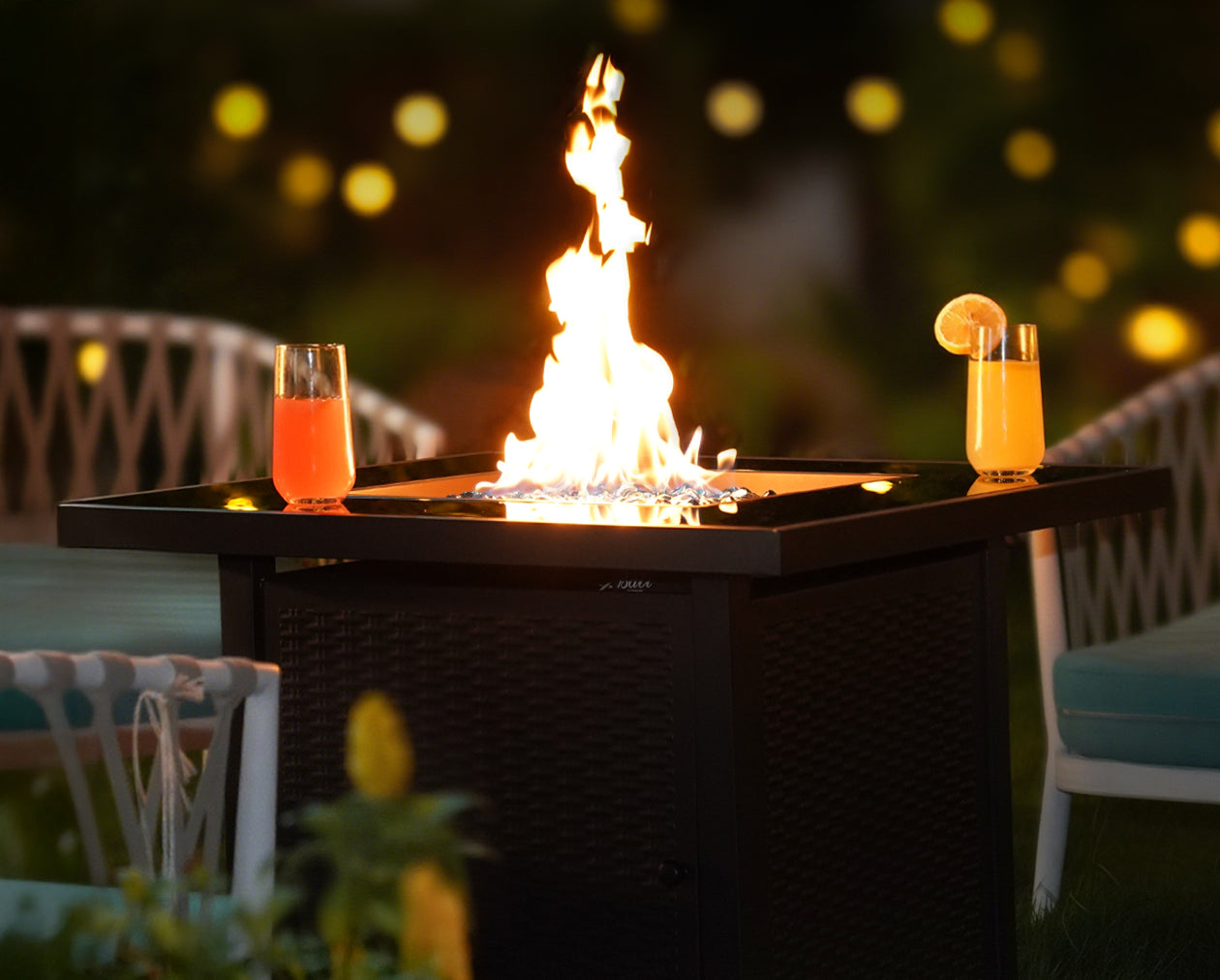


The sun dips below the fence line, the air gets that familiar cool edge, and someone walks out holding a bag of marshmallows. But tonight there's no campfire. There's a propane fire table burning steady and clean on your patio. Can you roast marshmallows on it, or is that strictly a campsite move?
Short answer: Your patio works fine. Here's the full picture.
The Short Answer: Yes, With One Important Rule
You can roast marshmallows on a propane fire table. The flame is real, it's hot, and plenty of backyard hosts do this every weekend without issue.
One rule cannot be ignored: the marshmallow must never fall into the burner. That single condition is what separates a great evening from a clogged burner that knocks your fire table out of service.
Hold your marshmallow above the flame on a long stick and keep it clear of the fire glass or lava rock media.
Why Propane Flames Are Safe for Food
A common misconception is that food roasted over a propane flame will taste like gas or pick up harmful chemicals. When propane combusts fully, the only byproducts are carbon dioxide and water vapor. No sulfur. No tar. No creosote. Commercial kitchens, outdoor grills, and portable camp stoves have relied on propane for decades for exactly this reason.
Propane vs. Wood Fire: Which Is Actually Cleaner?
Most people assume an open wood fire is the "natural" choice for roasting. From a food-safety standpoint, propane wins.
| Factor | Propane Fire Table | Wood Campfire |
| Combustion byproducts | CO₂ + water vapor only | Smoke, ash, particulates |
| Flavor transfer to food | None under normal use | Smoky residue possible |
| Flame consistency | Adjustable, steady | Variable, wind-dependent |
| Chemical contamination risk | Very low | Higher (depends on wood type) |
Before any roasting session, confirm your fire table is producing a steady, clean flame with a blue base and orange tips. A heavily yellow or sputtering burn can signal a gas mixture or pressure issue worth resolving before you start.

The Real Risk: Sugar Residue in Burner Ports
The flame is not the problem. The burner is.
Propane fire table burners have small, precision-drilled ports (tiny holes or slots through which gas flows and ignites). They're engineered for specific, even gas distribution. When a marshmallow falls onto the burner deck or into the fire media, the sugar melts on contact, drips down, and caramelizes as it cools. Once it hardens, that sticky residue can partially or fully block one or more burner ports.
The signs are hard to miss: For more details, see our guide on fire pit cooking recipes and safety.
- Uneven flame height across the burner surface
- Low or dead spots that won't light
- A hissing or popping sound during operation
- One section of the burner that consistently underperforms
Sugar residue isn't corrosive, but it behaves differently from dust or debris. Dust blows out. Sugar melts, flows into the port, then re-hardens as a solid plug once the burner cools. The more heat cycles it goes through, the more it bonds to the metal. A port that's 50% blocked won't throw an error — it'll just quietly underperform until the unevenness becomes too obvious to ignore. Because burner ports are small and precise, even a thin layer of blockage disrupts gas flow. This is the one real risk in the marshmallow-roasting equation, and it's entirely avoidable.
Smart Habits for a Mess-Free Roasting Experience
Quick-Reference Roasting Setup
Before getting into the details, here's the short version at a glance:
| What | Recommendation |
| Stick length | 30–36 inches minimum |
| Height above flame | 4–6 inches |
| Marshmallows per stick | One at a time |
| Best time to roast | Early evening |
| Wind condition | Use wind guard if breezy |
Go with a telescoping stainless steel roasting stick, 30 to 36 inches minimum. The extra length lets you hold the marshmallow above the flame without hovering close to the fire media. Stainless steel versions are durable, heat-resistant, and easy to wipe down. Avoid thin wire coat hangers. They offer no control and poor heat resistance.
2. Find the Sweet Spot Above the Flame
Hold the marshmallow 4 to 6 inches above the tip of the flame. At that height, you're in the radiant heat zone — enough heat for slow, even browning without direct flame contact. A charred shell with a cold center means you're too close; pale and barely warm means you're too far.
3. Keep the Stick Steady and Level
A marshmallow that swings or dips unpredictably is the one that ends up in the burner. Use both hands if needed, and keep the angle consistent. If wind is causing the flame to dart sideways, pause and wait for it to settle before continuing.
4. One Marshmallow Per Stick
Stacking two marshmallows doubles the drop risk. Roast one at a time.
5. Roast Early in the Evening
Late-night sessions when the group is relaxed and less focused are when accidents happen. Start the marshmallow round while everyone's still dialed in.
What to Do When a Marshmallow Drops
It happens to everyone eventually.
Step 1: Turn off the burner immediately. Shut the propane valve, let the flame extinguish fully, and allow the unit to cool for at least 15 to 20 minutes before touching anything.
Step 2: Remove and rinse the fire media. Take out your fire glass or lava rocks. Fire glass is non-porous and rinses clean easily. Lava rock is porous and can absorb sugar residue more deeply, so soak it in warm water for 10 to 15 minutes before rinsing if a marshmallow landed directly on it. Let both dry completely before reinstalling — trapped moisture near an active burner is its own problem.
Step 3: Clean the burner surface. A damp cloth with mild dish soap handles most residue. For hardened spots near the ports, a soft-bristle toothbrush gives you the right amount of control without scratching. For more details, see our guide on grilling safety guidelines.
Step 4: Clear blocked ports if needed. A thin wire or straightened paper clip can carefully dislodge hardened sugar from a clogged port. Work with light pressure, as these are small, precise openings.
Step 5: Test before the next use. Light the burner and observe the flame across its full surface. Even, consistent distribution means you're good. A low spot in one area signals residual blockage worth addressing before the next gathering.
Accessories That Keep Your Fire Table Protected
Fire Table Wind Guard
A tempered glass wind guard channels airflow so the flame burns cleanly upward rather than bending sideways in a breeze. This matters more than most people expect: even a light crosswind drops your effective heat at marshmallow height and pushes the flame toward the burner media, which is exactly where you don't want it pointing. Stable flame means better control over roasting heat and a smaller margin for error. The Bali Outdoors® Wind Guard fits the brand's fire table lineup with a tool-free installation.

Fire Pit Table Cover
A fitted cover protects the burner housing, fire media, and internal components from moisture, debris, and insects between uses. After any roasting session, once everything is cooled and cleaned, covering the table keeps the burner ready for the next evening. The Bali Outdoors® Fire Pit Table Cover is sized specifically for their propane fire table models, with weather-resistant material that holds up through every season.
Both extend the working life of your fire table and reduce maintenance time between sessions.
Roast Marshmallows on Your Fire Table
Roasting marshmallows on a propane fire table is a solid backyard move. The flame burns clean, the heat is adjustable, and your patio is probably more comfortable than any campsite you've been to recently. Keep the marshmallow above the flame and off the burner media. That's it.
When a drop happens, respond quickly and clean it properly. A wind guard and a quality cover complete the setup and make every fire table night more reliable.
Explore the full lineup at Bali Outdoors® at www.balioutdoors.com.
Frequently Asked Questions about roasting on propane fire tables
Q: Will marshmallows taste like gas if roasted over a propane fire table?
No. Fully combusted propane produces only carbon dioxide and water vapor. If you notice an off taste, the more likely cause is the marshmallow being held too close to the fire glass or lava rock media.
Q: Can I roast hot dogs or make s'mores on a fire table too?
Yes. Hot dogs on a long stick, held and rotated above the flame, work well. S'mores come together naturally once your marshmallow is done. The same rule applies: nothing drips directly onto the burner.
Q: Does roasting marshmallows void my fire table warranty?
Standard warranties cover manufacturing defects, not user-caused damage. A clogged burner from a food drop falls outside that coverage — it's treated the same way as physical damage from misuse. Check your specific product documentation for the exact terms, and keep your purchase receipt in case a warranty question ever comes up.
Q: How far should the marshmallow be held above the flame?
Start at 4 to 6 inches above the flame tip. Move it higher for slower, more even caramelization or slightly lower for more speed. You're aiming for a gradual golden-brown, not a quick char.