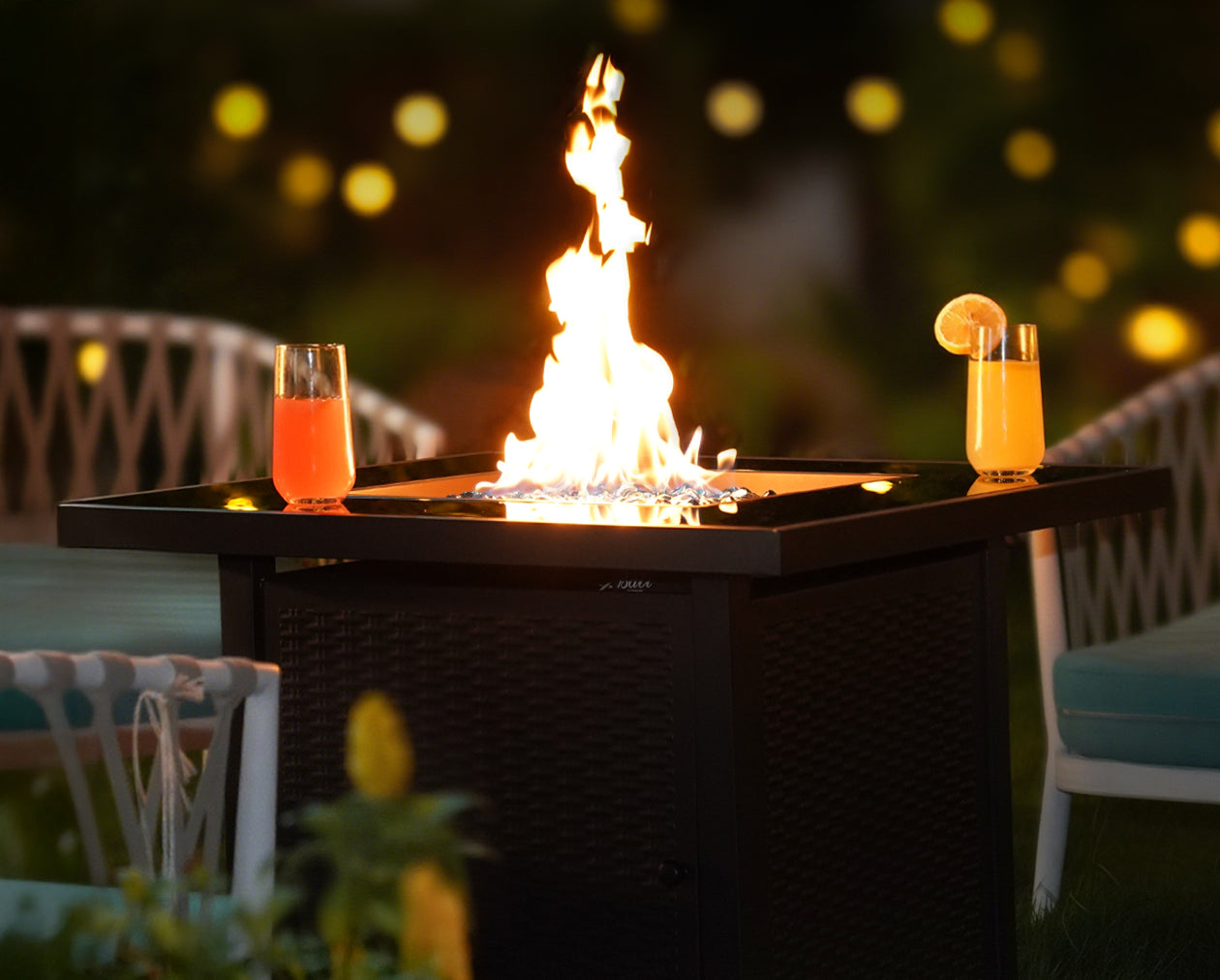


Carbon monoxide (CO) is produced whenever anything burns: wood, propane, natural gas, charcoal, and gasoline all generate CO as a byproduct of combustion. Outdoors, CO usually disperses harmlessly into the atmosphere within seconds. The problem starts when something traps that gas and prevents it from dissipating: a covered patio with poor airflow, a screened-in porch, a tent, or a partially enclosed gazebo.
This guide explains how much CO fire pits and patio heaters actually produce, when outdoor use becomes dangerous, and how to keep the air safe around your fire feature.
What Makes Carbon Monoxide Dangerous
Carbon monoxide is a colorless, odorless gas. Unlike propane (which has a mercaptan odorant added), CO gives no warning. You cannot smell it, see it, or taste it. According to the Centers for Disease Control and Prevention (CDC), CO poisoning kills more than 400 Americans per year and sends over 100,000 to emergency rooms.
CO is dangerous because it binds to hemoglobin in your blood roughly 200 times more effectively than oxygen. Even low concentrations over extended exposure displace oxygen delivery to your brain, heart, and muscles. Symptoms start with headache and dizziness and can progress to confusion, loss of consciousness, and death.
CO Concentration and Symptoms
| CO Level (ppm) | Exposure Time | Typical Symptoms |
|---|---|---|
| 35 ppm | 8 hours | Maximum recommended workplace exposure (OSHA). No symptoms for most people. |
| 100 ppm | 1–2 hours | Mild headache, fatigue. |
| 200 ppm | 1–2 hours | Headache, dizziness, nausea. |
| 400 ppm | 1–2 hours | Life-threatening. Headache within 1 hour, danger to life within 3 hours. |
| 800+ ppm | Minutes | Dizziness, nausea, convulsions. Fatal within 2–3 hours. |
In open air, CO concentration from a residential fire pit stays well below dangerous levels. The risk emerges only when the gas gets trapped.
How Much CO Do Fire Pits Actually Produce?
The amount of CO produced depends on the fuel type, the completeness of combustion, and the airflow around the fire.
Wood-Burning Fire Pits
Wood fires produce the most CO among common fire pit fuels. Incomplete combustion of wood (especially wet or unseasoned wood) generates significant CO because not all the carbon in the wood gets fully oxidized to CO₂. A well-ventilated outdoor wood fire is not a health risk, but a smoldering, oxygen-starved fire in a semi-enclosed space can produce dangerous concentrations quickly.
Smokeless fire pits burn wood more completely thanks to their double-wall airflow design, which reduces both smoke and CO output compared to open fire bowls. But they still produce CO and should never be used in enclosed or semi-enclosed spaces.
Propane and Natural Gas Fire Pits
Gas combustion is cleaner than wood. When propane burns completely, it produces primarily CO₂ and water vapor. CO output from a well-functioning propane burner is very low. The risk increases when the burner is not getting enough oxygen: clogged burner ports, blocked air intake, or insufficient ventilation around the fire pit can all create conditions for incomplete combustion and elevated CO.
A properly maintained propane fire pit in an open-air setting produces negligible CO. In a covered patio with restricted airflow, even a gas fire pit can accumulate CO to concerning levels over several hours.
Charcoal
Charcoal is the highest CO producer among common outdoor fuels. Glowing charcoal produces CO steadily for hours even after visible flames die down. This is why charcoal grills and hibachis are never safe to use indoors, in tents, or in enclosed patios. If you use a charcoal fire pit, treat it with the same ventilation requirements as a wood fire.
When Outdoor Becomes Indoor: Semi-Enclosed Spaces
The line between safe outdoor use and dangerous indoor use is not always obvious. "Outdoors" in fire code terms means fully open to the atmosphere on at least three sides. Anything less than that introduces CO accumulation risk.

Spaces with CO Risk
| Space | CO Risk Level | Why |
|---|---|---|
| Open backyard / uncovered patio | Very low | Wind disperses CO continuously. No accumulation. |
| Covered patio (open on 3 sides) | Low | Roof traps some heat and gas. Natural cross-ventilation usually sufficient. |
| Covered patio (open on 2 sides) | Moderate | Reduced airflow. CO can accumulate in still conditions over extended use. |
| Screened-in porch | Moderate to High | Screens block wind. CO accumulates faster than in open patios. |
| Enclosed gazebo | High | Limited airflow. Gas accumulates to dangerous levels within 1–2 hours. |
| Garage (door open) | High | Single opening is not adequate ventilation. CO pools at floor level. |
| Tent or canopy (sides down) | Very High | Essentially indoor use. Fatal CO levels possible within 30 minutes. |
| Any indoor space | Extreme | Never use any combustion fire feature indoors. Period. |
The Airflow Test
A practical way to assess your space: light a candle and hold it at fire pit height near the center of the space. If the flame flickers from a breeze, you have cross-ventilation. If the flame stands perfectly still, your space does not have enough natural airflow for safe fire pit use. This is a rough test, not a substitute for following fire code requirements, but it illustrates the principle.
Safety Measures for Semi-Enclosed Spaces
If you use a fire pit under a covered patio or in any space that is not fully open air, these precautions reduce CO risk:

1. Choose Gas Over Wood
A well-maintained propane fire pit produces significantly less CO than a wood fire. If your patio has limited ventilation, gas is the only responsible fuel choice.
2. Maintain the Burner
Clogged burner ports cause incomplete combustion, which increases CO output. Clean the burner at the start of each season and inspect it monthly during use. A flame that burns yellow or orange instead of blue indicates incomplete combustion and likely elevated CO production.
3. Keep at Least Two Sides Open
If your patio is covered, keep at least two full sides open to the outside. Do not add screens, curtains, or walls that restrict airflow while the fire pit is running. After turning the fire pit off, open any closed sides to ventilate the space.
4. Limit Continuous Run Time
In a semi-enclosed space, do not run the fire pit continuously for more than 2–3 hours. Take a 30-minute break with the fire pit off to allow the space to ventilate. This is especially important on still evenings when there is little natural wind to move air through the space.
5. Install a CO Detector
A battery-powered carbon monoxide detector near the fire pit area provides an early warning if CO accumulates. Mount it at breathing height (about 5 feet off the ground) rather than near the ceiling, since CO is roughly the same density as air and distributes evenly rather than rising like smoke. Detectors cost $20–$40 and are available at any hardware store.
6. Watch for Symptoms
If anyone near the fire pit reports a headache, dizziness, or nausea, shut off the fire pit and move everyone to fresh air immediately. These are the early symptoms of CO exposure. Do not dismiss them as being tired or having too much to drink.
Patio Heater CO Concerns
Propane patio heaters produce CO through the same combustion process as fire pits. The additional concern with patio heaters is their height: they push heat and combustion gases upward, directly toward the roof or ceiling of a covered patio. In spaces with low ceilings (under 8 feet), CO can concentrate near the ceiling before dispersing.
Follow the manufacturer's minimum ceiling height and ventilation requirements for any patio heater. Most propane standing patio heaters require at least 2 feet of clearance above the reflector dome and are designed for use in spaces with ceilings at least 10 feet high. Our fire pit distance from house guide includes vertical clearance requirements that also apply to patio heaters.
What Fire Codes Say About CO and Outdoor Fire Features
The NFPA 1 Fire Code and the International Fire Code both restrict combustion appliances in enclosed or partially enclosed spaces. The codes do not typically require CO detectors for outdoor fire features, but many local building codes require CO detectors in any living space adjacent to a combustion appliance.
If your patio is attached to your home and you use a gas fire pit on it, check whether your local code requires a CO detector on the interior wall nearest the patio. Many newer homes already have them as a code requirement, but older homes may not. For the full regulatory picture, see our fire pit laws by state guide.
Frequently Asked Questions
Can you get carbon monoxide poisoning from an outdoor fire pit?
In a fully open outdoor space, the risk is negligible. Wind and natural air circulation dilute CO to harmless levels almost instantly. The risk becomes real in semi-enclosed spaces: covered patios with limited openings, screened porches, and gazebos. In these settings, CO can accumulate to dangerous levels over hours of continuous fire pit use.
Do propane fire pits produce carbon monoxide?
Yes, all combustion produces some CO. A well-maintained propane burner produces very little because propane combustion is relatively complete. The key phrase is "well-maintained." A burner with clogged ports, a restricted air supply, or a malfunctioning regulator can produce elevated CO. Clean your burner regularly and replace any damaged components.
Is it safe to use a fire pit under a pergola?
A pergola with an open-slat roof and no walls provides adequate ventilation for a gas fire pit. A pergola with a solid roof functions like a covered patio: you need at least two fully open sides and should not use a wood-burning fire pit underneath it. Always maintain the vertical clearance specified by the fire pit manufacturer (typically 10+ feet for gas).
Should I buy a CO detector for my patio?
If you use a fire pit or patio heater on a covered or semi-enclosed patio, a battery-powered CO detector is a low-cost safety investment. It provides peace of mind and an early warning if ventilation is insufficient. Place it at breathing height near the fire pit area, not at the ceiling.
Can a fire pit produce enough CO to trigger an indoor CO alarm?
It is possible if the fire pit is on an attached patio near an open door or window. CO can drift from the patio into the house, especially on still evenings. If your indoor CO alarm goes off while the fire pit is running, turn off the fire pit, open doors and windows to ventilate, and move everyone outside until the alarm stops. This is a sign that your patio setup does not have enough ventilation for safe fire pit use in that configuration.