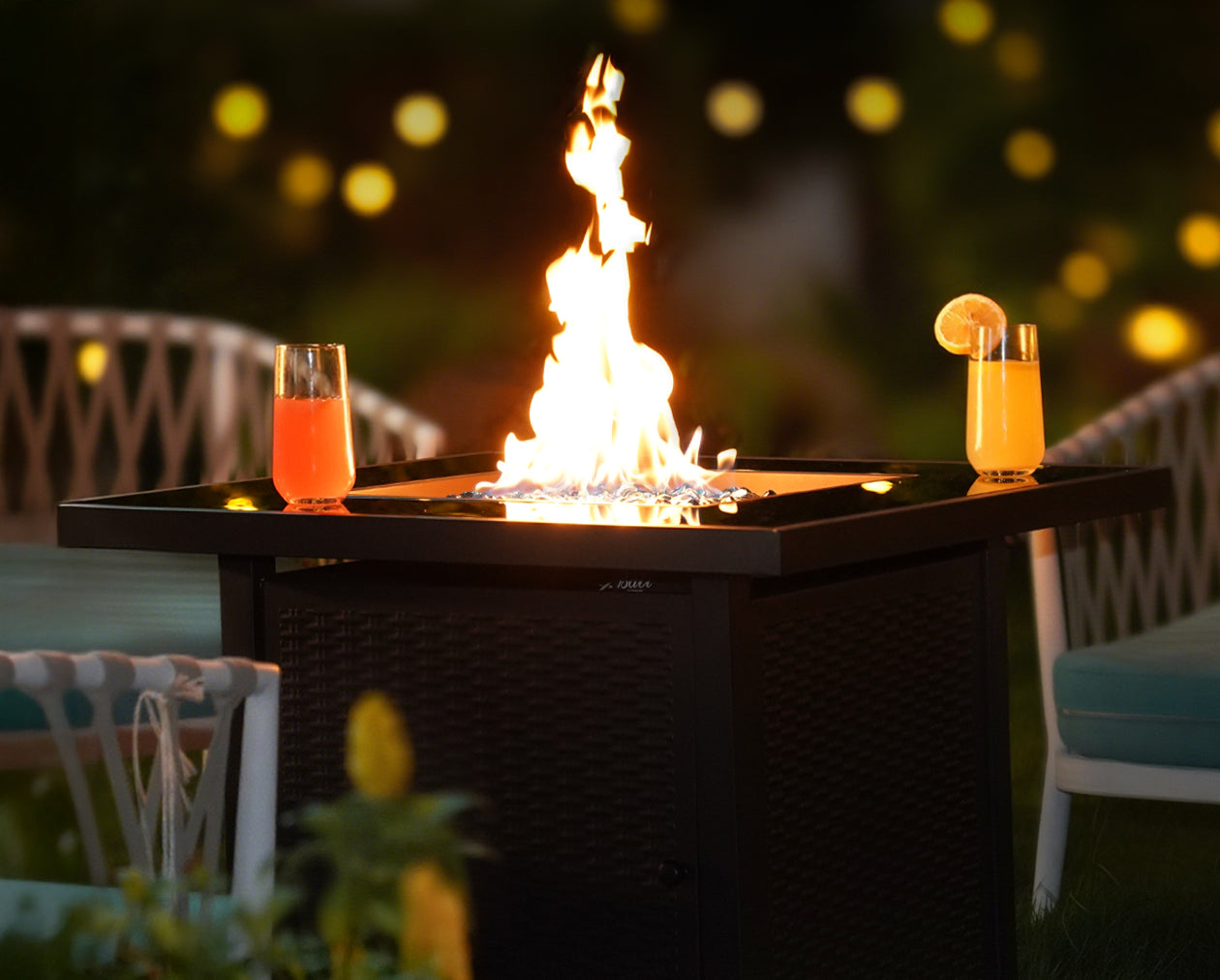


Most fire pits spend their lives as heating fixtures. But once you understand the cooking potential of a well-managed fire, the whole equation shifts. A wood burning fire pit with the right setup can handle everything from blistered vegetables to a full rack of ribs. This guide covers the best foods to cook on a fire pit, the tools that make it work, and how to do it right.

Top Foods That Taste Best Over an Open Fire
Not everything benefits from open fire cooking. These do.
| Category | Best Choices | Method |
| Proteins | Brats, chicken thighs, shrimp, steak | Grill grate or skewer |
| Vegetables | Corn, bell peppers, onions, asparagus | Grill grate or foil |
| Starchy sides | Whole potatoes, sweet potatoes | Foil packet |
| Bread | Flatbread, dough twists | Stick or grill grate |
| Fruit | Peaches, pineapple, banana | Foil or grill grate |
| Classics | Hot dogs, marshmallows, s'mores | Roasting stick |
A few things make these foods well-suited to open fire: high fat content (brats, chicken thighs) bastes itself during cooking. Dense vegetables like corn and peppers hold up to direct heat without falling apart. Foil packets trap moisture and steam contents to a tender finish even over variable flame. These are the properties that separate food that's genuinely better off an open fire from food that just survives it.
Must-Have Tools for Open Fire Cooking
The food is only part of the equation. Without the right tools, open fire cooking is inconsistent and frustrating.
Cooking Grate
A sturdy fire pit cooking grate is the most important piece. It elevates food above the flame, provides a stable surface for cast iron cookware, and opens up everything from grilled steaks to sautéed sides. Look for a swivel or swing-arm design that lets you rotate the grate away from the fire when adding wood or adjusting the coal bed without disturbing what's cooking.
Long-Handled Tongs and Spatula
Standard kitchen tongs put your hands too close to the heat. Fire-specific tongs at 16 to 20 inches give you reach and real control. Same principle applies to your spatula.
Heavy-Duty Aluminum Foil
Double-layer your foil for packet meals. Single-layer foil tears over direct heat, especially on longer cooks. The extra layer also slows heat transfer, which helps ingredients cook more evenly.
Heat-Resistant Gloves
Cast iron handles get hot fast. A pair of welding gloves or silicone mitts rated to at least 500°F outperforms any "BBQ glove" sold at the grocery store.
Roasting Sticks
Telescoping stainless steel sticks in the 30 to 36-inch range handle everything from hot dogs to bread dough. Avoid single-prong sticks for anything heavier than a marshmallow.
Classic Stick Foods Beyond S'mores
S'mores are the default, but your roasting sticks can handle a longer menu.
Brats and sausage links. The skin blisters and crisps over an open fire in a way a flat grill rarely replicates. Rotate slowly over coals rather than active flame to avoid splitting the casing before the interior cooks through.
Chicken thigh chunks. Thread marinated thigh pieces onto a flat double-prong skewer. Thighs hold moisture better than breast meat over variable heat, and they give you more margin on doneness. Marinate in olive oil, garlic, and lemon for at least an hour before cooking.
Bread dough twists. Wrap a rope of biscuit or pizza dough around the end of a stick and hold it above the fire, rotating constantly. The outside chars lightly while the inside steams through. Dip in butter or marinara.
Pineapple and peach chunks. Direct heat caramelizes natural sugars fast. These work especially well late in the evening when the fire has dropped to coals. The char on fruit adds depth that no pan can match.
Halloumi cheese. Thread cubes onto a skewer. Halloumi holds its shape under high heat without melting, and the exterior develops a firm, salty crust. Finish with a squeeze of lemon. For more details, see our guide on hosting a fire pit gathering.
Foil Packet Meals for Any Fire Pit Style
Foil packets work well on a wood burning fire pit because they insulate against flare-ups and hot spots. Once on the fire, they're completely hands-off, which matters when you're also managing the conversation around the pit.
How to Build a Packet
Use two layers of heavy-duty foil. Layer ingredients by cook time: dense items (potatoes, carrots) on the bottom, proteins in the middle, quick-cook items (asparagus, zucchini) on top. Add a tablespoon of butter or olive oil, season generously, and seal with a double-roll fold on each edge.
Four Packets Worth Making
Lemon garlic salmon and asparagus: 20 to 25 minutes on coals. Add capers and a thin lemon slice on top of the fillet before sealing.
Chicken thigh with potatoes and rosemary: 30 to 35 minutes. Use small-diced potatoes for even cooking. Season with garlic, olive oil, salt, and fresh rosemary.
Sausage, corn, and butter with Old Bay: 20 minutes. Cut corn into rounds, slice sausage into coins, and let the Old Bay carry it. This one disappears fast at any gathering.
Banana boat s'mores: Slice a banana lengthwise, stuff with mini marshmallows and chocolate chips, seal in foil, and cook 10 minutes. A straightforward upgrade on the campfire classic. Browse our fire pits for cooking to find the perfect fit for your outdoor space. Browse our fire pit accessories to find the perfect fit for your outdoor space.
How a Grill Grate Levels Up Your Fire Pit Meals
A roasting stick covers maybe 20% of what you'd want to cook outdoors. A cooking grate unlocks the rest.
With a stable grate over a wood burning fire pit, you gain a direct surface for steaks, burgers, fish, and vegetables. You can also set a cast iron skillet directly on it, which brings in sauces, sautéed sides, and anything that needs a controlled pan environment rather than an open flame.
The specific advantage of a swivel grate — built into the Bali Outdoors® wood burning fire pit lineup — is active heat management. You cook over the coals, not the flame, and swing the grate clear in seconds to adjust the wood bed or wait out a flare-up. This is the same principle pitmasters use: the coals are your consistent heat source; the flame is what you're managing around. For more details, see our guide on roasting marshmallows on a fire table.
For surface temperature without a thermometer: hold your palm 6 inches above the grate. Two to three seconds is high heat (450°F+). Four to five seconds is medium. That rough benchmark works for everything on this list.

Food Safety Near Open Flames
Open fire cooking is less controlled than a kitchen, so a few fundamentals matter more, not less.
Use an instant-read thermometer. You can't set a wood fire to a specific temperature, and visual cues that work on a gas grill don't transfer cleanly to open flame. Internal temp is the only reliable indicator of doneness.
| Food | Safe Internal Temp |
| Chicken and poultry | 165°F |
| Beef, pork, lamb (whole cuts) | 145°F |
| Ground beef / burgers | 160°F |
| Fish | 145°F, or until flesh flakes easily |
Separate raw and cooked. Use different utensils and plates. This rule is easy to overlook around a fire pit where everything feels casual, and that informality is when cross-contamination happens.
Keep cold food cold. Don't set raw chicken next to the fire to "come to temp." Keep it in the cooler until it goes directly onto the grate.
Manage flare-ups. Fat dripping onto wood coals can produce a concentrated burst of flame that chars food fast and unevenly. Keep a spray bottle of water nearby. One light mist settles most flare-ups without disturbing the fire.
Shop Bali Wood Fire Pits Now
A wood burning fire pit with a solid grate setup is one of the most capable outdoor cooking rigs you can own, and the food that comes off it reflects it. Work through the coal bed, use the right tools, and the results are hard to beat anywhere in the backyard. Browse the Bali Outdoors® wood burning fire pit lineup, including models with built-in swivel cooking grates, at balioutdoorlife.com.
Frequently Asked Questions about Fire Pit Cooking
Q: Can you cook directly on fire pit flames without a grate?
For stick foods, yes. For anything else, you need either a grate or a foil packet. Cooking in active flames rather than over a coal bed produces uneven char and unreliable doneness. Let the fire burn down first, then add food.
Q: What wood is best for cooking food over a fire pit?
Stick to hardwoods: oak, hickory, apple, cherry, or maple. These burn hot and clean and add flavor without excessive smoke. Avoid pine, cedar, or any treated or painted wood. They release compounds that affect flavor and are unsafe to burn near food. Split, well-seasoned wood (dried at least 6 months) burns cleaner and hotter than freshly cut logs.
Q: How do you control the heat when cooking on a fire pit?
Distance is your primary control: higher above the fire means lower heat. The coal bed also matters more than the flame itself. A dense, settled coal bed runs hotter and more consistently than an active fire. For anything requiring precision (steak, fish), wait until the fire matures to coals before putting food on the grate.
Q: Is it safe to use a regular BBQ grill grate on a fire pit?
It will technically work if the fit is close, but stability and safety are real concerns. A standard grill grate isn't built to anchor over an open fire pit bowl, doesn't have a swivel function, and sits at the wrong height for most fire pit cooking. A grate purpose-built for a fire pit, designed around the bowl dimensions and heat environment, is the right tool. It's also the safer one.