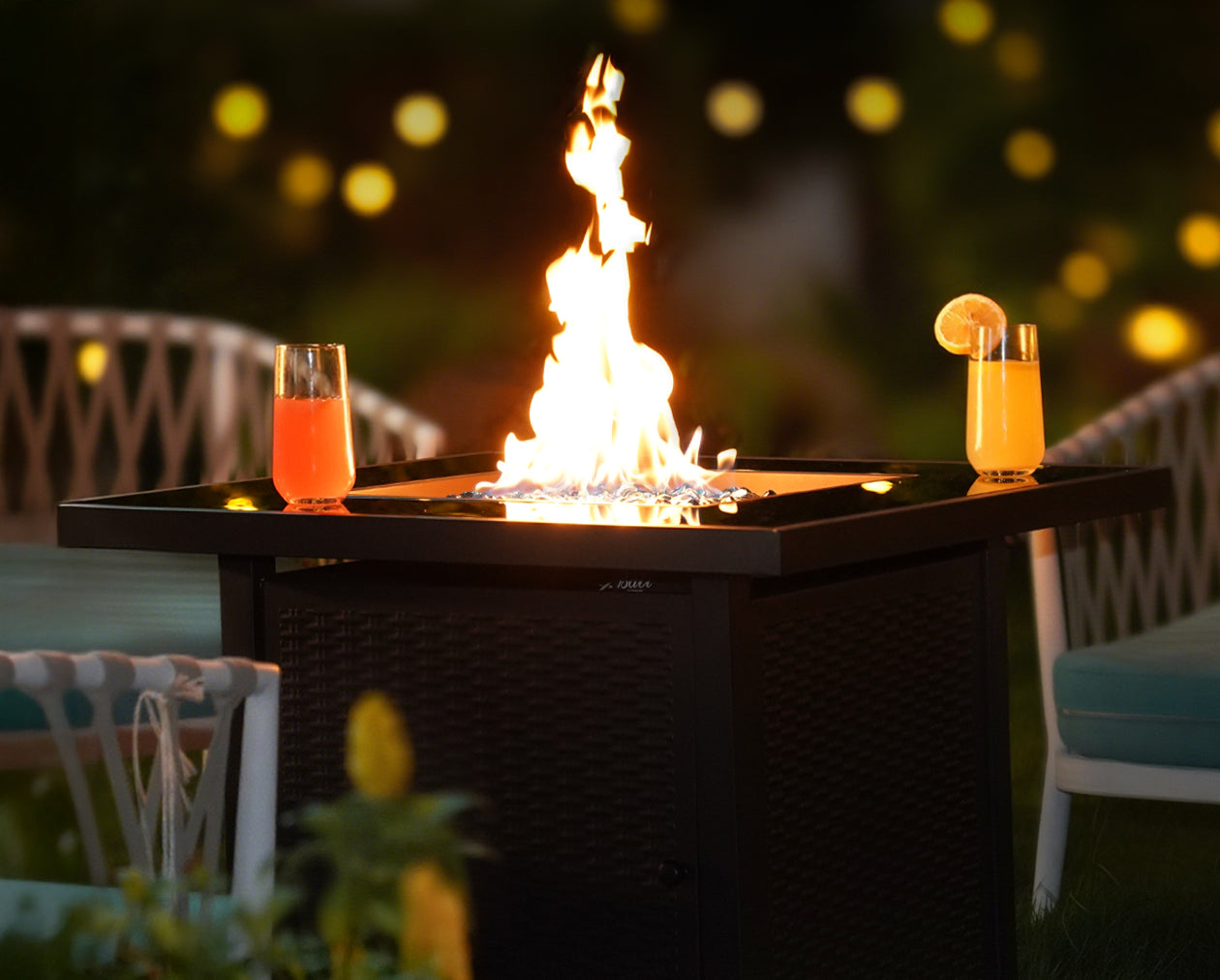


The Balance of Ambiance and Safety in Small Spaces
Creating a cozy retreat on a compact patio or balcony involves more than just selecting furniture that fits the floor plan. When you introduce a fire element, the primary challenge shifts from spatial design to risk management. For homeowners and renters in multi-family dwellings or high-density neighborhoods, the margin for error is slim.
Safety in small-space fire pit placement is not about following a single "best" rule; it is about understanding how heat, air movement, and materials interact in a confined environment. This guide provides a methodical approach to calculating safe clearances, ensuring you can enjoy the warmth of a fire table without compromising the integrity of your home or violating local safety codes.
Establishing the 10-Foot Foundation
Before measuring the specific dimensions of your patio, you must recognize the fundamental safety standard established by national fire authorities. According to the U.S. Fire Administration (USFA), a minimum distance of 10 feet from structures, including your home, fences, and overhanging branches, is the baseline for outdoor fire safety.
In a compact patio setting, achieving a full 10-foot radius can be difficult. However, this distance is designed to mitigate the risk of stray embers and radiant heat from igniting combustible siding or roofing. While propane fire tables do not produce the flying embers associated with wood-burning pits, the radiant heat remains a significant factor.
Logic Summary: The 10-foot rule is a generalized safety buffer designed for open-air environments. For propane units, which offer more controlled flames, this distance serves as a primary defense against structural overheating and accidental contact with flammable decor.
Calculating the Effective Heat Zone
One of the most common installation errors observed in residential settings is underestimating the "effective heat zone." This zone extends well beyond the visible flame. While a product manual provides a minimum clearance distance, practitioners often recommend a more conservative approach based on the unit's heat output, measured in British Thermal Units (BTUs).
A practical heuristic used by safety professionals is the "BTU-to-Clearance Ratio." For every 10,000 BTU above a 40,000 BTU baseline, you should consider adding 6 inches to the manufacturer’s stated clearance for combustible materials.
For example, the 30 Inch Propane Fire Pit Table for Outdoor, Black produces 50,000 BTUs. Since this is 10,000 BTUs over the baseline, adding a 6-inch safety margin to the manual's requirements is a prudent step for risk-averse users. Similarly, the 32 Inch Propane Gas Fire Pit Table, Brown also operates at 50,000 BTUs, requiring the same careful consideration of its surrounding "heat envelope."
Modeling Heat Clearance Requirements
| Parameter | Base Value | Unit | Rationale |
|---|---|---|---|
| Baseline Heat Output | 40,000 | BTU | Standard threshold for residential fire tables |
| Safety Increment | 10,000 | BTU | Incremental heat increase for safety scaling |
| Additional Clearance | 6 | Inches | Buffer for radiant heat expansion |
| Wind Factor Adjustment | 25 | % | Reduction in safe clearance due to lateral heat drift |
| Deck Pad Extension | 12 | Inches | Minimum protection beyond the unit footprint |
Note: This model is a scenario-based estimate for risk mitigation and does not replace the specific requirements found in your product manual or local fire codes.

Environmental Factors: Wind and Enclosures
In compact layouts, environmental variables like wind and wall proximity play a disproportionate role in fire safety. On an enclosed balcony or a patio with a privacy wall, heat can become trapped, leading to "heat reflection." This phenomenon increases the temperature of surrounding surfaces more rapidly than in an open-air yard.
Wind is another critical, often overlooked factor. A consistent breeze can direct heat laterally, effectively reducing your safe clearance by up to 25%. If your balcony is prone to wind tunnels, you must account for the flame being pushed toward one side. In these scenarios, the 28 Inch Propane Fire Pit Table, Black is an excellent choice due to its smaller footprint, which allows for a slightly larger safety buffer within the same total square footage.
Protecting Your Deck Surface
If you are installing a fire table on a wooden or composite deck, the surface beneath the unit requires specific protection. While the 30 Inch Propane Fire Pit Table, Black is designed with a sturdy frame to keep the burner elevated, conductive heat can still transfer through the metal legs or base.
Many professionals insist on the use of a non-combustible fire pit pad. This pad should extend at least 12 inches beyond all sides of the unit's footprint. This extension protects the deck boards from accidental heat damage and provides a stable, fire-resistant surface for the appliance. Browse our compact fire tables to find the perfect fit for your outdoor space.

Gas Safety and Ventilation Requirements
Propane fire tables are popular for small spaces because they eliminate smoke and ash, but they introduce the need for gas safety awareness. According to the Centers for Disease Control and Prevention (CDC), carbon monoxide (CO) is an odorless, colorless gas that can be fatal in enclosed spaces.
You must never use a propane fire pit indoors or in a fully enclosed porch. Even with one or two open sides, a balcony can trap CO if there is insufficient airflow. Always ensure your space meets the ventilation requirements specified by the manufacturer and health authorities like MedlinePlus.
Ventilation Checklist for Small Spaces:
- Open Air Ratio: At least 25% of the total wall area should be completely open to the outside.
- Ceiling Height: Ensure there is a minimum of 72 to 80 inches of vertical clearance from the burner to any overhead structure.
- Tank Storage: Always store propane tanks in a well-ventilated area, never inside a garage or storage shed.
Navigating Local Codes and HOA Rules
Before finalizing your layout, you should verify if your local fire codes have more stringent requirements than the product manual. This is particularly common for multi-family dwellings, where local ordinances may ban open-flame devices on balconies entirely or require specific types of ignition systems.
HOA (Homeowners Association) rules often mirror these municipal codes but may include additional aesthetic or placement restrictions. Being proactive in checking these rules prevents the frustration of purchasing a unit that you cannot legally or safely operate.
Practical Steps for a Safe Setup
- Measure Twice: Map out your patio and identify all combustible materials (siding, wooden railings, plants).
- Identify the Centerpoint: Place your fire table so that it maximizes the distance from the most flammable objects.
- Install a Heat Barrier: Use a fire-resistant mat if placing the unit on a deck.
- Monitor the Wind: Avoid lighting the fire pit on days with high gusts that could push flames toward structures.
- Stay Present: According to Ready.gov, you should never leave an active fire unattended. Always have a clear plan for extinguishing the flame immediately if conditions change.
Maintaining Your Equipment
Safe operation also depends on the condition of your equipment. Regularly inspect the gas hose for cracks or leaks using a simple soap-and-water test. For those who occasionally use wood-burning pits in other settings, following the EPA’s Best Wood-Burning Practices for seasoned wood can minimize smoke, but for your small patio propane table, the focus remains on clean combustion and clear airflow.
By applying these precise measurements and methodical safety rules, you can transform a small outdoor area into a secure, warm environment. Prioritizing clearance and surface protection ensures that your evening by the fire remains a source of relaxation rather than a safety risk.
Disclaimer: This article is for informational purposes only and does not constitute professional safety, legal, or fire-prevention advice. Fire pit regulations vary significantly by location and housing type. Always consult your local fire department, HOA, and the specific manufacturer’s manual for your product before installation and use.
Sources
- U.S. Fire Administration (USFA) - Outdoor Fire Safety
- Ready.gov - Home Fires Safety Guidelines
- Centers for Disease Control and Prevention (CDC) - About Carbon Monoxide
- MedlinePlus - Carbon Monoxide Poisoning
- EPA - Best Wood-Burning Practices
Navigating Overhead Clearance for Covered Patio Fires
Understanding the Vertical Safety Zone
For many homeowners, the dream of a cozy evening by the fire often moves from the open lawn to the comfort of a covered patio or pergola. However, transitioning a fire feature into a semi-enclosed space introduces complex safety variables that go beyond simple "common sense." While most users focus on the floor surface, the most significant risks often hover overhead.
Navigating overhead clearance is not just about keeping flames from touching the ceiling. It is about managing the invisible behavior of heat. According to the U.S. Fire Administration (USFA), maintaining proper distance from structures is a fundamental pillar of fire prevention. In this guide, we will break down the methodical steps required to ensure your outdoor heating setup is both functional and safe, prioritizing structural integrity and personal security.
The Science of the Heat Plume
A common misconception among new fire pit owners is that safety is guaranteed as long as the visible flames do not reach the ceiling. In reality, heat behaves differently than light. While you can see the flame, you cannot see the "heat plume"—a column of rising hot air created by convection currents.
In still-air conditions, which are common under covered structures, this convection current creates a heat plume that can extend two to three times higher than the visible flames. This means a 12-inch flame could be sending damaging levels of heat up to 36 inches above the burner. This radiant heat can cause "pyrolysis," a process where wood or composite materials chemically decompose due to sustained heat exposure, eventually leading to spontaneous combustion even without a direct spark. For more details, see our guide on deck fire pit safety rules.
Logic Summary: The Convection Model Our safety recommendations are based on a scenario model that assumes still-air conditions and standard atmospheric pressure.
- Flame-to-Plume Ratio: 1:3 (Visible flame height vs. invisible heat column).
- Primary Mechanism: Convection-driven thermal transfer.
- Critical Failure Point: Material ignition temperature (typically 400°F - 500°F for seasoned wood).

Calculating Your Clearance Requirements
Manufacturer manuals provide a baseline, but environmental factors often require a more conservative approach. To calculate a safe vertical clearance, you must consider the heat output of your unit, measured in British Thermal Units (BTUs). A BTU is the amount of heat required to raise the temperature of one pound of water by one degree Fahrenheit.
A reliable heuristic used by experienced installers is to add 4 to 6 inches of vertical clearance for every 10,000 BTU increase above the standard 30,000 BTU baseline. For a high-output unit like the 32 Inch Propane Fire Pit Table, Brown, which produces 50,000 BTUs, this means adding roughly 8 to 12 inches to the manufacturer's minimum clearance.
Recommended Clearance Parameters
| Parameter | Value or Range | Unit | Rationale |
|---|---|---|---|
| Base Vertical Clearance | 72 - 84 | Inches | Standard manufacturer safety baseline |
| BTU Scaling Factor | 4 - 6 | Inches | Per 10,000 BTU increase (Heuristic) |
| Material Safety Buffer | 12 - 18 | Inches | Additional space for wood/composite ceilings |
| Lateral Clearance | 36 - 48 | Inches | Horizontal distance from walls/railings |
| Flame Height Ratio | 3:1 | Ratio | Plume height relative to visible flame |
Note: These values are estimated ranges based on common professional practices and should be verified against your specific structural materials.
Material Sensitivity and the "Heat Shadow"
Not all patio covers are created equal. Aluminum or stone covers handle heat much better than wood, vinyl, or composite materials. If your patio features a wood-beamed ceiling or a composite deck overhead, you should add an 12 to 18-inch buffer beyond the manufacturer's minimums. These materials degrade faster under sustained heat, losing moisture and becoming more flammable over time.
One of the first signs of inadequate clearance is the appearance of a "heat shadow." This is a subtle yellowing or warping of the overhead surface directly above the fire pit. It typically appears long before any charring occurs. We recommend performing a "maintenance walk-through" every month to inspect the ceiling for these visual cues. If you notice any discoloration, you must either increase the clearance or reduce the flame height immediately. Browse our fire pits for small spaces to find the perfect fit for your outdoor space.
Close-up of a fire pit table surface and lid, demonstrating the importance of protective coverings when the unit is not in use.
Strategic Placement: Avoiding Reflection Zones
Where you place your fire table under a cover is just as important as how high the ceiling is. Placing a fire pit table, such as the 30 Inch Propane Fire Pit Table, Black, directly against a solid wall creates a "heat reflection zone." The wall traps the heat, preventing it from dispersing laterally and forcing more of it upward toward the ceiling.
Additionally, avoid placing fire features directly under ceiling fans. While it might seem like the fan would help disperse heat, it often disrupts the natural rise of the heat plume, creating turbulent air that can push flames toward the edges of the table or toward nearby combustible furniture.
Professional Installation Checklist:
- Center the Unit: Ensure the fire pit is centered between support beams rather than directly underneath one.
- Verify Airflow: Ensure at least two sides of the covered area are open to allow for cross-ventilation.
- Check for Obstructions: Remove hanging plants, wind chimes, or decorative fabric (like outdoor curtains) from the immediate vicinity.
- Surface Stability: Ensure the unit is on a level, non-combustible surface to prevent tipping, which could drastically alter the vertical heat path.
Carbon Monoxide: The Silent Vertical Risk
When operating any gas-burning appliance in a semi-enclosed space, ventilation is a critical health requirement. According to the Centers for Disease Control and Prevention (CDC), carbon monoxide (CO) is an odorless, colorless gas that can be fatal if it accumulates.
While a patio with two or three open sides is generally considered "outdoor use," a very small balcony or a heavily screened-in porch can trap CO. Citing the National Library of Medicine, symptoms of exposure include headache, dizziness, and nausea. To mitigate this risk, always ensure your covered space has adequate airflow and never use a fire pit in a fully enclosed room or garage. For more details, see our guide on best fire pits for small spaces.
The 28 Inch Propane Fire Pit Table, Black is designed for clean, smokeless combustion, which reduces the presence of particulates, but it does not eliminate the need for oxygen. Proper vertical clearance actually aids in CO safety by allowing the gas to rise and disperse into the atmosphere rather than pooling under a low ceiling.
Wood-Burning vs. Propane: Different Rules
If you are using a wood-burning fire pit, the rules for covered areas are significantly stricter. Wood fires are less predictable than propane; they produce sparks, embers, and varying flame heights. The National Park Service (NPS) emphasizes that fires should be "cool to the touch" before being left unattended—a rule that is much easier to follow with the turn of a knob on a propane unit.
For wood-burning setups, we align with the Environmental Protection Agency (EPA) Burn Wise recommendations: only burn seasoned, dry wood. Wet wood produces excessive smoke and creosote, which can coat the underside of your patio cover, creating a secondary fire hazard over time. However, for most small covered patios, a propane table remains the safer, more controllable choice.
Modeling Note (Reproducible Parameters): Our safety assessments for propane units assume the following:
- Fuel Type: Liquid Propane (LP).
- Ambient Temperature: 60°F - 80°F.
- Wind Speed: < 5 mph.
- Ceiling Material: Standard wood joists with 15% moisture content.
- Boundary Condition: This model does not apply to enclosed sunrooms or areas with less than 50% wall openness.
Summary of Safety Best Practices
Safely enjoying a fire feature under a covered patio requires a methodical approach to clearance and maintenance. By understanding that heat extends far beyond the visible flame, you can protect your home from long-term thermal damage.
- Prioritize Clearance: Aim for a minimum of 72 to 84 inches of vertical space, adding more for high-BTU units.
- Monitor Surfaces: Regularly check for yellowing or warping on the ceiling (the "heat shadow").
- Ensure Ventilation: Maintain at least two open sides to prevent carbon monoxide buildup and allow heat to escape.
- Use the Right Tools: Utilize the lid provided with models like the 28 Inch Propane Fire Pit Table, Black to convert the unit into a table when not in use, ensuring the burner is protected from debris.
By following these guidelines and adhering to the safety principles established by organizations like Ready.gov, you can create a secure, warm, and inviting outdoor retreat.
Disclaimer: This article is for informational purposes only and does not constitute professional engineering or fire safety advice. Always consult your local building codes, fire department regulations, and the specific manufacturer’s manual for your product before installation. Fire features should never be left unattended and should be operated only by responsible adults.
References
- U.S. Fire Administration - Outdoor Fire Safety
- CDC - About Carbon Monoxide
- EPA - Best Wood-Burning Practices
- Department of Homeland Security - Home Fires
- National Park Service - Campfire Safety
Navigating Clearance Rules for Heaters Under Low Pergolas
Understanding the Safety Dynamics of Covered Patios
Adding a pergola to a small patio or balcony creates an inviting outdoor room, but it also introduces complex thermodynamic challenges when you introduce a heat source. Unlike open-sky environments, a pergola—even one with slats—changes how heat rises and how air circulates. For homeowners, especially those governed by Home Owners Association (HOA) regulations, understanding the intersection of comfort and fire safety is the first step toward a worry-free outdoor season.
Fire safety is not merely about preventing a spark; it is about managing "radiant heat" and "convective heat." Radiant heat travels in a direct line from the source to your body or the structure, while convective heat is the rising column of hot air. According to the U.S. Fire Administration (FEMA), maintaining proper distance from combustible structures is the most effective way to prevent unintended ignition. This starts with the "10-foot rule"—keeping any fire source at least ten feet away from your main home structure. However, when placing a heater under a pergola, the rules for vertical and horizontal clearance become even more stringent.
 For more details, see our guide on fire table airflow in enclosed patios.
The "Flame Tip" Rule: Correcting a Common Measurement Error
One of the most frequent mistakes professional installers observe is how homeowners measure vertical clearance. Most manuals for propane heaters or fire tables provide a clearance requirement (e.g., 6 feet). A common and dangerous error is measuring this distance from the top of the metal heater unit or the burner itself.
In reality, the measurement must be taken from the highest point of the flame. For a 32 Inch Propane Patio Heater, Black, the flame is contained within a glass tube or under a reflector, but the heat column extends significantly higher. For propane fire tables, the flame tip can fluctuate 6 to 12 inches depending on the BTU setting and wind conditions.
If you measure from the burner to a pergola beam and find 4 feet of space, but your flame is 1 foot tall, you only have 3 feet of actual clearance. This "missing foot" is often where structural scorching begins.
Logic Summary: Our safety analysis assumes that heat intensity decreases at an inverse-square rate relative to distance. Measuring from the flame tip ensures the "point of origin" for the highest thermal output is the baseline for all calculations.
Navigating Pergola Roof Types: Slatted vs. Solid
The type of roof on your pergola dictates how much heat becomes trapped against the structure. A solid roof (such as one covered with polycarbonate panels or solid wood) acts as a "heat trap," forcing hot air to mushroom out and linger.
The 50% Air Gap Heuristic
For slatted pergolas, landscape architects often use a specific rule of thumb: the 50% Air Gap. If the total surface area of the slats covers more than 50% of the roof's footprint, you must treat the pergola as a solid roof for safety purposes. This is because the restricted airflow prevents the rapid dissipation of heat.
- Under 50% Coverage: Heat can escape relatively freely. Standard manufacturer clearances typically apply.
- Over 50% Coverage: Heat accumulates. You should increase your vertical clearance by at least 25% beyond the manufacturer’s recommendation.
The "Hand Test" for Real-World Verification
Numbers on a page are a starting point, but environmental factors like humidity and wind change the math. After operating your 32 Inch Propane Patio Heater, Black for 30 minutes under your pergola, perform a manual check. Place your hand on the pergola beam directly above the heater. If the material is uncomfortably warm to the touch, your clearance is insufficient. Heat should feel like a gentle breeze at the beam level, not a hot surface.
Protecting the Ground: Composite Decking and Surface Heat
While most homeowners worry about the roof, the floor is equally vulnerable. Modern composite decking (like Trex or similar brands) and certain pressure-treated woods are highly sensitive to sustained heat.
Composite materials can begin to scorch, warp, or lose structural integrity at temperatures as low as 120°F. This is significantly lower than the ignition point of kiln-dried wood, which is why many homeowners are caught off guard by "heat sagging" under their heaters.
To mitigate this, always use a thermal barrier. A 68x48" Large Grill Mat is designed to withstand temperatures up to 2000°F. While its primary job is catching embers, its layered structure also helps disperse the downward radiant heat from a fire pit or heater base, protecting the expensive composite boards beneath.

Carbon Monoxide: The Invisible Requirement
Any gas-burning appliance, including propane heaters and fire tables, produces Carbon Monoxide (CO). In wide-open spaces, this gas dissipates instantly. However, under a pergola—especially one with "privacy walls" or heavy foliage—CO can accumulate to dangerous levels.
According to the Centers for Disease Control and Prevention (CDC), CO is an odorless, colorless gas that can cause sudden illness or death. This is why "Outdoor Use Only" is a mandatory safety certification. When using a 42 Inch Propane Fire Pit Table, Black under a pergola, you must ensure at least two sides of the structure are completely open to allow for cross-ventilation.
Modeling Note (Reproducible Parameters):
Parameter Value/Range Unit Rationale Min. Vertical Clearance 72 - 96 Inches Based on 40k-60k BTU outputs Max Surface Temp (Deck) 120 °F Warping threshold for composite Min. Air Gap (Slats) 50 % Threshold for convective venting Horizontal Offset 36 Inches Clearance from fabric/curtains CO Ventilation 2 Sides Minimum open sides for safety
Selecting the Right Equipment for Small Spaces
When space is at a premium, the choice between a vertical patio heater and a fire pit table depends on your pergola's height.
Vertical Patio Heaters
A unit like the 32 Inch Propane Patio Heater, Black stands approximately 87 inches tall. It is designed to push heat downward using a reflector cap. This is ideal for pergolas with a height of 10 feet or more. If your pergola is lower than 9 feet, the reflector cap will be too close to the beams, creating a high risk of heat damage.
Fire Pit Tables
For lower pergolas, a 42 Inch Propane Fire Pit Table, Black is often a safer choice. Because the heat source is closer to the ground (approximately 24 inches high), you gain an additional 5 feet of vertical "buffer" zone compared to a standing heater. These tables, such as the 42 Inch Propane Fire Pit Table, Black with its 60,000 BTU output, provide significant warmth while keeping the "flame tip" at a safer distance from the roof structure.
Operational Safety and Maintenance
Even with perfect clearance, safety depends on consistent habits. Following the National Park Service (NPS) guidelines for fire management, even propane units require supervision and proper "extinguishing" protocols.
- Clear the Zone: Ensure no "soft goods" like outdoor curtains, pillows, or hanging plants are within 3 feet of the heater. Wind can blow these into the heat column.
- Ignition Safety: Use the integrated "Push & Turn" systems found on Bali Outdoors products. This ensures a controlled gas flow and reduces the risk of "flash ignition" caused by manual lighting.
- The "Cool to Touch" Rule: Before going inside, turn off the propane at the tank. Wait for the unit to be cool to the touch before covering it. Covering a warm heater can trap residual heat and damage the cover or the unit's finish.
- Ember Awareness: While propane is "cleaner" than wood, the EPA notes that any combustion requires oxygen and produces exhaust. Ensure your burner is free of debris (like spider webs or leaves) that could ignite and create flying embers.
Summary of Clearance Requirements
To ensure your setup is compliant and safe, use the following checklist derived from the Ready.gov Home Fire Safety framework:
- Vertical: Minimum 6 feet from the flame tip to the nearest combustible beam.
- Horizontal: Minimum 3 feet from the edge of the heater to any wall or railing.
- Floor: Use a 68x48" Large Grill Mat if placing on wood or composite.
- Ventilation: Ensure the space is not enclosed on more than two sides.
By prioritizing these methodical safety rules, you can enjoy the warmth of your patio without the anxiety of property damage or regulatory issues. Safety is not a limitation on your comfort; it is the foundation that allows you to relax fully in your outdoor space.
Disclaimer: This article is for informational purposes only and does not constitute professional safety, legal, or engineering advice. Always consult your local fire department, HOA guidelines, and the specific manufacturer’s manual before installing or operating outdoor heating equipment.