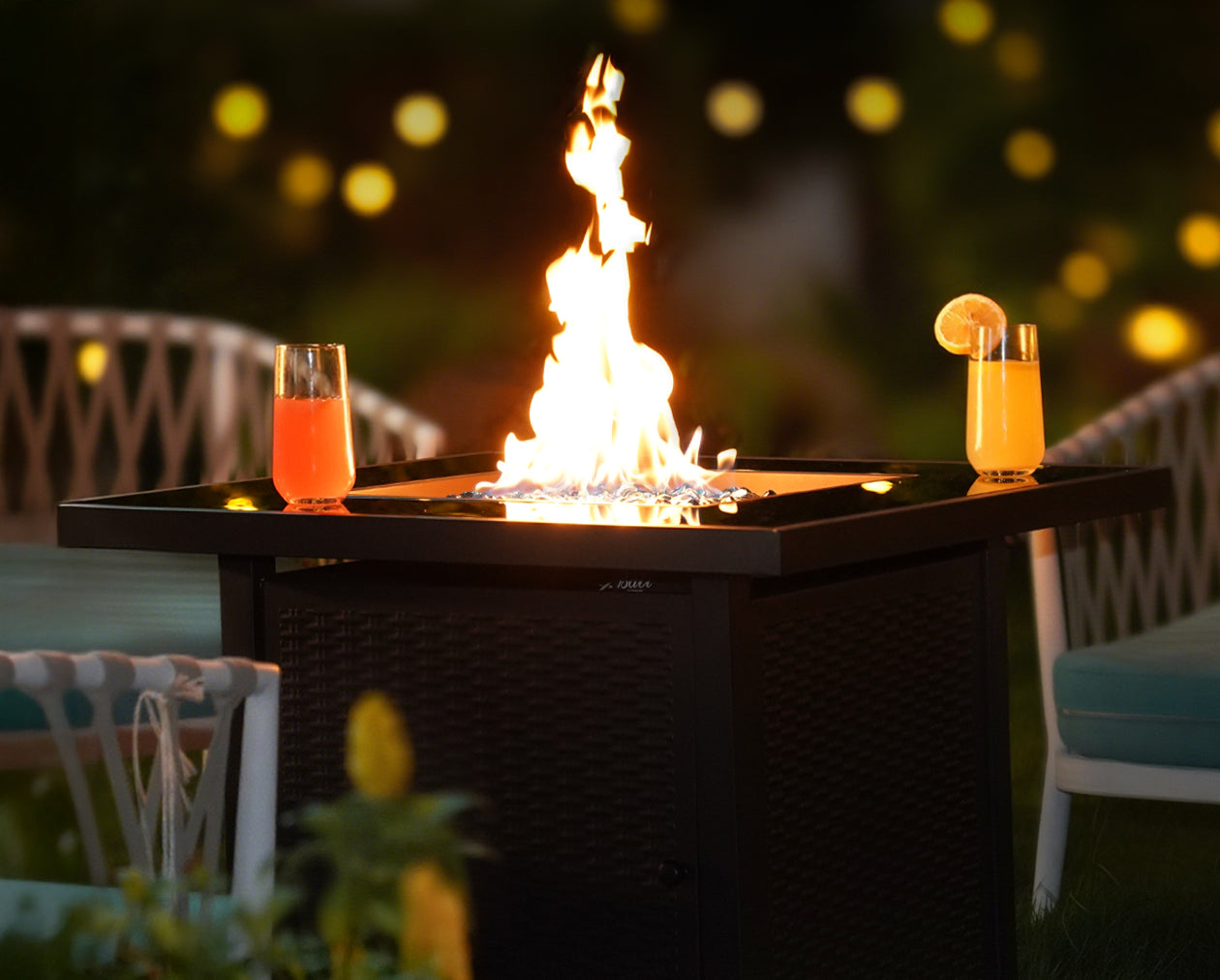


Gas fire pits have replaced the woodpile in millions of backyards, and for good reason. No smoke, no ash, instant flames, and a dial that controls the heat. But "gas fire pit" covers two different fuel types, dozens of form factors, and a price range from $150 to $5,000. Picking the right one means understanding what separates propane from natural gas, which features actually matter, and where your money goes furthest.
This guide breaks down the best gas fire pit categories for 2026, explains the propane vs. natural gas decision, and gives you a practical checklist so you buy once and enjoy the thing for years.
Propane vs. Natural Gas Fire Pits: The Core Decision
Every gas fire pit runs on one of two fuels. Some units ship as propane-only, some as natural-gas-only, and a few offer conversion kits. The fuel you choose affects where you can place the unit, how much you spend over time, and how much setup work sits between you and the first flame.

| Factor | Propane | Natural Gas |
|---|---|---|
| Setup | Connect a 20 lb tank, light it | Requires a dedicated gas line (licensed plumber) |
| Upfront cost | $200–$600 for most table-style units | $300–$800 for the unit + $500–$2,000 for the gas line |
| Operating cost per hour | ~$1.50–$3.00 | ~$0.50–$1.50 |
| Portability | Move it anywhere on the patio (or take it camping) | Fixed to the gas line location |
| Heat output range | 30,000–70,000 BTU | 30,000–100,000+ BTU |
| Fuel supply | Swap or refill tanks ($15–$25 per fill) | Unlimited from the utility line |
| Best for | Renters, flexible layouts, smaller patios | Permanent hardscape, heavy nightly use |
For most homeowners, propane is the more accessible starting point. There is no contractor, no permit, and no commitment to a fixed spot. You unbox the unit, connect the tank, and light it the same evening. Natural gas makes sense when you already have a gas line nearby or plan to install a permanent outdoor kitchen. For a full side-by-side breakdown, see our propane vs. natural gas fire pit comparison.
What to Look for in Any Gas Fire Pit
Whether you go propane or natural gas, these five factors separate a fire pit you will love from one that collects dust after the first season.
1. BTU Output
BTU (British Thermal Unit) measures heat per hour. A 40,000–50,000 BTU fire pit keeps a circle of four to six chairs comfortable on a cool evening. Go below 30,000 BTU and you get ambiance but not much warmth. Go above 60,000 BTU and you burn through fuel fast without a proportional comfort gain unless you entertain in genuinely cold weather. Our BTU guide has the math for matching heat output to your patio size.
2. Materials and Build Quality
The frame, tabletop, and burner each take different abuse. Look for:
- Frame: Powder-coated steel (16–18 gauge) or cast aluminum. Steel is heavier and cheaper; aluminum resists rust without a coating.
- Tabletop: Tempered glass, tile, or faux stone. Tempered glass shows off the flame but can crack if cold water hits a hot surface.
- Burner: Stainless steel lasts the longest. If the listing does not mention burner material, that is a red flag.
3. Shape and Size
Shape is a layout decision, not just an aesthetic one. Rectangular tables seat 6–8 and fit against walls or railings. Round tables seat 4–6 evenly and work best in open areas. Square tables split the difference and tuck into corners. Before ordering, measure your space and subtract 3 feet on every open side for chairs and safe clearance. Our fire pit table vs. outdoor fire pit guide covers how form factor affects placement.
4. Ignition Type
Match-lit (hold a lighter to the burner) is the cheapest option but least convenient. Spark ignition (piezo button) is reliable and needs no batteries. Electronic ignition adds push-button or remote start, which is worth the upgrade if you use the fire pit several nights a week.
5. Included Accessories
A fitted cover, wind guard, and fire media (glass or lava rocks) can add $100–$200 to your total if you buy them separately. Units that include all three in the box deliver better overall value. Check the listing carefully because some brands advertise accessories in product photos but sell them as add-ons.
Best Gas Fire Pits by Category
There is no single "best" gas fire pit. The right pick depends on how you plan to use it. Here are the categories that cover most buyers, with the features to prioritize in each.
| Category | What to Look For | BTU Range | Price Range | Fuel Type |
|---|---|---|---|---|
| Best overall | Mid-size rectangular table, 50K BTU, hidden tank, cover included | 45,000–55,000 | $300–$500 | Propane |
| Best for dining | Rectangular table 56″+ with wide ledges for plates and glasses | 40,000–55,000 | $350–$600 | Propane |
| Best portable | Lightweight bowl or column under 30 lb, connects to 1 lb canisters or 20 lb tank | 10,000–30,000 | $100–$250 | Propane |
| Best for small patios | Square table under 30″ wide, low-profile design | 30,000–40,000 | $200–$400 | Propane |
| Best for heavy use | Built-in burner with permanent gas line, high BTU, cast aluminum or stone surround | 60,000–100,000+ | $1,500–$5,000+ | Natural gas |
| Best budget pick | Round fire pit bowl with lava rocks, spark ignition, basic cover | 28,000–40,000 | $150–$250 | Propane |
Notice that propane dominates five of the six categories. That is because most freestanding gas fire pits ship as propane units. Natural gas only leads for permanent, high-output installations where unlimited fuel supply and higher BTU ceilings outweigh the upfront installation cost.
Best Overall: The Mid-Range Propane Fire Pit Table
This is where the majority of buyers land. A rectangular or square propane fire pit table in the $300–$500 range gives you 45,000–55,000 BTU, a hidden 20 lb tank compartment, and a usable table surface around the burner. Look for powder-coated steel frames, stainless steel burners, and models that ship with a cover and fire glass. At this price, you should not have to buy accessories separately.
If you want to compare specific table styles, our best propane fire pit tables guide goes deeper on shape, size, and feature tradeoffs.
Best for Dining: Wide-Ledge Rectangular Tables
A fire pit table that doubles as a dining surface needs wide ledges (at least 8–10 inches on each side of the burner) so plates and glasses sit safely away from the flame. Rectangular models 56 inches or longer seat six comfortably and work for both weeknight dinners and weekend gatherings.
Best Portable: Propane Bowls and Columns
Portable gas fire pits weigh under 30 pounds and connect to small 1 lb propane canisters or a standard 20 lb tank via an adapter hose. They produce less heat (10,000–30,000 BTU), but they go where you need them. If portability is your priority, focus on weight, canister compatibility, and a carry handle.
Best for Small Patios: Compact Square Tables
A patio under 100 square feet does not have room for a 60-inch rectangular table. A square fire pit table under 30 inches wide delivers real heat (30,000–40,000 BTU) while leaving space for two to four chairs with proper clearance. Round bowls work here too, but a square table gives you corner ledge space that a bowl does not.
Best for Heavy Use: Built-In Natural Gas
If you run the fire pit four or more nights a week, the per-hour cost of propane adds up. A natural gas fire pit connected to your home's gas line eliminates tank swaps and cuts operating costs roughly in half. The tradeoff is the upfront installation: expect $500–$2,000 for a licensed plumber to run the line, plus the cost of the unit itself. Our natural gas fire pit installation guide walks through the process and permit requirements.
Best Budget: Round Propane Fire Pit Bowls
Below $250, you are looking at round fire pit bowls with 28,000–40,000 BTU burners, lava rocks, and spark ignition. They skip the table surface and fancy finishes, but they light reliably and throw enough heat for a small group. A basic cover should be included. If it is not, add one immediately because an uncovered burner corrodes fast.
Gas Fire Pit Safety Basics
Gas fire pits are safer than wood burners, but they still involve open flame and pressurized fuel. Follow these rules regardless of fuel type:

- Clearance: Keep the unit at least 10 feet from your house, fence, or any combustible structure. The National Fire Protection Association (NFPA) sets this as a minimum. Some local codes require 15 feet or more.
- Deck use: Place a heat-resistant pad underneath on wood or composite decking. Avoid running at max BTU for long stretches directly on composite boards.
- Ventilation: Never use a gas fire pit in a fully enclosed space. Covered patios work if the ceiling is 8–10 feet above the flame and two sides are open.
- Tank storage (propane): Store tanks upright and outdoors, never in a garage or enclosed room. The U.S. Consumer Product Safety Commission publishes detailed handling guidelines.
- Gas line inspection (natural gas): Have a licensed technician inspect the connection annually. Even small leaks in a buried line can go unnoticed for months.
Maintenance Tips for Gas Fire Pits
A gas fire pit needs less upkeep than a wood burner, but zero maintenance leads to clogged burners and corroded frames. Here is a simple schedule:
- After each use: Shut off the gas at the source (tank valve for propane, shutoff valve for natural gas). Let the unit cool, then cover it.
- Monthly: Remove fire media and brush debris from the burner ports with a soft-bristle brush. Clogged ports cause uneven or yellow flames.
- Seasonally: Inspect the hose, regulator, and fittings. Apply soapy water to connections and look for bubbles that signal a leak. Clean fire glass with warm water or replace crumbled lava rocks.
- End of season: Disconnect the fuel source, deep-clean the burner, and store the unit under a properly sized cover or move it to a sheltered area.
For a full maintenance walkthrough, see our gas fire pit maintenance guide.
How Much Does a Gas Fire Pit Cost?
The unit price depends on fuel type, materials, and whether you need installation work.
- Portable propane bowl: $100–$250. Lightweight, 10,000–30,000 BTU, basic ignition.
- Mid-range propane table: $250–$600. 40,000–55,000 BTU, hidden tank compartment, cover often included.
- Premium propane table: $600–$1,500. Cast aluminum or thick steel, electronic ignition, high BTU.
- Natural gas built-in: $1,500–$5,000+ including gas line installation. Permanent, high output, unlimited fuel.
Beyond the unit, budget $30–$80 for a cover (if not included), $50–$100 for a wind guard, and $30–$40 for a spare propane tank. Propane refills run $15–$25 per 20 lb tank depending on your area. According to the U.S. Energy Information Administration, average residential propane prices hover around $2.50–$3.00 per gallon nationally, though prices vary by region and season.
Quick Buyer's Checklist
- Pick your fuel. Propane for flexibility and low upfront cost. Natural gas for permanent setups with heavy use.
- Set a BTU target. 40,000–50,000 BTU handles most patios. Go higher only for cold-climate entertaining.
- Measure your space. Subtract 3 feet on every open side for seating and clearance from structures.
- Choose a shape. Rectangular for dining, round for conversation, square for tight corners.
- Check materials. Stainless steel burner, coated or aluminum frame, tempered glass or tile top.
- Confirm what is in the box. Cover, wind guard, and fire media included saves $100–$200.
- Verify local codes. HOA rules, building codes, and lease terms can restrict open-flame use on decks and balconies.
For a deeper walkthrough focused on propane models, our propane fire pit buying guide covers tank sizing, fuel math, and deck safety in detail.
Frequently Asked Questions
Is a gas fire pit better than a wood fire pit?
Gas fire pits produce no smoke, no ash, and no sparks. They light instantly and shut off with a dial. Wood fire pits cost less upfront and deliver the campfire smell and crackle. If you prioritize convenience, gas wins. If you want the full campfire experience, wood is hard to replace.
Can I convert a propane fire pit to natural gas?
Some manufacturers sell conversion kits that swap the orifice, regulator, and sometimes the burner. Never attempt a conversion without a manufacturer-approved kit. Incorrect gas pressure creates dangerous flame behavior. A licensed plumber should handle the gas line connection.
How long does a 20 lb propane tank last on a fire pit?
A 20 lb tank holds about 430,000 BTU of fuel. Divide by your burner's hourly rating: a 40,000 BTU fire pit gets roughly 10–11 hours per tank. At 3–4 hours per session, that is about 2–3 evenings before you need a refill.
Do gas fire pits work in windy conditions?
Wind above 10–15 mph pushes flames sideways and reduces heat. A tempered glass wind guard solves the problem in moderate wind. In strong gusts, turn the fire pit off for safety. Most table-style gas fire pits perform well in light breezes without any wind protection.
Are gas fire pits safe on a wood deck?
Yes, with precautions. Place a heat-resistant fire pit pad underneath to protect the decking. Keep the unit away from railings and overhead structures. Avoid running at maximum BTU for extended periods on composite decking, which can warp under concentrated heat.
What is the lifespan of a gas fire pit?
A well-maintained gas fire pit lasts 5–10 years. The burner and ignition system wear out first. Frames and tabletops last longer when kept covered between uses. Annual hose and regulator checks catch small problems early.
Ready to shop? Browse our propane fire pit collection to find the right size, shape, and heat output for your backyard.