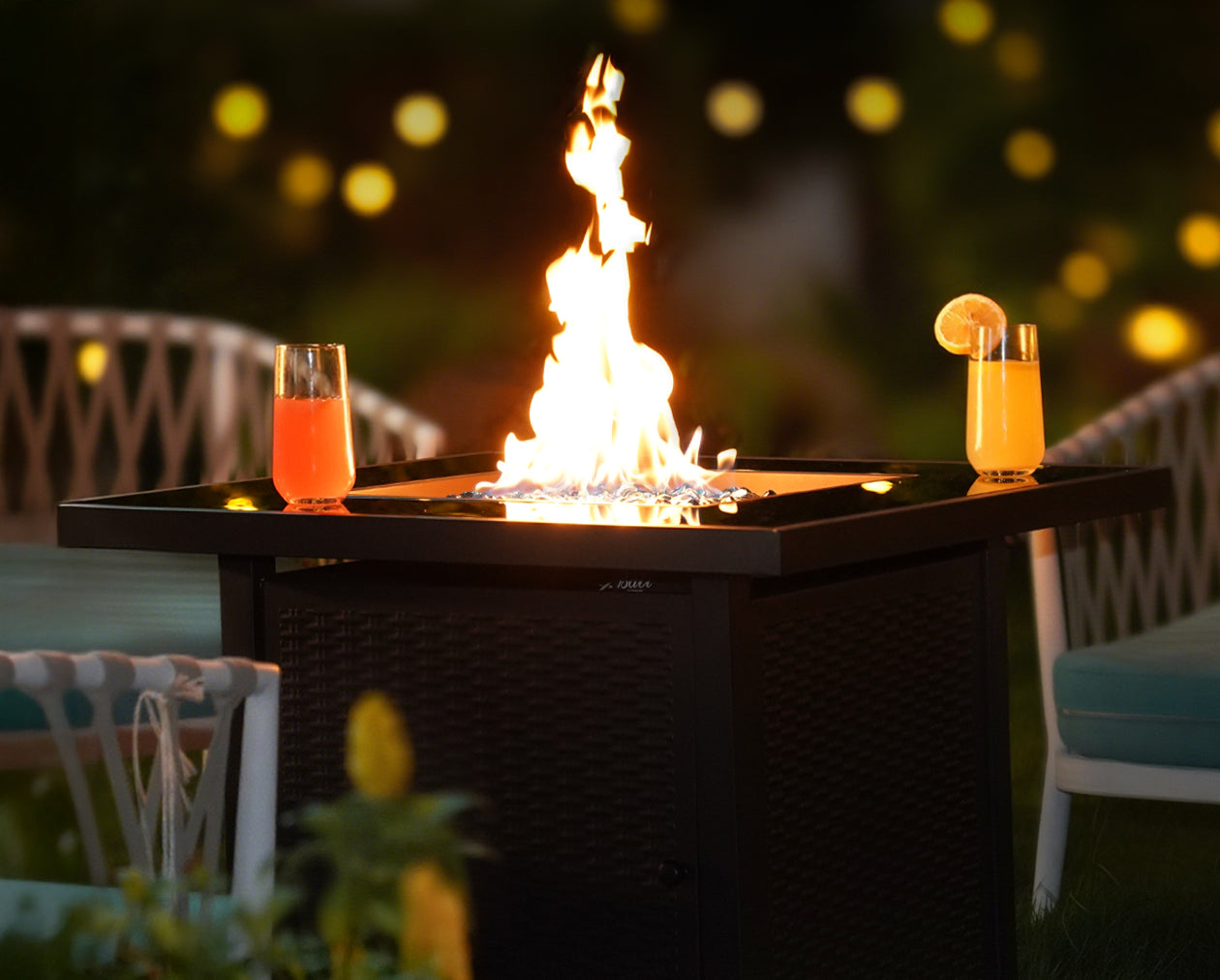


The fire pit itself gets all the attention, but accessories determine how long it lasts and how much you enjoy using it. A fitted cover keeps rain out of the burner. A wind guard stops gusts from flattening the flame. A spark screen catches embers before they land on the deck.
This guide covers every common fire pit accessory and helps you figure out which ones are worth buying for your setup.
Fire Pit Accessories at a Glance
Here is a quick comparison of the most common accessories, what they cost, and who needs them:
| Accessory | Price Range | What It Does | Who Needs It |
|---|---|---|---|
| Fire pit cover | $25–$80 | Shields against rain, UV, dust, and pollen | Everyone with an outdoor fire pit |
| Wind guard | $40–$120 | Blocks wind; retains heat around the flame | Gas fire pit owners in breezy spots |
| Fire glass | $30–$60 (10 lb bag) | Decorative media that reflects light and adds color | Gas fire pit owners wanting a modern look |
| Lava rocks | $15–$40 (10 lb bag) | Natural media that retains and radiates heat | Gas fire pit owners prioritizing warmth |
| Spark screen | $25–$70 | Mesh dome that catches embers and sparks | Wood-burning fire pit owners, especially on decks |
| Fire pit mat / pad | $30–$80 | Heat-resistant barrier protecting the surface below | Fire pit owners with wood or composite decks |
| Fire poker / tongs | $15–$40 | Moves and rearranges logs safely | Wood-burning fire pit owners |
| Cooking grate | $20–$60 | Adds a grilling surface over the fire | Anyone who wants to cook over flame |
| Log rack | $30–$100 | Stores firewood off the ground, keeps it dry | Regular wood burners |
| Carry bag | $20–$50 | Protects portable fire pits during transport | Campers and tailgaters |
Now let's break down each accessory in detail so you can decide what belongs in your setup.
Covers: The Most Important Accessory You Can Buy
A fire pit left uncovered collects rainwater in the burner pan, traps debris in the ports, and fades under UV exposure. Within one season, an uncovered unit can develop clogged burners, surface rust, and a dull finish. A cover prevents all of that for $30–$80.
What to Look For in a Fire Pit Cover
- Material: 600D polyester with PVC backing is the standard for durability. It resists tearing and handles UV exposure better than thinner fabrics. The ASTM D3786 burst strength test is one way manufacturers rate fabric toughness. Lighter covers (300D or nylon) work for mild climates but degrade faster in sun and rain.
- Fit: Measure the length, width, and height of your fire pit before ordering. A cover that is too large flaps in the wind and traps moisture underneath. Too small and it won't stay put. Our fire pit cover sizing guide walks through the measurement process step by step.
- Closure system: Drawstrings offer the tightest seal. Elastic hems are quickest to use. Buckle straps handle high winds best.
- Ventilation: Mesh vents prevent condensation buildup inside the cover, which can cause mildew and surface damage.
If you own a BALI OUTDOORS fire table or fire pit, check the fire pit cover collection and fire table cover collection for covers sized to match specific models.
Wind Guards: Keep the Flame Steady
A 10–15 mph breeze can push the flame sideways, reduce heat output, and make the fire pit less pleasant to sit around. A wind guard fixes that. Most guards are panels of tempered glass that sit on top of the fire pit rim, forming a barrier around the burner. The glass blocks wind while keeping the flame visible, and it traps heat to create a warmer zone for people sitting nearby.

Choosing the Right Wind Guard
- Shape: Match the shape of your fire pit opening. Rectangular fire tables need a rectangular wind guard; round burners need a round or square guard.
- Height: Most guards stand 6–8 inches tall. Taller guards block more wind but can partially obscure the flame from a seated position.
- Material: Tempered glass is the standard. It handles heat well and won't shatter from normal temperature changes. Avoid non-tempered glass, which can crack from rapid heating.
- Sizing: Measure the inner dimensions of your fire pit opening. The guard should sit inside the rim with about 1/4 inch of clearance on each side.
For a deeper look at the practical benefits, read our article on fire pit wind guard benefits. BALI OUTDOORS offers tempered glass wind guards designed to fit our fire tables in the wind guard collection.
Fire Glass and Lava Rocks
Fire media sits on top of the burner pan, hides the hardware, and changes how the fire looks and feels.

- Fire glass: Small pieces of tempered glass (1/4 to 1/2 inch) available in dozens of colors. It reflects the flame for a bright, shimmering effect and does not burn, melt, or produce soot.
- Lava rocks: Porous volcanic stone that absorbs and radiates heat, giving the area around the fire pit a warmer feel. More natural and rustic than fire glass. Lava rocks can crumble after 1–2 years of regular use and will need replacement.
Our fire glass vs. lava rocks guide compares heat performance, maintenance, and cost. Many BALI OUTDOORS fire tables ship with fire glass included, so you may not need to buy media separately unless you want to change colors or switch to lava rocks.
Spark Screens
A spark screen is a mesh dome that sits over the fire pit opening and catches embers before they drift onto nearby surfaces. This is a wood-burning fire pit accessory. Gas fire pits produce a controlled flame without sparks, so a screen is not needed for propane or natural gas setups.
The National Fire Protection Association (NFPA) recommends ember containment any time you burn wood in a residential setting. If you use a wood-burning fire pit on a deck or near dry vegetation, a spark screen is a safety essential. Look for screens made from heavy-gauge steel mesh with a handle on top for easy removal. The screen should sit securely on the rim without wobbling.
Fire Pit Mats and Heat Shields
A fire pit mat goes underneath the unit to protect the surface below from heat damage, especially at higher BTU settings.
- Deck protection: Wood and composite decking are the most vulnerable. According to the U.S. Consumer Product Safety Commission, fire-related deck damage is a leading cause of outdoor structure fires. A mat rated for temperatures above 1,000 °F provides a solid buffer. Without one, you risk scorch marks, discoloration, and in extreme cases, structural weakening of the deck boards.
- Material options: Fiberglass mats are thinner and more affordable. Silicone-coated mats handle higher temperatures.
- Sizing: The mat should extend 6–12 inches beyond the fire pit base on all sides.
If you use a fire pit on a wood deck, a mat is not optional. Pair it with a cover for winter storage to protect both the fire pit and the deck underneath.
Fire Pokers, Tongs, and Tool Sets
Fire tools are designed for wood-burning fire pits. A poker shifts logs to improve airflow. Tongs let you add or remove wood without getting close to the flame. Many sets also include a small shovel for ash removal.
Gas fire pit owners generally do not need these tools. Gas burners produce a consistent flame without manual adjustment. For rearranging fire media after cleaning, heat-resistant gloves work better than tongs.
Cooking Grates and Grills
A cooking grate sits over the fire and lets you grill food directly. Swivel grates let you swing food on and off the heat without lifting anything. A few things to keep in mind:
- Compatibility: Not every fire pit is designed for cooking. Check manufacturer guidelines first. Cooking can void the warranty on some gas fire pits.
- Grate material: Cast iron holds heat well for searing. Stainless steel resists rust and cleans easily. Chrome-plated grates cost less but wear out fastest.
- Heat control: Adjustable-height grates let you manage heat by raising or lowering the cooking surface.
Our guide on fire pit cooking covers food ideas, tool recommendations, and safety tips for cooking over an open flame.
Log Racks and Firewood Storage
A log rack keeps firewood off the ground, allows air circulation, and prevents moisture from soaking in. Wet firewood produces more smoke, less heat, and more creosote buildup.
- Capacity: Small racks hold 1/8 cord (a few evenings). Larger racks hold 1/2 cord or more for the season.
- Placement: Store firewood at least 20 feet from the house and 5 feet from the fire pit to reduce fire risk. The CAL FIRE defensible space guidelines recommend keeping combustible materials well away from structures. A cover on the top keeps rain out while leaving the sides open for airflow.
- Materials: Steel racks with powder coating last the longest outdoors. Avoid uncoated iron, which rusts quickly.
How to Prioritize Your Accessory Budget
Your fire pit type determines which accessories matter most:
Gas Fire Pit Owners (Propane or Natural Gas)
- Cover: Non-negotiable. Protects the burner, ignition system, and finish.
- Wind guard: Highly recommended if your patio is exposed to any breeze. Makes a noticeable difference in flame stability and warmth.
- Fire media: Many gas fire pits include fire glass or lava rocks. If yours didn't, or you want to change the look, budget $30–$60.
- Fire pit mat: Required if you're using the fire pit on a deck. Optional on concrete or stone patios.
Wood-Burning Fire Pit Owners
- Spark screen: Essential for safety, especially on decks or near dry areas.
- Fire pit mat: Protects the surface below from heat and falling embers.
- Fire poker and tongs: You need at least a poker to manage the fire effectively.
- Cover: Keeps ash, rain, and debris out between uses.
- Log rack: Keeps firewood dry and ready to burn.
Start with a cover and one or two safety items, then add comfort accessories later as budget allows.
Maintenance Tips for Fire Pit Accessories
Basic care keeps accessories working longer:
- Covers: Brush off leaves before removing. Wash with mild soap and water once or twice per season. Let the cover dry fully before putting it back on.
- Wind guards: Clean glass panels with a non-abrasive glass cleaner. Let the guard cool fully before handling.
- Fire glass: Rinse with warm water and a drop of dish soap. Spread on a towel to dry before returning to the fire pit.
- Lava rocks: Replace crumbling rocks. Light brushing removes surface dust, but deep cleaning is rarely effective on porous stone.
- Metal tools and grates: Oil cast iron after washing to prevent rust. Store in a dry location.
For a full seasonal maintenance routine, including burner cleaning and propane system checks, see our gas fire pit maintenance guide.
What About Flame Color Accessories?
Color-changing fire glass, flame colorant packets, and tinted lava rocks are all available online. Here's the reality:
- Color-changing fire glass: Does not change the flame color. The glass itself is colored, creating a visual effect as light passes through it, but the flame stays the same.
- Flame colorant packets: Work with wood-burning fire pits only. Toss a packet into the fire for temporary colored flames (green, blue, purple) lasting a few minutes.
- Gas flame color: Depends on gas type and combustion quality, not the media. A properly burning propane flame is blue at the base with yellow tips.
If flame aesthetics matter to you, our fire pit flame colors guide explains what affects flame color and how to get the look you want.
Frequently Asked Questions
What accessories come with most fire pits?
It varies by brand and model. Budget fire pits often ship with just the burner and basic hardware. Mid-range models frequently include fire media, a lid, and sometimes a wind guard. Always check the product listing to see what's included so you can budget for anything missing.
Do I need a wind guard for a propane fire pit?
If your patio has any regular breeze, yes. A wind guard prevents the flame from being pushed sideways, which wastes fuel and reduces warmth. On a completely sheltered patio, it's less critical but still improves heat retention.
Can I use a spark screen on a gas fire pit?
You can, but there's little reason to. Gas fire pits don't produce sparks or embers. A spark screen would just sit on top without serving its intended purpose. For gas fire pits, a wind guard is the more useful accessory.
How do I know what size cover to buy?
Measure the length, width, and height of your fire pit. Add 1–2 inches to each dimension for a snug fit. Avoid oversized covers, which trap moisture and blow off in the wind. Our cover sizing guide matches specific covers to fire pit dimensions.
Are fire pit cooking grates safe to use?
They are safe when used on a fire pit designed for cooking. Not all fire pits support cooking, and using a grate on a gas fire pit may void the warranty. Grease dripping into the burner can cause flare-ups or clog ports. Check your owner's manual first.
How often should I replace fire glass or lava rocks?
Fire glass rarely needs replacement. It doesn't burn, melt, or degrade under normal use. A rinse once or twice a season keeps it clean. Lava rocks are softer and more porous, and can crumble after 1–2 years of regular use, at which point you should swap them out.
Ready to outfit your fire pit? Start with a closer look at essential accessories, then browse our propane fire pit buying guide if you're still choosing a fire pit to go with them.