

Flame color indicates how efficiently your fire pit burns fuel and whether it operates safely. Blue flames mean complete combustion with maximum heat output. Yellow flames can be normal decorative glow or a warning sign of poor combustion. Orange or red flames signal serious problems. Understanding these colors helps you troubleshoot issues, save propane, and maintain a safe outdoor space.
What Determines Flame Color?
When you light your fire pit, you mix fuel (propane) with oxygen from the air. A spark ignites this mixture to produce heat. This process is called combustion.
The quality of this combustion determines both the color you see and the efficiency of your fire. Complete combustion means the propane mixes with enough oxygen to burn fully. Incomplete combustion occurs when fuel lacks sufficient oxygen, wasting energy and creating potentially dangerous gases.
What Blue Flames Mean
A blue flame indicates complete combustion. This means your propane is mixing with enough oxygen to burn fully. When combustion is complete, the fire releases the maximum amount of heat possible from the fuel. The byproducts are harmless water vapor and carbon dioxide.
What you get:
- Peak fuel efficiency
- Maximum heat output
- Clean burning with no soot
- Safe operation
If you see a steady blue base in your fire, your unit operates at peak efficiency. You get the most warmth for every dollar you spend on propane.
What Yellow Flames Mean
Yellow flames can be normal or problematic, depending on the pattern.
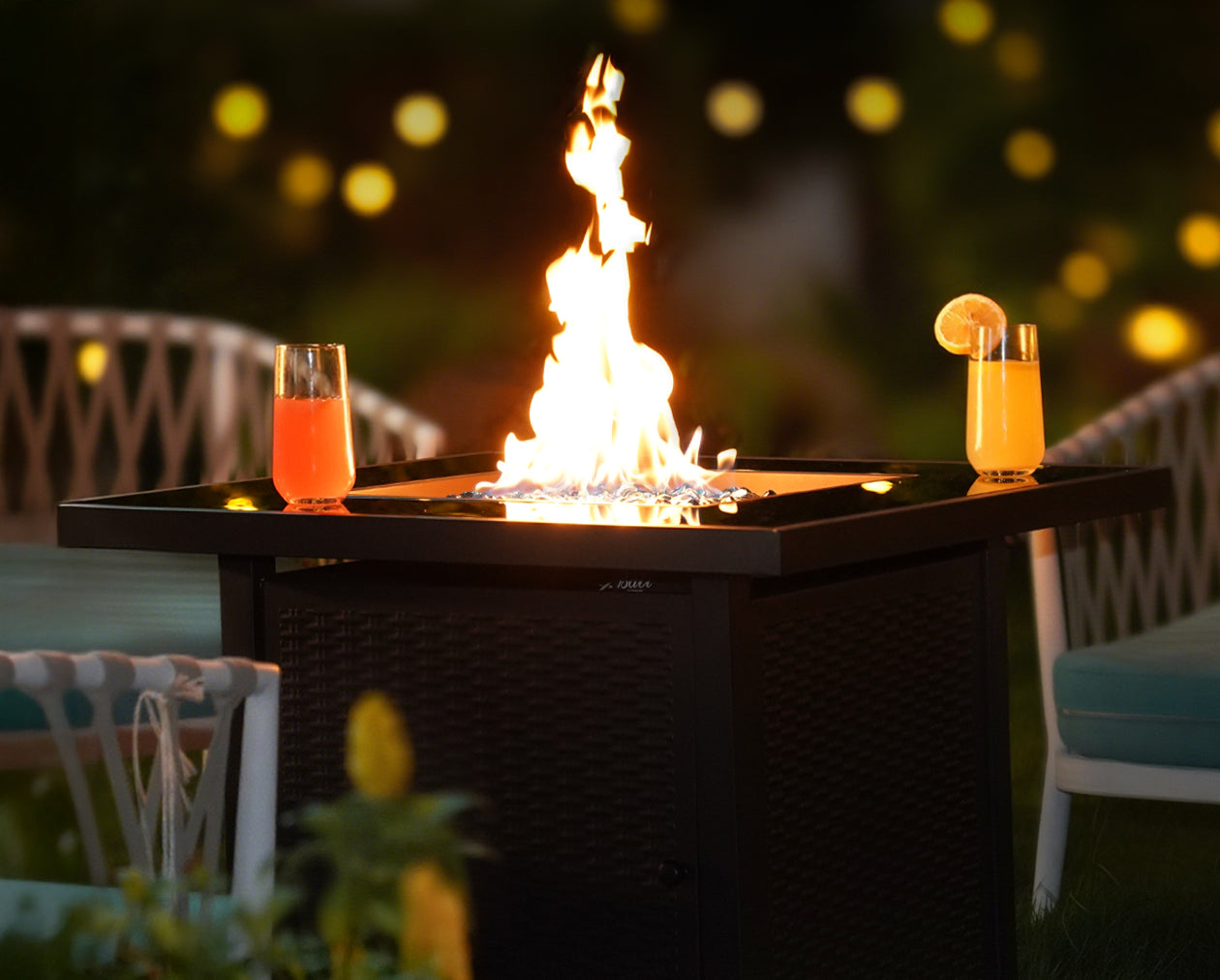
Normal yellow (decorative): A flame with a blue base that transitions into yellow tips is ideal for residential fire pits. The blue base shows efficient combustion, while the yellow tips provide that cozy, campfire-like glow. This is exactly what quality fire pits are designed to produce.
Problematic yellow (warning sign): A flame that is entirely yellow or deep orange without any blue base signals incomplete combustion. This happens when fuel lacks sufficient oxygen. The yellow color comes from glowing soot particles (tiny bits of unburned carbon). This type of flame:
- Produces less heat
- Wastes propane
- Releases carbon monoxide
- Leaves black soot on fire glass or lava rocks
While some yellow is normal for aesthetics, a fire that turns from blue to a deep, sooty orange suggests a mechanical or airflow issue. This isn't an emergency, but we recommend checking your air mixer settings or cleaning the burner ports before your next use to restore peak efficiency.

What Orange or Red Flames Mean
Deep orange or red flames are serious warning signs. This color indicates severe incomplete combustion.
What causes it:
- Severely restricted airflow
- Major blockages in burner ports
- Regulator malfunction
- Wrong gas pressure
What happens: For more details, see our guide on testing your fire pit after rainfall.
- Very low heat output
- Heavy soot deposits
- Black smoke
- Potential carbon monoxide production
If your flames shift completely to a dull yellow or red and generate black smoke, do not ignore it. Turn off the unit immediately and investigate.
Why Propane Burns Differently Than Wood
Homeowners often confuse the standards for wood fires with those for propane fire pits. If you grew up with a wood-burning campfire, you associate a bright yellow and orange glow with a healthy fire. Wood burns differently than refined gases because it contains moisture and complex organic compounds that naturally burn yellow and create smoke.
Propane is a refined, high-energy fuel. In industrial settings, a propane flame is typically blue. For residential fire pits, a purely blue flame looks too much like a kitchen stove and lacks the cozy feel most people desire.
Manufacturers design high-quality fire pits to achieve a safe balance: a flame with a blue base (indicating heat and efficiency) that transitions into yellow tips. This decorative yellow provides the warm, natural look of a wood fire without the heavy soot or dangerous carbon monoxide levels of incomplete combustion.
What Causes Wrong Flame Colors
Air Mixer Valve Problems
If your flame looks too yellow and deposits soot on your fire glass or lava rocks, check the air mixer valve first. This component controls how much air mixes with propane before ignition.
The air mixer sits below the burner pan and uses the Venturi effect to pull in air as gas passes through. Propane is a heavy gas that needs help mixing with oxygen, which is why this valve is critical. Browse our propane fire pits to find the perfect fit for your outdoor space.
Adjustment guidelines:
- Too Much Air: Wide-open valve creates a loud, roaring sound and a thin, entirely blue flame that lifts off the burner
- Too Little Air: Closed or clogged valve prevents oxygen from reaching the gas, creating a lazy yellow flame
Adjust the collar on the air mixer. Open it slightly if your flame is too yellow. Close it slightly if the flame is too blue or noisy. Small adjustments make a big difference.
Burner Blockages
Outdoor fire pits face constant challenges from nature. Even high-quality stainless steel burners struggle when exit ports get blocked.
Common obstructions: For more details, see our guide on propane tank burn time and efficiency.
- Insects: Spiders and wasps build nests inside mixing tubes or burner portholes
- Debris: Dust, pollen, and leaves settle into the burner area
- Media Dust: Lava rock or fire glass dust clogs gas exit holes
Blocked ports change gas pressure at specific spots. You might see blue flames on one side but wild yellow spikes on the other. This uneven pattern creates hot spots that can damage the burner over time.
Regularly inspect your burner. Use a pipe cleaner or compressed air to clear ports. Keep fire media from covering the ignition pilot housing.
Gas Pressure Issues
Sometimes the problem is the fuel supply line, not the burner. Your fire pit has a regulator hose that reduces tank pressure to a safe level for the burner.
Low pressure: Nearly empty tanks produce weak, flickering flames that die out. Cold weather also decreases propane pressure temporarily. Check your tank level first.
High pressure: Failed regulators allow too much gas through, creating massive, dangerous flames with chaotic yellow turbulence. If you suspect regulator failure, turn off the gas immediately and replace the hose.
Warning Signs You Shouldn't Ignore
Soot Buildup
Soot is the physical evidence of poor combustion. Propane should burn clean. If you notice black, powdery residue accumulating on your fire glass or ceramic logs, your flame is too yellow.
This carbon buildup is not simply messy; it acts as an insulator. Over time, layers of soot prevent the fire media from radiating heat properly. This means you stay cold even when the fire is on high.
If you see soot, you have a combustion problem. Cleaning the soot off is only a temporary fix. You must identify why the flame burns yellow (air mixer, blockage, or pressure) and fix the root cause. Otherwise, the black residue will return within hours of use.

Black Smoke
Visible black smoke means severe incomplete combustion and carbon monoxide production. This is dangerous. Turn off the unit, ensure good ventilation, and troubleshoot the issue immediately.
Uneven Flame Patterns
If flames look different across the burner ring (blue here, yellow there), you have partial blockages or air distribution problems. Address these immediately to prevent burner damage and ensure consistent heat output.
Ready to Enjoy the Perfect Flame?
Fire pit flame color provides constant feedback about your unit's health. A blue base is necessary for safety, fuel economy, and heat output. Some yellow adds cozy ambiance. Deep orange or red flames signal problems requiring immediate attention.
By keeping an eye on combustion quality, checking your air mixer, and keeping the burner ports clean, you ensure warm, worry-free evenings. At Bali Outdoors®, we design our fire pits to optimize fuel-to-oxygen balance for both efficiency and natural flame beauty. Explore our collection of high-performance fire pits.
FAQ
Q1: Is it safe to add chemicals to change flame colors?
No. Never add color-changing packets or chemicals to propane fire pits. These products are designed for wood fires only. They corrode burner components, clog gas ports, and release toxic fumes in gas systems. Stick to natural flame colors for unit longevity and safety.
Q2: Why is my flame blue at the bottom but yellow at the top?
This is ideal for decorative gas fire pits. The blue base shows clean combustion as gas exits the burner. Yellow tips occur at the top of the flame where oxygen is less concentrated. This causes tiny carbon particles to glow bright yellow before they burn away, creating that desirable campfire look.
Q3: Does wind affect flame color?
Yes. Strong breezes disrupt the air-to-gas mixture. Wind can blow gas away from the air intake or push too much oxygen into the burn area. The flame shifts from blue to yellow and waves erratically. Use a wind guard or turn off the unit during very windy conditions.
Q4: How do I know if my fire pit produces carbon monoxide?
Carbon monoxide is invisible and odorless. Visual cues are critical. Heavy dark yellow or dull red flames that produce black smoke and soot indicate incomplete combustion, which generates carbon monoxide. Turn off the unit, check for blockages, and ensure good ventilation immediately.
While outdoor ventilation typically disperses CO safely, never use a fire pit in enclosed spaces or under poorly ventilated covers without proper clearance.