

| Feature | Wood-Burning Fire Pit | Propane Fire Pit |
| Atmosphere | Traditional, rustic feel with crackling logs | Modern, steady flame without smoke |
| Startup | Needs kindling, matches, and attention | Instant ignition with knob or switch |
| Cleanup | Ash and soot require regular cleaning | Minimal — just check hose and connections |
| Fuel | Firewood | Propane tanks, easy to swap |
| Cooking | Can roast or cook directly over flame | Not ideal for cooking |
| Regulations | May be restricted in some areas | Generally fewer restrictions |
| Cost | Lower upfront, but ongoing expense depends on wood | Higher upfront, steady ongoing propane expense |
| Maintenance | Frequent ash removal, cover needed for weather | Occasional checks, very low upkeep |
| Mobility | Heavy, often fixed in place | Many models are portable and easy to move |
A fire pit can instantly change the mood of a backyard. Beyond warmth on a cool night, it creates a spot where people gather — for stories, late-night talks, or simply the quiet comfort of watching flames. Choosing between propane fire pits and a wood-burning fire pit isn't always straightforward, since each has unique strengths and trade-offs.
Wood Burning Fire Pits Give the Traditional Experience
A wood-burning fire pit feels familiar and nostalgic. The snap of burning logs, the smoke that lingers on clothes, and the glow of embers all recall campfires. Still, the charm comes with extra work.
Advantages of Wood Burning Fire Pits
- Natural atmosphere: The smell of oak or cedar and the sight of sparks create a rustic outdoor feel.
- Fuel availability: Firewood is widely sold, and in some rural areas, it can even be gathered easily.
- Cooking ability: The strong heat makes it possible to toast bread or roast skewers.
Drawbacks of Wood-Burning Fire Pits
- Smoke concerns: Smoke drifts into laundry or open windows, and can irritate people with asthma or allergies.
- Effort to use: Fires need kindling, attention, and tools like a poker, especially if the wood is damp.
- Regulations: Some suburbs limit wood burning during dry or windy weather.
Wood-burning fire pits bring character and atmosphere, but they also require patience and regular upkeep.
Propane Fire Pits Provide a Modern Way to Enjoy Fire
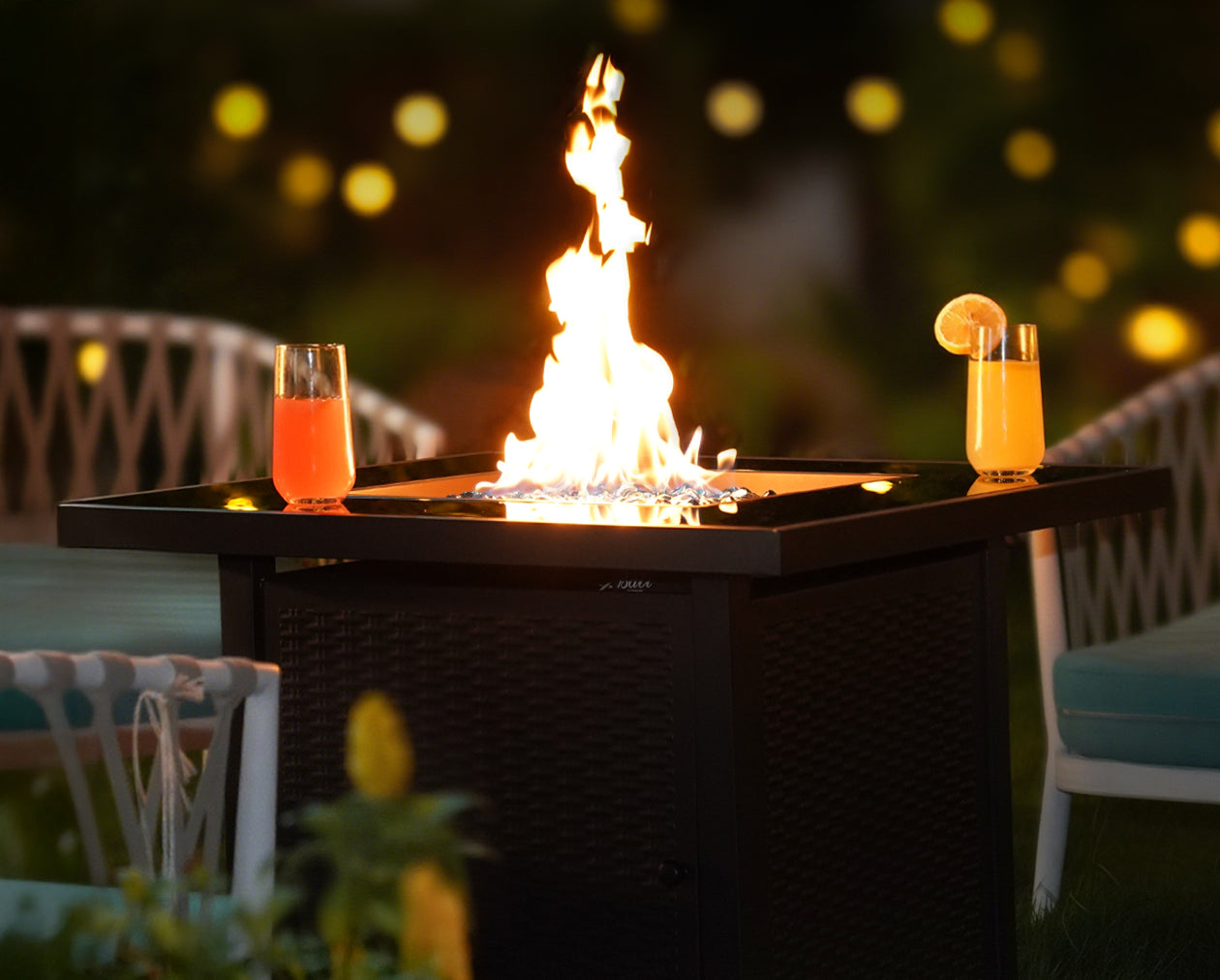
Wood fire pits have their charm, but propane fire pits are designed for everyday life. They bring fire to your backyard with the same ease as turning on a light, giving you more time to enjoy the evening instead of working to keep the fire alive.
Benefits of Propane Fire Pits
- Instant start: Flames appear within seconds. This means you can enjoy fire on a weekday evening after dinner without any setup.
- Cleaner use: There's no ash, no half-burned wood, and no sweeping. The patio stays neat, and clothes don't smell like smoke afterward.
- Adjustable flame: A simple turn of the knob gives you control, from gentle flicker to strong warmth. Perfect for both quiet nights and gatherings.
- Flexible design: Many propane fire pits are light enough to move, effectively working as a portable fire pit that can adapt to smaller patios or different backyard layouts.
Considerations for Propane Fire Pits
- Fuel refills: Tanks do run out, but most households keep a spare tank, making swaps quick and simple. See our 20 lb propane tank burn time guide for exact run times by BTU level.
- Different feel: You won't hear the crackle of logs, but many people prefer the steady, smoke-free flame and the fact that guests can sit closer without irritation.
- Starting price: The cost can be higher than a basic log pit, but the time saved on cleanup and the comfort of instant fire often outweigh that difference.
For families who want warmth without extra work, propane fire pits are hard to beat. They combine convenience, cleanliness, and modern control in a way that fits busy lives and makes backyard evenings easier to enjoy.
Comparing Costs of Wood and Propane Fire Pits
Money plays a role in any fire pit decision, both at the start and as time goes on. Focusing only on propane and wood-burning fire pits makes the differences clearer.
| Fire Pit Type | Upfront Cost | Ongoing Fuel Cost | Notes |
| Wood Burning Fire Pit | Generally lowest | Varies by wood source | Simple entry point, but costs rise if you need to buy wood often |
| Propane Fire Pit | Moderate to higher | Steady, recurring expense | Convenient but requires regular tank refills or replacements |
Wood-burning fire pits usually cost less at the beginning, but expenses depend heavily on local access to firewood. Propane fire pits cost more upfront and carry steady fuel costs, yet they offer predictable convenience that many homeowners value.
How Much Care a Fire Pit Really Needs
A fire pit should be enjoyable, not another chore. How much time you spend cleaning depends on whether you choose wood or propane.
Wood Burning Fire Pits
Ash builds up with every fire. If it isn't cleared, it mixes with rain or dew and turns into a messy paste that makes the next fire harder to light. Covers help keep things dry, but lightweight covers can easily blow off in strong winds. Regular sweeping and occasional scrubbing are part of the routine.
Propane Fire Pits
Cleaning up is easy. There's no ash to deal with and only a little soot. The main task is simply testing the hose and connections for leaks once in a while. Propane tanks should be stored upright and away from direct heat. Other than that, maintenance is straightforward.
Compared with wood-burning fire pits, propane fire pits require much less attention.
Other Fire Pit Options to Consider
Beyond wood and propane, two other types of fire pits are also worth considering. They're less common but can solve problems many homeowners face.
Smokeless Fire Pits
These are built with a double-wall design that draws in air and burns wood gases more completely. The result is clear: much less smoke in the air, on clothing, or in your eyes. They still use real logs, but burn them more efficiently. For small yards or homes close to neighbors, smokeless fire pits are a smart option.
Natural Gas Fire Pits
These connect directly to a home's gas line and can be lit with a simple switch—no tanks to refill and no wood to stack. The drawback is that they're permanent and need professional installation. For homeowners planning to stay long-term, that stability is an advantage.
Smokeless fire pits look much like traditional wood-burning models but with far less smoke — our smokeless vs traditional fire pit guide covers this trade-off in detail. Natural gas fire pits offer a steady, low-maintenance flame.
Matching the Fire Pit Type to Your Lifestyle
The best fire pit isn't just about price—it depends on how you plan to use your outdoor space. Think about your yard size, how often you entertain, and how much effort you want to put into upkeep.
Wood Burning Fire Pits Are Best For
- People who love the smell, crackle, and glow of real logs.
- Homes with spacious yards where smoke won't disturb neighbors.
- Families who enjoy the occasional experience of cooking simple foods over an open flame.
Propane Fire Pits Are Best For
- Homeowners who want instant flames with no extra work.
- Neighborhoods where smoke might raise complaints.
- Households that like to rearrange their backyard setup and need flexibility.
Other Options Worth Considering
- Smokeless fire pits reduce smoke while keeping real wood, making them a lighter alternative for tighter spaces.
- Natural gas fire pits provide a permanent, steady flame for homes already equipped with a gas line.
Choosing a fire pit based on lifestyle makes the decision easier. If you value tradition and atmosphere, wood brings that experience. If convenience and low maintenance matter more, propane fits perfectly. Smokeless and natural gas options serve as helpful alternatives but remain secondary to the main decision between wood and propane.
Find the Right Fire Pit for Your Backyard
There is no universal winner in the propane fire pits versus wood-burning fire pit debate. Wood gives tradition, propane brings convenience, smokeless reduces irritation, and natural gas guarantees stability. Think about how you plan to use your backyard — relaxed evenings with friends, quiet nights alone, or family weekends — and let that guide the decision. The right fire pit is the one that turns your outdoor space into a place where people want to linger.