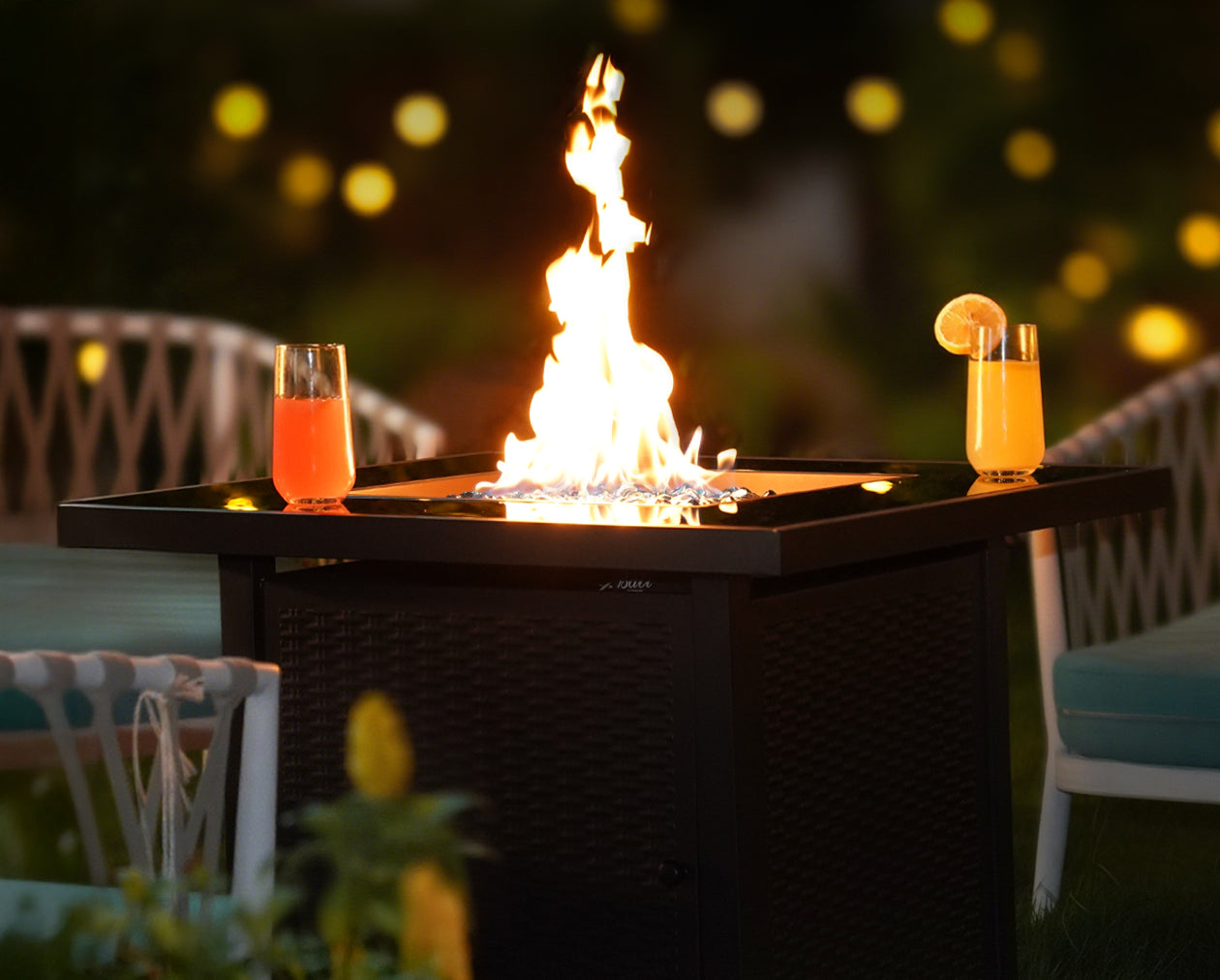


Stainless steel fire pits show up in nearly every "best of" list, and for good reason. The material resists rust, handles extreme heat, and looks sharp years after purchase. But stainless steel also costs more than regular steel, and not every backyard setup justifies the premium.
This guide breaks down the real differences between stainless steel and standard (carbon/mild) steel fire pits. You will learn how each material performs over time, what price gap to expect, and which one makes sense for your climate and budget.
Stainless Steel Fire Pit vs. Steel: What Is the Actual Difference?
Both materials start as iron-carbon alloys. The split happens when chromium enters the mix. According to ASM International, stainless steel contains at least 10.5% chromium by mass. That chromium forms a thin, self-repairing oxide layer on the surface that blocks oxygen from reaching the iron underneath. Regular steel lacks this chromium content, so it oxidizes freely when exposed to moisture and air.

In practical terms: a stainless steel fire pit bowl left uncovered in the rain will look almost the same a year later. A bare carbon steel bowl in the same conditions will develop a coat of orange rust within weeks.
Grades That Matter for Fire Pits
Not all stainless steel is equal. Two grades dominate the fire pit market:
- 304 stainless steel: The most common grade in consumer fire pits. Contains roughly 18% chromium and 8% nickel. Excellent corrosion resistance for most residential settings. Handles temperatures well above what any backyard fire produces.
- 316 stainless steel: Adds 2–3% molybdenum for better resistance to salt and chloride. Worth the extra cost if you live within a few miles of the ocean or in areas where road salt spray is constant. Some premium brands label this "marine grade."
If a product listing says "stainless steel" without specifying 304 or 316, it may be a lower grade like 430 or 201. These grades contain less nickel and offer weaker corrosion protection. Always check the spec sheet.
Head-to-Head: Stainless Steel vs. Carbon Steel Fire Pits
| Factor | Stainless Steel (304/316) | Carbon / Mild Steel |
|---|---|---|
| Corrosion resistance | High; self-healing oxide layer | Low; rusts without coating or treatment |
| Heat tolerance | Handles 1,500 °F+ without warping | Handles 1,200 °F+; may warp with repeated thermal cycling |
| Weight (similar size bowl) | Slightly heavier due to alloy density | Lighter at equivalent thickness |
| Price range (24–30 in. bowl) | $250–$800+ | $80–$300 |
| Lifespan (outdoor, minimal care) | 10–20+ years | 3–7 years before structural rust |
| Appearance over time | Stays silver/brushed; may show heat tint | Develops patina or rust; some owners prefer this look |
| Maintenance | Occasional wipe-down; no coating needed | Needs seasoning, paint, or powder coat to prevent rust |
The short version: stainless steel costs more upfront but needs less attention over its longer life. Carbon steel costs less but demands regular maintenance to stay functional. For a deeper look at how coatings protect steel fire pit frames, read our powder-coated fire pit maintenance guide.
Rust and Corrosion: The Deciding Factor
Rust is the number-one reason fire pits get replaced. A steel fire pit that lives outdoors year-round faces rain, morning dew, humidity, and temperature swings. Each cycle chips away at unprotected metal.

How Stainless Steel Handles Moisture
The chromium oxide layer on stainless steel is self-repairing. Scratch the surface and the oxide reforms within hours when exposed to oxygen. This means minor scuffs from moving the pit around your patio heal on their own. You do not need to touch up paint or reapply sealant.
That said, stainless steel is not immune to corrosion. Chloride exposure (salt air, pool chemicals, de-icing salts) can cause pitting over time, especially on 304 grade. If your fire pit sits near a saltwater pool, 316 grade is the safer pick.
How Carbon Steel Handles Moisture
Without protection, carbon steel rusts fast. Most steel fire pits ship with either a powder coat or high-temperature paint as a barrier. The problem: fire pits get hot. Repeated heating and cooling cycles can crack paint and cause powder coat to chip, especially around the fire bowl rim where temperatures peak. Once the coating breaks, rust starts at that spot and spreads.
You can slow this down with regular inspections and touch-ups. Our guide on stopping surface rust on steel fire tables covers the exact steps. But the maintenance never fully stops.
Heat Performance and Structural Integrity
Fire pits see temperatures ranging from 800 °F to over 1,100 °F at the hottest points, depending on fuel type and airflow. Both stainless and carbon steel handle these temperatures, but they respond differently over hundreds of fire cycles.
| Property | Stainless Steel (304) | Carbon Steel |
|---|---|---|
| Melting point | ~2,550 °F | ~2,600 °F |
| Thermal expansion rate | Higher (expands more per degree) | Lower |
| Resistance to warping | Good; thicker gauge minimizes distortion | Moderate; thin-gauge bowls may warp after repeated use |
| Heat discoloration | Gold/blue tint at high temps (does not affect function) | Darkens; coating may blister |
Stainless steel expands slightly more when heated, which is why some stainless fire bowls develop a faint flex at very high temperatures. This is normal. Carbon steel holds its shape well initially but can warp permanently if the gauge is thin (20 gauge or less).
For wood-burning fire pits where temperatures run hotter, stainless steel has a clear edge. For propane fire pits at lower, controlled temperatures, the gap narrows. Browse our propane fire pit collection to see how controlled-burn designs reduce material stress.
Stainless Steel Fire Pit Types
The stainless steel fire pit market splits into a few main categories:

- Smokeless fire pits: Double-wall stainless steel construction with secondary air vents that re-burn smoke particles. Brands like Solo Stove and Breeo popularized this design. They burn wood efficiently and produce minimal smoke. For a full breakdown, see our smokeless fire pit buyer's guide.
- Standard wood-burning bowls: Single-wall stainless bowls on a stand. Simpler design, lower price, no smokeless feature. Good for occasional campfire-style use.
- Propane fire pit components: Stainless steel burner pans and rings used inside fire pit tables with steel or aluminum frames. The burner itself is stainless while the surrounding structure may not be.
- Custom/built-in inserts: Stainless steel drop-in fire bowls designed for permanent hardscape installations. Typically 304 or 316 grade, priced at $400–$1,500 for the insert alone.
The smokeless category has driven most of the consumer interest in stainless steel fire pits over the past few years. For a ranked list of what to look for, see our best smokeless fire pits roundup. If smoke is your main concern, our article on how smokeless fire pits work explains the engineering behind the double-wall airflow system. And if you are comparing Solo Stove to less expensive options, our Solo Stove alternatives guide breaks down the trade-offs.
Cost Breakdown: Is Stainless Steel Worth the Premium?
A stainless steel fire pit typically costs 2–3x more than a comparable carbon steel model. Here is a quick price comparison by category:
| Fire Pit Type | Carbon Steel Price | Stainless Steel Price |
|---|---|---|
| Wood-burning bowl (24–30 in.) | $80–$200 | $250–$600 |
| Smokeless fire pit | $100–$250 | $300–$800 |
| Propane fire pit table (burner only) | N/A (frame is steel) | $50–$150 (burner pan) |
| Built-in drop-in insert | $150–$400 | $400–$1,500 |
Here is where the price gap comes from:
- Raw material: Nickel and chromium are expensive. 304 stainless runs roughly $1.50–$2.50 per pound at mill prices, versus $0.30–$0.60 for hot-rolled carbon steel. That gap multiplies across a 20–40 lb fire pit.
- Manufacturing: Stainless steel is harder to cut, weld, and form. Welding requires inert gas shielding (TIG or MIG with argon), which adds labor cost.
- Finishing: Carbon steel needs painting or powder coating. Stainless skips this step but costs more at the raw material stage, so carbon steel still wins on upfront price.
Over a 10-year span, the math shifts. A $150 carbon steel pit that rusts out in 4 years and gets replaced costs $300 total. A $350 stainless steel pit that lasts the full decade costs $350 with less maintenance along the way. For owners who keep their fire pit long term, stainless steel often breaks even or comes out ahead.
Which Material Fits Your Setup?
The right pick depends on your climate, how often you use the fire pit, and what fuel type you prefer.
Choose Stainless Steel If:
- You live in a humid or coastal area where rust is aggressive
- You want a wood-burning smokeless fire pit that handles high heat repeatedly
- You prefer minimal maintenance and plan to keep the pit for 7+ years
- You leave your fire pit uncovered regularly (no covered patio or storage)
Choose Carbon/Mild Steel If:
- You have a covered patio or store the pit between uses
- Your budget is under $200 and you want maximum size for the money
- You like the weathered patina look that develops on raw steel
- You use a propane fire pit where temperatures stay lower and more controlled
Many fire pit tables use a hybrid approach: a steel frame with powder coating for the structure and a stainless steel burner pan where heat and moisture exposure are highest. This balances cost and durability. Our steel vs. aluminum fire pit table guide compares how different frame materials affect long-term value.
Maintenance Tips for Both Materials
No matter which material you choose, a few habits extend the life of any fire pit:
- Cover it: A fitted cover is the single best investment for any fire pit material. It blocks rain, UV, and debris. Our fire pit cover sizing guide helps you find the right fit.
- Clean the burner: For gas fire pits, brush out the burner ports monthly during the season. Clogged ports cause uneven flames and can trap moisture. Follow the steps in our gas fire pit maintenance guide.
- Remove ash promptly: For wood-burning pits, scoop out ash after it cools. Wet ash holds moisture against the metal and accelerates corrosion on both steel types.
- Inspect before each season: Look for cracks in welds, chips in coatings, and signs of rust. Early treatment prevents small spots from becoming structural problems.
- Store for winter: In cold climates, move the fire pit to a garage or shed for winter, or at minimum use a heavy-duty cover. Our winter storage guide covers the full process.
For stainless steel specifically, wipe occasionally with a stainless steel cleaner to remove water spots. Avoid steel wool or abrasive pads that can scratch the oxide layer.
Safety Considerations by Material
Material choice affects a few safety factors worth noting. The National Fire Protection Association (NFPA) recommends keeping any fire pit at least 10 feet from structures, regardless of material. Beyond that baseline:
- Exterior temperature: Stainless steel conducts heat efficiently, so the outer walls of a single-wall stainless pit get very hot. Keep children and pets away, and never place it directly on a wood deck without a heat shield. Double-wall smokeless designs stay cooler on the outside.
- Coating off-gassing: New carbon steel fire pits with paint or powder coat may produce fumes during the first few burns as the coating cures. Run the first burn outdoors in a well-ventilated area and avoid inhaling directly. The U.S. Consumer Product Safety Commission (CPSC) provides general fire pit safety guidance.
- Structural failure: A severely rusted carbon steel fire pit can develop holes or weakened joints. Inspect before each use if the pit is more than 3 years old and has visible rust. A collapse during a fire is a serious hazard.
Frequently Asked Questions
Does stainless steel discolor from fire?
Yes. High heat causes gold, blue, or purple tinting on stainless steel surfaces. This is a cosmetic change only and does not weaken the metal or reduce corrosion resistance. Some owners consider the heat tint part of the fire pit's character. You can remove it with a stainless steel polish if you prefer the original finish.
Can I leave a stainless steel fire pit outside year-round?
You can, and the material will hold up far better than bare carbon steel. That said, using a cover still extends the life of any fire pit by blocking UV, pollen, and standing water. Even stainless steel benefits from basic protection, especially in coastal or high-humidity climates.
Is a stainless steel fire pit safe on a wood deck?
Only with a heat-resistant pad or fire pit mat underneath. Single-wall stainless fire pits transfer significant heat to the surface below, enough to scorch or warp wood and composite decking. Double-wall smokeless designs radiate less heat downward but still benefit from a mat. Check the manufacturer's clearance specs before setting up on any combustible surface.
What gauge stainless steel should I look for?
For a wood-burning fire pit, 16 gauge or thicker provides good durability and heat resistance. Thinner gauges (18–20) work for propane burner pans where temperatures stay lower. Avoid anything thinner than 20 gauge for any fire application.
Will a magnet stick to a stainless steel fire pit?
It depends on the grade. 304 and 316 stainless steel are non-magnetic or very weakly magnetic, so a magnet will not stick firmly. Lower grades like 430 are magnetic. This magnet test is a quick way to verify the grade if the manufacturer does not specify it.
Do I need to season a stainless steel fire pit?
No. Seasoning (coating with oil and heating) is a technique for carbon steel and cast iron to build a protective layer. Stainless steel's built-in chromium oxide layer makes seasoning unnecessary.
Choosing between stainless steel and standard steel comes down to how long you want the fire pit to last and how much maintenance you are willing to do. If you are shopping for a propane fire pit where the burner is stainless and the frame is protected by powder coating, that hybrid approach gives you the best of both worlds. Browse our propane fire pit collection or check out our smokeless fire pit options to find the right fit for your patio.