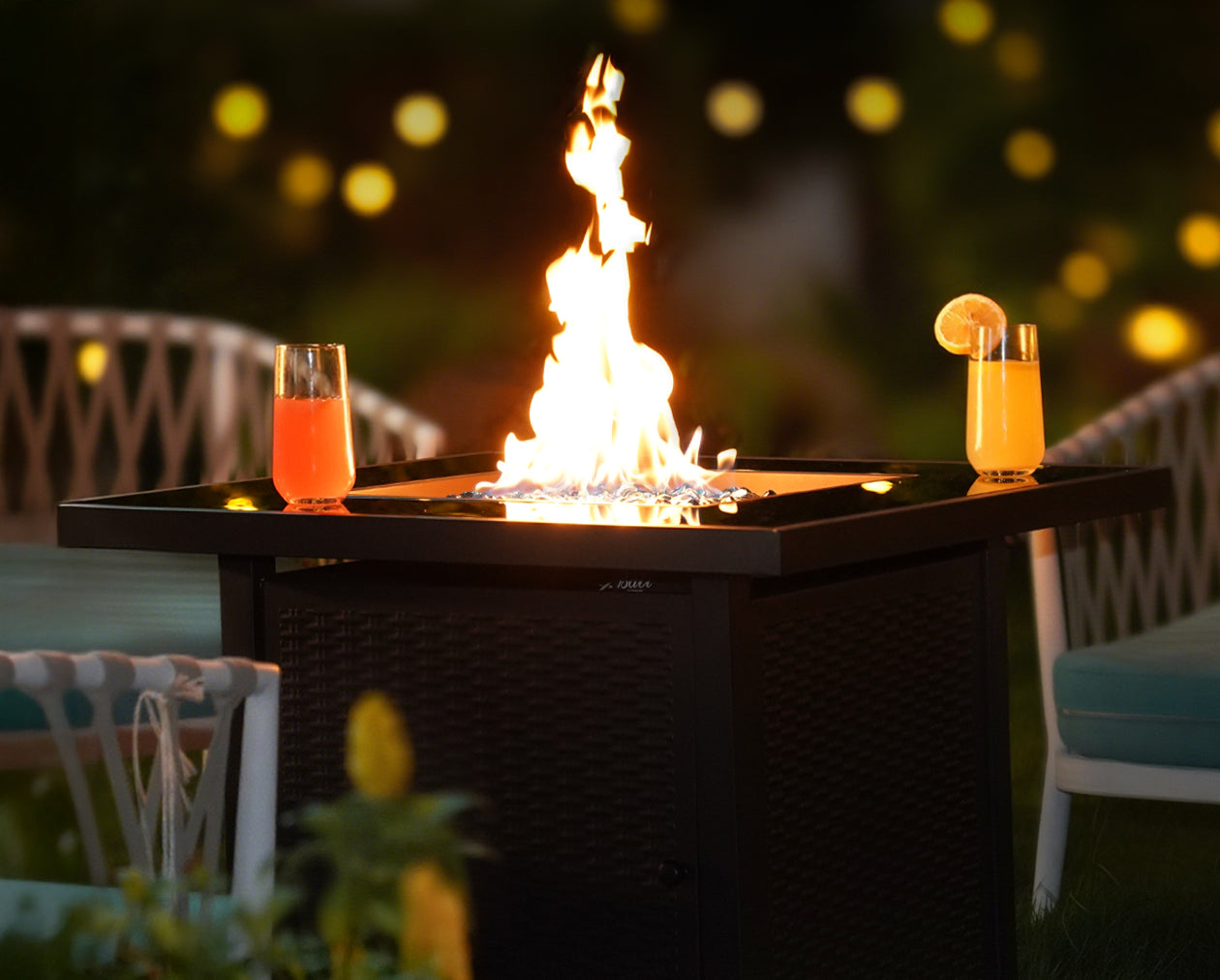


If you have ever gathered around a campfire and spent the entire evening dodging smoke, you already understand the appeal of a smokeless fire pit. These cleverly engineered fire pits promise real flames without the constant cloud of irritating smoke. So how do they actually pull it off?
The answer comes down to physics: double-wall airflow and secondary combustion. In this guide, we break down the science in plain language, cover the real benefits and honest trade-offs, and help you decide whether a smokeless fire pit belongs in your backyard.
What Makes a Fire Pit “Smokeless”?
First, a quick clarification: no wood-burning fire is 100% smoke-free. The term smokeless fire pit means the design dramatically reduces visible smoke—typically by 70–90% compared to a traditional open fire pit. You may still see a thin wisp during startup or when adding new logs. Once the fire is established, though, the smoke virtually disappears.
The difference lies in how the fire pit manages airflow. A traditional fire pit is essentially an open bowl: air reaches the fire from random directions, combustion is inefficient, and a large portion of the wood’s energy escapes as unburned particles. That is what we see and smell as smoke.
A smokeless fire pit flips this around. It is a precision-engineered wood-burning fire pit that controls exactly how and where air feeds the flames.
The Double-Wall Airflow System
The defining feature of a smokeless fire pit is its double-wall construction. The two walls work together in a specific sequence:
- Outer wall with bottom vents. Cool ambient air enters through intake holes near the base of the outer wall. This fresh oxygen feeds the bottom of the fire, keeping the primary combustion strong.
- Air channel between walls. A gap between the inner and outer walls acts as a chimney-like channel. As the fire heats the inner wall, the air trapped in this channel heats up rapidly and rises through convection.
- Inner wall with top vents. Near the rim of the inner wall, a ring of small, precisely placed holes releases this superheated air directly into the top of the fire. This is where secondary combustion kicks in.
The result is a self-sustaining airflow loop: cool air drawn in at the bottom, heated between the walls, injected at the top. No fans. No electricity. Just physics.
Secondary Combustion: Where Smoke Gets Burned Away

When wood burns in a primary fire, it doesn’t combust completely. Volatile gases, tiny carbon particles, and water vapor rise off the logs. In a traditional fire pit, these byproducts simply drift away as smoke.
In a smokeless fire pit, the secondary combustion stage catches those byproducts before they escape:
- Step 1 – Primary burn. Wood ignites at the bottom of the pit. Oxygen from the base vents fuels this initial combustion, generating heat and releasing volatile gases upward.
- Step 2 – Air preheating. Fresh air traveling up the channel between the double walls absorbs heat from the inner wall and reaches temperatures high enough to support re-ignition, roughly 1,100°F (593°C) or above.
- Step 3 – Secondary burn. The superheated air jets out through the top vent holes and collides with the rising smoke and unburned gases. At this temperature, those particles ignite and burn off, converting what would have been smoke into additional heat and a faint shimmer of clean exhaust.
You can often see secondary combustion in action: look for the distinctive ring of small, dancing flames just inside the rim of the fire pit. That ring is unburned gases being consumed in real time.
Why Less Smoke Matters More Than You Think
Reducing smoke is not just about comfort. According to the EPA’s Wood Smoke and Your Health resource, wood smoke contains fine particulate matter (PM2.5) along with harmful compounds like benzene, formaldehyde, and polycyclic aromatic hydrocarbons. These microscopic particles can penetrate deep into the lungs and aggravate asthma, trigger respiratory infections, and even affect cardiovascular health.
By burning off the majority of these particles through secondary combustion, a smokeless fire pit delivers several meaningful benefits:
1. Healthier Air for You and Your Guests
Less PM2.5 means less irritation for everyone around the fire, especially children, older adults, and anyone with respiratory sensitivities. You can actually hold a conversation without watery eyes and coughing fits.
2. No More “Campfire Smell” on Everything
With dramatically less smoke output, your clothes, hair, and patio furniture absorb far less odor. Your outdoor cushions and blankets will thank you.
3. Better Fuel Efficiency
Secondary combustion extracts more energy from each piece of wood. You get a hotter fire from less fuel, which means fewer trips to the firewood pile and less ash to clean up afterward.
4. Neighbor-Friendly Fires
Smoke drifting into a neighbor’s yard is one of the most common sources of backyard friction. A smokeless fire pit keeps the warmth on your patio and the smoke complaints at zero.
5. Fewer Sparks and Embers
The controlled airflow pattern also reduces the random sparks that a traditional fire pit throws. The NFPA recommends placing any fire pit at least 10 feet from structures and combustible materials. Fewer sparks make it easier to stay well within those guidelines.
Honest Limitations to Know Before You Buy
A smokeless fire pit is a genuine improvement over traditional designs, but it is not a magic wand. A few things to keep in mind:
Startup Smoke Is Normal
During the first 5–15 minutes, the double walls have not yet reached the temperatures needed for effective secondary combustion. Expect some visible smoke while the fire establishes itself. Using a top-down lighting method (kindling on top of larger logs) can shorten this window.
Fuel Quality Matters. A Lot.
Secondary combustion works best with dry, seasoned hardwood with a moisture content below 20%. Wet or green wood produces excess steam and volatile gases that overwhelm the secondary burn system. If you see persistent smoke after the fire is established, your wood is almost certainly too wet.
Kiln-dried firewood is the gold standard. If you split your own, give it at least 6–12 months of covered, off-ground seasoning time.
Wind Can Disrupt Airflow
Strong crosswinds can interfere with the natural convection cycle, pushing smoke sideways before it reaches the secondary burn zone. On gusty days, positioning the fire pit behind a windbreak or waiting for calmer conditions will give you the best results.
Higher Upfront Cost
The precision engineering behind double-wall construction means smokeless fire pits typically cost more than a basic steel bowl. However, the difference has narrowed significantly. Today you can find quality smokeless fire pits starting well under $300, a reasonable investment for years of cleaner, more enjoyable fires.
Smokeless Fire Pit Materials: What to Look For
The material your fire pit is made from affects durability, heat retention, and how long it lasts. A quick comparison:
- 304 Stainless Steel. The most common choice for smokeless designs. It resists rust, handles extreme heat cycles, and maintains structural integrity over years of use. Look for thicker gauge steel (typically 2–3 mm) for the best durability.
- Corten (Weathering) Steel. Develops a protective rust patina that gives it an industrial aesthetic. Structurally sound but the patina can stain concrete patios.
- Cast Iron. Excellent heat retention but significantly heavier and more prone to rust without careful maintenance.
For a portable smokeless fire pit that you plan to move between your patio, campsite, or tailgate, stainless steel offers the best balance of weight, durability, and corrosion resistance.
Getting the Most From Your Smokeless Fire Pit
Follow these tips to maximize clean-burning performance:
- Use the top-down method. Place larger logs on the bottom, medium pieces in the middle, and kindling on top. Light from the top. This preheats the pit walls faster and shortens the smoky startup phase.
- Keep logs below the vent holes. If you stack wood above the secondary air holes, you block the jets that eliminate smoke. Leave the top ring of vents clear at all times.
- Burn only dry, seasoned wood. Invest in a moisture meter (under $15 at any hardware store) and test your firewood. Target 15–20% moisture content.
- Clean out ash regularly. A thick layer of ash in the bottom restricts primary airflow. Empty the pit after every two or three burns.
- Protect your investment. When not in use, cover your fire pit with a fitted weather cover to keep moisture, debris, and critters out of the air channels. Blocked vents mean more smoke next time you light up.
Smokeless vs. Traditional vs. Gas: Which Is Right for You?

Choosing the right type of fire pit depends on what you value most.
| Feature | Smokeless Wood-Burning | Traditional Wood-Burning | Propane / Gas |
|---|---|---|---|
| Smoke level | Very low | High | None |
| Real wood fire experience | Yes (crackling, aroma) | Yes | No |
| Ease of use | Moderate (needs dry wood) | Easy (any wood) | Very easy (push-button) |
| Heat output | High | Moderate | Moderate to high |
| Ongoing fuel cost | Low (uses less wood) | Low | Moderate (propane refills) |
| Portability | Good | Varies | Limited (tank weight) |
| Ambiance | Excellent | Excellent | Good |
If you want the authentic crackle and warmth of a wood fire without the smoke, a smokeless fire pit is the strongest option. If convenience matters more and you like the idea of a fire pit table that doubles as an outdoor dining surface, a propane fire pit table may be a better fit.
Fire Pit Safety Essentials
Regardless of type, safe fire pit use comes down to a few firm rules. The NFPA recommends:
- Place your fire pit on a level, non-combustible surface at least 10 feet from any structure or combustible material.
- Never leave a fire unattended. Fully extinguish before going inside.
- Keep children and pets at a safe distance.
- Avoid using a fire pit on windy days.
- Store cooled ashes in a metal container with a lid.
A quality fire pit cover also doubles as a safety measure. It prevents accidental contact with a pit that may still be warm and keeps the unit clean between uses.
Is a Smokeless Fire Pit Worth It?
For most backyard fire enthusiasts, yes. The science behind secondary combustion is proven and straightforward. It is not a gimmick. You get a hotter, cleaner, more fuel-efficient fire with dramatically less smoke, fewer sparks, and less cleanup.
The key is setting realistic expectations: use dry hardwood, give the pit a few minutes to reach operating temperature, and keep those air vents clear. Do that, and you will wonder how you ever tolerated a traditional fire pit.
Ready to experience the difference? Browse the full smokeless fire pit collection at BALI OUTDOORS and find the right fit for your backyard, campsite, or patio.