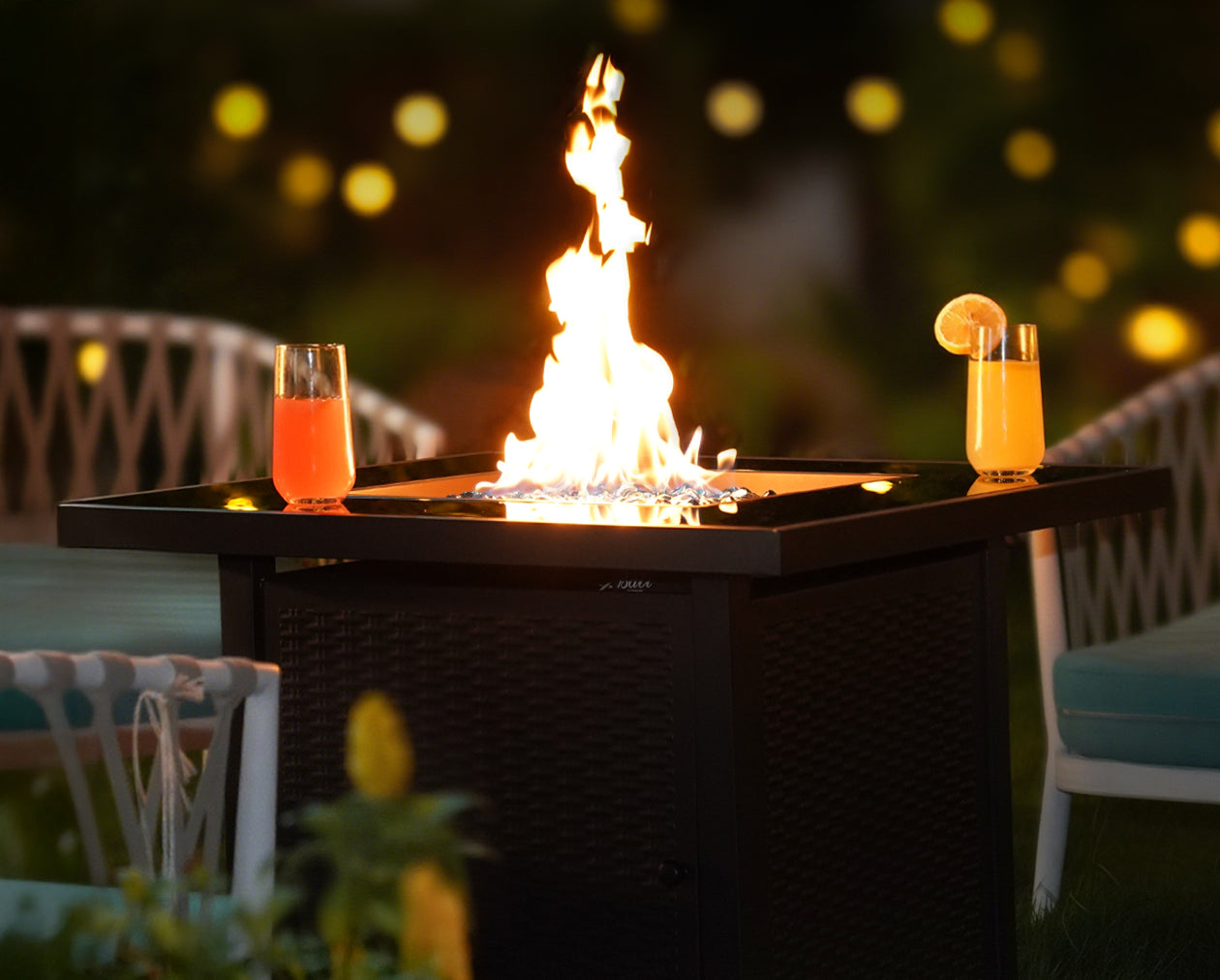


When you go camping on the weekend or just hang out in your backyard on a Thursday night, having the right fire pit changes everything. But if you go to any outdoor store, you'll see dozens of choices, all claiming to be the best. The truth? The right choice depends entirely on how you'll actually use it.
What Size Fire Pit Do You Need?
Bigger isn't always better when it comes to fire pits. Be honest about your typical group size and usage patterns.
- Large fire pits (24 to 28 inches) work well when you often have more than six people over and have adequate storage space. A 28-inch wood pit makes a real campfire setting and gives everyone a place to sit. Assembly takes about 20 minutes, but becomes routine after the first time.
Larger pits are better for families because everyone can see the flames, not just two people stuck in the "good spots." The design makes it possible for kids to roast marshmallows from all sides. You don't have to keep adding sticks; you can use real logs instead.
- Small models (15 inches or less) are good for camping by yourself or with a partner. A 15-inch propane unit weighs between 27 and 41 pounds depending on whether it includes a glass wind guard and fire glass stones—the heavier models have these extras. One person can handle either size. These fit in most car trunks without difficulty.
- Tabletop options (less than 10 inches) work well on balconies and small patios where a full-size pit would be too big or against the rules of an apartment complex.
Propane or Wood: Which Is Better?
This choice will affect everything, from how you clean up to whether you can use your fire pit while camping in the summer.
| What's Important | Propane | Wood |
| Speed of setup | Quick and easy | 10 to 15 minutes |
| Cleanup required | None | Getting rid of ash every time |
| Fire ban restrictions | Usually okay | Often not allowed |
| Air quality | Only clean flame | Crackling and a smoky smell |
| Fuel cost per night | ~$3 to $5 | ~$10 to $30 |
| Annual fuel cost (regular use) | ~$300-$600/year | ~$1,000-$3,000/year |
| Fuel availability | Gas stations everywhere | Depends on where you are |
*Cost breakdown:
Annual fuel costs are estimated based on typical backyard use—two fires per week, 3-4 hours each.
- Propane: Based on 20 lb tank refills at $12-$20 (2025 average from Tractor Supply, U-Haul, and gas stations), with each tank lasting 2-3 fires.
- Wood: Based on burning 3-4 bundles per fire at $7-$10 per bundle (2025 campground and retail store averages).
For regular users, propane's lower fuel costs and zero-maintenance convenience make it the smarter long-term investment.
Choose Propane
Propane models get rid of the worst parts of campfires. There's no getting kindling, tending to fires for 15 minutes, or arguing over "is this wood dry enough?"
This is what setup looks like: For the 15-inch propane unit, take it out of the base and connect the tank that's stored inside. Put one AAA battery into the pulse ignition and press the button. The pulse ignition system makes lighting simple and convenient. Close the valve when you're done.
Here's how the two 15-inch options compare:
- The Black Column costs $209.99 and puts out 26,000 BTU, which is enough heat for four to five people to sit close together. It has blue sparkling stones.
- The Silver Column costs $189.99 and puts out 25,000 BTU but has a toughened glass wind guard that makes it different. That extra feature is worth it if you camp in open places where the wind constantly blows out the fire. The glass wind guard keeps the fire gorgeous even during a breeze.
Both have cutaway handles on the sides placed at the balance point, making them easy to move around.
What about propane tank runtime? You can use a standard 20-pound propane tank, which stores inside the base. Propane provides hours of outdoor enjoyment without frequent refueling. Very rarely do weekend camping trips need multiple tanks.


Choose Wood
When you burn wood in a fire pit, you can enjoy the smell, sounds, and routine of building and tending a fire that propane can't replicate. A lot of people see this as the whole point of a campfire.
A 28-inch wood fire pit can hold real logs, not just sticks. Instead of constantly adding wood, you'll add logs two or three times over the course of three hours. Modern versions have mesh screens on all four sides that keep sparks inside while letting heat out.
The important feature for cleaning up: Removable ash trays that slide out like drawers. Traditional fire pits require a shovel to clean up cold ash. With slide-out trays, you can dump it in the morning. For regular users, this makes the whole experience better.

Consider Fire Bans
Many camping areas don't allow fires during dry seasons. Wood fires are often prohibited during fire restrictions, while propane fires may still be permitted. If you camp in fire-prone areas during high-risk periods, a wood-only setup will sit unused for some of the time.
What Safety Features Matter Most?
Marketing materials list a lot of different "safety features." Most of them are standard. Some actually make things better or prevent problems.
Essential Safety Features
Full mesh screening (wood fires): Four-sided tight-weave mesh keeps sparks contained without blocking heat. Cheap pits use wide-weave mesh that lets sparks pass through. With proper screening, you don't have to constantly watch for flying sparks when kids or pets are close.
Stable base design: Adjustable feet aren't just useful for uneven ground; they also keep the base from tipping over when someone walks around it in the dark and kicks it. Models with three or four wide-stance feet prevent tipping. For more details, see our guide on fire pits for compact spaces.
Raised designs: Fire pits that sit directly on surfaces transfer heat downward. Raised designs, like those found on smokeless models, protect deck wood and prevent dead grass rings in your yard. The three-legged support structures create a real air gap.
Propane wind guards: Tempered glass shields keep fires steady when there are breezes and keep heat in by making a barrier that people can see and know not to cross.

Safe Placement
Keep adequate clearance from tents and structures. More distance is better, especially around wood fires that can throw sparks. Clear space above is also important—people typically forget about low tree branches.
Check the campground's rules before you arrive. Some places don't allow wood fires at all, limit pit sizes, or prohibit portable pits entirely during high fire risk periods. Finding out at check-in that you can't use what you brought isn't fun.
Are Tabletop Fire Pits Worth It?
A 6.5-inch tabletop model is perfect for creating fire ambiance in places where full-size pits don't fit or aren't allowed.
What these do well: Set the mood for two to three people in small areas. Apartment patios where a larger pit would overwhelm the space, or patios where you want ambiance but not a heat source. You can use them indoors in well-ventilated rooms (check your local building codes first). Browse our portable fire pits to find the perfect fit for your outdoor space.
How the dual-fuel benefit works: You can use sticks of wood or small pieces of wood. Pellets are the most practical choice because 500 grams burns for up to an hour, a big bag costs about $10, they're easy to store, and they always light. Small wood works if you want the authentic wood smell, but it's harder to maintain.
Some have stove racks that can hold pots that are 6 to 8 inches in diameter. This works to heat soup or bring water to a boil (about 10 minutes). It's not a replacement for a camping stove, but it adds convenience while you enjoy the flames.
Setting realistic expectations: These produce minimal heat. You can see the fires clearly, but they won't warm your hands. Not useful if you're trying to stay warm; it's purely for ambiance.
When not in use, you can store them in drawers. They're portable and create ambiance without taking over small areas.

Do Smokeless Fire Pits Really Work?
The airflow engineering in a 22-inch smokeless fire pit helps the fire burn more thoroughly.
How it works: The design pushes air through the fire in strategic patterns. This superheated oxygen ignites smoke particles before they can escape, minimizing smoke production while maximizing heat output. For more details, see our guide on tabletop vs freestanding fire pit options.
What to expect when you use it: The first several minutes produce regular smoke because the wood releases moisture. Once the fire gets hot, smoke is significantly reduced compared to regular pits. This is the difference between "eyes watering, constantly moving chairs" and "barely noticeable."
Why the raised shape matters: The three-legged structure does two things. It protects decks from heat damage, whether you're using it on wood or composite decking. It also improves airflow below, which is essential for the smokeless technology to work properly.
When smokeless makes sense: If someone in your group is sensitive to smoke, or if you're hosting under a backyard umbrella where smoke can accumulate. The 22-inch smokeless model ($169.99) costs about $40 more than a comparable 28-inch regular wood pit ($129.99), which is worth it if smoke is a real problem.
When it doesn't: Smokeless doesn't help if you're trying to comply with fire restrictions; officials care about open flames, not smoke levels. Also, if you enjoy the smell of campfire smoke, you're paying extra to eliminate something you actually wanted.

Which Fire Pit Should You Buy?
Propane is clearly the best choice if you only camp a few times a year. It's easy to set up and take down, and you don't have to buy or store fuel between trips. A 15-inch propane unit is enough for 95% of casual camping situations.
If you camp often (at least once a month), wood pits are worth it because they add to the atmosphere and cost less per use. The setup time doesn't matter once you have good routines. A 28-inch wood pit with a removable ash tray gives you the authentic experience without a lot of hassle.
If you have limited space (like in an apartment or a small car), a 6.5-inch tabletop model is the best choice. Accept that it's decorative rather than functional for heat, and it works great for what it is.
Start with a mid-range propane model if you're unsure. You'll find out what factors actually matter in your case: heat output, fuel costs, setup time, and atmosphere. You can always upgrade to a wood pit later, but propane gives you flexibility while you figure things out.
Conclusion
The best fire pit is one that fits the way you actually camp, not the way you imagine camping. Think about the size of your usual group, how you'll transport it, and how much time you want to spend on setup.
Our collection at Bali Outdoors® includes 15-inch gas units that set up quickly and 28-inch wood pits with slide-out ash trays for easy cleanup. Based on how you use it most often, choose: Propane for ease of use and fire restriction options, wood for an authentic atmosphere, and compact designs for places with limited space.
Find out what the rules are in your area, measure your cargo space, and be honest about what's most important to you when you go camping.