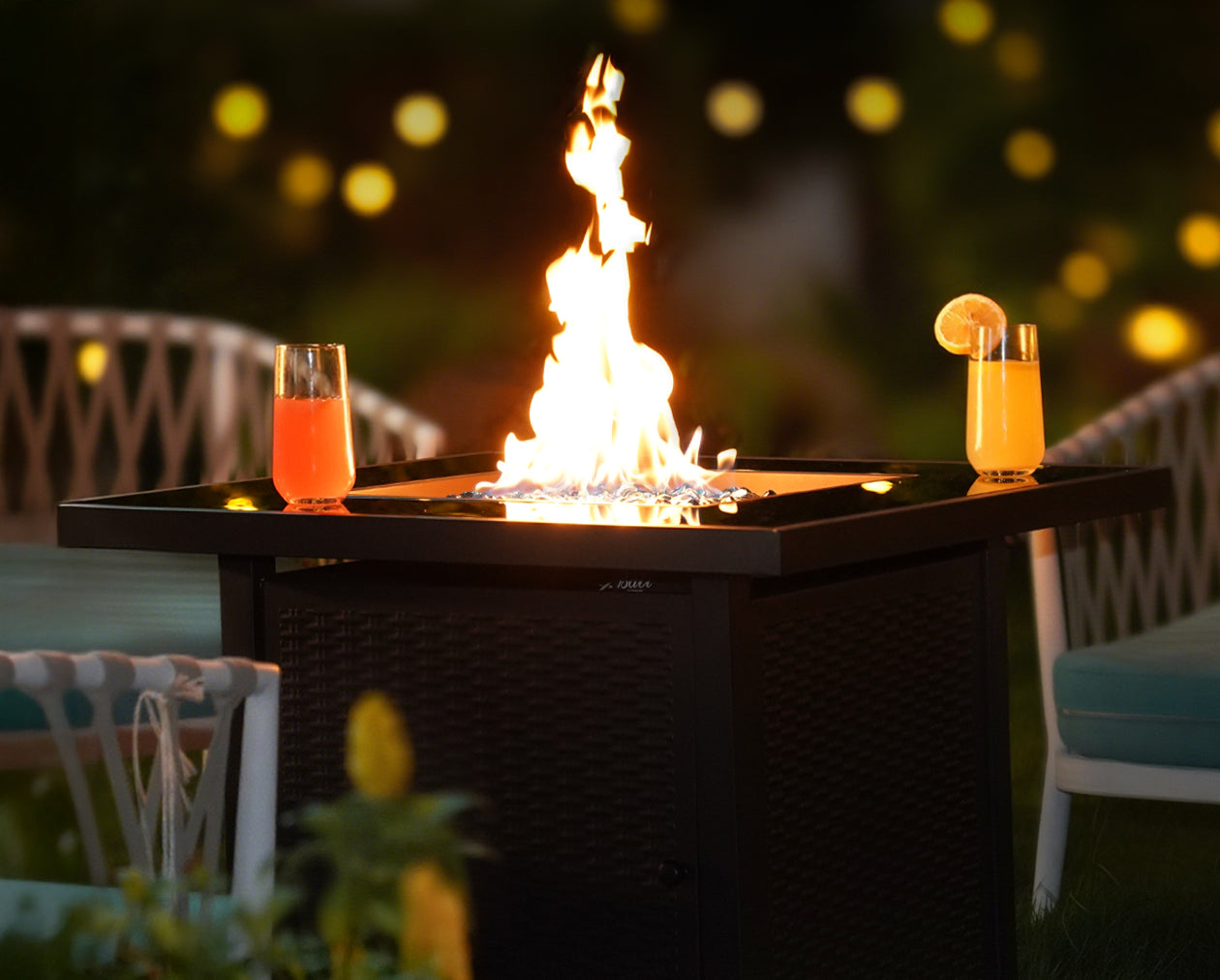


Wind is the most common annoyance fire pit table owners deal with. A steady breeze pushes the flame sideways, reduces heat output, and can blow fire glass beads out of the burner pan. A wind guard fixes all of that. It is a tempered glass panel (or set of panels) that surrounds the flame, blocking wind while keeping the fire visible from every angle.
The question most buyers ask is whether a wind guard is worth the extra cost. After going through the benefits, sizing, and installation, the answer for most fire pit table setups is yes.
What a Wind Guard Does
A wind guard is a simple accessory with several practical effects:
- Keeps the flame centered and upright. Without a wind guard, even a moderate breeze (10–15 mph) can push a propane flame flat against the fire media. A wind guard redirects airflow above the glass panels, keeping the flame burning vertically in the center of the burner pan.
- Increases heat output to the seating area. Wind carries heat away from the fire pit. By blocking the breeze at burner level, a wind guard allows more radiant heat to reach the people sitting around the table. The flame burns more efficiently because it is not fighting the wind.
- Prevents fire glass from shifting. On a windy night, fire glass beads can be blown to one side of the burner pan or even out of the pan entirely. A wind guard contains the media in place.
- Adds a safety barrier. The tempered glass panels create a physical barrier between the flame and anything around the table: hands, napkins, jackets, or curious pets. This is especially valuable for families. See our child and pet fire pit safety guide for more on protective barriers.
- Looks good. A wind guard gives the fire a cleaner, more polished appearance. The glass is transparent, so the flame remains fully visible while looking contained and intentional.
Types of Wind Guards
Rectangular Wind Guards
Designed for rectangular and square fire pit tables, these are the most common style. They consist of four tempered glass panels held together by metal corner brackets. The guard sits directly on the fire pit table surface, surrounding the burner pan. Rectangular wind guards come in standard sizes to match common burner pan dimensions (12×24 inches, 12×42 inches, and similar).

Round Wind Guards
For round fire pit tables, a single curved tempered glass cylinder surrounds the burner pan. Round guards are typically 19–24 inches in diameter and 6–8 inches tall. They are a seamless, single-piece design that looks clean on round tables.
Custom and Universal Guards
Some manufacturers offer universal wind guards with adjustable brackets that fit a range of burner pan sizes. These are useful if you have a non-standard fire pit table or want a guard that might work with a future table upgrade. Custom-cut wind guards are also available from glass fabricators for unusual dimensions.
How to Choose the Right Size
A wind guard needs to fit around your burner pan, not around the entire table. Measure the following:
- Burner pan dimensions. Measure the length and width (or diameter for round) of the burner pan opening on your fire pit table. This is the recess where the burner and fire media sit.
- Depth of the pan. The wind guard should sit on the table surface around the pan, not inside it. Make sure the guard's inner dimensions are slightly larger than the pan opening so it frames the pan without overlapping into it.
- Height. Most wind guards are 6 to 8 inches tall. Taller guards (8+ inches) provide better wind protection but can feel like a barrier for conversation across the table. Shorter guards (6 inches) look more minimal but let more wind through above the glass line. For most residential setups, 6 inches is sufficient.
Sizing Table
| Fire Pit Table Shape | Common Burner Pan Sizes | Wind Guard Size to Look For |
|---|---|---|
| Rectangular (48–60 in. table) | 12×24 in., 12×42 in. | 13×25 in. or 13×43 in. (allows 0.5 in. clearance) |
| Square (28–36 in. table) | 12×12 in., 18×18 in. | 13×13 in. or 19×19 in. |
| Round (36–48 in. table) | 19 in., 24 in. diameter | 20 in. or 25 in. diameter cylinder |
BALI OUTDOORS wind guards are sized to fit the brand's fire pit table burner pans. If you own a BALI OUTDOORS fire table, matching the wind guard to your specific model ensures a proper fit.
Material and Durability
Tempered Glass
All quality wind guards use tempered glass, which is heat-treated to withstand the temperatures produced by a gas fire pit. According to the Glass Association of North America (GANA), tempered glass handles thermal shock better than regular glass, and if it does break, it shatters into small, rounded pieces rather than sharp shards.

Key specs to look for:
- Thickness: 1/4 inch (6mm) is standard for residential wind guards. Thicker glass (3/8 inch) is available for commercial or heavy-use settings but adds significant weight.
- Temperature rating: Quality tempered glass wind guards handle temperatures up to 400–500°F, well within the range of a propane fire pit flame.
- Edge treatment: Look for polished or beveled edges. Raw-cut glass edges can be sharp and chip more easily.
Metal Brackets
The brackets or frame that holds the glass panels together are typically stainless steel or powder-coated steel. Stainless steel holds up better in humid or coastal environments. Powder-coated steel looks good initially but can chip and rust over time, especially in the heat zone around the burner.
Installation
Most wind guards require no tools and take under 5 minutes to set up:
- Make sure the fire pit is off and the burner area is cool.
- Place the wind guard on the table surface around the burner pan. Center it so there is even clearance on all sides.
- For multi-panel rectangular guards, connect the panels at the corners using the included brackets. Some models use rubber or silicone feet on the bottom to prevent scratching the table surface.
- For round cylinder guards, simply set the glass cylinder over the burner pan.
- Light the fire pit and verify the flame is centered within the guard. Adjust the guard position if needed.
Wind guards are designed to be removable. Take them off for cleaning, during storage, or if you want to use the table surface without the fire feature.
Maintenance and Care
- Cleaning: Wipe the glass with a standard glass cleaner after each use to remove soot and fingerprints. Do not clean the glass while it is hot. Let it cool completely first.
- Soot buildup: A yellow or sooty flame can leave deposits on the inside of the glass. This usually indicates a burner issue (clogged ports or low gas pressure) rather than a wind guard problem. Clean the burner ports and check the propane regulator if soot appears regularly.
- Chips and cracks: Inspect the glass periodically. A small chip on the edge may be cosmetic, but a crack through the panel means the glass should be replaced. Tempered glass can shatter suddenly if a crack weakens the heat-treated structure.
- Storage: Store the wind guard indoors or in a protective bag when not in use. Tempered glass is tough but can break if knocked off a table or stored under heavy objects.
Do You Need a Wind Guard?
Not every fire pit table setup requires one, but most benefit from it. Here is when it matters most:

You Definitely Need One If:
- Your fire pit table is in an open yard or elevated deck exposed to regular wind.
- You have young children or pets who might reach toward the fire. The glass barrier adds a meaningful layer of contact protection.
- You use your fire pit table for dining. Wind-blown flames and shifting fire glass are not compatible with food on the table.
- You live near the coast or in a plains area where consistent wind is the norm.
You Can Skip It If:
- Your fire pit table is in a fully sheltered courtyard or screened patio with little to no wind.
- You only use the fire pit on calm evenings and turn it off when wind picks up.
- The fire table is positioned against a wall that blocks the prevailing wind direction.
For most patios and backyards, a wind guard is a worthwhile investment. It costs $50–$150, installs in minutes, and makes every fire pit session more enjoyable.
Frequently Asked Questions
Will a wind guard make my fire pit hotter?
It does not increase the BTU output of the burner, but it does increase the perceived heat at the seating area. By preventing wind from carrying heat away, the warmth stays concentrated around the table. On a windy night, the difference is noticeable.
Can I use a wind guard with a wood-burning fire pit?
No. Wind guards are designed for gas (propane or natural gas) fire pit tables only. Wood fires produce higher temperatures, sparks, and soot that would damage or shatter the tempered glass. For wood-burning fire pits, a metal mesh spark screen is the appropriate wind and spark protection.
Do wind guards come with fire pit tables?
Some fire pit tables include a wind guard in the box, but many sell it as a separate accessory. BALI OUTDOORS offers wind guards matched to their fire table burner pan sizes. Check your fire pit table listing to see what is included.
How do I clean soot off the inside of the wind guard?
Let the glass cool completely. Spray standard glass cleaner on the inside surface and wipe with a soft cloth or paper towel. For stubborn soot, a paste of baking soda and water applied with a non-abrasive sponge works well. If soot is a recurring problem, clean the burner ports to ensure complete gas combustion.
Can I use a wind guard on a fire pit table that did not come with one?
Yes, as long as you match the wind guard dimensions to your burner pan size. Measure the burner pan opening and choose a guard with inner dimensions 0.5–1 inch larger on each side. Universal wind guards with adjustable brackets fit a range of pan sizes. Make sure the guard sits flat on the table surface and does not rest inside the burner pan.