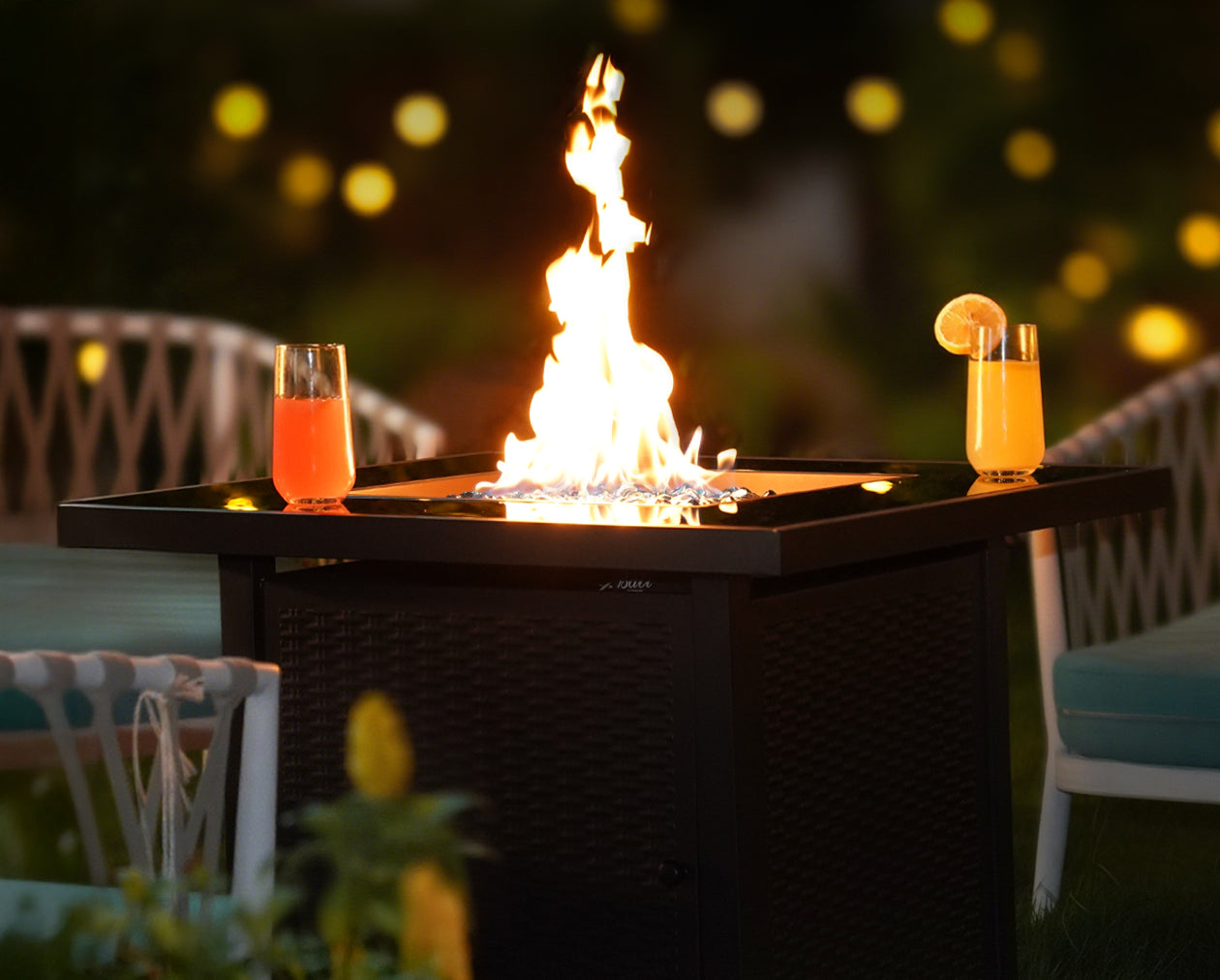


Propane fire pits come in dozens of shapes, sizes, and price points. A compact bowl that fits on a condo balcony is a completely different product than a 60,000 BTU rectangular table built for hosting eight people. That range is what makes the category useful and what makes shopping frustrating.
Instead of ranking individual models that may go in and out of stock, this guide breaks the market into categories based on how you actually use a fire pit. Find your scenario below, check what features matter most, and narrow your search from there.
Quick Comparison: Best Propane Fire Pit by Category
| Category | What to Prioritize | Typical BTU | Budget Range |
|---|---|---|---|
| Best for Small Patios | Compact footprint, low clearance needs | 30,000–40,000 | $200–$350 |
| Best for Entertaining | High BTU, large surface, seating for 6–8 | 50,000–60,000 | $350–$600 |
| Best for Decks | Lightweight, safe base, lower heat output | 30,000–50,000 | $250–$500 |
| Best Budget Pick | Solid construction at the lowest price | 30,000–40,000 | $150–$250 |
| Best Premium Pick | Thick materials, electronic ignition, included cover | 50,000–70,000 | $500–$800 |
| Best for Year-Round Use | Weather-resistant build, high heat, cover included | 50,000–60,000 | $350–$600 |
Best Propane Fire Pit for Small Patios
When your outdoor space measures under 100 square feet, every inch of footprint counts. The right fire pit for a small patio is one that leaves enough room for chairs, foot traffic, and the minimum safety clearances required by most local fire codes.
What to Look For
- Dimensions: A square or round fire pit table under 30 inches across is the sweet spot. Rectangular tables can also work if your patio is narrow and long, since they tuck against a railing or wall.
- BTU range: 30,000–40,000 BTU provides enough warmth for a two- to four-person seating area without overwhelming a tight space with heat.
- Hidden tank compartment: A base that conceals a standard 20 lb propane tank keeps the setup clean. Exposed tanks eat into your limited floor space.
- Portability: If you rearrange furniture seasonally, pick a unit under 60 lb that two people can move easily.
For a full breakdown of sizing strategies and product layouts in tight spaces, see our guide to fire pits for small patios.
Best Propane Fire Pit for Entertaining
If your patio is the gathering spot for weekend dinners or football watch parties, you need a fire pit that heats a wide area and gives guests somewhere to set a drink. That means a fire pit table, not a bowl.

What to Look For
- Shape and size: Rectangular tables (44–60 inches long) seat six to eight people comfortably. The flat rim acts as a surface for glasses and plates, which eliminates the need for extra side tables. Our propane fire pit table guide covers the best configurations for group seating.
- BTU output: Go for 50,000–60,000 BTU. That range heats an 8–12 foot radius, enough to keep a full circle of chairs warm on a 45 °F evening. Our BTU guide explains the math behind heat radius and fuel consumption.
- Wind guard: A tempered glass wind guard keeps flames steady when a breeze picks up and prevents embers of fire glass from shifting. Most mid-range tables accept an aftermarket guard if one is not included.
- Adjustable flame: A dial-controlled valve lets you run a low flame for ambiance during conversation, then crank it up when temperatures drop after sunset.
BALI OUTDOORS' propane fire pit collection includes rectangular and square table options in the 50,000 BTU range designed for exactly this kind of use.
Best Propane Fire Pit for Decks
Decks introduce a concern that ground-level patios don't: the surface underneath is flammable. Whether you have pressure-treated lumber or composite boards, radiant heat from a fire pit base can cause discoloration, warping, or worse.

What to Look For
- Elevated base: A fire pit table with legs that lift the burner 24–28 inches off the deck surface reduces direct heat transfer. Low-profile bowls that sit close to the ground are riskier on wood or composite.
- Heat shield or mat: Place a fire-resistant pad under the unit regardless of height. These pads cost $20–$50 and protect against radiant heat that travels downward.
- Weight: Know your deck's load capacity. A fire pit table (70–120 lb) plus a full propane tank (37 lb) plus four adults in chairs can add up quickly on an older deck.
- BTU moderation: Running a 60,000 BTU burner at full power on a deck creates more downward heat. A 40,000–50,000 BTU unit at medium flame is a safer everyday choice.
Read our complete guide to propane fire pits on decks for material-specific advice on composite vs. hardwood surfaces, ventilation spacing, and code requirements.
Best Budget Propane Fire Pit
You can get a well-built propane fire pit for under $250. The tradeoff at this price point is usually size (smaller burners, narrower tabletops) and finish (thinner powder coating, no included cover), not safety or function.
What to Look For
- Stainless steel burner: This is the one component where material quality matters most for safety and longevity. A cheap burner corrodes faster and can develop uneven flame patterns. Do not compromise here even at a budget price.
- 30,000–40,000 BTU: Plenty of heat for a small group. You save on fuel costs compared to higher-output models, and a 20 lb propane tank lasts 12–15 hours at this range.
- CSA certification: Any fire pit sold in North America should carry a CSA (Canadian Standards Association) or similar safety certification. If the listing does not mention one, move on.
- Buy a cover separately: Budget models rarely include a cover. Factor in $30–$60 for a fitted cover to protect your investment. Our cover sizing guide explains how to measure for a proper fit.
Best Premium Propane Fire Pit
Spending $500–$800 gets you thicker materials, better ignition systems, and details that make a difference over five to ten years of use.
What to Look For
- Aluminum or cast aluminum frame: Unlike steel, aluminum does not rust. Period. It weighs less too, which matters if you ever need to reposition the unit. Look for thick-wall aluminum (not thin stamped panels) for structural rigidity.
- Electronic ignition: Push-button or remote-start systems beat piezo strikers on convenience. Premium models often include a battery backup so the igniter works even if the main power source dies.
- Included accessories: At this price, expect a fitted cover, wind guard, and fire media in the box. If a $600 fire pit table still charges extra for a cover, it is not truly premium.
- Higher BTU with control: 50,000–70,000 BTU output with a smooth-turning dial that lets you fine-tune the flame from a low flicker to a full roar.
- Warranty: Look for at least a 1-year full warranty on the frame and burner. Some manufacturers offer 3–5 year coverage on the frame separately from the ignition components.
Best Propane Fire Pit for Year-Round Use
If you plan to use your fire pit from March through December, durability and weather resistance move to the top of the list.
What to Look For
- Corrosion-resistant frame: Steel frames with multi-layer powder coating or aluminum frames hold up to rain, snow, and freeze-thaw cycles. Single-layer painted steel will flake within a couple of seasons in wet climates.
- High BTU with efficiency: 50,000–60,000 BTU gives you enough heat for 40 °F evenings without draining the tank in under four hours. Pair with a wind guard to retain more heat during breezy conditions.
- Cover included or available: A tight-fitting cover is non-negotiable for year-round use. Water pooling on the burner pan or inside the tank compartment accelerates corrosion and clogs burner ports.
- Easy maintenance access: You will clean this unit more often than a seasonal-only fire pit. Look for removable fire media trays and burner pans that come out without tools.
Propane Fire Pit Bowl vs. Fire Pit Table: Which Format Wins?
This is the first fork in the road for most buyers. The answer depends on how you plan to use it:
- Fire pit bowls: Lighter, cheaper, easier to store. They work for camping, temporary setups, or patios where you already have side tables. Most produce 20,000–40,000 BTU.
- Fire pit tables: Heavier and pricier, but they replace a piece of furniture. The flat rim provides surface area for drinks. Hidden tank compartments keep things clean. BTU runs higher (40,000–60,000). Our fire pit table roundup compares shapes and sizes.
For a permanent patio centerpiece, a fire pit table delivers more value per dollar. Bowls make sense when portability is the priority.
Features That Matter More Than You Think
A few details separate a fire pit you enjoy for years from one that frustrates you after the first season:
- Tank compartment door: A door with a latch (not just a panel you lift off) keeps the tank secure and the compartment cleaner. Magnetic closures work but can weaken over time.
- Regulator and hose quality: A cheap regulator causes flame surging or prevents full output. CPSC propane safety guidelines recommend inspecting hoses for cracks before each season.
- Leg levelers: Adjustable feet keep the table stable on uneven pavers or deck boards. A wobbly fire pit table is a safety hazard and an annoyance.
- Lid or tabletop insert: Some fire pit tables include a flat lid that covers the burner when not in use, converting the unit into a regular table. This is a practical feature if you use your patio for daytime meals.
Propane vs. Wood: A Quick Reality Check
Propane fire pits produce no smoke, no ash, and no flying embers. They light in seconds and shut off with a dial. Wood gives you the campfire crackle and smell that propane cannot replicate, but you trade convenience for cleanup and unpredictable heat. We break down cost, maintenance, and lifestyle differences in our wood vs. propane fire pit guide.
How to Stretch Your Propane Budget
Propane costs roughly $1.50–$3.00 per hour depending on BTU output and local fuel prices. A few habits reduce that number:
- Run at medium flame: You get 70–80% of the warmth at roughly half the fuel consumption of a full-blast setting.
- Use a wind guard: Wind strips heat from the seating area and forces the burner to work harder. A glass guard improves heat retention noticeably in breezy conditions.
- Refill, don't exchange: Tank exchange programs charge $20–$25 and often only fill to 15 lb. A propane refill station fills the full 20 lb for $12–$18.
- Keep a spare tank: Running out mid-evening means a cold patio. A second full tank means you never waste fuel rushing to a refill station. For runtime numbers, see our 20 lb propane tank burn time guide.
Frequently Asked Questions
What BTU is best for a propane fire pit?
For most residential patios, 40,000–50,000 BTU provides a solid balance of heat output and fuel efficiency. This range warms a 6–8 foot radius and runs 8–12 hours on a standard 20 lb tank. Go higher (50,000–60,000 BTU) if you regularly entertain groups of six or more in cooler weather. Our BTU guide has the full heat-radius math.
Can I leave a propane fire pit outside all year?
Yes, as long as you use a fitted, weather-resistant cover when the unit is not in use. Uncovered fire pits collect water in the burner pan and tank compartment, which leads to rust and clogged burner ports. If your area gets heavy snow, storing the propane tank indoors is not safe. Keep tanks upright and outdoors, even in winter.
Are propane fire pits safe on composite decks?
They can be, with precautions. Use a fire pit table with legs (not a ground-level bowl), place a fire-resistant mat underneath, and avoid running the burner at maximum for extended periods. Composite decking can warp under sustained heat exposure. Read our deck safety guide for material-specific recommendations.
How long does a 20 lb propane tank last on a fire pit?
At 40,000 BTU, expect roughly 10–11 hours. At 50,000 BTU, closer to 8–9 hours. At 60,000 BTU, about 7 hours. Real-world runtime varies slightly based on altitude, ambient temperature, and how often you adjust the flame.
Do I need a wind guard for my propane fire pit?
You don't strictly need one, but a tempered glass wind guard significantly improves the experience. It keeps the flame upright in breezy conditions, reduces fuel waste, and prevents fire glass from shifting. If your patio gets regular wind above 8–10 mph, a wind guard pays for itself in saved propane within a season.
What is the difference between a propane fire pit and a propane fire table?
A fire table is a type of fire pit. "Fire table" refers to units with a flat rim surrounding the burner, designed to double as furniture. "Fire pit" is the broader category that includes bowls, tables, and drop-in burner kits. Fire tables cost more but offer more utility. See our propane fire pit buying guide for a breakdown of the types.
Finding the right propane fire pit comes down to matching the unit to your space, your climate, and how you use your patio. Start with the category that fits, check specs against the priorities above, and you will narrow a crowded market to a short list fast. Browse the BALI OUTDOORS propane fire pit collection to see options across these categories.