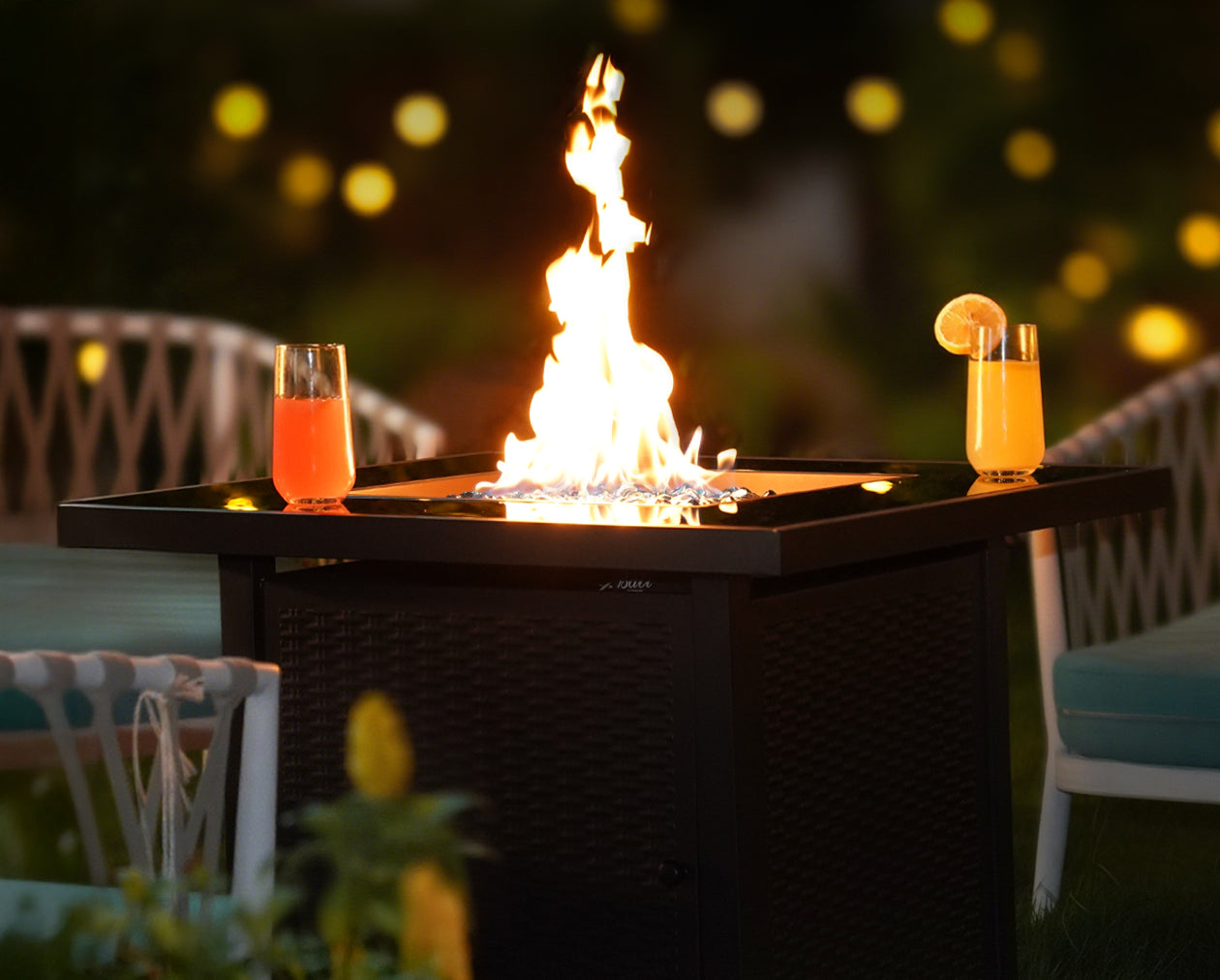


Choosing between a smokeless fire pit and a traditional wood-burning fire pit comes down to trade-offs. Both deliver warmth and ambiance, but they do it in fundamentally different ways. The right choice depends on what matters most to you.
Maybe you love the crackling sounds and woodsy aroma of a classic campfire. Or maybe you're tired of constantly shifting your chair to dodge smoke. Either way, this guide breaks down every major difference so you can pick the fire pit that actually fits your lifestyle.
Quick Comparison: Smokeless vs Traditional Fire Pits
Here's a side-by-side overview before we get into specifics:
| Feature | Smokeless Fire Pit | Traditional Wood-Burning Fire Pit |
|---|---|---|
| Smoke Output | Minimal (80-90% less than traditional) | Moderate to heavy |
| Heat Output | High, efficient burn | High, but less efficient |
| Fuel Type | Kiln-dried hardwood recommended | Any seasoned firewood |
| Maintenance | Moderate (airflow vents need cleaning) | Low (basic ash removal) |
| Price Range | $200–$500+ | $100–$400 |
| Ambiance | Clean flame, less campfire aroma | Full campfire experience |
| Portability | Generally lighter, compact designs | Varies widely (stone pits are permanent) |
| Environmental Impact | Lower particulate emissions | Higher particulate emissions |
| Best For | Suburban patios, smoke-sensitive users | Large yards, campfire purists |
What Makes a Fire Pit "Smokeless"?
First, let's clear up the most common misconception: "smokeless" doesn't mean zero smoke. Every wood fire produces some smoke, especially during the initial lighting phase. What smokeless fire pits do is dramatically reduce smoke — typically by 80% or more compared to a traditional open fire pit.
They achieve this through a double-wall airflow design. Cool air enters through bottom vents, heats up between the inner and outer walls, then exits through small holes near the top of the burn chamber. This superheated secondary air re-ignites the smoke particles before they escape, resulting in a cleaner, more complete burn.
The result? You get a tall, bright flame with significantly less smoke billowing into your face and your neighbors' yards.
Smoke Output and Air Quality
This is the headline difference and the primary reason people switch to smokeless models.
Traditional fire pits produce visible smoke that contains fine particulate matter (PM2.5) — tiny particles that can irritate your eyes, throat, and lungs. According to the U.S. Environmental Protection Agency, wood smoke contains hazardous pollutants including benzene, formaldehyde, and polycyclic aromatic hydrocarbons (PAHs). For people with asthma, heart disease, or other respiratory conditions, prolonged exposure around a smoky fire pit can be more than unpleasant. It's a real health concern.
Smokeless fire pits don't eliminate these emissions entirely, but their secondary combustion system burns off a large percentage of the particulates before they reach the air. If you host frequent backyard gatherings with children, elderly family members, or anyone sensitive to smoke, a smokeless fire pit makes a noticeable difference in the air quality around the fire.
If you only light a fire pit a few times per season in a well-ventilated open yard, the smoke from a traditional pit is unlikely to bother most healthy adults.
Heat Performance
Both types burn real wood and produce substantial radiant heat. However, they deliver that heat differently.
Smokeless fire pits burn hotter and more efficiently because secondary combustion extracts more energy from the same amount of wood. You'll often notice the flames are taller and more intense. The trade-off is that much of the heat radiates upward rather than outward, so people sitting around the pit may feel slightly less warmth at the same distance compared to a wide, open fire.
Traditional fire pits, especially wide bowl or ring designs, spread heat outward more effectively. A large wood-burning fire pit with a generous opening can warm a bigger circle of chairs. The burn is less efficient (more energy is lost as smoke and incomplete combustion), but the radiant heat pattern can feel more enveloping.
Bottom line: smokeless pits are more fuel-efficient, but traditional pits may warm a wider seating area.
Fuel Type and Availability
Both types burn wood, but smokeless fire pits are pickier about what you feed them.
For optimal performance in a smokeless pit, you'll want kiln-dried hardwood — oak, hickory, or maple with a moisture content below 20%. Wet or green wood produces excess moisture and smoke that overwhelms the secondary airflow system, defeating the purpose of the smokeless design. Kiln-dried wood typically costs $5–$8 per bundle at hardware stores, or $250–$400 per cord from a firewood supplier.
Traditional fire pits are more forgiving. They'll burn seasoned softwoods, hardwoods, and even the odd piece of scrap lumber (though you should avoid treated or painted wood, which releases toxic fumes). You can use standard seasoned firewood that's been air-dried for 6–12 months — generally cheaper and more widely available than kiln-dried options.
If you live in an area where quality firewood is expensive or hard to find, the fuel flexibility of a traditional pit is a practical advantage.
Maintenance and Longevity

Neither type requires heavy maintenance, but there are differences worth knowing.
Smokeless fire pits need their airflow vents cleaned periodically. Ash and debris can clog the bottom intake holes and top secondary burn holes, reducing the smokeless effect over time. Most models are built from stainless steel, which resists rust well but can discolor with heat. A quick brush-out after every few uses keeps them performing at their best. Investing in a quality fire pit cover also extends the life of any fire pit significantly by protecting it from rain and moisture.
Traditional fire pits require basic ash cleanup — shovel out the cold ashes, wipe down the bowl, and you're done. Steel models will develop surface rust over time if left exposed to the elements, while cast iron pits need occasional seasoning. Stone or brick fire pits are essentially maintenance-free beyond clearing ash.
In terms of longevity, stainless steel smokeless pits and well-maintained steel traditional pits both last 5–10+ years. Protect either type with a weather-resistant cover when not in use, and you'll get the most out of your investment.
Cost Comparison
Traditional fire pits generally have a lower entry price. You can find basic steel bowl models for $100–$200, and even well-built mid-range options like those in the BALI OUTDOORS wood-burning collection sit comfortably in the $150–$350 range.
Smokeless fire pits carry a premium due to their engineered double-wall construction. Budget models start around $150–$200, while popular mid-range options like BALI OUTDOORS smokeless fire pits run $200–$500. Premium brands like Solo Stove push past $300–$500 for their larger models.
Beyond the upfront cost, factor in ongoing fuel expenses. Smokeless pits burn wood more efficiently (you'll use less per session), but they perform best with pricier kiln-dried wood. Traditional pits use more wood per session but accept cheaper fuel. Over a full season of regular use, the total fuel cost tends to be roughly similar.
Ambiance and Experience
This is where personal preference matters most, and where traditional fire pits still hold a strong edge for many buyers.
A traditional wood-burning fire pit delivers the full sensory experience: crackling logs, dancing flames, glowing embers, and that unmistakable campfire smell that clings to your hoodie the next morning. For many families, that smoky aroma is the whole point. It brings back memories of childhood campouts and creates an atmosphere that's hard to replicate.
Smokeless fire pits produce a beautiful, tall flame — often more visually dramatic than a traditional fire. But the reduced smoke also means a reduced campfire scent. The sound profile is slightly different too: you'll still hear some crackling, but the intense secondary combustion creates a subtler, steadier burn rather than the wild, popping character of an open fire.
Neither is objectively better. If the campfire smell is essential to your outdoor experience, go traditional. If you'd rather enjoy the visual warmth without smelling like a campfire afterward, smokeless is your pick.
Portability and Setup
Smokeless fire pits tend to win on portability. Most are compact, cylindrical, and weigh between 15–30 lbs, making them easy to move around the patio or pack for a camping trip. Their self-contained design means no assembly beyond unboxing.
Traditional fire pits span a huge range. Portable steel bowls can be just as light and mobile as smokeless models, while built-in stone or brick fire pits are permanent fixtures. If you want a fire pit you can bring to the beach, the campsite, or a friend's backyard, a portable smokeless model is hard to beat.
For a dedicated backyard setup where the fire pit stays in one spot, both types work equally well — just ensure you place it on a non-flammable surface and keep it at least 10 feet from any structure, as recommended by the National Fire Protection Association (NFPA).
Environmental Impact
If environmental footprint factors into your decision, smokeless fire pits have a clear advantage.
The EPA notes that residential wood smoke is a leading contributor to fine particle pollution, emitting more PM2.5 than both on-road and non-road vehicles combined during winter months. While backyard fire pits are a small slice of that total, reducing per-use emissions still matters — especially in suburban neighborhoods where smoke can drift into adjacent properties.
Smokeless fire pits burn wood more completely, producing less particulate matter, less carbon monoxide, and less unburned hydrocarbons per log. They also use less wood overall, which means less demand on firewood resources.
Traditional fire pits aren't environmental villains. A few evening fires per month have a modest impact. But if you fire up your pit multiple times a week or live in an area with air quality concerns, the cleaner burn of a smokeless model is worth considering.
So, Which One Should You Choose?
Here's a simple framework to help you decide:
Choose a Smokeless Fire Pit If You:
- Host frequent gatherings and don't want guests dodging smoke
- Have neighbors in close proximity
- Have family members sensitive to smoke or with respiratory conditions
- Value fuel efficiency and lower emissions
- Want a portable fire pit for camping or tailgating
- Live in an area with air quality regulations or burn restrictions
Choose a Traditional Fire Pit If You:
- Want the full campfire experience — smell, sound, and all
- Have a large, open yard where smoke disperses easily
- Prefer a lower upfront cost
- Want flexibility in fuel types
- Plan to build a permanent, decorative fire feature
- Use your fire pit only occasionally
Or Consider Both
You don't have to pick just one. Some households keep a smokeless fire pit on the patio for regular weeknight use and a larger traditional wood-burning pit in the backyard for weekend campfire nights. BALI OUTDOORS offers both types, so you can mix and match based on your space and budget.
Fire Pit Safety Reminders
Regardless of which type you choose, follow these essential safety practices:
- Placement: Keep your fire pit at least 10 feet from structures, fences, and overhanging branches.
- Surface: Place it on a non-flammable surface like concrete, brick, or a fire-rated pad.
- Supervision: Never leave a burning fire unattended. Keep children and pets at least 3 feet away.
- Extinguishing: Fully extinguish the fire and let ashes cool completely before disposal. Keep a garden hose or bucket of water nearby.
- Local regulations: Check with your local fire department for burn permits or restrictions before your first fire.
The Bottom Line
Smokeless fire pits and traditional wood-burning fire pits each have real strengths. Smokeless models win on clean air, fuel efficiency, and neighbor-friendliness. Traditional pits win on ambiance and affordability, plus that irreplaceable campfire vibe.
There's no wrong answer here. It comes down to your backyard, your budget, and the kind of evenings you want to spend outside. A well-built fire pit of either type will last for years and earn its spot as the centerpiece of your outdoor space.