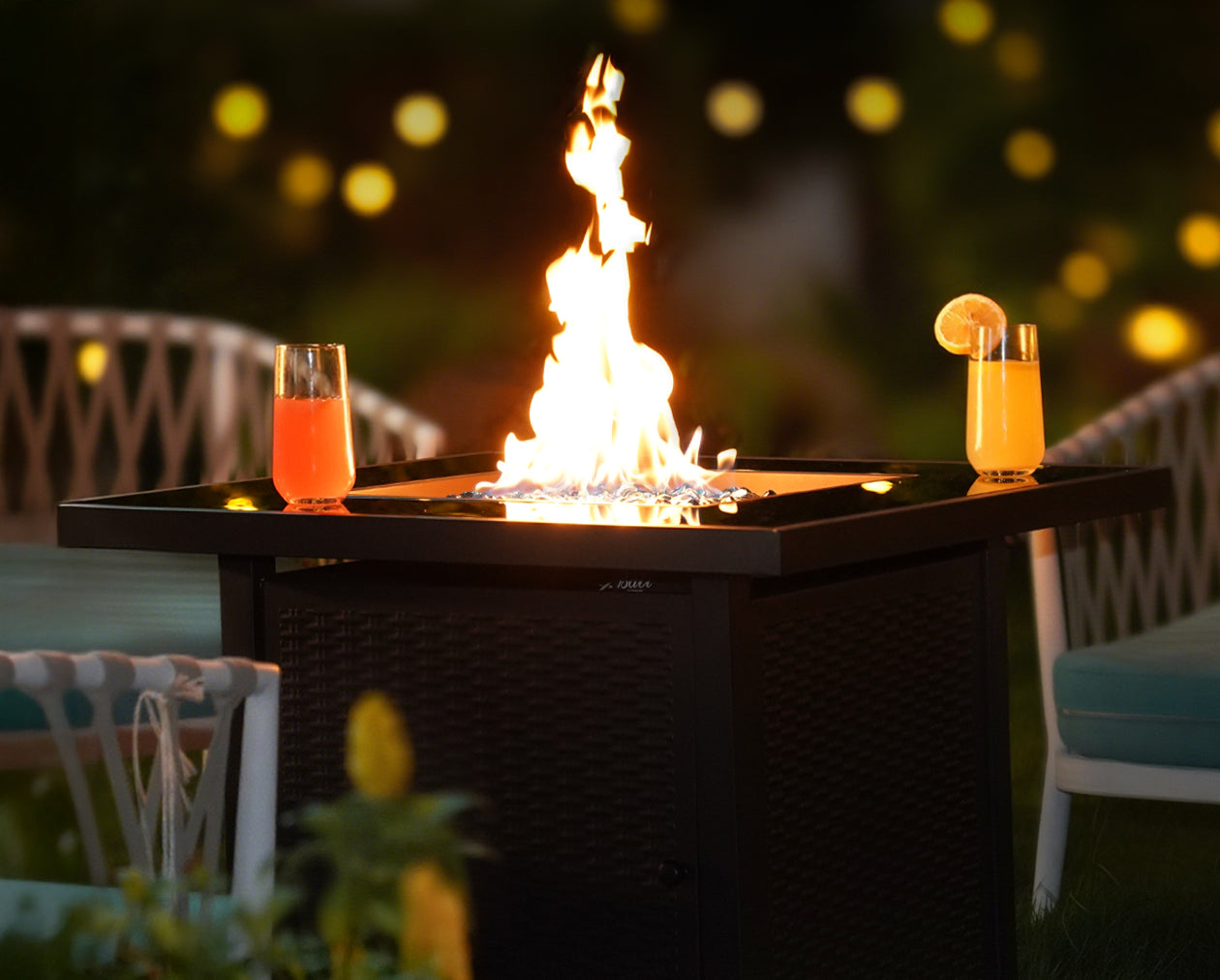


Rectangular fire tables outsell every other shape for one simple reason: they fit the way people already arrange outdoor furniture. A long table mirrors a dining setup, lines up against a sofa, and fills a narrow patio without wasting space on either side. If you are shopping for one, the main decisions come down to size, materials, heat output, and how the table fits your seating plan.
This guide covers all of that, plus a sizing chart you can match to your patio dimensions.
Why Rectangular Is the Most Popular Fire Table Shape
Round and square fire tables have their place, but rectangular models dominate the market for practical reasons:
- Natural seating flow: Guests sit along two long sides, the same way they would at a dinner table. Nobody gets stuck in a corner with no legroom.
- Better use of narrow spaces: A 32×52-inch rectangular table fits on a 10-foot-wide patio. A round table with the same surface area would need more clearance on every side.
- Longer flame tray: The stretched burner pan puts the fire closer to more seats. On a round table, the flame sits in the center and the heat drops off faster at the edges.
- Pairs with linear furniture: Sofas, benches, and L-shaped sectionals all align with rectangular tables. No awkward gaps.
If your patio is wider than it is deep, or if you entertain groups of six or more, a rectangular shape will almost always be the better pick. For a full breakdown of how each shape affects traffic flow, see our fire pit table shapes and traffic flow guide.
Rectangular Fire Table Size Guide
Size is the single biggest factor in whether a fire table works for your space. Too small and guests crowd together. Too large and you lose walking room around the edges. The table below maps common rectangular fire table dimensions to the seating capacity and minimum patio footprint they need.

| Table Dimensions (in.) | Seats | Min. Patio Size | Best For |
|---|---|---|---|
| 24×44 | 4 | 8×10 ft | Small decks, balcony-adjacent patios |
| 28×48 | 4–6 | 10×12 ft | Standard patios, couples who host occasionally |
| 32×52 | 6 | 10×14 ft | Mid-size entertaining, sofa + chair combos |
| 36×56 | 6–8 | 12×16 ft | Dinner parties, L-shaped seating areas |
| 42×60+ | 8–10 | 14×18 ft | Large yards, dedicated outdoor dining zones |
How to measure: Start with your patio's total length and width. Subtract at least 36 inches from each side for chair pullback and walkway clearance. The space that remains is your maximum table footprint. For a step-by-step method, our fire pit table footprint mapping guide walks through the process with diagrams.
Shape Comparison: Rectangular vs. Round vs. Square
Rectangular is not the right call for every patio. If a round shape fits your space better, our round fire pit table guide covers sizing and layout in detail. Here is a quick comparison to confirm you are choosing the best shape for your layout.
| Factor | Rectangular | Round | Square |
|---|---|---|---|
| Best patio shape | Long, narrow, or L-shaped | Square or circular | Square, compact |
| Seating capacity | 6–10 (scales with length) | 4–6 | 4–6 |
| Furniture pairing | Sofas, benches, sectionals | Adirondack chairs, curved seating | 4 matching chairs |
| Heat distribution | Wider spread along long sides | Even radius from center | Even radius, smaller reach |
| Surface area for drinks | Most (wide ledges on both sides) | Moderate | Least per seat |
| Visual footprint | Anchors the space, feels substantial | Softer, casual look | Compact, symmetrical |
For a deeper dive into how each shape changes the look and feel of your patio, read our square vs. rectangular vs. round fire table comparison.
Materials and Construction
Most rectangular fire tables in the $200–$500 range use a steel frame with a tempered glass or tile tabletop. Here is what to look for in each component.
Frame
Powder-coated steel is the standard. Thicker gauge steel (16–18 gauge) resists denting and holds up better over seasons of use. Multi-step powder coating lasts longer than single-layer paint because it creates a thicker barrier against moisture and UV exposure. Aluminum frames weigh less and will not rust, but they cost more and are less common in rectangular models.
Tabletop
Tempered glass panels sit on either side of the burner and give you a surface for plates and glasses. The glass is heat-treated to handle temperature swings, but you should still avoid pouring cold water on a hot surface. Some models use ceramic tile or faux stone instead. Tile hides scratches better; faux stone gives a more rustic look.
Burner
Stainless steel burners last the longest and resist corrosion from moisture and fire media. Rectangular tables typically use an H-style or linear burner that spreads flame across the full length of the tray. Most ship with blue or gray fire glass, which sits on top of the burner and radiates heat outward. For a comparison of fire media options, see our guide on fire glass vs. lava rocks.
Lid and Cover
A metal lid turns the burner area into additional table surface when the fire is off. A fitted weather cover protects the entire unit during rain, snow, and off-season storage. Most covers use 600D polyester with PVC backing for water resistance. Sizing matters: a cover that is too loose flaps in wind and traps moisture underneath. Our fire pit cover sizing guide explains how to match cover dimensions to your table, and you can browse options in our fire table cover collection.
Heat Output and Fuel Efficiency
Rectangular fire tables typically produce between 40,000 and 60,000 BTU per hour. That is enough to warm a circle roughly 6–10 feet in diameter, depending on wind and ambient temperature.
A standard 20 lb propane tank holds about 4.7 gallons of fuel. At 50,000 BTU, expect around 8–9 hours of burn time per fill. At 40,000 BTU, you will get closer to 10–11 hours. If you run your table three evenings a week for two hours each session, one tank lasts about three to four weeks.
Most rectangular tables hide the 20 lb tank inside a cabinet in the base. Before buying, check that the cabinet door opens easily and that swapping tanks does not require removing panels or tools. For a full breakdown of BTU ratings and how they affect warmth and fuel cost, see our propane fire pit BTU guide.
Placement and Safety Clearances
Where you put a rectangular fire table matters as much as which one you buy. The National Fire Protection Association (NFPA) recommends keeping any open-flame appliance at least 10 feet from structures, overhangs, and combustible materials.
Practical placement rules:
- Overhead clearance: Keep at least 8 feet between the burner and any pergola, umbrella, or tree branch. Heat rises faster than it spreads sideways.
- Deck use: Propane fire tables can go on composite or wood decks if the base has a heat shield or stands high enough to prevent direct heat transfer. Always check the manufacturer's deck-use rating.
- Wind: Position the long side of the table perpendicular to the prevailing wind direction so flames do not blow toward one row of seats. A tempered glass wind guard helps contain the flame and keeps the fire visible instead of whipping sideways.
- Propane storage: Store spare tanks upright, outdoors, and away from the house. Never store a tank inside a garage or enclosed space.
Setting Up a Rectangular Fire Table for Entertaining
A rectangular fire table works best when the seating plan matches the table's proportions. Here are the most common layouts:

Sofa + Two Chairs
Place a three-seat outdoor sofa along one long side of the table and a pair of club chairs on the opposite side. This creates a living-room feel and works for groups of five to seven. Leave 18–24 inches between the table edge and the front of each seat so people can reach their drinks without leaning.
Dining Configuration
Line up three chairs on each long side and one at each short end. This seats eight around a 36×56-inch table. Use chairs without arms so they slide in and out easily. If you are planning a dedicated outdoor dining setup around your fire table, our guide on how to create an outdoor dining fire pit area covers the full layout process.
L-Shaped Sectional
An L-shaped sectional wraps around two sides of the table. Add a single accent chair on the open side. This layout is the most space-efficient and works well in corners of larger patios. For more pairing ideas, check our fire pit table and chairs guide.
Maintenance Tips for Rectangular Fire Tables
Steel and glass are low-maintenance, but they are not no-maintenance. A few habits will keep your table looking good and working safely for years.
- After each use: Turn off the gas, close the tank valve, and place the metal lid over the burner to keep out debris.
- Weekly: Wipe the tempered glass panels with a damp cloth. Remove leaves and insects from the burner tray.
- Monthly: Check the gas hose and connections for cracks or wear. Spray the connections with soapy water and watch for bubbles to detect leaks. The U.S. Consumer Product Safety Commission recommends this bubble test before each season.
- Seasonally: Inspect the powder coating for chips or scratches. Touch up bare spots with a high-heat spray paint rated for outdoor metal to prevent rust.
- Off-season: Disconnect the propane tank, clean the burner tray, and cover the table with a fitted weather cover. If your area gets heavy snow, move the table to a sheltered spot or store it in a garage.
What to Look for When Buying
With dozens of rectangular fire tables on the market, here is a checklist to narrow the field:
- Ignition type: Push-button piezo ignition is the simplest and does not need batteries or a power source. Electronic ignition is more reliable in wind but adds a battery dependency.
- Adjustable flame: A control knob that lets you dial the flame from low ambiance to full heat. Some budget models only have on/off.
- Hidden tank compartment: The propane tank should sit inside the base, out of sight. Make sure the door or panel is easy to open for tank swaps.
- Weight: Rectangular tables range from 50 to over 120 lbs. Heavier tables resist wind better but are harder to reposition. Consider whether you will move the table seasonally.
- CSA or UL certification: Look for a CSA or UL listing label, which confirms the gas components have been tested to North American safety standards.
- Included accessories: Fire glass, a metal lid, a cover, and a wind guard can add $50–$150 if purchased separately. Tables that bundle these save money upfront.
If you want a broader overview of what matters across all propane fire tables, our propane fire pit table buying guide covers the full decision framework.
Frequently Asked Questions
What is the best size rectangular fire table for 6 people?
A table in the 32×52-inch range seats six comfortably with room for drinks on the ledges. You will need a patio that is at least 10×14 feet to allow for chair pullback and walkway space around the table.
Can I use a rectangular fire table on a wood deck?
Yes, most propane rectangular fire tables are safe for wood or composite decks as long as the base includes a heat shield or raises the burner high enough above the deck surface. Check the manufacturer's specifications for deck-use clearance. Placing a non-combustible pad under the table adds an extra layer of protection.
How long does a propane tank last on a rectangular fire table?
A standard 20 lb propane tank lasts roughly 8–11 hours depending on the BTU setting. At 50,000 BTU on high, expect about 8 hours. At a lower 35,000–40,000 BTU setting, you can stretch that to 10–11 hours.
Do I need a wind guard for a rectangular fire table?
A wind guard is not required, but it makes a noticeable difference. It keeps the flame visible and steady on breezy evenings, reduces heat loss from wind, and prevents fire glass from shifting. Tempered glass wind guards are sized to fit specific table dimensions. Browse our wind guard collection for compatible options.
What is the difference between a fire pit table and a fire table?
The terms are interchangeable. "Fire pit table" is more common in search results, while "fire table" is the shorter version manufacturers use in product names. Both refer to a table with a built-in gas burner. For a closer look at the full product category, see our rectangular fire pit table guide.
Are rectangular fire tables good for small patios?
Smaller rectangular models (24×44 inches) fit on patios as compact as 8×10 feet. The rectangular shape actually works better in tight spaces than round tables because it pushes against a wall or railing without wasting corner space. Measure your patio and subtract 36 inches per side for clearance to find the maximum table size that works.
Finding the Right Rectangular Fire Table
Start with your patio measurements, decide how many people you want to seat, and use the size chart above to identify the right dimensions. From there, check the BTU range, confirm the table fits on your surface (deck or patio), and verify that the gas components carry a safety certification.
BALI OUTDOORS offers a full lineup of propane rectangular fire tables with steel frames, tempered glass tops, and included fire glass. Browse the rectangular fire table collection to find the size that fits your space.