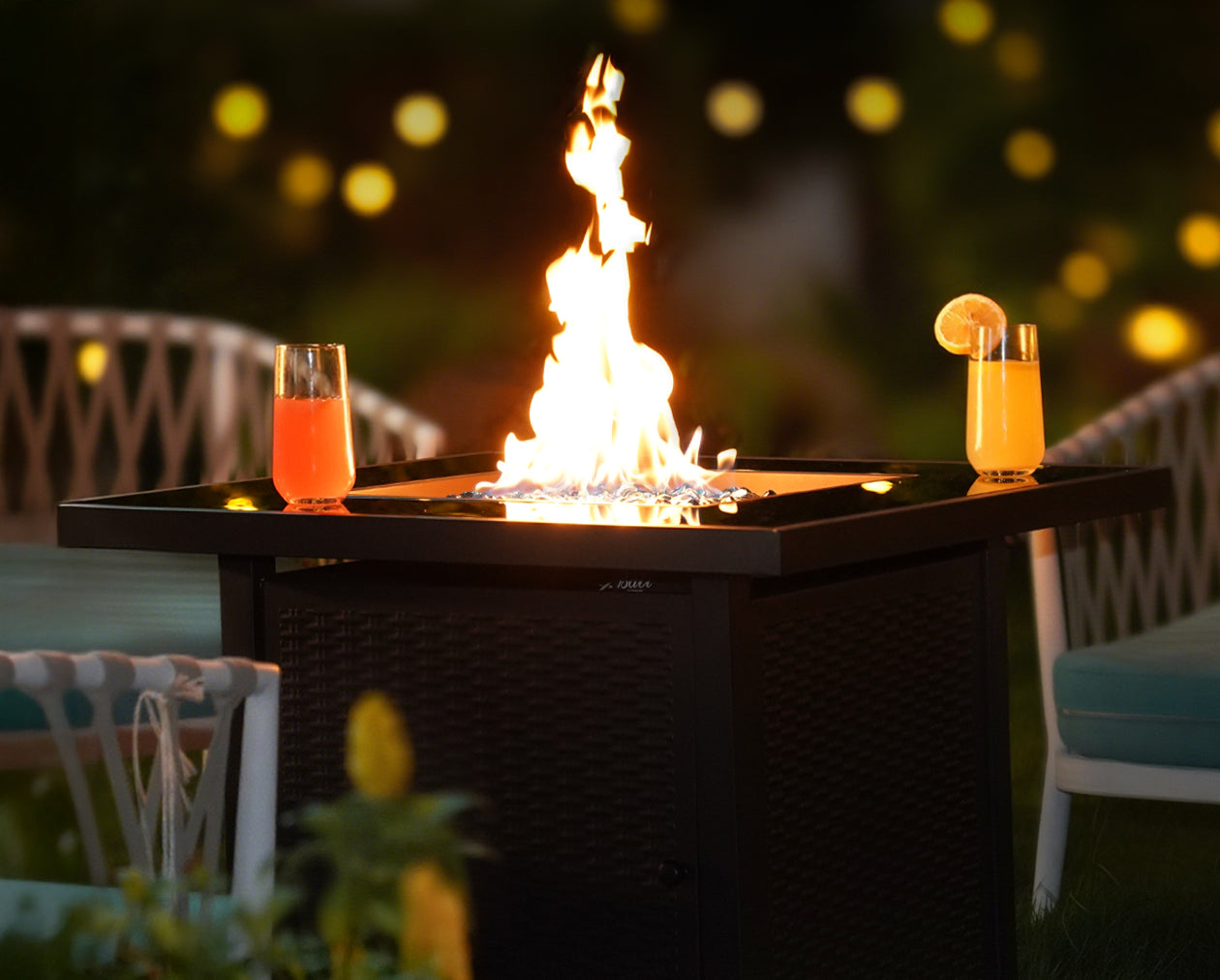


Chiminea vs patio heater is the wrong question framed right. Both extend your outdoor season — but they do it in completely different ways. A chiminea gives you wood fire, ambiance, and the option to cook on it. A patio heater gives you push-button warmth across a wider area with no wood, no smoke, and no mess. The real question is not which is better; it is which fits how you actually use your patio.
This guide compares both on heat coverage, fuel cost, season fit, and yard layout, and ends with a clear recommendation for each scenario.
Quick Verdict
| Pick a chiminea if… | Pick a patio heater if… |
|---|---|
| You want wood fire and visible flame | You want consistent heat without lighting a fire |
| You enjoy cooking pizza or grilling outdoors | You entertain at a dining table or seated arrangement |
| 1–3 people gather most of the time | 4+ people regularly, often with food being served |
| You want a vertical statement piece | You want zonal warmth around a 5–6 ft radius |
| HOA allows wood burning | HOA bans wood, or you live in a fire-restricted area |

Heat Output and Coverage
This is the biggest functional difference.
A typical residential propane patio heater puts out around 40,000 BTU through a top-mounted reflector cap that spreads heat downward and outward in a circle. The usable warmth radius is roughly 5 to 6 feet from the post, with the strongest heat directly beneath the reflector. BALI OUTDOORS standing patio heaters use this mushroom design with a 32-inch reflector hood specifically because it spreads warmth across an entire seating area.
A chiminea concentrates heat in a forward zone of 2 to 3 feet in front of the mouth. Anyone seated to the side or behind the chiminea will feel almost no direct warmth. The trade-off is that, within that 2-to-3-ft zone, the wood fire is intense and the flame is visible.
| Factor | Chiminea | Patio Heater |
|---|---|---|
| Heat distribution | Forward, single zone (~2–3 ft) | 360° under reflector (~5–6 ft radius) |
| Output | Variable by fuel load (no BTU rating) | ~40,000 BTU typical for standing models |
| Time to feel warm | 15–30 min to build coal bed | ~30 sec after ignition |
| Best group size | 2–4 people | 4–8 people |
| Visible flame | Yes — wood fire | Pilot flame visible behind a glass tube; not the visual experience of wood |
Fuel and Running Cost
Chimineas burn wood. Costs are local — bundled hardwood at a hardware store typically runs $5 to $10 per bundle, which gives you 2 to 3 hours of fire. If you have a free wood source, running cost is near zero.
Propane patio heaters burn LP gas. A standard 20-lb tank runs roughly 8 to 10 hours at full output on a 40,000 BTU heater. At a typical $20 to $25 tank refill, that works out to about $2 to $3 per hour. Higher than wood per hour of use, lower than electric heaters, and effectively zero setup time per session.
| Factor | Chiminea (wood) | Patio Heater (propane) |
|---|---|---|
| Per-hour fuel cost | $1–$3 (varies by wood source) | $2–$3 |
| Setup time per use | 15–30 min fire build | ~30 sec ignition |
| Cleanup | Empty ash tray | None |
| Storage | Firewood pile + cover | Cover the unit |
Smoke, Smell, and Neighbors
A chiminea produces real wood smoke. The chimney directs most of it upward — far better than an open fire pit — but downwind neighbors will still smell it. In condo, townhouse, or attached-home settings this matters more than the heat output difference.
A propane patio heater produces almost no smoke and minimal smell during operation. There is no ash, no embers, and no lingering smoke on clothing. If air quality, asthma, or neighbor complaints are concerns, a propane heater wins by a wide margin.
Seasonality
- Patio heater. Built for shoulder seasons and cold-weather entertaining. Spring and fall are peak use. Many buyers store theirs in summer to save space.
- Chiminea. Used year-round in mild climates, fall through spring in cold-winter regions. Wood fire is more about ambiance than pure thermal performance.
If your goal is "extend dinner parties into October," a propane patio heater pays off faster. If your goal is "Sunday-night fire and a glass of wine," a chiminea earns its keep.
Safety and Clearance
| Requirement | Chiminea | Patio Heater |
|---|---|---|
| Clearance to combustibles | 3 ft sides, 5 ft above the chimney mouth | 3 ft sides, 3 ft from anything overhead (covered porches, awnings, ceiling joists) |
| Tip-over protection | Stable base, but heavy — once tipped, hard to right while hot | Auto-shut-off tilt switch on most modern propane heaters |
| Indoor/garage use | Outdoor only (CO and embers) | Outdoor only (CO buildup in enclosed spaces) |
| HOA / municipal restrictions | Wood burning is increasingly restricted | Propane is usually allowed where wood is not |
For full chiminea clearance rules see our chiminea safety guide. For propane outdoor safety see our propane safety guide.
Cooking and Multi-Use
Chimineas double as cooking tools. Pizza on a stone, grilling on a grate, slow-cooked Dutch oven. Cast iron retains heat the longest and is the most versatile cooking material. Walkthrough in our chiminea cooking guide.
Propane patio heaters are heat-only. They warm an area; they do not cook. If you want both heat and cooking, the chiminea wins this category by default.
Price and Long-Term Value
| Factor | Chiminea (cast iron) | Patio Heater (propane standing) |
|---|---|---|
| Typical price | $150–$400 | $160–$500 |
| Lifespan | 10–15 yrs with care | 5–10 yrs with care |
| Resale | Holds value, sometimes appreciates | Depreciates faster — gas valves and ignitions wear |
Best by Scenario
- Small townhouse patio, 2 people, food-focused evenings: cast iron chiminea.
- Open backyard with regular dinner parties for 6: 40,000 BTU standing propane patio heater.
- Restaurant or commercial outdoor seating: propane patio heater — multiple units placed across the seating zone.
- Wood-fire enthusiast in a cold climate: cast iron chiminea (clay cracks in freeze-thaw cycles).
- HOA bans wood burning: propane patio heater.
- You want both: a chiminea for ambiance fires and a patio heater for the long stretches when you actually need warmth. Many buyers in cold-shoulder-season regions own one of each.
BALI OUTDOORS Picks
- Cast iron chiminea — 22-inch black or brown-black, both with sliding door and ash tray. Lifetime cooking and ambiance pick. See the chiminea collection.
- Propane standing patio heater — 32-inch reflector, 40,000 BTU, push-and-turn ignition, auto-shut-off tilt protection, integrated wheels for mobility. See the patio heater collection.
Bottom Line
Buy a chiminea if your priority is wood-fire ambiance, cooking, or smaller groups. Buy a patio heater if your priority is fast, dependable heat across a seating area, with no smoke and no setup. The two are not direct competitors — they are different tools for different parts of how you use your patio. Pick the one that matches the use case you have today; if budget allows, owning both is the most-used setup in cold-climate yards.