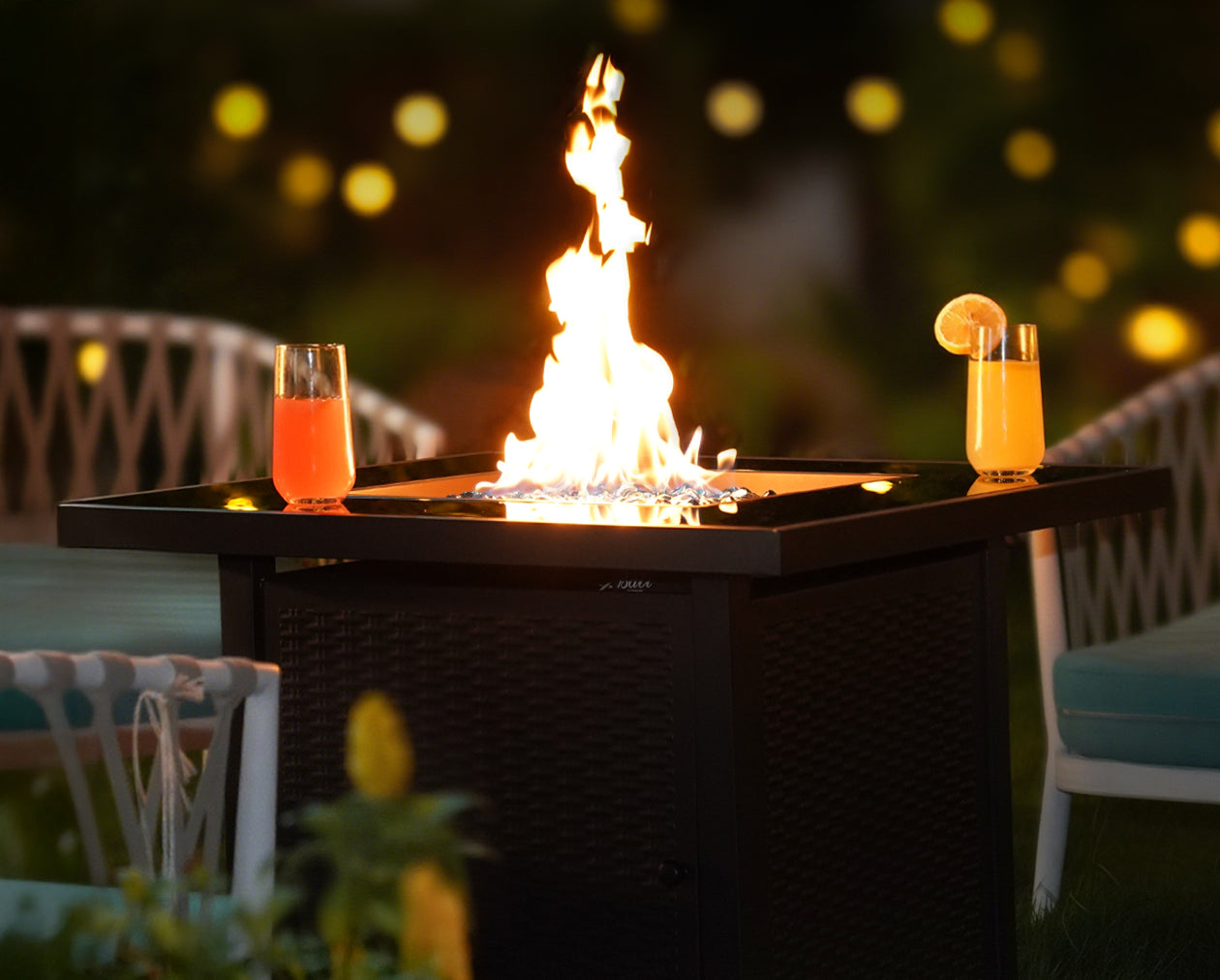


Fire glass and lava rocks both sit in your fire pit and make flames look great. But they deliver very different results in terms of appearance, heat distribution, durability, and long-term cost. Picking the wrong fire pit media means either spending more than you need to or ending up with a look that doesn't match your outdoor space.
This guide compares fire glass and lava rocks across every factor that actually matters — so you can choose the right media for your fire table or propane fire pit with confidence.
Quick Comparison: Fire Glass vs Lava Rocks
Here's the full side-by-side before we dive into details:
| Feature | Fire Glass | Lava Rocks |
|---|---|---|
| Material | Tempered glass (recycled or manufactured) | Natural volcanic rock |
| Appearance | Modern, reflective, many color options | Rustic, natural, black/red/brown tones |
| Heat Behavior | Reflects heat upward, minimal retention | Absorbs and radiates heat, retains warmth longer |
| Lifespan | 3–5+ years | 1–2 years before degradation |
| Cost (10 lbs) | $30–$80 | $15–$30 |
| Safety | No popping risk, inert when heated | Rare popping if moisture trapped inside |
| Maintenance | Occasional rinsing to remove soot | Replace when crumbling or discolored |
| Weight Needed | More (glass is denser) | Less (porous = lighter per volume) |
| Best For | Modern patios, decorative focal points | Natural landscapes, budget setups |
Now let's break each factor down so you know exactly what you're getting.
What Is Fire Glass?
Fire glass is small pieces of tempered glass — typically 1/4-inch to 1/2-inch in size — specifically designed to withstand high heat without melting, burning, or producing smoke. It's processed at extreme temperatures to eliminate sharp edges, making it safe to handle.
You'll find two main types:
- Reflective fire glass — Has a mirror-like coating on one side that catches and bounces light from the flames. This creates a brighter, more dramatic visual effect. It's the premium option.
- Non-reflective (tumbled) fire glass — Smooth, frosted pieces with a softer glow. Still beautiful, just more subtle. Usually costs less than reflective varieties.
Color options are where fire glass really shines. You can find it in cobalt blue, aqua, clear, copper, emerald green, black, amber, and dozens of other shades. This makes it easy to match your glass to your patio furniture, house exterior, or personal style.
One important note: fire glass does not produce heat on its own. It sits on top of the burner in a gas or propane fire pit and enhances the flame's visual impact while distributing heat. It's purely a media layer — the burner does the real work.
What Are Lava Rocks?
Lava rocks are exactly what they sound like — chunks of volcanic rock (basalt) formed when molten lava cools rapidly. They've been the go-to fire pit media for decades because they're natural, affordable, and widely available at any hardware store.
Their key characteristic is porosity. Lava rocks are full of tiny air pockets created by gas bubbles during volcanic cooling. This porous structure does two useful things:
- Even heat distribution — The air pockets help spread flames evenly across the burner, preventing hot spots and creating a more uniform fire.
- Heat retention — Those same pockets trap heat, allowing lava rocks to continue radiating warmth even after you turn off the gas.
Lava rocks typically come in black, dark gray, or reddish-brown. The look is organic and earthy — it blends well with stone patios, natural landscaping, and rustic outdoor setups. If your goal is a fire pit that looks like it belongs in nature, lava rocks deliver that vibe effortlessly.
Heat Performance

Let's clear up a common misconception: neither fire glass nor lava rocks produce heat. Your burner produces the heat. The media's job is to distribute and interact with that heat in different ways.
That said, the two materials behave quite differently once the flames are going.
Lava Rocks: Better Heat Retention
Lava rocks absorb heat during use and release it slowly afterward. This means your seating area stays warm for 15–20 minutes after you shut off the gas — a nice bonus on cool evenings when you're not ready to head inside yet. The porous structure also helps distribute flames more evenly across the burner pan, which can reduce flickering and dead spots.
Fire Glass: Better Heat Reflection
Fire glass doesn't absorb much heat at all. Instead, it reflects heat upward and outward, directing more warmth toward you rather than storing it in the media itself. The visual effect is also different — flames dancing through glass create brighter, more vibrant light. Many homeowners say the fire just looks bigger with glass.
In practical terms, if you're running your fire table for an hour-long dinner, you probably won't notice a meaningful heat difference between the two. The distinction matters more at the margins — lava rocks give you a little extra residual warmth, while fire glass makes the active flame feel slightly more directional.
Durability and Lifespan
This is where the two materials diverge significantly, and it's the factor most people overlook when comparing upfront prices.
Lava Rocks: 1–2 Years
Lava rocks degrade over time. Their porous structure — the same feature that gives them good heat retention — also makes them absorb moisture from rain, humidity, and morning dew. Repeated heating and cooling cycles cause the absorbed water to expand and contract, which gradually breaks the rocks apart.
After one to two seasons of regular use, you'll notice lava rocks crumbling into smaller pieces and dust. This debris can clog burner ports and affect flame quality. At that point, it's time to replace them.
Fire Glass: 3–5+ Years
Tempered glass doesn't absorb moisture, doesn't crack from thermal cycling, and doesn't break down over time. A quality fire glass set can last five years or more with basic care. According to the ASTM International standards for heat-treated glass, tempered glass is engineered to withstand significant thermal stress without structural failure.
The main durability issue with fire glass is cosmetic: soot and carbon buildup can dull the surface over time, especially with propane. A quick soak in warm soapy water every few months restores the sparkle. If a piece does crack (rare), you can replace individual pieces without swapping the whole set.
Replacement Cost Over Time
For a typical 30-inch round fire table:
- Lava rocks: ~$25 every 1–2 years = $60–$125 over 5 years
- Fire glass: ~$60 once, maybe a refresh at year 4 = $60–$120 over 5 years
The total cost of ownership is surprisingly similar. Fire glass costs more upfront but lasts longer. Lava rocks are cheap per bag but need replacing regularly.
Appearance and Style

Aesthetics are subjective, but here's how most homeowners think about the visual difference.
Fire Glass: Modern and Elegant
Fire glass instantly gives any fire pit a contemporary, polished look. The reflective surfaces catch light even when the fire is off, adding sparkle during the day. At night, flames refracting through colored glass create a jewel-like effect that's hard to achieve with any other media.
Popular color pairings with outdoor spaces:
- Cobalt blue or aqua — Complements poolside setups and coastal themes
- Clear or ice — Clean, minimal look for modern patios
- Copper or amber — Warm tones that match wood decks and earth-toned furniture
- Black reflective — Sleek and dramatic, pairs well with dark stone or concrete
If you're building an outdoor entertaining space around a rectangular fire table or square fire table, fire glass is usually the media that ties the design together.
Lava Rocks: Natural and Rustic
Lava rocks look like they came from the earth — because they literally did. The irregular shapes, rough textures, and muted dark colors blend seamlessly with stone patios, natural wood, and garden-adjacent settings. If your backyard has a cabin, lodge, or desert Southwest aesthetic, lava rocks are the natural fit.
The trade-off is less variety. You're mostly choosing between black, dark gray, and reddish-brown. There's no equivalent to the color spectrum available with fire glass.
Safety Differences
Both fire glass and lava rocks are safe for use in gas and propane fire pits when used correctly. But there are some differences worth knowing.
Lava Rocks: Small Popping Risk
The porous structure of lava rocks can trap moisture. When heated rapidly, that trapped water turns to steam and expands — occasionally causing a rock to pop or crack. It's uncommon with well-dried rocks, but it does happen. This is more likely in humid climates or if the rocks have been rained on without drying.
Using a fire table wind guard helps contain any fragments and also improves flame stability in breezy conditions.
Fire Glass: No Popping Risk
Tempered fire glass is non-porous, so it doesn't absorb moisture. There's no trapped water to cause popping or cracking. The glass is also processed to remove sharp edges, so it's safe to handle with bare hands.
Shared Safety Rules
Regardless of which media you choose:
- Gas and propane only — Neither fire glass nor lava rocks should be used in wood-burning fire pits. The extreme, uncontrolled temperatures from burning wood can cause glass to shatter and rocks to explode.
- Both are non-toxic — Neither material releases harmful fumes when heated by a gas burner. According to U.S. Geological Survey research on volcanic rock properties, basalt lava rock is chemically stable at gas-burner temperatures.
- Don't block burner ports — Keep media above the burner, not packed around or under it. Proper airflow prevents incomplete combustion and sooting.
Cost Breakdown
Let's talk real numbers. Prices vary by brand and retailer, but these ranges are representative of what you'll find in 2026:
| Cost Factor | Fire Glass | Lava Rocks |
|---|---|---|
| 10 lbs | $30–$80 | $15–$30 |
| Typical fill (20 lbs) | $60–$160 | $30–$60 |
| Lifespan | 3–5+ years | 1–2 years |
| 5-year cost (20 lbs fill) | $60–$160 (one purchase) | $75–$180 (3 purchases) |
| Reflective premium | +20–30% vs non-reflective | N/A |
The upfront difference is real — fire glass can cost 2–3x more per bag. But when you factor in replacement frequency, the five-year total is comparable. If budget is tight right now, lava rocks get you started for less. If you'd rather buy once and forget about it, fire glass is the better investment.
How Much Do You Need?
The amount of media you need depends on your fire pit's diameter and depth. You want 2–4 inches of coverage over the burner. Here's a quick reference:
| Fire Pit Diameter | Fire Glass (lbs) | Lava Rocks (lbs) |
|---|---|---|
| 18 inches | 15–20 lbs | 10–15 lbs |
| 24 inches | 20–30 lbs | 15–20 lbs |
| 30 inches | 30–40 lbs | 20–30 lbs |
| 36 inches | 40–55 lbs | 30–40 lbs |
| 42 inches | 55–70 lbs | 40–50 lbs |
| 48 inches | 70–90 lbs | 50–65 lbs |
Fire glass requires more weight because it's denser than porous lava rock. A bag of lava rocks fills more volume per pound. Keep this in mind when comparing prices — you'll need more pounds of fire glass to fill the same space.
For rectangular fire tables, multiply the length by width (in inches) and use roughly 1 lb of fire glass per 4 square inches, or 1 lb of lava rocks per 5–6 square inches.
Can You Mix Fire Glass and Lava Rocks?

Yes — and this is actually one of the smartest moves you can make.
The most popular approach is to use lava rocks as a base filler (the bottom 1–2 inches) and fire glass as the visible top layer. This gives you the best of both worlds:
- Cost savings — Cheap lava rocks fill the bulk of the volume, so you buy less of the expensive fire glass
- Better heat performance — The lava rock base absorbs and radiates heat while the glass top reflects it upward
- Full visual impact — Guests only see the fire glass on top, so the aesthetic is identical to a full glass fill
- Improved drainage — The porous lava rock base helps moisture drain away from the burner
For a 30-inch round fire pit, a mixed fill might look like: 15 lbs of lava rocks on the bottom + 15 lbs of fire glass on top. Compare that to 35+ lbs of fire glass for a full fill. You could save $30–$60 depending on the glass you choose.
One thing to keep in mind: when using a mixed fill, you'll eventually need to replace the lava rock base layer (every 1–2 years), which means lifting out the glass, swapping the rocks, and replacing the glass. It's not difficult, but it's worth knowing upfront. For detailed tips on layering and arranging your media for optimal flame performance, check out our fire pit media layout and flame optimization guide.
The Bottom Line
There's no universally "better" option here — it depends on your priorities.
Choose fire glass if you want a modern look, maximum color options, longer lifespan, and you're willing to invest more upfront. It's the go-to choice for propane fire pit tables on contemporary patios and outdoor dining areas.
Choose lava rocks if you prefer a natural, rustic aesthetic, want to keep initial costs low, and don't mind replacing them every couple of seasons. They're a great match for natural stone settings and casual backyard fire pits.
Mix both if you want the visual appeal of fire glass at a lower cost. Use lava rocks as a hidden base layer and fire glass on top — it's the most cost-effective way to get the premium look.
Whichever media you choose, make sure you're using it with a gas or propane fire pit (never wood-burning), keep the burner ports clear, and follow the manufacturer's fill guidelines. If you're still deciding on the fire pit itself, our propane fire pit table buying guide walks you through every decision point from BTU output to table shape.