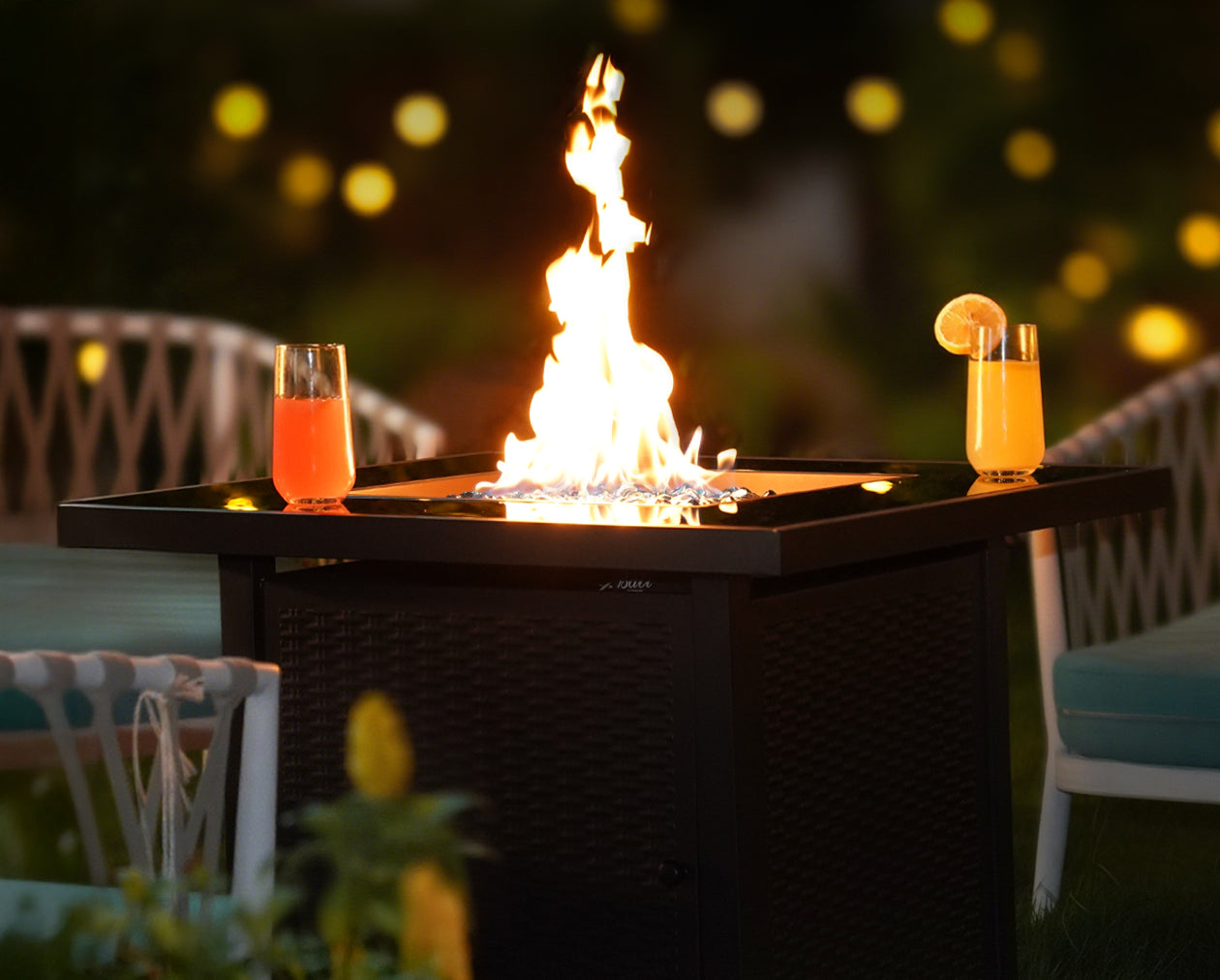


A tabletop fire pit sits right on your table and delivers real flames in a compact, portable package. It works on a tiny apartment balcony, a modest patio, or anywhere you want ambient fire without a full backyard setup. Sales of these miniature fire features have climbed steadily since 2024, and it's easy to see why. (For more layout inspiration, see our fire pit ideas roundup and small fire pit ideas.)
Unlike traditional fire pits that demand dedicated floor space and clearance, a table top fire pit turns any flat surface into an instant gathering point. They weigh just a few pounds, require minimal setup, and most can move from your coffee table to your dining table in seconds. Here is everything you need to know before choosing one.
What Exactly Is a Tabletop Fire Pit?
A tabletop fire pit is a small, self-contained fire feature designed to sit on a table or other flat surface. Most models measure between 8 and 16 inches across and stand 4 to 8 inches tall. They typically use clean-burning fuels like bioethanol, gel canisters, or isopropyl alcohol rather than wood or large propane tanks.
Think of it as the candle's cooler, more dramatic cousin. You get real flames (usually 6 to 12 inches tall) with no smoke, no ash, and no permanent installation. The result is a small tabletop fire pit that works equally well as a dinner party centerpiece or a solo reading companion on a quiet evening.
Fuel Types: What Powers a Tabletop Fire Pit
The fuel you choose affects everything from flame height to where you can safely use the unit. Here is a breakdown of the most common options.
Bioethanol
Bioethanol is the most popular fuel for tabletop fire pits. It burns cleanly with no smoke or soot, produces a warm orange flame, and is made from renewable plant sources. A single fill typically lasts 45 to 90 minutes depending on the burner size and ventilation. Bioethanol is widely available online and in home improvement stores.
Gel Fuel Canisters
Gel fuel comes in pre-measured cans that you simply open and light. It is the easiest option for beginners since there is no pouring or measuring involved. Flames tend to be slightly shorter than bioethanol, and each canister burns for about 2 to 3 hours. The downside is ongoing canister cost and waste.
Isopropyl Alcohol (Rubbing Alcohol)
Some budget-friendly tabletop fire bowls are designed to burn 90% or higher isopropyl alcohol. It is inexpensive and available at any pharmacy. However, the flame burns with a slightly blue tint and produces less heat than bioethanol. Always use the concentration your manufacturer specifies. Lower percentages contain more water and will not burn reliably.
Small Propane (1 lb Canisters)
A handful of tabletop fire pit propane models connect to standard 1-pound camping propane cylinders. These offer adjustable flame control and longer burn times (3 to 5 hours per canister), but the canister adds bulk and limits indoor use. Propane tabletop models are best suited for outdoor patios where ventilation is not a concern.

| Fuel Type | Burn Time | Smoke | Indoor Use | Cost per Hour |
|---|---|---|---|---|
| Bioethanol | 45–90 min | None | Yes (ventilated) | $1.50–$3.00 |
| Gel Fuel | 2–3 hours | Minimal | Yes (ventilated) | $1.00–$2.00 |
| Isopropyl Alcohol | 30–60 min | None | Yes (ventilated) | $0.50–$1.00 |
| Small Propane | 3–5 hours | None | No | $1.00–$1.50 |
Indoor vs. Outdoor Use: What You Need to Know
One of the biggest selling points of a tabletop fire pit is versatility. Many models market themselves as suitable for both indoor and outdoor use, but there are important nuances.
Indoor Use
An indoor tabletop fire pit must burn a clean fuel: bioethanol, gel, or isopropyl alcohol. Even with these fuels, adequate ventilation is non-negotiable. Crack a window or run the unit near an open door. Never use a propane-powered model indoors, as it produces carbon monoxide in enclosed spaces.

Place the unit on a heat-resistant surface like stone, tile, or a dedicated heat mat. Wood and laminate tables can scorch, warp, or discolor from prolonged heat exposure. Most manufacturers include a silicone or cork pad for this purpose. Use it.
Outdoor Use
Outdoors, wind is your main challenge. Lightweight tabletop fire pits can struggle to stay lit in even moderate breezes, and gusts can push flames unpredictably. Look for models with a wind guard or glass surround. Position the unit in a sheltered spot and never use it during high-wind advisories.
Sizing Guide: Matching the Fire Pit to Your Table
Choosing the right size tabletop fire pit depends on where you plan to use it. A unit that looks perfect on a coffee table may feel lost on a large dining table, and vice versa.

- Bistro or 2-person table (24–30 in.): Go with a small tabletop fire pit in the 8–10 inch range. Anything larger crowds the table and leaves no room for drinks or plates.
- Coffee table or side table (36–48 in.): A 10–14 inch model works well. This is the sweet spot for most tabletop fire bowls, large enough to be a focal point without dominating the surface.
- Dining table (60+ in.): You can go up to 14–16 inches, but consider whether diners can comfortably see over the flames. Shorter, wider models work better than tall, narrow ones in dining settings.
Regardless of size, leave at least 6 inches of clearance on all sides between the fire pit and any objects: glasses, napkins, overhanging decor, centerpieces.
Safety: Non-Negotiable Rules
Tabletop fire pits are real fire, not decoration. Treat them accordingly.
- Never leave unattended. Extinguish the flame before leaving the room or stepping away from the table. A pet's tail or a gust of wind can turn a cozy flame into a hazard in seconds.
- Keep away from flammables. Curtains, paper napkins, dried flower arrangements, and overhanging branches should all be well clear of the unit. Maintain at least 3 feet of vertical clearance above the flame.
- Use a heat-resistant surface. Even models with insulated bases generate significant heat underneath. A heat-proof mat, stone slab, or tile trivet protects your furniture.
- Never refuel while hot. Wait at least 15 minutes after extinguishing before adding more bioethanol or alcohol. Pouring fuel into a hot burner can cause a dangerous flare-up.
- Keep a snuffer or lid nearby. Most tabletop fire pits include a snuffer tool or lid to extinguish the flame. Never blow on the fire. It can splatter burning fuel.
- Store fuel properly. Keep bioethanol and isopropyl alcohol in their original containers, away from heat sources, and out of reach of children.
Tabletop Fire Pit vs. Full-Size Fire Pit: When Each Makes Sense
A tabletop fire pit and a full-size fire pit serve fundamentally different purposes. Choosing between them comes down to space, ambiance goals, and how many people you want to gather around the flame.
| Feature | Tabletop Fire Pit | Full-Size Fire Pit / Fire Table |
|---|---|---|
| Best for | Balconies, small patios, dining tables | Backyards, large patios, dedicated seating areas |
| Group size | 1–4 people | 4–10 people |
| Heat output | Minimal (ambiance only) | 40,000–60,000 BTU (real warmth) |
| Fuel | Bioethanol, gel, isopropyl | Propane (20 lb tank), natural gas, wood |
| Portability | Carry with one hand | Semi-permanent placement |
| Price range | $30–$150 | $200–$800+ |
| Indoor use | Yes (most models) | No |
A tabletop fire pit excels at creating intimate ambiance. It is perfect for a dinner for two, a solo evening on the balcony, or adding a warm glow to a bedroom or living room. But it will not keep you warm on a chilly night or serve as the centerpiece for a backyard party.
When you need real heat and a larger gathering point, a full-size propane fire pit or fire table is the better choice. BALI OUTDOORS offers a range of square fire tables and round fire tables that deliver 50,000+ BTU of heat, accommodate 6 to 8 chairs, and come with features like adjustable flame control, included lava rocks or fire glass, and weather covers.
If you already own a full-size fire table and want something for your smaller spaces, a tabletop fire pit makes an excellent complement. And if you are still weighing your options for a larger setup, our propane fire pit table buying guide walks through everything from BTU ratings to table shapes.
What to Look for When Shopping
Not all tabletop fire pits are created equal. Here are the features worth paying attention to:
- Material: Concrete and ceramic hold up well to heat and weather. Powder-coated steel is durable but can chip. Avoid thin glass bowls with no reinforcement.
- Wind guard: A tempered glass surround protects the flame from breezes and adds a layer of safety. Some are included; others are sold separately.
- Burn cup capacity: Larger reservoirs mean longer burn times. For a dinner party, you want at least 60 minutes of uninterrupted flame.
- Extinguisher tool: A snuffer lid or slide cover is safer than trying to blow out or smother the flame. Make sure one is included.
- Base insulation: Double-walled or insulated bases protect your table from heat transfer. If the model lacks this, budget for a heat-proof mat.
- Decorative media: Many tabletop fire bowls come with decorative stones, ceramic pebbles, or mini lava rocks for aesthetics. These are optional but add a finished look.
Final Thoughts
A tabletop fire pit is one of the simplest ways to bring real fire into spaces where a traditional fire pit would never fit. They are affordable, portable, and good-looking enough that guests will ask where you got yours.
Just remember: they are ambiance tools, not heaters. If warmth is the goal, pair one with a patio heater or consider stepping up to a full-size propane fire table that can anchor your outdoor space for years to come.