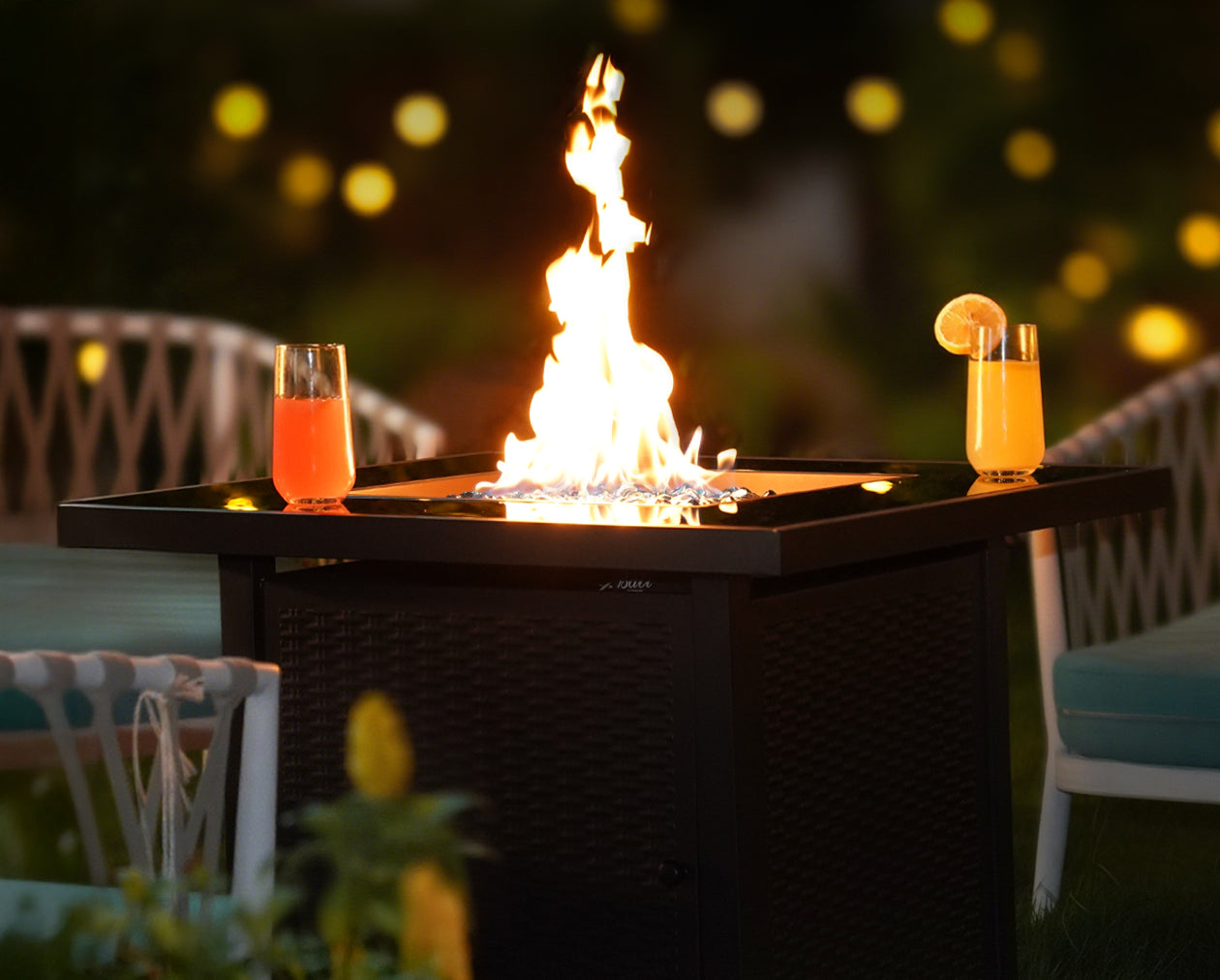

Understanding the Lifecycle of Steel Fire Tables
Investing in a steel fire table brings a sophisticated, warm centerpiece to your patio or balcony. However, for many homeowners, the initial enjoyment is often accompanied by a quiet concern regarding longevity. Steel, by its chemical nature, is susceptible to oxidation—the process we commonly recognize as rust.
Oxidation occurs when iron in the steel reacts with oxygen and moisture. While high-quality finishes, such as the matte black powder coating found on the 30 Inch Propane Fire Pit Table, Black, provide a robust primary defense, no coating is entirely impenetrable over years of exposure. Our goal is to move beyond the "if" of surface rust and focus on the "how" of prevention and early intervention.
In this guide, we will outline a methodical approach to maintaining your fire table. We prioritize clarity and safety, ensuring you can enjoy the 50,000 BTU (British Thermal Unit—a standard measure of heat output) of your unit without the anxiety of cosmetic or structural degradation.
The Critical Prevention Window: Assembly and Setup
In our experience assisting thousands of homeowners with outdoor heating maintenance, we have observed that the most common failure point isn't the broad, flat surfaces of the table. Instead, rust typically begins at micro-abrasions and chip points around fastener holes, handle brackets, and the underside of the table ledge where moisture tends to pool.
To mitigate this, we recommend a "seal-as-you-build" strategy. During the assembly of your 28 Inch Propane Fire Pit Table, Black, you should treat pre-drilled holes as potential vulnerabilities.
Proactive Sealing Steps:
- Before inserting bolts, apply a small amount of clear, silicone-based sealant around the pre-drilled hole.
- As you tighten the fastener, the silicone creates a water-resistant gasket that prevents moisture from reaching the raw steel edge inside the hole.
- Wipe away any excess sealant immediately with a lint-free cloth to maintain the clean aesthetic of the matte finish.
Logic Summary: This method addresses the "capillary action" of water, where moisture is pulled into tight gaps between metal surfaces, staying trapped and accelerating corrosion. Our analysis of warranty patterns suggests that sealing these junctions can significantly extend the interval before the first signs of surface rust appear.

Routine Maintenance and the "Coastal Heuristic"
For those living in humid or coastal environments, maintenance must be more frequent. Salt air is particularly aggressive; it acts as an electrolyte that speeds up the chemical reaction of rusting. Even if your fire table looks clean, salt deposits may be microscopic.
We suggest a simple heuristic for coastal owners: if you can smell the salt in the air, it is already on your furniture. After any significant salt-air exposure, wipe down the exterior of your table with a vinegar-water solution (1:4 ratio). This mild acidic solution neutralizes salt deposits before they can initiate corrosion under the powder coating.
Environmental Maintenance Schedule
| Environment | Cleaning Frequency | Primary Protection Method |
|---|---|---|
| Coastal/Salt Air | After every use or weekly | Vinegar-water wipe down + Heavy-duty cover |
| High Humidity/Rainy | Bi-weekly | Mild soap and water + Thorough drying |
| Arid/Dry | Monthly | Dusting and inspection of fastener points |
According to the U.S. Fire Administration (FEMA), keeping your outdoor area clear of debris is a core safety rule. For fire tables, this also means removing wet leaves or bird droppings from the steel surface immediately, as these organic materials hold moisture and acidity against the finish.
Identifying and Stopping Early Surface Rust
If you notice a small orange speck or a slight bubbling of the paint, do not wait. Surface rust is progressive. However, the method of removal is just as important as the timing. A common mistake is using a heavy wire brush, which can scratch the surrounding healthy coating and create new sites for rust.
The Methodical Restoration Process:
- Avoid: Aggressive wire brushing or coarse sandpaper.
- Use: A rotary tool with a fine abrasive pad (such as a Scotch-Brite type).
- Technique: Target only the rust spot, "feathering" the edges outward until you see shiny metal.
- Chemical Treatment: Apply a phosphoric acid-based rust converter (often sold as "Naval Jelly") to the spot. This converts any remaining microscopic iron oxide into a stable, black protective layer.
- Priming: Once dry, apply a high-heat-resistant primer and a matching touch-up paint.
Methodology Note: This "surgical" approach to rust removal is based on professional restoration techniques. It minimizes the "heat-affected zone" of the repair and ensures the patch bonds effectively to the existing powder coat.
The Role of Protective Covering
The single most effective tool in your maintenance kit is a high-quality cover. When your fire pit is not in use and has completely cooled, it should be covered to protect it from UV rays, which can degrade the powder coating over time, and from standing water.
The 28 Inch Square Durable Fire Pit Cover, Black is specifically designed with 600D polyester to withstand snow, rain, and sun. Using a cover reduces the "wet-dry cycles" the metal undergoes, which is the primary driver of coating fatigue.

Essential Safety Protocols
While maintaining the appearance of your steel fire table is important, safety is paramount. Propane fire tables are designed for outdoor use only. According to the Centers for Disease Control and Prevention (CDC), carbon monoxide (CO) is an odorless, colorless gas that can be fatal in enclosed spaces.
Safety Checklists for Every Use:
- Clearance: Maintain a minimum 10-foot distance from your home, overhanging branches, or combustible materials, as recommended by Ready.gov.
- Ventilation: Never use a propane fire table inside a garage, screened-in porch, or under a low-hanging canopy.
- Supervision: Always supervise children and pets. The exterior steel surfaces can remain hot for a significant time after the flame is extinguished.
- Extinguishment: For gas units, ensure the valve is tightly closed and the tank is turned off. If you are using a portable wood-burning unit, follow the National Park Service guidelines: the embers should be "cool to the touch" before you leave the area.
Long-Term Reliability
By adopting these methodical maintenance habits—sealing fastener holes during assembly, using a vinegar-water solution in coastal areas, and utilizing a durable cover—you transform from a passive owner to a proactive steward of your outdoor space.
Steel is a resilient material, and with the right care, your fire table will remain a safe and beautiful source of warmth for many seasons. Remember that consistency is more effective than occasional deep cleaning. A five-minute wipe-down today can prevent hours of restoration work next year.
Disclaimer: This article is for informational purposes only and does not constitute professional safety or engineering advice. Always refer to your specific product manual for assembly and safety instructions. If you suspect a gas leak or mechanical failure, contact a certified technician immediately.