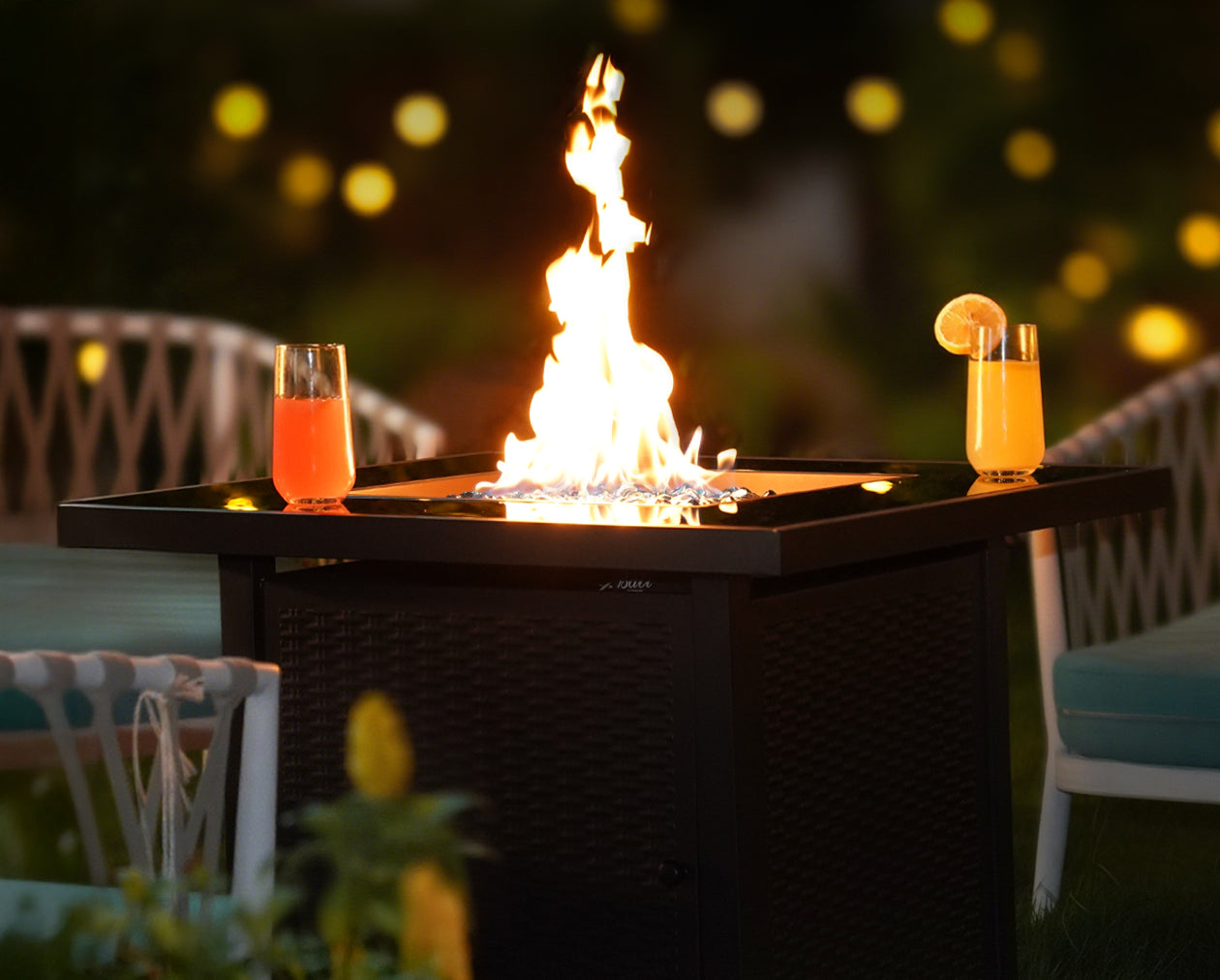

Navigating the Coastal Paradox: Protecting Your Outdoor Investment
For coastal homeowners, the balcony is a sanctuary where the salt-scented breeze meets the warmth of a flickering flame. However, this idyllic environment presents a unique challenge: the very air that makes the location desirable is also a relentless corrosive force. Marine environments are characterized by high humidity and airborne sodium chloride, which can degrade metal components significantly faster than in inland areas.
Maintaining a fire table on a coastal balcony requires more than just a standard cleaning routine. It demands a methodical approach to preservation that addresses microscopic vulnerabilities. By understanding the chemical interactions between salt air and metal, and by following a disciplined maintenance schedule, you can ensure your fire table remains a safe and beautiful centerpiece for years.
The Science of Salt Air Corrosion
Corrosion in coastal areas is not a uniform process. While many owners look for rust on large, flat surfaces, the most rapid degradation typically occurs at microscopic crevices. These "hot spots" include where screw heads meet the frame, under bolt washers, and inside burner ports.
When condensation mixes with salt residue in these tight spaces, it creates a concentrated electrolytic solution. This solution accelerates the electrochemical reaction that breaks down metal. Even powder-coated finishes, which are designed for durability, are susceptible if the coating is compromised.
Logic Summary: Our analysis of material longevity in marine environments assumes a baseline of 70% relative humidity and daily salt-mist exposure. These recommendations are derived from common patterns observed in warranty claims and service reports from coastal ZIP codes.
The Dangers of Abrasive Cleaning
A common mistake among well-meaning owners is the use of abrasive pads or wire brushes to "scrub away" salt or early signs of rust. This approach is counterproductive. Abrasive tools create micro-scratches in the powder-coated finish. These scratches serve as new entry points for salt air, allowing corrosion to take hold beneath the protective layer. Once the bond between the coating and the metal is broken, the finish will begin to bubble and peel.
Strategic Placement and Safety Standards
On a small balcony, placement is a matter of both aesthetics and strict safety compliance. Fire pits and tables must be positioned with care to prevent property damage and ensure the safety of the household.
The 10-Foot Rule and Structural Clearance
According to the U.S. Fire Administration (USFA), a critical safety guideline is the "10-foot rule." This heuristic suggests maintaining a minimum distance of 10 feet from structures, overhanging trees, or combustible materials. On a balcony, this can be challenging. You should always consult your local fire department or Homeowners Association (HOA) for specific regulations regarding gas-burning appliances on elevated decks.
If your space is limited, products like the 28 Inch Propane Fire Pit Table, Gray are designed with a compact footprint, making them easier to position safely within the constraints of a small patio.

Ventilation and Carbon Monoxide Safety
Gas-burning fire tables produce Carbon Monoxide (CO), an odorless, colorless gas that can be life-threatening in enclosed spaces. The Centers for Disease Control and Prevention (CDC) emphasizes that gas-burning appliances should be used in well-ventilated outdoor areas only. Never use a fire table inside a screened-in porch or a balcony with heavy plastic enclosures that restrict airflow.
The Methodical Maintenance Protocol
To combat the alkalinity of salt, you must implement a cleaning routine that neutralizes the environment without damaging the appliance's seals or finish.
The 10:1 Neutralizing Wipe
The most effective weekly maintenance involves a simple 10:1 water-to-white-vinegar solution. Vinegar’s mild acidity is highly effective at neutralizing salt alkalinity.
Step-by-Step Cleaning Process:
- Preparation: Ensure the fire table is completely cool and the gas supply is shut off.
- Application: Use a soft microfiber cloth to apply the 10:1 solution to all exterior surfaces, paying special attention to joints and fasteners.
- The Crevice Check: Use a soft-bristled toothbrush dampened with the solution to reach into screw heads and around the burner base.
- Immediate Drying: Follow the wet wipe immediately with a clean, dry microfiber towel. This prevents water spotting and ensures no moisture is left to sit in crevices.
Burner Port Maintenance
Salt crystals can accumulate inside the burner ports, potentially obstructing the flow of gas and leading to an uneven flame. Periodically inspect the burner of your 32 Inch Propane Fire Pit Table, Brown for any white, crusty buildup. If found, gently clear the ports with a thin wire or a compressed air canister, ensuring you do not enlarge the holes.
Technical Inspection: Gas Lines and Fittings
In marine environments, brass fittings are subject to "pitting," a form of localized corrosion that creates small holes. This is particularly dangerous for gas regulators and hose connections.
The "Double-Frequency" Rule
Experienced technicians recommend inspecting gas connections in coastal areas twice as often as inland locations. While a standard soap test (applying soapy water to connections to look for bubbles) is a good baseline, it may not always detect very slow leaks caused by microscopic pitting.
Inspection Checklist:
- Hose Integrity: Check for cracking or stiffness in the propane hose. Salt air can leach plasticizers from rubber, making it brittle.
- Regulator Vent: Ensure the small vent on the regulator is not clogged with salt or debris.
- Brass Connections: Look for green or white powdery residue on brass threads, which indicates advanced corrosion.
Modeling Note (Reproducible Parameters): The following table outlines the hypothetical environmental stress factors used to determine our maintenance intervals.
| Parameter | Value or Range | Unit | Rationale / Source Category |
|---|---|---|---|
| Salt Concentration | 3.5 - 5.0 | % | Estimated sea spray levels in coastal zones |
| Ambient Humidity | 65 - 90 | % | Typical range for marine balcony environments |
| Solution Acidity | 2.5 - 3.0 | pH | 10:1 Water-to-Vinegar mixture baseline |
| Cleaning Interval | 7 | Days | Heuristic to prevent salt crystallization |
| Inspection Frequency | 60 | Days | 2x standard safety baseline for marine fittings |
Storage and Seasonal Preservation
When the fire table is not in use, protection is paramount, but the type of protection matters. A common misconception is that any waterproof cover will suffice.
The Breathability Requirement
In humid coastal areas, a non-breathable plastic cover can actually accelerate corrosion. It traps humid, salty air underneath, creating a "greenhouse effect" of moisture around the metal. If the temperature rises, this trapped moisture becomes even more reactive.
You should utilize a cover made from breathable fabric or one with built-in vents to allow air circulation. If you use a heavy-duty waterproof cover, ensure you remove it on dry, sunny days to let the unit "breathe" and prevent condensation buildup. For larger units like the 42 inch Rectangular Propane Fire Pit Table, Black, ensuring the cover is properly tensioned to prevent water pooling is also vital.

Managing Fire Glass and Media
Fire glass, such as the blue smooth glass included with the 30 Inch Propane Fire Pit Table, Black, is generally resistant to salt. However, the tray beneath the glass can collect salt-laden moisture. Once a season, it is advisable to remove the fire glass, rinse it in fresh water to remove salt dust, and thoroughly clean the burner pan.
Summary of Coastal Care
Living near the ocean requires a shift in how we maintain our outdoor gear. By moving from a reactive "fix it when it breaks" mindset to a methodical "prevent and neutralize" strategy, you protect both your investment and your safety.
A high-quality fire table, such as those with a 50,000 BTU output, provides significant warmth and ambiance. Maintaining that performance in a salt-air environment is entirely possible with the right tools—namely, a microfiber cloth, a little white vinegar, and a vigilant eye for safety.
Disclaimer: This article is for informational purposes only and does not constitute professional safety, legal, or fire-prevention advice. Always follow the manufacturer's specific instructions provided in your user manual. Consult your local fire department or HOA regarding specific regulations for fire pits on balconies. If you suspect a gas leak, immediately turn off the gas supply and contact a qualified professional.