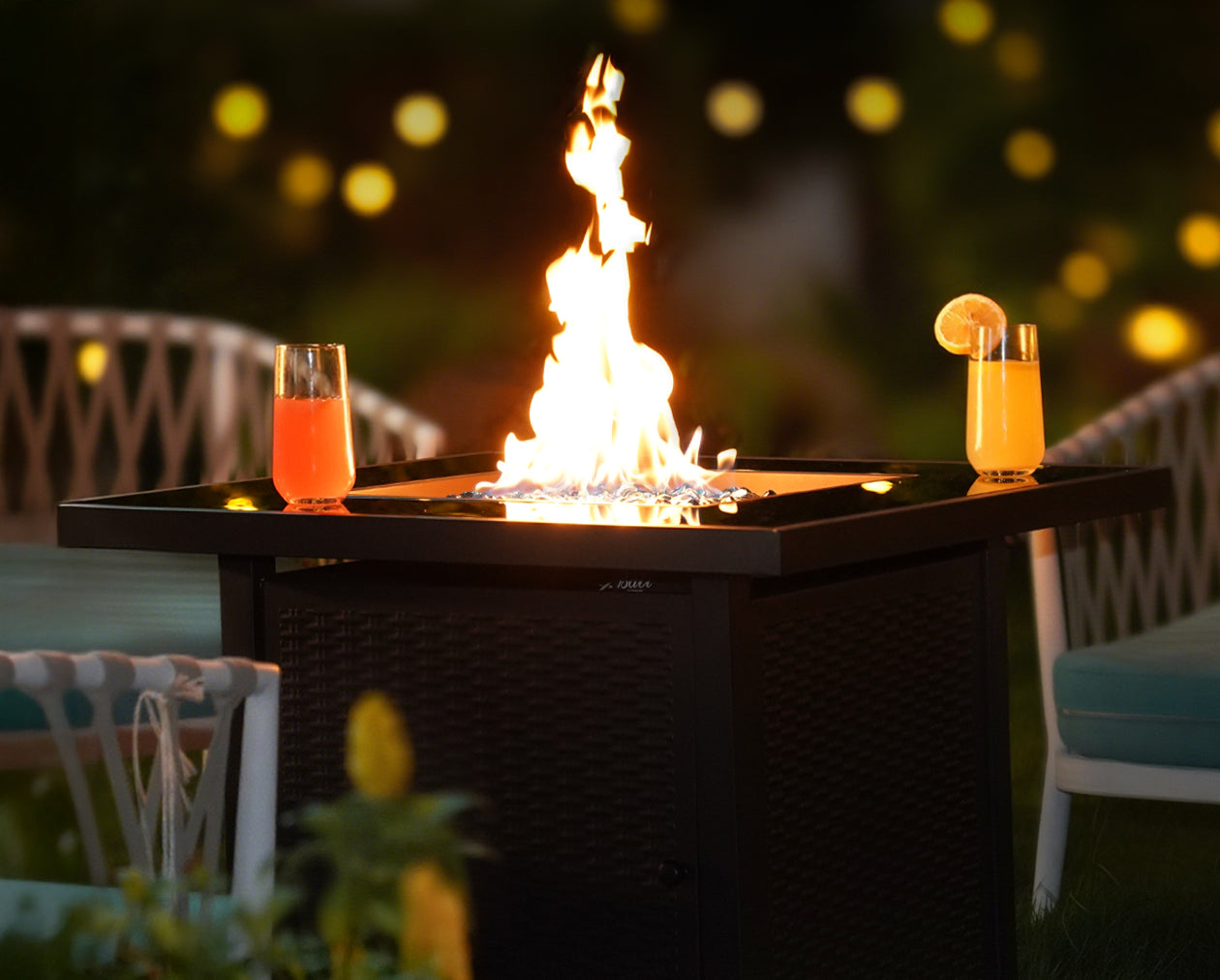

Managing Airflow for Fire Tables in Semi-Enclosed Patios
Creating a cozy retreat on a semi-enclosed patio or screened porch requires more than just aesthetic coordination. When you introduce a propane fire table into a sheltered environment, you are managing a complex interaction between heat output, fuel combustion, and air exchange. For many homeowners, the primary concern is safety—specifically the risk of fire or carbon monoxide (CO) accumulation.
In this guide, we provide a methodical framework for ensuring your outdoor space remains a safe sanctuary. We will move beyond general advice to provide precise, actionable requirements for ventilation and clearance, grounded in fire safety standards and professional installation practices.
The Physics of Airflow and Combustion
To understand why airflow is critical, we must look at how a propane burner functions. A fire table requires a constant supply of oxygen to maintain a clean, "complete" combustion. In an open backyard, natural wind patterns provide this effortlessly. However, semi-enclosed spaces—defined as areas with at least two walls or a ceiling—can trap gases and create "dead air" zones.
When oxygen levels drop, the burner may undergo "incomplete combustion." This process creates soot and, more dangerously, carbon monoxide. According to the Centers for Disease Control and Prevention - CDC, carbon monoxide is an odorless, colorless gas that can be fatal if it accumulates in enclosed spaces. This is why gas-burning appliances are strictly rated for "Outdoor Use Only."
Identifying "Dead Air" Zones
A common mistake is assuming that because a space is "outdoors," it is automatically well-ventilated. If you cannot feel a persistent breeze on your face while sitting at the intended fire table location, assume natural ventilation is inadequate.
Professional Insight: The Incense Test Before purchasing or installing a fire table, we recommend a simple smoke test. Light a stick of incense at the exact height and location where the fire table will sit. Observe the smoke. If it rises vertically and lingers or swirls in place for more than a few seconds, you have a dead air zone. If the smoke is quickly pulled away by a draft, your natural ventilation is likely sufficient.

Clearance Requirements: The 8-Foot Heuristic
Standard fire safety guidelines, such as those from the U.S. Fire Administration - FEMA, emphasize the "10-foot rule"—keeping fires at least 10 feet away from structures like your home or overhanging branches. However, semi-enclosed patios present a different challenge: proximity to walls, screens, and furniture.
While many manuals cite a 4-foot minimum clearance for open areas, our experience with sheltered environments suggests this is insufficient. In spaces with overhead coverage or multiple walls, we recommend doubling that distance.
The Clearance Safety Matrix
| Environment Type | Recommended Clearance (Horizontal) | Recommended Clearance (Vertical) | Rationale |
|---|---|---|---|
| Open Deck/Yard | 4 Feet | 8 Feet | Maximum natural dissipation |
| Semi-Enclosed (2 Walls) | 6 Feet | 10 Feet | Increased heat reflection from walls |
| Sheltered (3 Walls/Ceiling) | 8 Feet | 12 Feet | High risk of heat and CO trapping |
| Screened Porch | 8 Feet | 12 Feet | Screens restrict air velocity by up to 50% |
Logic Summary: These distances are based on heat-mapping heuristics used by professional installers to prevent the "oven effect," where heat builds up against a ceiling or wall faster than it can dissipate.
When selecting a unit like the 30 Inch Propane Fire Pit Table, Black, you must account for its circular footprint. The 30-inch diameter is the starting point; you should measure your 8-foot safety buffer from the edge of the table, not the center burner.
Selecting the Right BTU for Small Spaces
BTU stands for British Thermal Unit, a measure of heat output. While it is tempting to choose the highest BTU rating available for maximum warmth, high-output models can be counterproductive in semi-enclosed spaces.
A burner producing 50,000 BTU—like the one found in the 32 Inch Propane Fire Pit Table, Brown—is designed for significant warmth. However, in a confined area, a high-output flame consumes oxygen more rapidly. If the space cannot replenish that oxygen, the flame will begin to "starve," leading to soot production and unstable performance.
Why 40,000 to 50,000 BTU is the "Sweet Spot"
For semi-enclosed patios, we recommend an adjustable burner in the 40,000 to 50,000 BTU range. This provides:
- Flame Stability: A lower, steady flame is less likely to be affected by the "eddies" (circular air currents) created by patio walls.
- Clean Combustion: It allows for a higher oxygen-to-fuel ratio in sheltered air.
- Manageable Heat: It reduces the risk of heat damage to ceiling fans, light fixtures, or screened materials.
If you find your flame is flickering excessively or producing yellow, "lazy" tips, turn the control knob down. A smaller, blue-based flame is safer and more efficient than a large, flickering orange one in a sheltered environment.
Enhancing Airflow with Active Measures
If your patio fails the "Incense Test" or has a low ceiling, you must implement active ventilation measures. Do not rely on luck when managing gas combustion.
1. Mechanical Assistance
Install an outdoor-rated ceiling fan or a floor-standing oscillating fan. The goal is not to blow the flame out, but to ensure a constant exchange of air. Position the fan to pull fresh air into the space rather than just swirling the existing air.
2. Using a Glass Wind Guard
In semi-enclosed spaces, wind doesn't always blow in one direction; it often swirls. This can cause the flame to lick toward a nearby wall or furniture. A 18.5 Inch Fire Pit Glass Wind Guard is an essential safety component. It shields the burner from erratic drafts, ensuring the heat goes straight up where it can be managed, rather than sideways toward combustible materials.
18.5 Inch Fire Pit Glass Wind Guard installed on a round fire table for flame stability
3. The "Breeze Check"
If you are using a fire table on a screened porch, remember that even high-visibility screens act as a physical barrier to air. According to general fire safety principles outlined by Ready.gov, maintaining clear paths for air and egress is vital. Ensure at least one side of your patio remains completely unobstructed by furniture or heavy curtains to allow for natural cross-ventilation.
Critical Safety Hardware and Certifications
Before you ignite your fire table, verify that your equipment meets specific safety standards.
- Outdoor-Only Certification: Never use a fire table that isn't specifically certified for outdoor use. These units are engineered to handle wind exposure and have safety shut-offs (like thermocouples) that indoor units may lack.
- Pulse Ignition Systems: Modern tables, such as the 30 Inch Propane Fire Pit Table for Outdoor, Black, feature integrated pulse ignition. This ensures the gas ignites immediately, preventing a "cloud" of unburnt propane from building up before the flame catches.
- Propane Tank Storage: Always store the propane tank within the table's designated compartment or at a safe distance as specified by the manufacturer. Never store spare tanks in a semi-enclosed or enclosed space.
Maintenance for Safe Airflow
Soot buildup is the enemy of airflow. If the burner ports become clogged with carbon deposits, the gas cannot mix properly with air.
- Inspect the Burner: Once a month, check the burner ring for blockages. Use a soft brush or compressed air to clear out dust or spider webs.
- Lava Rock/Glass Placement: Do not over-fill the burner pan. If the fire media (lava rocks or glass) is packed too tightly over the burner ports, it restricts airflow and causes the "starved flame" issue mentioned earlier.
- Cover When Not in Use: Use a waterproof cover once the unit is completely cool. This prevents debris from settling into the burner components.
Summary of Non-Negotiable Rules
Managing a fire table in a small or semi-enclosed space is entirely possible with a methodical approach to safety. By prioritizing airflow and maintaining strict clearances, you can enjoy the ambiance without the anxiety.
- Always maintain an 8-foot horizontal clearance from walls and combustibles in sheltered spaces.
- Never use a fire table in a space that fails a basic ventilation test (like the incense smoke test).
- Use a glass wind guard to stabilize the flame and prevent heat from drifting toward walls.
- Choose a moderate BTU output (40,000-50,000) to ensure clean combustion in limited air volumes.
By following these professional heuristics and adhering to the safety guidelines provided by the U.S. Fire Administration and the CDC, you can create an outdoor living space that is both beautiful and fundamentally safe.
Disclaimer: This article is for informational purposes only and does not constitute professional safety, legal, or fire-prevention advice. Fire table installation and use must comply with local building codes, HOA regulations, and manufacturer instructions. Always consult with a certified gas professional or your local fire marshal if you are unsure about the safety of your specific setup.