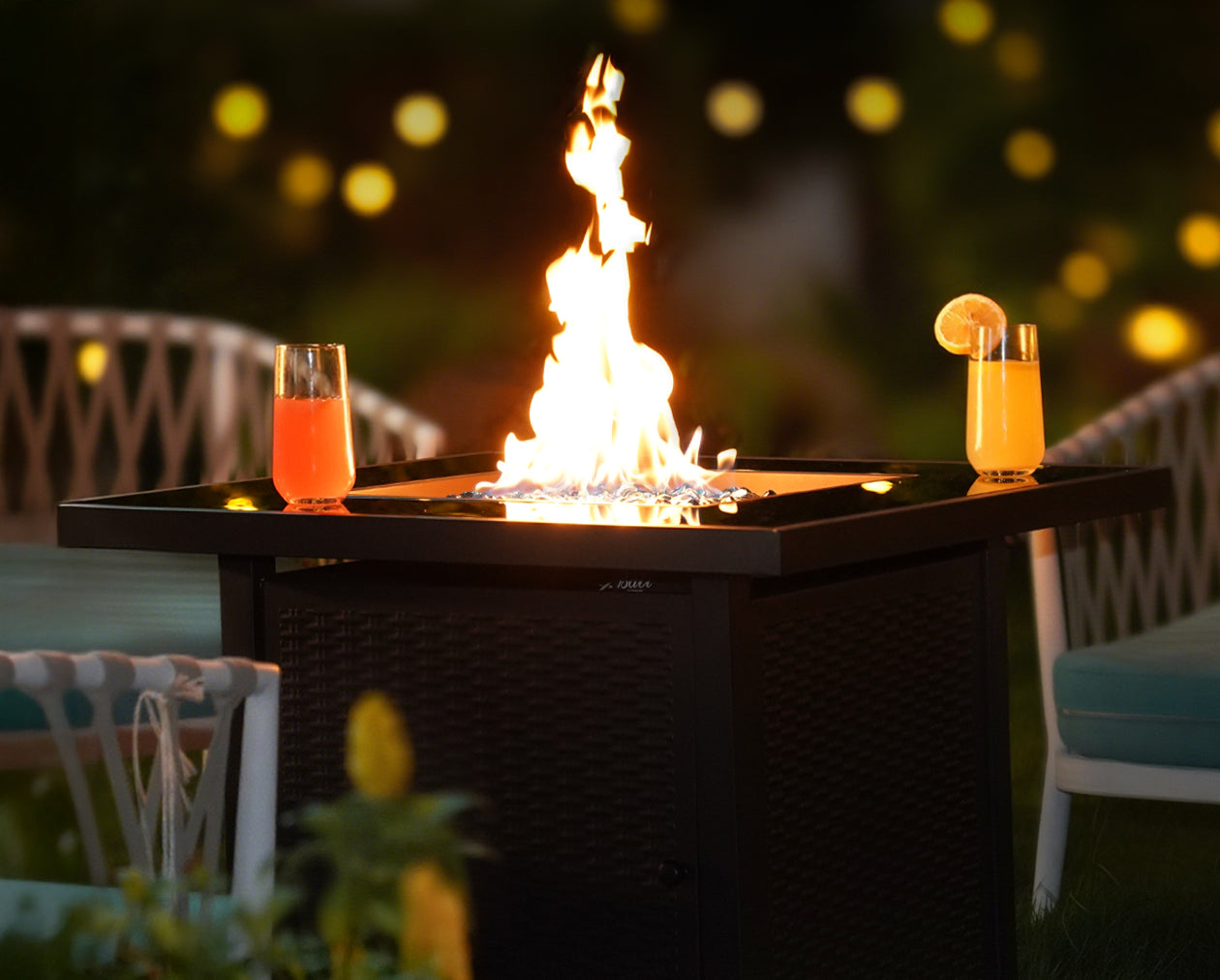


A warm, inviting fire pit is the heart of any great backyard. It extends your living space, offers a cozy gathering spot, and adds a touch of magic to cool evenings. If you love the ambiance but not the mess of a wood fire, an outdoor propane fire pit is the perfect solution. But how do you install one? This guide will walk you through everything you need to know, from picking the perfect spot to lighting the first flame safely.
Where Should You Put the Fire Pit?
Choosing the right location is the most important first step. Your fire pit's placement affects safety, comfort, and usability. You want a spot that is both accessible and secure.
Ideally, place your fire pit on a level, stable, and non-combustible surface. This includes materials like:
- Paving stones or bricks
- Concrete patios
- Gravel or crushed rock
- Stone or tile
These surfaces provide a solid foundation that won't shift or, more importantly, catch fire. A flat surface ensures your fire table is stable and won't tip over. It should be in an open-air location, far from any overhanging trees or structures, with plenty of room for seating.
For safety, you must also maintain a safe distance. Keep your fire pit at least 10 to 15 feet away from your home's siding, fences, sheds, or any other combustible structure. It should be in an open-air location, far from any overhanging trees, with plenty of room for seating.
[[related_products_1]] Browse our propane fire pits to find the perfect fit for your outdoor space.
Where Should You Not Put the Fire Pit?
Safety is paramount. Never install any fire pit, including a propane model, in a high-risk area. Avoid these locations:
- On a wooden or composite deck: While many propane fire pits are certified for use on these surfaces (always check the manufacturer's manual!), it’s crucial to use a fire-resistant barrier or deck-protecting mat underneath. Heat can still cause damage or pose a fire risk over time.
- Directly on grass or soil: Grass is flammable, and soil is uneven. This creates an unstable and hazardous base.
- In an enclosed or semi-enclosed space: This is the most critical rule. Never use a propane fire pit in a screened-in porch, sunroom, garage, or under a covered patio with a low ceiling. Propane units require ample ventilation to prevent the dangerous buildup of carbon monoxide.
- Too close to your house: Keep your fire pit at least 10 to 15 feet away from your home's siding, fences, sheds, or any other combustible structure.
- Under low-hanging branches: Heat rises, and a stray spark or high flame can easily ignite dry leaves or branches.
Do You Need a Permit?
This is a common question, and the answer varies. In the United States, regulations for outdoor fire features differ by state, county, and even city.
Many municipalities do not require a permit for a portable, self-contained propane fire pit, as it's often classified as a "recreational fire appliance" similar to a barbecue grill.
However, if your installation involves a permanent structure, a custom-built enclosure, or running a fixed gas line (natural gas or a large propane tank), you will almost certainly need a permit. This process ensures the installation is inspected and meets all local building and fire codes.
Before you buy or build, always check with your local fire department or municipal building code office. It’s a quick phone call that can save you a major headache later. Browse our fire pit collection to find the perfect fit for your outdoor space.
What Are Your Fire Pit Options?
When you think "propane fire pit," you might picture one specific thing, but there are several options to fit your style and needs.
- Propane Fire Tables: These are a popular choice as they combine a fire feature with a functional table. The wide ledges are perfect for setting down drinks or small plates, making them a fantastic centerpiece for a seating area.
-
Fire Pits: These are typically lower to the ground and more focused on warmth and ambiance. They come in various shapes, from round bowls to square pits, and are designed to be the main focal point.
- Gas Fire Table Kits: If you are building a custom fire pit from stone or pavers, a gas fire table kit is essential. This includes the burner, pan, and all the connections you need to create your own design.
- Portable Propane Fire Pits: These are smaller, lighter units designed for flexibility. You can easily move them around your patio or even take them on a camping trip (where permitted).
What Are the Main Parts of a Fire Pit?
Understanding the components of your fire pit makes installation and maintenance much easier. A typical propane system consists of several key fire table parts:
- Enclosure/Body: This is the main structure of the fire pit or table, made from materials like metal, concrete, or stone.
- Burner and Pan: The burner is where the gas is released and ignited. It sits inside a metal pan, which supports the burner and holds your fire media (lava rock or fire glass).
- Ignition System: This is how you light the fire. It can be a simple spark-ignition button (piezo igniter) or a more advanced electronic ignition system.
- Gas Valve and Control Knob: This component, often located on a control panel, allows you to start the flow of gas and adjust the flame height.
- Hose and Regulator: This flexible hose connects the burner assembly to the propane tank. The regulator is a critical safety device that controls the pressure of the gas coming from the tank.
- Fire Media: This is the non-combustible material that covers the burner. Lava rocks are common for a rustic look, while tempered fire glass offers a modern, vibrant style.
- Propane Tank: The fuel source, usually a standard 20 lb. barbecue-style tank, is often hidden inside the fire table's base or connected via a longer hose.
How Do You Install the Fire Pit? - Need Professional
If your project involves running a permanent gas line from your home's main supply (either natural gas or a large, fixed propane tank), this is not a DIY job.
You must hire a licensed and certified gas plumber or technician. Working with gas lines is extremely dangerous and subject to strict codes. A professional will: For more details, see our guide on natural gas fire pit installation.
- Safely run the gas line underground to your desired location.
- Ensure all connections are properly sealed and leak-free.
- Install any necessary shut-off valves.
- Connect and test the appliance to ensure it meets all safety standards and local codes.
The cost is higher, but the peace of mind and safety are non-negotiable.
How Do You Install the Fire Pit? - DIY Route
For the vast majority of self-contained, tank-in-base propane fire tables, the installation is a simple DIY project that takes less than an hour. Here is a general step-by-step guide.
Note: Always read and follow your specific model's assembly manual.
- Unbox and Inspect: Carefully unpack all parts. Check for any damage that may have occurred during shipping. Lay out all your components and hardware.
- Assemble the Base: Most fire tables require you to assemble the side panels and door that form the base. This usually involves just a few screws or bolts. Make sure the structure is level and all screws are snug, but don't overtighten.
- Attach the Tabletop: Once the base is built, secure the tabletop (which contains the burner pan and control panel) to the base.
- Add Fire Media: Open the bags of lava rock or fire glass. Pour them into the burner pan, covering the burner element completely. The media should be about 1 inch deep over the burner. Do not overfill the pan, and be careful not to clog the igniter.
- Connect the Propane Tank: Place your 20 lb. propane tank into the holder inside the base. Ensure the tank valve is in the "OFF" position. Attach the fire pit's regulator hose to the tank valve and tighten it by hand (it's usually a reverse thread—righty-loosey, lefty-tighty). Ensure the connection is secure.
- Perform a Leak Test: This is the most critical safety step. Create a 50/50 solution of dish soap and water. With the tank valve open, brush this solution onto all connections (where the regulator meets the tank and where the hose meets the fire pit). If you see bubbles forming, you have a leak. Turn the tank valve off immediately, tighten the connection, and test again. Do not use the fire pit until all leaks are fixed.
- Light and Enjoy: Once you are leak-free, follow the lighting instructions in your manual. This typically involves pushing and holding the control knob while pressing the igniter button.
Is a Propane Fire Pit Kit Worth It?
If you have a vision for a custom-built fire pit that matches your stone patio, a propane fire pit kit (or gas fire table kit) is absolutely worth it.
These kits provide the "guts" of the fire pit—the pan, burner, valve, and connections. You or a landscaper then build the enclosure around it using materials like concrete, brick, or stone blocks. For more details, see our guide on how long a 20lb propane tank lasts.
Pros:
- Total Customization: You control the size, shape, and finish material.
- Permanent Feel: It creates a high-end, built-in look.
- Durable: Stone and concrete enclosures are incredibly long-lasting.
Cons:
- More Complex: This is a bigger project than assembling a fire table.
- Higher Cost: The kit plus the building materials will cost more.
- Less Flexible: It's a permanent addition to your yard.
For those who want to know how to build a fire pit with the convenience of gas, a kit is the perfect middle ground between a simple fire table and a full professional installation.
How to Maintain a Propane Fire Pit
One of the best features of an outdoor propane fire pit is its low maintenance. A few simple steps will keep it looking and working great for years:
- Always Use a Cover: When not in use, protect your fire pit with a high-quality, waterproof cover. This keeps rain, dirt, leaves, and snow out of the burner.
- Clean the Surface: Wipe down the exterior of the fire table regularly with a soft, damp cloth.
- Check for Pests: Spiders and insects are known to build nests in the burner tubes. This can block gas flow and create a hazard. Periodically inspect the burner ports with a flashlight.
- Inspect the Hose: Before each season, check the gas hose for any cracks, abrasions, or damage.
-
Keep the Burner Clean: Gently brush away any debris from the lava rocks or fire glass. If the burner ports are clogged, you can often clear them with a paperclip (with the gas OFF and cool).
Final Check for Safety
Before you relax by the fire, run through this quick safety checklist every time:
- Is the fire pit on a level, stable, and non-flammable surface?
- Is it at least 10-15 feet away from any structures?
- Is the area clear of low-hanging branches and dry leaves?
- Are all connections secure and leak-free?
- Is the propane tank in good condition and upright?
- Do you have a fire extinguisher or water source nearby, just in case?
- Never leave a lit fire pit unattended.
- Always keep children and pets at a safe distance.
Conclusion
Installing a propane fire pit is one of the easiest and most rewarding upgrades you can make to your backyard. For most, it’s a simple DIY assembly that provides instant ambiance and warmth with the push of a button. By choosing the right spot, following safety rules, and performing basic maintenance, you'll create a favorite gathering place for family and friends for many seasons to come.
Ready to find the perfect fire pit for your space? Explore the full collection of stylish and durable propane fire pits from Bali Outdoors® and start enjoying the good life, outdoors.
Propane Fire Pit FAQs
Q1: Can Rain Damage a Propane Fire Pit?
Rain doesn't hurt the durable parts of a propane fire pit, since it's made from stainless steel. However, if water accumulates in a burner pan, it can cause rust in other parts that aren't made from stainless steel. Rain might also make the ignition system dysfunctional if water saturates it for an extended period. Use a waterproof cover on your fire pit if it's idle.
Q2: Can I simply dig a hole for a fire pit?
You can dig a hole for a conventional wood burning fire pit (but it would be much better to line it with stones). You should never do so for a propane fire pit. Propane is heavier than air. That means if there were any kind of leak in an underground installation, rather than dissipating, it would collect in the hole, creating a potentially dangerous explosion hazard. Propane fire pits need to be erected above ground with adequate ventilation.
Q3: Are propane fire pits superior to wood fire pits?
This depends on personal preference. Propane fire pits give more convenience in terms of readiness, since they light immediately, do not emit smoke or sparks, and self-extinguish quickly in comparison to wood fire pits. They also allow burning in areas where wood burning is prohibited, such as in residential areas with wood burning restrictions.
Q4: Does a propane fire pit need to be vented?
Yes, absolutely. All propane fire pits need to be installed in an open location where plenty of air is circulating. They consume oxygen during the burning process, releasing carbon monoxide in the process. Burning a propane fire pit in an interior location (such as an indoor garage, shed, or even a screened-in porch) can result in a fatal concentration of carbon monoxide in the area since it is an odorless gas. Vents need to be present on the bottom surface of the fire table to allow air circulation in case there is gas leakage.