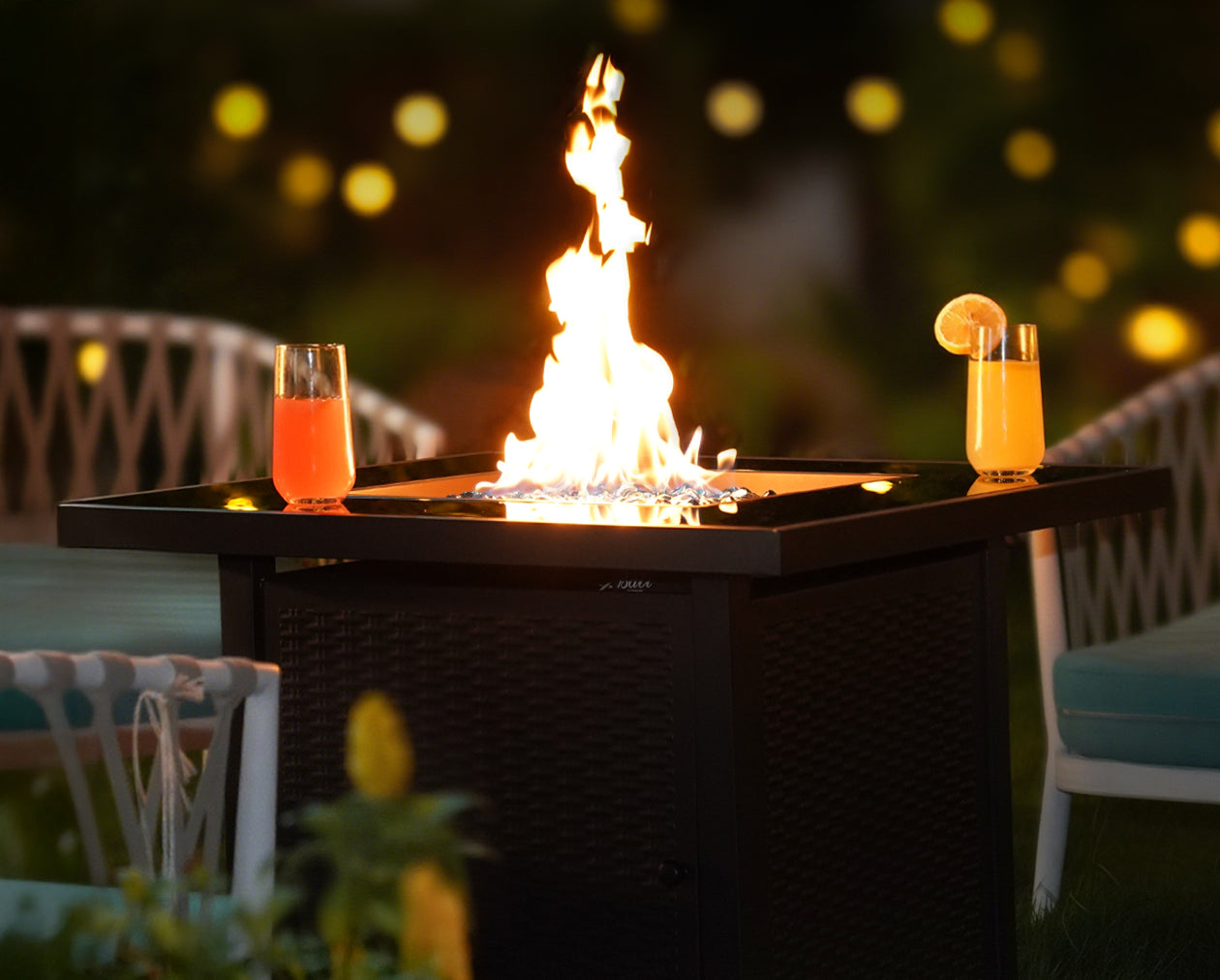


A fire table glass topper turns your fire pit table into a regular dining or serving table when the fire is not in use. It is a flat piece of tempered glass that sits over the burner pan, covering the fire media and giving you a smooth, usable surface. For fire pit tables that sit on a patio year-round, a glass topper means you get two functions from one piece of furniture.
This guide covers how glass toppers work, how to measure for the right fit, care and replacement, and the safety considerations you need to know.
What a Glass Topper Does
Fire pit table glass toppers serve a few functions beyond aesthetics:

- Converts the fire pit into a flat table surface. Set drinks, plates, or a centerpiece on it when the fire is off. This is especially useful for smaller patios where the fire pit table is the only outdoor table.
- Protects the burner and fire media. The topper keeps rain, leaves, pollen, and debris out of the burner pan. This reduces cleanup and prevents clogged burner ports from organic material.
- Discourages unwanted access. With the topper in place, children and pets cannot reach the fire glass or burner. This adds a passive safety layer when the fire pit is off but you do not want to worry about curious hands.
- Improves appearance. A clean glass surface looks better than a burner pan filled with fire glass when the fire is not running, especially during daytime use.
Types of Glass Toppers
OEM / Manufacturer-Matched
Most fire pit table manufacturers sell glass toppers designed for their specific models. These are cut to the exact dimensions of the burner pan opening, with the right shape and fit. If your fire table brand offers a matching topper, this is the easiest option. BALI OUTDOORS fire pit tables use tempered glass toppers that sit flush with the table surface for a seamless look.
Universal / Aftermarket
If your fire table manufacturer does not offer a topper, or you want a different style, aftermarket glass toppers are available in standard dimensions. These require accurate measurements of your burner pan opening. Some aftermarket toppers include rubber bumpers on the bottom to prevent sliding and scratching.
Custom-Cut
For non-standard fire table dimensions, a local glass shop can cut a tempered glass topper to your specifications. Bring the exact measurements of the opening, specify tempered glass (not regular glass), and request polished edges. Custom toppers typically cost $40–$100 depending on size and thickness.
How to Measure for a Glass Topper
Getting the right fit requires three measurements:
- Length and width (or diameter). Measure the inside of the burner pan opening at the table surface level. The glass topper should be slightly larger than the opening so it rests on the rim, not falling into the pan. Add 0.25–0.5 inches to each dimension.
- Shape. Most burner pans are rectangular, square, or round. Match the topper shape to the pan. Some fire tables have rounded corners on the opening; if so, note the corner radius for a precise fit.
- Lip or ledge depth. Check whether the burner pan opening has a ledge or lip where the topper rests. If the ledge is narrow (under 0.5 inches), the topper needs to be close to the exact opening size. If the ledge is wide (1+ inches), you have more tolerance.
Common Sizes
| Fire Table Type | Common Burner Opening | Glass Topper Size |
|---|---|---|
| Rectangular (48–60 in.) | 12×24 in. or 12×42 in. | 12.5×24.5 in. or 12.5×42.5 in. |
| Square (28–36 in.) | 12×12 in. or 18×18 in. | 12.5×12.5 in. or 18.5×18.5 in. |
| Round (36–48 in.) | 19 in. or 24 in. diameter | 19.5 in. or 24.5 in. diameter |
Safety: When to Use and Remove the Topper
Glass toppers have one critical safety rule: never operate the fire pit with the topper in place. The topper sits directly over the burner pan. Turning on the gas with the glass topper covering the burner traps gas beneath the glass, which can lead to a gas accumulation and a sudden ignition when the gas finds an escape point. This is the single most dangerous mistake you can make with a fire table glass topper.

Safe Use Protocol
- Remove the topper before lighting. Lift the glass topper off the burner pan and set it somewhere stable and out of the way before turning on the gas or igniting the fire pit.
- Let the fire pit cool before replacing. After turning off the fire pit, wait at least 30–45 minutes for the fire glass and burner pan to cool before placing the topper back. Hot fire media can crack the topper or cause burns when handling.
- Store the topper safely while the fire pit is in use. Lean it against a wall, lay it flat on a chair, or keep it in a padded storage bag. Do not leave it on the ground where it can be stepped on or knocked over.
Glass Topper Material Specs
Not all glass is suitable for a fire pit table topper. Here is what to look for:
- Tempered glass: Required. Tempered glass is heat-treated to be 4–5 times stronger than regular glass. It withstands temperature differences and, if it breaks, crumbles into small granular pieces instead of sharp shards.
- Thickness: 1/4 inch (6mm) is the standard for most residential fire table toppers. This provides adequate strength for holding items on the surface while remaining light enough to handle easily.
- Edge finish: Polished or beveled edges are safer and look better. Raw-cut edges can be sharp and are prone to chipping.
- Tint: Most toppers are clear, but bronze and gray tinted options are available. Tinted glass adds a design element but makes it harder to see the fire glass and burner underneath, which is a minor consideration.
Care and Maintenance
- Cleaning: Standard glass cleaner and a soft cloth. Clean both sides regularly to prevent water spots and pollen buildup. Do not use abrasive cleaners or steel wool, which can scratch tempered glass.
- Water drainage: If your fire table is exposed to rain, the topper will collect water on its surface. Wipe it dry before removing the topper to prevent water from dripping into the burner pan. Some toppers include a slight convex curve to encourage water runoff.
- UV exposure: Tempered glass handles UV well. Prolonged sun exposure does not weaken or discolor it. However, if you use a tinted topper, check whether the tint film is on the surface (can fade) or integrated into the glass (permanent).
- Thermal shock prevention: Do not place a cold topper on a hot fire pit surface or pour cold water on a sun-heated topper. Sudden temperature changes can stress tempered glass. Let surfaces equalize before combining.
When to Replace a Glass Topper
- Visible cracks: Any crack through the glass weakens the tempered structure. Tempered glass can shatter suddenly once compromised. Replace immediately.
- Deep chips on the edge: Small chips are cosmetic, but deep chips (especially on the corners) can propagate into cracks.
- Persistent cloudiness: Surface etching from mineral deposits or chemical cleaners can make the glass permanently cloudy. This is cosmetic but affects the clean look of the fire table.
- Fit issues after table repair: If you have had the fire table serviced or the burner pan replaced, re-measure to confirm the topper still fits correctly.
Glass Topper vs. Metal Lid vs. Fire Pit Cover
Fire pit tables have several covering options. Here is how they compare:
| Option | Purpose | Use as Table Surface? | Weather Protection? |
|---|---|---|---|
| Glass topper | Convert to dining/serving table | Yes (smooth, flat) | Keeps debris and rain out of burner |
| Metal lid / burner cover | Cover the burner pan | Limited (not as smooth) | Basic debris protection |
| Full fire pit cover | Protect entire fire table from weather | No | Full protection (rain, UV, snow, dust) |
The glass topper and the fire pit cover serve different purposes and are not interchangeable. Use the glass topper during the day or between fires. Use a fire pit cover for extended storage and weather protection. Ideally, you have both: the topper for daily use and the cover for seasonal or long-term protection.
Frequently Asked Questions
Can I put hot dishes on a tempered glass topper?
Tempered glass handles moderate heat well, but placing a very hot pan (straight from a grill or oven) can cause thermal stress. Use trivets or heat pads for hot cookware, same as you would on any glass table surface. Warm plates and coffee cups are fine directly on the glass.
Will the glass topper crack in winter?
Tempered glass handles cold temperatures without issue. The risk comes from rapid temperature changes (thermal shock), not from cold alone. Do not pour hot water on a frozen topper to de-ice it. Let it warm up gradually or bring it inside during winter storage.
How heavy is a glass topper?
A 1/4-inch tempered glass topper weighing depends on size: a 12×24 inch rectangular topper weighs about 6–7 pounds. A 24-inch round topper weighs about 8–9 pounds. Both are manageable for one person to lift and place.
Can I use a regular glass piece as a fire table topper?
No. Regular (annealed) glass is not heat-treated and breaks into large, sharp shards if it fractures. It also has much lower resistance to thermal stress. Always use tempered glass for fire pit table toppers. It is a safety requirement, not a preference.
Does a glass topper replace a fire pit cover?
No. A glass topper covers the burner pan opening and converts the fire table to a flat surface. A fire pit cover protects the entire table from rain, UV, snow, and debris. For full protection, use both: the topper for daily use and the cover for long-term or seasonal storage.