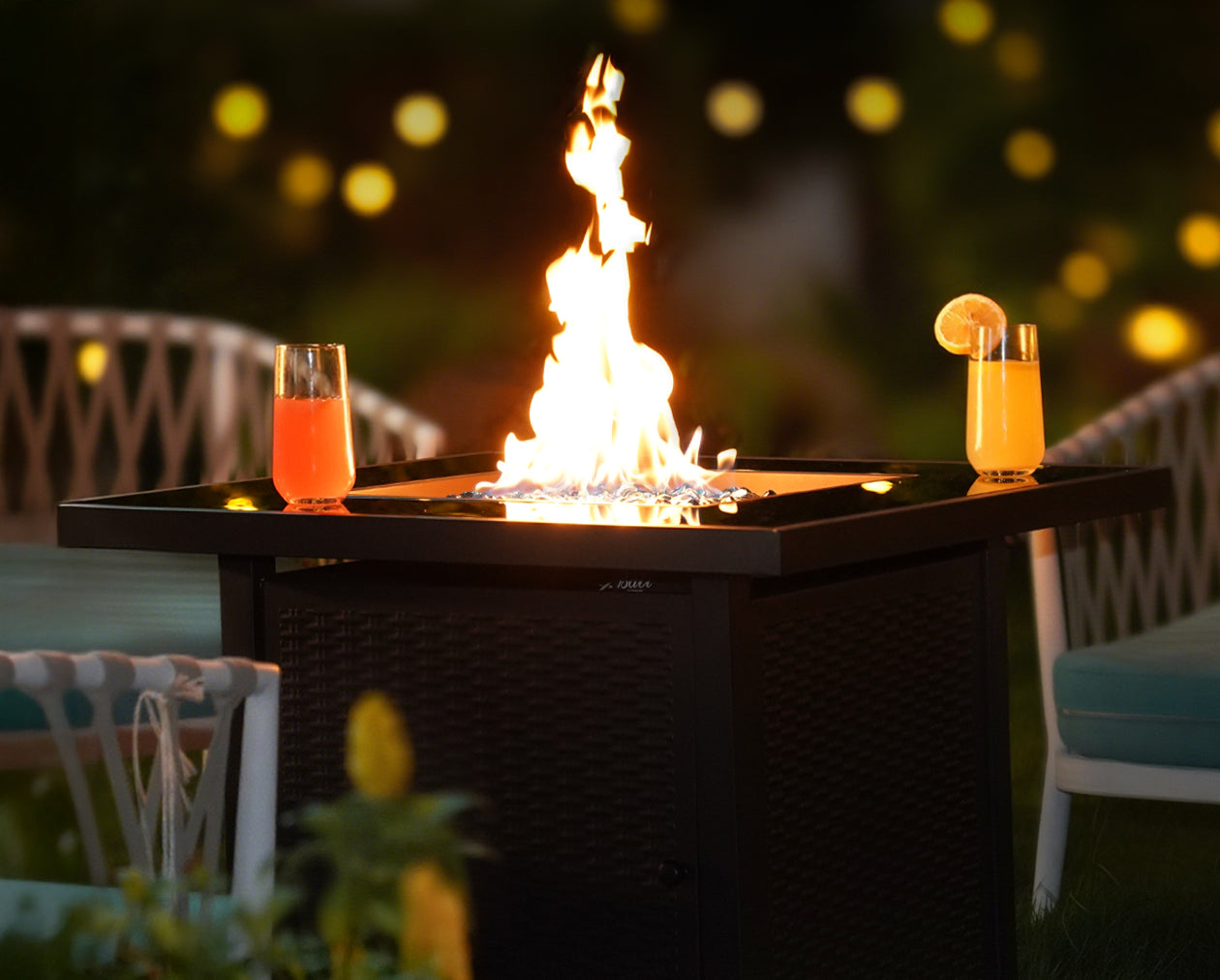


Assessing Long-Term Value: Steel vs. Aluminum Fire Pit Tables
When you invest in an outdoor living space, the fire pit table often serves as the focal point. For homeowners with small patios or balconies, this choice is particularly significant. You are looking for a piece that provides warmth and ambiance without becoming a maintenance burden or a safety hazard.
One of the most frequent questions we encounter involves the choice between powder-coated steel and aluminum. While a steel table often carries a more attractive initial price point, the long-term value—measured in durability, safety, and replacement frequency—paints a different picture. In this guide, we will analyze the material science and total cost of ownership to help you make a methodical, informed decision.

Understanding Material Longevity and Environmental Stress
The primary challenge for any outdoor fire table is the environment. Unlike indoor furniture, these units must withstand UV exposure, moisture, and extreme temperature fluctuations from the burner itself.
The Vulnerability of Steel
Powder-coated steel is a common material for entry-level fire tables because it is heavy and sturdy. However, its longevity is strictly tied to the integrity of its coating. Based on our field observations in high-humidity or coastal environments, even high-quality powder-coated steel tables often show signs of pinpoint rust at weld seams and fastener holes within 18 to 24 months.
This occurs because salt aerosols and moisture penetrate microscopic gaps in the coating. Once the oxidation process begins under the surface, the rust expands, causing the powder coat to bubble and flake.
The Resilience of Aluminum
In contrast, cast aluminum frames offer a different chemical response to the elements. When aluminum is exposed to oxygen, it naturally forms a microscopic layer of aluminum oxide. Unlike iron oxide (rust), which flakes away and exposes more metal to damage, aluminum oxide creates a hard, protective seal.
While an aluminum table might show superficial oxidation over time, it typically does not compromise the structural integrity of the frame. In humid climates, we suggest a practical rule of thumb: budget for a steel table replacement every 4 to 5 years, whereas a quality aluminum unit can easily last 10 years or more. Browse our fire pit tables in steel and aluminum to find the perfect fit for your outdoor space.
Logic Summary: This longevity estimate is a heuristic based on observed degradation patterns in coastal versus inland environments. It assumes standard outdoor exposure without specialized climate-controlled storage.
Total Cost of Ownership: A 10-Year Projection
To understand the true value of your investment, you must look beyond the sticker price. We have modeled a 10-year cost scenario comparing a standard budget steel unit against a premium aluminum alternative.
| Factor | Powder-Coated Steel (Budget) | Cast Aluminum (Premium) |
|---|---|---|
| Initial Purchase Price | ~$250 - $400 | ~$700 - $1,200 |
| Estimated Lifespan | 4-5 Years | 10+ Years |
| Replacement Frequency | 2 Units per decade | 1 Unit per decade |
| Maintenance Needs | High (Rust treatment, paint) | Low (Cleaning only) |
| 10-Year Total Cost | ~$500 - $800 + Labor | ~$700 - $1,200 |
As the table illustrates, the "cheaper" option often ends up costing nearly the same as the premium option over a decade, without factoring in the time spent on maintenance or the frustration of using a rusted product. For those prioritizing long-term value, the 32 Inch Propane Fire Pit Table, Brown offers a robust build that balances aesthetic appeal with high-performance materials.
 For more details, see our guide on corrosion resistance in coastal environments.
Critical Failure Points: Burner Pans and Shields
When assessing a fire pit table, many users focus solely on the outer frame. However, the most common failure point we observe isn't the main structure—it is the internal components.
On many budget-friendly steel tables, the burner pan and ignition shield are made of thinner-gauge steel. Because these parts are subjected to direct flame and high heat, the protective coatings burn off quickly. Once exposed, the thin steel corrodes and warps, which can lead to ignition failures or uneven gas flow.
Expert Insight: The Thumbnail Test To gauge the quality of a table’s finish, we recommend inspecting the thickness of the powder coat. A high-quality coat should be thick enough that it does not chip easily if you perform a light "thumbnail test" on an inconspicuous edge. Furthermore, ensure that the internal components—the parts that actually handle the fire—are made of stainless steel or aluminum, regardless of what the outer frame is made of.
The 30 Inch Propane Fire Pit Table for Outdoor, Black utilizes high-quality metal materials designed to withstand these harsh conditions, ensuring that the 50,000 BTU output remains consistent over time. For more details, see our guide on comparing fire table surface materials.
Safety and Compliance for Small Spaces
For residents with small patios or balconies, safety is not just a preference; it is a requirement. Fire safety involves both the physical placement of the unit and the management of the fuel source.
The 10-Foot Rule
According to the United States Fire Administration (USFA/FEMA), a critical safety guideline for any outdoor fire is the "10-foot rule." You must maintain at least 10 feet of clearance from structures, overhanging branches, or combustible materials. On a small balcony, this may require central placement of the table and the use of a protective heat shield if applicable.
Carbon Monoxide (CO) Awareness
Propane fire tables are designed for outdoor use only. This is a non-negotiable safety rule. As detailed by the Centers for Disease Control and Prevention (CDC), burning fuel produces carbon monoxide, an odorless, colorless gas that can be fatal in enclosed spaces.
When using a product like the 28 Inch Propane Fire Pit Table, Black, always ensure there is adequate ventilation. Never use these units inside a screened-in porch or under a low-hanging canopy that could trap gases.
Extinguishing and Supervision
While propane tables are easier to "extinguish" than wood-burning pits, the heating elements (like lava rocks or glass stones) retain heat for a long time. Aligned with the National Park Service (NPS) guidelines for fire safety, you should never leave a fire unattended. Before covering your table or retiring for the evening, ensure the media is cool to the touch.

Practical Maintenance for Small Patios
If you choose a steel-framed table for its weight or price, proactive maintenance is essential to extend its life.
- Use a High-Quality Cover: Even if the manufacturer claims the table is "weatherproof," a heavy-duty cover is your first line of defense against moisture penetration.
- Inspect Yearly: Every spring, inspect the weld seams and the underside of the table. If you see small orange spots, sand them lightly and apply a rust-inhibiting touch-up paint immediately.
- Clean the Burner: Spiders and insects are often attracted to the smell of propane and may build nests in the burner tubes. Use a soft brush or compressed air to keep the ports clear.
For those who prefer a low-maintenance lifestyle, the 28 Inch Propane Fire Pit Table, Gray provides a durable powder-coated finish and an integrated design that simplifies the assembly and upkeep process.
Final Decision Framework
Choosing between steel and aluminum ultimately depends on your local climate and how long you intend to stay in your current home.
- Choose Steel if: You live in a dry, inland climate, have a strictly limited initial budget, and are willing to perform annual maintenance.
- Choose Aluminum if: You live near the coast, experience high humidity, or simply want a "buy it once" solution that requires minimal effort to stay looking new.
By focusing on material quality and adhering to established safety standards from organizations like Ready.gov, you can ensure that your outdoor fire table remains a safe, valuable, and beautiful addition to your home for years to come.
Safety Disclaimer: This article is for informational purposes only and does not constitute professional safety or fire prevention advice. Outdoor fire pits and gas appliances should always be installed and operated in accordance with local building codes, fire department regulations, and the manufacturer's specific instructions. If you are unsure about the safety of your setup, consult with a certified gas technician or your local fire marshal.
Sources
- United States Fire Administration - Outdoor Fire Safety
- Centers for Disease Control and Prevention - Carbon Monoxide FAQ
- National Park Service - Campfire Safety
- Environmental Protection Agency - Burn Wise
Related guides
- Fire pit table safety on decks, balconies & coastal patios — surface-by-surface installation rules and BTU ceilings.
- Small patio fire table layout — footprint mapping, shapes, and furniture matching.
- Fire pit replacement parts guide — when steel vs aluminum components need swapping.
- Fire pit dining table set buying guide — sizes, BTU, and material picks for outdoor dining.