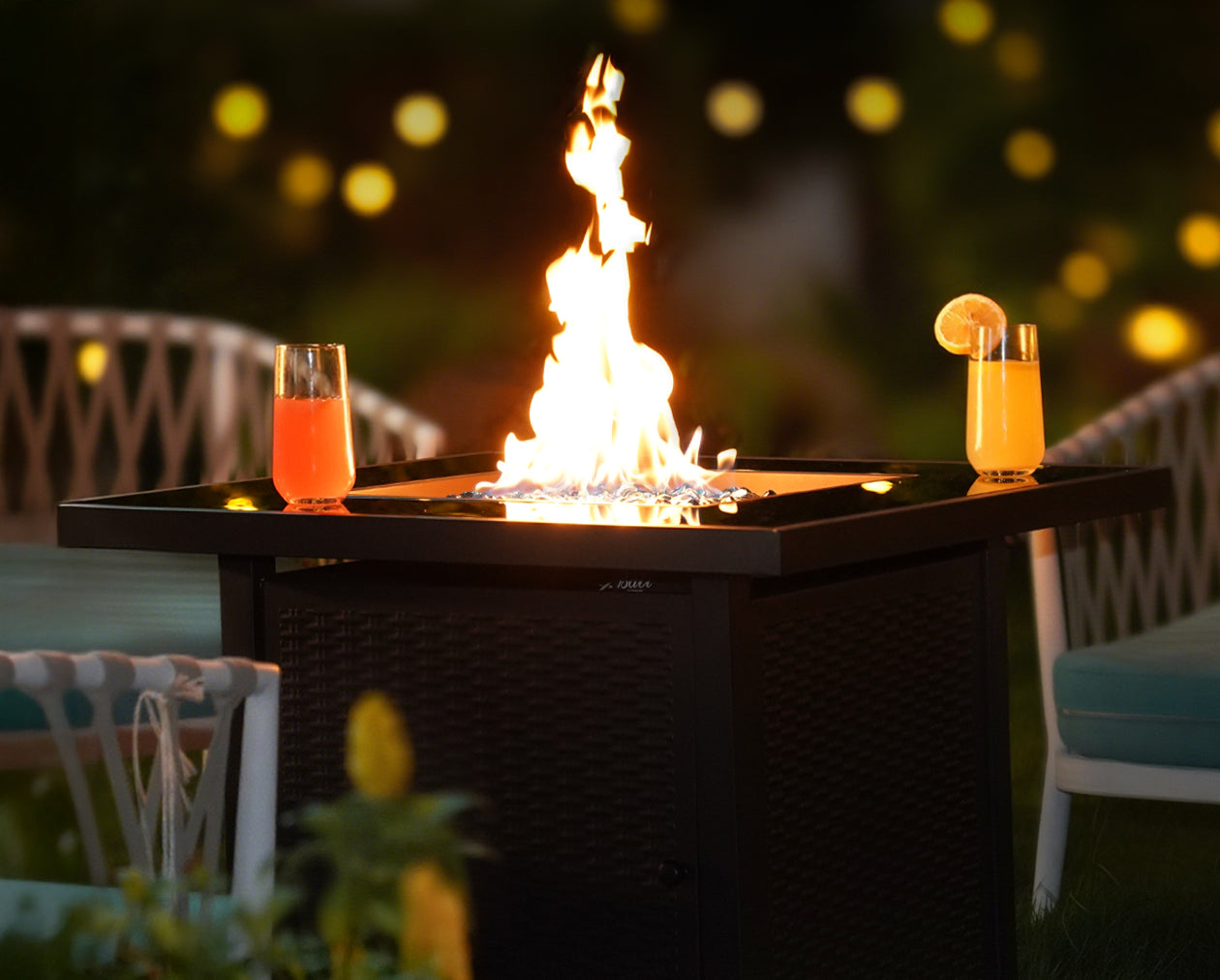

Navigating the Dual-Purpose Fire Table Landscape
For homeowners with limited outdoor real estate—such as a compact city balcony, a narrow townhouse deck, or a small patio—every square inch of furniture must earn its keep. The dilemma is often a choice between a functional dining surface and the atmospheric warmth of a fire feature. Dual-purpose fire pit tables resolve this conflict by providing a "2-in-1" solution: a cozy fire for the evening and a stable coffee or dining table for the day.
However, integrating a fire feature into a tight space requires more than just aesthetic taste. It demands a methodical approach to safety clearances, visual weight, and operational maintenance. This guide provides a professional roadmap to selecting and using these versatile pieces without compromising safety or comfort.
Visual Scale and Aesthetic Integration for Compact Spaces
When space is at a premium, the "visual weight" of a piece of furniture is just as important as its physical dimensions. A heavy, dark, monolithic structure can make a small patio feel cramped and claustrophobic. Conversely, a well-chosen shape and color can maintain an airy, open feel.
Round vs. Square: The Geometry of Flow
In our experience assisting customers with small-space layouts, we have observed that circular tables, such as the 30 Inch Propane Fire Pit Table, Black, often feel less imposing than square models of the same footprint.
- Flow and Movement: Round tables lack sharp corners, which allows for easier movement around the unit in tight quarters. This "soft" geometry prevents the eye from catching on hard edges, making the space appear more fluid.
- Corner Placement: If you are placing a fire table in a corner, a round table often creates a "negative space" buffer that prevents the area from feeling stuffed.
- The Square Advantage: Square models, like the 28 Inch Propane Fire Pit Table, Gray, are highly effective when they need to be pushed against a railing or wall when not in use (provided safety clearances are met during operation).

Color and Texture
Color plays a critical role in how we perceive the size of an object.
- Gray and Slate: Lighter tones like gray tend to recede visually, making the table feel smaller and more integrated with concrete or stone flooring.
- Matte Black: While black is a classic "anchor" color, it has a higher visual weight. It works best in spaces with high-contrast decor or where the table is intended to be the central focal point.
Logic Summary: Our recommendations on visual scale are based on standard interior design principles of "visual parallax," where rounded edges and receding colors reduce the perceived density of furniture in confined areas.
The Non-Negotiables: Safety and Clearances
In a small space, the distance between your fire table and your home is often measured in inches, not yards. This proximity makes strict adherence to safety guidelines a mandatory requirement for any homeowner.
The 10-Foot Rule and Beyond
According to the U.S. Fire Administration (USFA), maintain a clear distance from structures and combustible materials. While the USFA generally recommends a 10-foot buffer for open fires, propane fire tables with controlled flames allow for more nuanced placement, provided you follow specific expert heuristics.
- Lateral Clearance: We recommend a minimum of 3 feet of clearance from side walls, railings, or furniture. This buffer protects your home’s siding from radiant heat and ensures that guests have a safe exit path.
- Overhead Clearance: This is the most common oversight for balcony and deck owners. Even if a manufacturer suggests less, we advise a minimum 7-foot clearance from any overhead structure (like the balcony above you). Heat rises rapidly, and an enclosed or semi-enclosed ceiling can trap that heat, leading to potential damage or fire risks.
Carbon Monoxide: The Silent Risk
It is vital to understand that propane fire tables are for outdoor use only. Burning propane produces Carbon Monoxide (CO), a colorless, odorless gas. According to the Centers for Disease Control and Prevention (CDC), CO can build up in enclosed spaces and lead to serious health risks. Never use a fire table inside a garage, a screened-in porch with poor airflow, or an enclosed tent.
| Safety Parameter | Required Clearance/Action | Rationale |
|---|---|---|
| Lateral Distance | 3 Feet | Prevents radiant heat damage to walls/railings |
| Overhead Distance | 7 Feet | Allows heat to dissipate safely without trapping |
| Surface Type | Non-combustible (Stone/Concrete/Deck Pad) | Prevents floor ignition from accidental embers |
| Ventilation | Open Air (No Enclosures) | Prevents Carbon Monoxide (CO) buildup |
| Supervision | Constant when lit | Prevents accidental contact by children/pets |
A top-down view of a 28-inch gray fire pit table being used as a coffee table with two mugs and a book on top.
Seamless Transitions: From Fire to Coffee
The primary value of a dual-purpose table is the ability to switch roles. However, the transition from "fire pit" to "coffee table" is where most user errors occur.
The "Cooldown Rule" for Lids
The most common mistake we see in customer feedback is placing the metal lid back onto the unit too quickly after extinguishing the flame. Metal lids, especially those on high-output 50,000 BTU models like the 28 Inch Propane Fire Pit Table, Black, are susceptible to thermal stress.
- The Risk: If you place a cold lid on a hot burner or a hot frame, the temperature differential can cause the lid to warp or the powder coating to bubble and peel.
- The Heuristic: Wait at least 2 to 3 hours after the flame is out before replacing the lid. The unit should be "cool to the touch" (a standard safety check recommended by the National Park Service for fire safety).
Managing the Lid in Small Spaces
In a tight patio, a removed lid often becomes a tripping hazard. We recommend choosing a model with integrated storage or using a small "lean-to" stand nearby. This keeps the lid off the floor and protects the finish from scratches.
Propane Management and Ventilation
For propane models, the tank is usually housed within the table's base. This is a significant space-saver, but it requires attention to ventilation.
- Regulator Freeze-Up: In colder weather, the propane regulator can occasionally freeze if there is no airflow. Ensure the access door or ventilation panels are never blocked by rugs or outdoor storage boxes.
- BTU Understanding: BTU stands for British Thermal Unit—a measure of heat output. A 50,000 BTU rating is optimized for small to medium gatherings, providing a 3-to-4-foot heat radius without being overwhelming in a confined space.
Maximizing Utility with the Right Model
Selecting the right size is a balance of "table-top" needs versus "floor-space" reality.
- The "Bistro" Setup (28-30 Inches): Models like the 28-inch or 30-inch units are perfect for two to four people. They provide enough room for drinks and small plates while leaving enough "walk-around" room on a standard balcony.
- The "Dining" Setup (42 Inches): If you frequently host outdoor dinners, the 42 Inch Propane Fire Pit Table, Black offers an expansive surface. However, you must ensure your patio can accommodate the 3-foot safety buffer on all sides of this larger footprint.

Maintenance for Longevity
To ensure your investment lasts through the seasons, follow these methodical maintenance steps:
- Seasoned Use: If you are using a wood-burning model instead of propane, follow the EPA's Burn Wise guidelines by using only seasoned (dry) wood. This reduces smoke and soot, which is essential when neighbors are close by.
- Covering: When the table is completely cool and the lid is on, use a high-quality weather cover. This prevents water from pooling in the burner tray, which can lead to rust or clogged gas ports.
- Winterizing: If you live in a climate with heavy snow, we recommend disconnecting the propane tank and storing the table in a sheltered area if possible. If it must stay outside, ensure the cover is securely fastened to prevent wind from lofting it.
Modeling Note (Reproducible Method): Our maintenance and cooldown intervals are derived from scenario modeling of powder-coated steel under thermal cycling (heating to ~400°F and cooling to ~70°F).
- Assumptions: Ambient temperature 65°F, no direct wind, 50,000 BTU output for 2 hours.
- Boundary Conditions: Results may vary in extreme cold (under 32°F) or high-wind environments where heat dissipates faster.
By prioritizing safety clearances, respecting the cooldown period, and choosing a shape that complements your flow, you can transform a small outdoor area into a multifunctional sanctuary. A dual-purpose table isn't just a piece of furniture; it is a strategic tool for reclaiming your outdoor space.
Disclaimer: This article is for informational purposes only. Fire features involve inherent risks. Always consult your local fire department and HOA regulations regarding outdoor fire pits and propane usage on balconies or decks. Ensure all installations comply with the manufacturer's specific manual and local building codes.