
Fuel Efficiency Frameworks: Managing Propane Costs by Climate
Adding an outdoor heating element to a small patio or balcony often brings up a specific type of economic anxiety: "How much is this going to cost me to run every month?" We understand that for many homeowners and renters, the goal is to create a cozy sanctuary without facing an unpredictable utility bill.
At Bali Outdoors, we view patio heating not just as a luxury, but as a system that must be managed for efficiency. By understanding how propane interacts with different climates, you can move from guessing your fuel needs to planning a precise winter heating budget. This guide provides a framework to help you navigate these costs while maintaining a safe and inviting outdoor space.
The Mathematical Foundation of Propane Consumption
To manage costs, we first need to look at the "burn rate." A common heuristic used by practitioners in the heating industry is that for every 1,000 BTUs (British Thermal Units) consumed, a heater burns approximately 0.01 gallons of propane per hour.
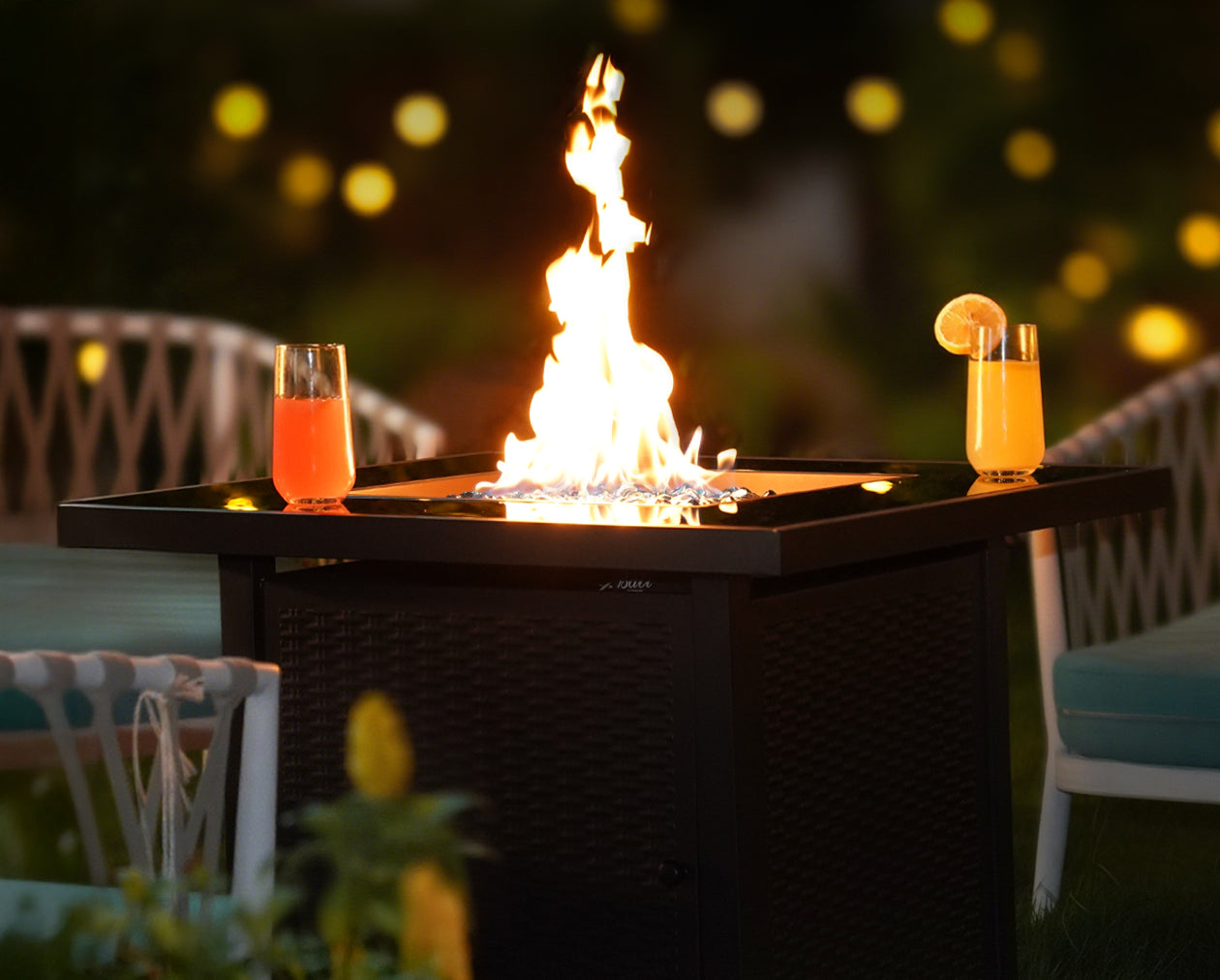
If you are using a high-performance unit like the 42 Inch Propane Fire Pit Table, Black, which offers a robust 50,000 BTU output, the math is straightforward. At maximum output, this table consumes roughly 0.5 gallons of propane per hour. Given that a standard 20 lb propane tank holds about 4.7 gallons of fuel, you can expect approximately 9 to 10 hours of continuous use at the highest flame setting.
However, heat output is rarely a "set it and forget it" metric. Most users find that they fluctuate between high and low settings based on the evening's chill.
Logic Summary: Our fuel consumption estimates are based on a deterministic model using the standard propane burn rate of 0.01 gallons per 1,000 BTUs, adjusted for real-world environmental stressors.
| Parameter | Value or Range | Unit | Rationale / Source Category |
|---|---|---|---|
| Standard Output | 40,000 - 50,000 | BTU/hr | Typical residential heater baseline |
| Propane Energy Density | ~91,500 | BTU/gal | Industry standard fuel specification |
| Tank Capacity | 20 | lbs | Standard residential cylinder (~4.7 gal) |
| Ambient Temperature | 30 - 55 | °F | Typical operating range for seasonal use |
| Wind Factor | 0 - 10 | mph | Variable affecting convective heat loss |

Climate-Adaptive Heating: Mild vs. Freezing Scenarios
The environment acts as a thermal thief. The colder the air, the faster it "steals" the heat generated by your propane appliance. To plan your budget, you must categorize your local climate into one of two primary frameworks.
Scenario A: The Mild Climate Framework (Above 50°F)
In regions where winters are mild, such as the coastal South or parts of California, a patio heater serves to "take the edge off." In these conditions, you rarely need to run your unit at 100% capacity.
We observe that in mild climates, users typically operate their heaters at 40-60% output. This adjustment significantly extends the life of a single tank. While a 40,000 BTU unit like the 32 Inch Propane Patio Heater, Black might last 10 hours on high, intermittent use in mild weather can stretch that same tank to 15 or even 20 hours.
Scenario B: The Freezing Climate Framework (Below 30°F)
When temperatures drop below freezing, the physics of heating changes. A practical heuristic for these environments is to allow for 20-30% higher BTU needs compared to manufacturer ratings for still, temperate air.
In these extreme conditions, we often see a "cycling trap." Users turn the heater to maximum to get warm, then turn it off when they feel a bit of heat, only to have the mass of cold air immediately rush back in. Our modeling suggests that continuous low-heat operation is actually more fuel-efficient in freezing climates than cycling the heater on and off. Constant operation maintains a "heat bubble," whereas cycling requires the unit to work harder to reheat the surrounding air from scratch every time.

Managing Environmental Stressors: Wind and Placement
Wind is perhaps the greatest enemy of fuel efficiency. Even a light breeze can strip away the radiant heat before it reaches you, forcing you to turn up the dial and burn more fuel.
The 25% Efficiency Gain
Experienced users emphasize that positioning your heater strategically can reduce fuel consumption by up to 25%. If possible, place the heater against a wall or in a corner (ensuring all safety clearances are met). This blocks the wind from "blowing through" the heat zone.
Additionally, using a wind guard on a fire table can prevent the flame from flickering excessively. This keeps the heat concentrated and prevents the safety sensors from over-compensating. For those using traditional wood options like the 32 inch Wood Fire Pit, Black, wind management is equally vital to prevent sparks from flying, as noted by the U.S. Fire Administration (FEMA).
Coastal and High-Humidity Considerations
If you live in a coastal area, salt air can lead to corrosion, which eventually affects the efficiency of the burner ports. Clogged or corroded ports lead to incomplete combustion, which wastes fuel and can increase Carbon Monoxide (CO) risks. We recommend using a high-quality cover, such as the 32 Inch Fire Pit Cover, Brown, to protect your investment from the elements when not in use.
Safety and Compliance: The Non-Negotiables
Efficiency should never come at the cost of safety. When managing your outdoor heating, there are several authoritative "musts" that every homeowner should follow to protect their property and comply with local regulations.
The 10-Foot Rule
According to guidelines from the U.S. Fire Administration, all fire pits and heaters should be placed at least 10 feet away from structures, including your home, deck railings, and overhanging branches. For those on small balconies, this rule is critical; always check your local HOA or apartment fire codes, as some may prohibit open flames entirely or require specific clearances for propane units.
Carbon Monoxide (CO) Awareness
Propane appliances are for outdoor use only. Burning propane produces Carbon Monoxide, a colorless, odorless gas that can be fatal in enclosed spaces. The Centers for Disease Control and Prevention (CDC) warns that CO can build up quickly in garages, tents, or even partially enclosed porches. Ensure your patio has adequate ventilation—at least two sides should be open to the air.
Extinguishing and Maintenance
If you choose a wood-burning option, follow the National Park Service (NPS) standard for extinguishing: the ashes must be "cool to the touch" before you leave them unattended. For propane units, always turn off the gas at the cylinder valve, not just the heater knob, to prevent slow leaks that waste fuel and create hazards.
Optimization Checklist for New Owners
To help you transition into a confident outdoor host, we have compiled this checklist based on common patterns from customer support and real-world usage.
- Check for Leaks: Before the first use of the season, apply a soapy water solution to the hose connections. If bubbles form, you have a leak that needs tightening.
- Use Seasoned Wood: If using the 32 inch Wood Fire Pit, Black, only use dry, seasoned wood. As the EPA's Burn Wise program explains, wet wood creates excessive smoke and burns inefficiently, wasting your effort and irritating neighbors.
- Monitor the Tank: A 20 lb tank feels significantly lighter when it is near empty. Keep a spare tank on hand so a cold snap doesn't end your evening early.
- Position for the "Bubble": Place your seating first, then position the heater to maximize the radiant "throw" of the heat. For the 32 Inch Propane Patio Heater, Black, the umbrella reflector is designed to push heat down in a circular radius.

Planning Your Seasonal Budget
By combining these frameworks, you can estimate your monthly costs with reasonable accuracy. For a typical user in a mild climate hosting two 3-hour gatherings a week, one 20 lb propane tank will likely last an entire month. In a freezing climate with similar usage, you should budget for two tanks per month.
Understanding the "why" behind your fuel consumption—from the ambient temperature to the physics of wind—allows you to take control of your outdoor experience. You don't have to choose between comfort and cost; with the right placement and a methodical approach to heat management, you can enjoy a warm, safe, and budget-friendly patio all season long.
Disclaimer: This article is for informational purposes only and does not constitute professional safety, legal, or fire prevention advice. Always consult your local fire department, HOA guidelines, and the manufacturer’s manual for specific safety requirements related to your equipment and location.