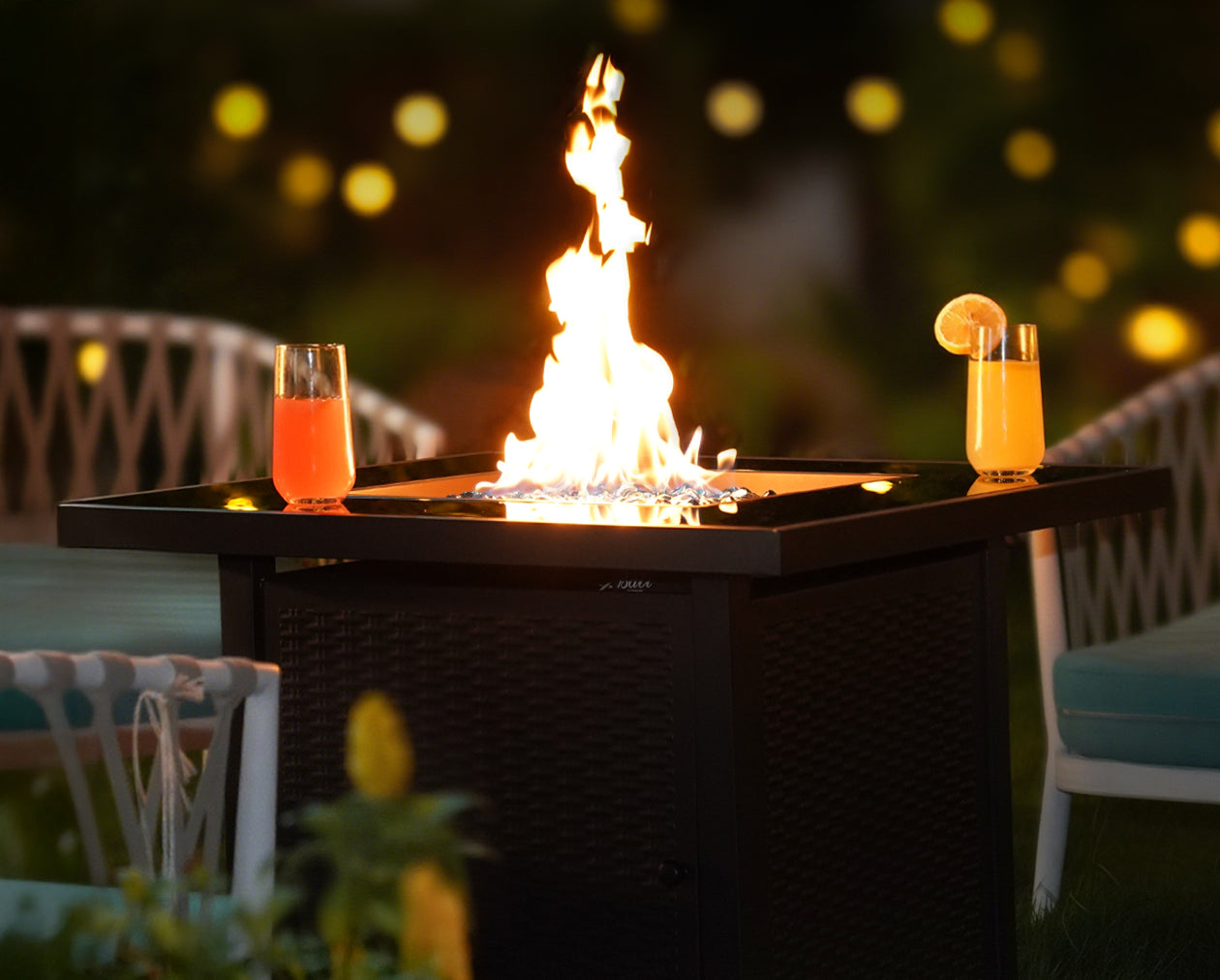

Durable Warmth: Selecting Patio Heaters for High-Humidity Areas
Living in a coastal region or a high-humidity environment like the Gulf Coast or the Pacific Northwest offers breathtaking views and a refreshing atmosphere. However, for outdoor heating equipment, these environments are among the most challenging on Earth. Salt air and constant moisture act as catalysts for oxidation, often turning a significant investment into a rusted eyesore within a single season.
At our workshop, we frequently observe a specific pattern: homeowners often select a patio heater based on its outward appearance, only to find that while the main pillar remains intact, the unit fails because a small internal bracket or a set of fasteners has corroded through. Understanding the material science behind your outdoor heating is not just about aesthetics; it is about ensuring the structural integrity and safety of your investment.
This guide provides a methodical framework for selecting and maintaining patio heaters in harsh, humid climates. We will focus on the technical differences between stainless steel grades, the importance of coating thickness, and the critical safety protocols required for long-term outdoor use.
The Metallurgy of Longevity: 304 vs. 430 Stainless Steel
When you browse patio heaters, you will frequently see the term "stainless steel." However, not all stainless steel is created equal. In high-humidity or coastal areas, the specific grade of steel determines whether your heater will last five years or five months.
The two most common grades used in consumer outdoor products are 304 and 430 stainless steel.
- Grade 304 (Austenitic): This is the industrial standard for harsh environments. It contains high levels of chromium and nickel, which create a self-healing oxide layer that resists salt-air corrosion. In our experience with warranty assessments, 304 stainless components rarely show "pitting"—the small, deep holes that compromise metal strength.
- Grade 430 (Ferritic): This is a lower-cost alternative. While it is still "stainless," it lacks nickel and has lower chromium content. It is significantly more susceptible to rust when exposed to salt spray or persistent dampness.
Logic Summary: Our material recommendations are based on standard metallurgical properties of austenitic (304) vs. ferritic (430) stainless steels. Austenitic steels (304) provide superior corrosion resistance due to their nickel content, whereas ferritic steels (430) are prone to oxidation in chloride-rich (salty) environments.
The Magnet Test: A Practical Heuristic
If you are unsure of the quality of a heater's components, use a magnet. As a general rule of thumb, a magnet will stick strongly to 430 stainless steel but will not stick (or will only have a very weak pull) to 304 stainless steel. If a magnet firmly grips the burner head or the fasteners of a heater you are considering, you should assume it will require aggressive maintenance in a coastal setting.
| Feature | 304 Stainless Steel | 430 Stainless Steel | Unit/Metric |
|---|---|---|---|
| Corrosion Resistance | High (Salt-Air Resistant) | Moderate (Prone to Pitting) | Qualitative |
| Nickel Content | 8–10.5% | ~0% | Percentage (%) |
| Magnetic Property | Non-Magnetic / Weak | Strongly Magnetic | Heuristic |
| Typical Use Case | Coastal / Industrial | Inland / Low Humidity | Application |
| Estimated Lifespan | 5–10+ Years | 1–3 Years (Coastal) | Years (Estimated) |
Note: Lifespan estimates are based on typical observations in coastal environments with minimal maintenance; actual results vary by salt concentration and cleaning frequency.

Identifying Hidden Failure Points
In coastal installations, the failure point is rarely the thick, visible steel tube. Instead, it is the thinner-gauge components that are often overlooked.
- Burner Pans and Assemblies: These parts are subjected to extreme heat. If they are made from lower-grade 430 steel, the combination of heat and salt air accelerates "thermal oxidation." We recommend insisting that the burner assembly be made of 304 stainless steel.
- Fasteners and Bolts: Many manufacturers use 304 steel for the body but cheap, zinc-plated or 430 steel bolts to save costs. Once these bolts rust, the heater becomes unstable and impossible to disassemble for repairs.
- Internal Brackets: Check the internal frame. If the structural brackets are not coated or made of high-grade stainless, they can fail, leading to a collapse risk during high winds.
For those seeking a durable propane option, the 20 inch Propane Patio Heater, Dark Brown features a stainless steel base designed to provide a more stable and corrosion-resistant foundation compared to standard painted steel bases.
The Science of Protective Coatings
For heaters that are not made entirely of high-grade stainless steel, powder coating is the primary line of defense. However, the quality of this coating is paramount.
A quality powder coat should have a minimum thickness of 2 to 3 mils (a mil is 1/1000th of an inch). Thinner coatings are highly susceptible to "thermal cycling." As the heater warms up and cools down, the metal expands and contracts. If the coating is too thin or brittle, it will develop microscopic chips. Moisture then seeps through these chips, causing rust to spread beneath the finish—a process known as "undercutting." This is often worse than no coating at all, as the rust remains hidden until the structural integrity is compromised.
Modeling Note (Assumptions & Parameters): To understand the impact of coating thickness, we modeled the failure rate of coatings under thermal stress (heaters reaching 400°F and cooling to 60°F).
| Parameter | Value / Range | Unit | Rationale |
|---|---|---|---|
| Coating Thickness | 2.0 – 3.0 | mils | Industrial standard for outdoor durability |
| Thermal Cycle Range | 60 – 400 | °F | Typical operating temperature for heater housing |
| Salt Spray Exposure | 500+ | hours | Standard ASTM B117 simulation baseline |
| Adhesion Rating | 4B – 5B | Scale | Required to prevent undercutting rust |
| Substrate Material | Cold Rolled Steel | Type | Common base for powder-coated units |
Boundary Conditions: This model assumes the surface was properly pre-treated (degreased and phosphated) before coating application.
Essential Safety Protocols for Outdoor Heating
Regardless of the material durability, safety remains the highest priority. When operating any patio heater or fire pit in a residential setting, you must adhere to established safety guidelines.
1. The 10-Foot Rule
According to the U.S. Fire Administration (FEMA), you must keep outdoor fires and heating appliances at least 10 feet away from your home, deck railings, or any combustible structures. This is particularly critical in coastal areas where high winds can unexpectedly shift flames or embers.
2. Carbon Monoxide Awareness
Propane-powered heaters, such as the 20 inch Propane Patio Heater, Dark Brown, must only be used in well-ventilated outdoor spaces. The Centers for Disease Control and Prevention (CDC) warns that gas-burning appliances can produce Carbon Monoxide (CO), a colorless, odorless gas that can be fatal if it accumulates in enclosed areas like screened-in porches or garages.
3. Fuel and Ember Management
If you prefer a wood-burning experience, such as with the 22 inch Smokeless Wood Firepit Outdoor, Black, it is essential to use seasoned, dry wood to minimize smoke and sparks. The Environmental Protection Agency (EPA) recommends using wood that has been split and dried for at least six months. This not only protects the air quality but also prevents the buildup of creosote, which can damage the stainless steel finish of your fire pit.
For portable units, always ensure the fire is "cool to the touch" before leaving it unattended, as advised by the National Park Service (NPS).

Maintenance Strategies for High-Humidity Regions
Even the highest-quality 304 stainless steel requires some intervention to combat the relentless nature of salt air.
- Rinse Regularly: Every two weeks, rinse your heater with fresh water to remove salt deposits. Do this when the unit is completely cool.
- Use a Dedicated Cover: A high-quality cover is your best defense. The 30 Inch Fire Pit Cover, Brown is made from 600D polyester, providing a robust barrier against rain, salt spray, and UV damage. Ensure the heater is dry before covering it to avoid trapping moisture.
- Apply Stainless Steel Protectant: Use a specialized outdoor stainless steel spray or a light coat of high-grade car wax on the non-heated parts (like the base and pole) to provide an extra sacrificial layer against oxidation.
- Inspect Fasteners: Once a season, check all bolts. If you see signs of "tea staining" (light brown surface rust), clean it immediately with a non-abrasive stainless steel cleaner and a soft cloth.
Scenario Analysis: Selecting the Right Heater for Your Location
To help you decide, we have analyzed two common environmental scenarios:
Scenario A: The Beachfront Home (Within 1 mile of the ocean)
- Environmental Stressor: High salt concentration, constant wind, high humidity.
- Recommendation: Prioritize 304 stainless steel for all components. Avoid powder-coated steel unless it is an secondary accent.
- Top Choice: A fully stainless gas heater or a stainless smokeless pit like the 22 inch Smokeless Wood Firepit Outdoor, Black.
Scenario B: The Inland Humid Region (High humidity, no salt)
- Environmental Stressor: Persistent moisture, frequent rain, low salt.
- Recommendation: High-quality powder-coated steel is acceptable if the coating is 2-3 mils thick. 430 stainless steel will perform adequately with regular cleaning.
- Top Choice: A robust metal unit like the 32 inch Wood Fire Pit, Black, provided it is stored under a 30 Inch Fire Pit Cover, Brown during the off-season.
Investing in Durability
Choosing a patio heater for a humid or coastal climate requires moving beyond the "low price" trap. By focusing on 304 stainless steel components, verifying powder coat thickness, and adhering to strict safety distances, you protect both your home and your wallet.
The initial cost of a high-durability unit is often offset by the fact that you will not need to replace it every two years. When you combine the right materials with a disciplined maintenance routine—such as regular rinsing and consistent use of protective covers—you can enjoy the warmth of your outdoor space for many seasons to come.
Disclaimer: This article is for informational purposes only and does not constitute professional safety or engineering advice. Always refer to your product's specific manual and local fire codes before installation and use. Carbon monoxide is a serious health risk; never use gas-burning heaters indoors or in enclosed spaces.