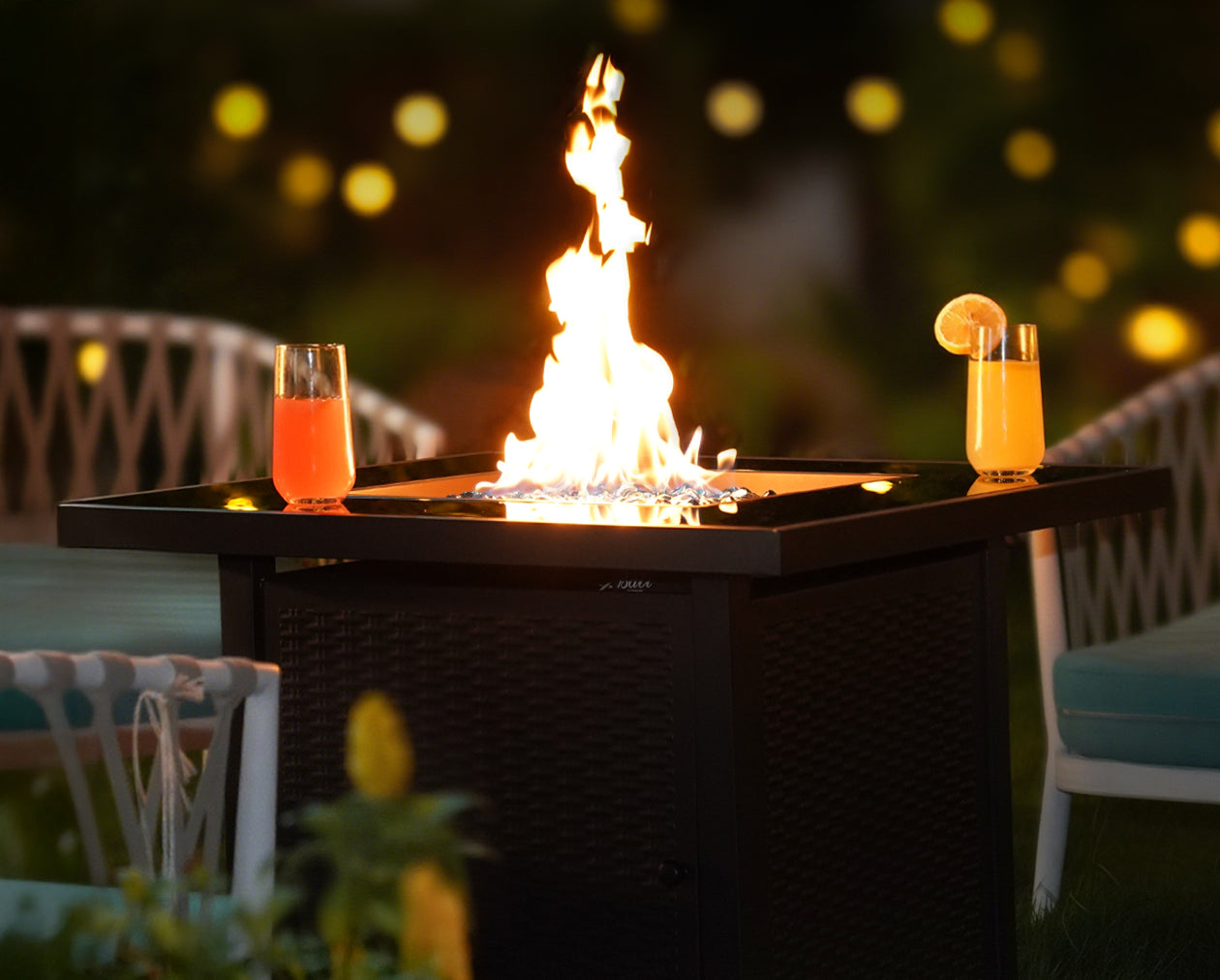

Understanding Heat Trap Risks: Safe Heater Use Near Retractable Awnings
Creating a cozy outdoor sanctuary often involves two primary elements: shelter from the elements and a reliable source of warmth. For homeowners with limited space, a retractable awning paired with a propane heater seems like the ideal combination. However, this setup introduces a specific physical phenomenon known as a "heat trap."
A heat trap occurs when rising thermal energy becomes confined beneath a horizontal surface, such as an awning or pergola. Unlike an open patio where heat dissipates vertically, a covered space forces heat to accumulate. We have observed through customer support feedback that many property damage incidents occur not because of direct flame contact, but because of sustained, invisible infrared energy that exceeds the material's tolerance.
In this guide, we will provide a methodical framework for managing these risks. By understanding the relationship between BTU (British Thermal Units) output, material thresholds, and ventilation, you can enjoy your outdoor space with the confidence that your property remains protected.
The Science of Radiant Heat and Fabric Integrity
Most residential retractable awnings are constructed from solution-dyed acrylic, polyester, or vinyl-coated fabrics. While these materials are designed for UV resistance and weatherproofing, they have specific thermal limits.
According to technical specifications often found on awning manufacturer tags, many residential fabrics begin to lose structural integrity or undergo "off-gassing" at sustained temperatures above 150°F. In contrast, the shroud of a high-output patio heater can exceed this temperature within a 3-foot radius in just minutes.
Radiant Distance vs. Clearance Labels
One of the most common misconceptions we encounter is the belief that following the "minimum clearance" printed in a manual is a universal guarantee of safety. While these clearances are vital for preventing fire, they do not always account for the delicate nature of awning fabrics.
- Clearance: The minimum distance required to prevent the ignition of combustible materials.
- Radiant Distance: The distance at which infrared energy can still cause material warping, melting, or discoloration over time.
For example, a 40,000 BTU radiant heater may have a safety clearance of 3 feet, but it can still damage vinyl awning fabric over 8 feet away through sustained, focused infrared energy.
Logic Summary: Our analysis of heat-sensitive materials assumes a standard residential vinyl or acrylic fabric. Based on common industry heuristics, we suggest that radiant heat impact extends roughly 2.5x further than the fire-safety clearance for sensitive synthetic materials.

The Ventilation Mandate: Managing Carbon Monoxide and Heat
When you operate a combustion-based heater under an awning, you are effectively creating a semi-enclosed space. This necessitates a strict adherence to ventilation standards to prevent the accumulation of Carbon Monoxide (CO).
The Centers for Disease Control and Prevention (CDC) emphasizes that CO is an odorless, colorless gas that can be fatal. Because gas-burning appliances consume oxygen and release CO, they must never be used in fully enclosed spaces.
The 5 MPH Rule
In our experience assisting customers with balcony and small patio setups, we have found that cross-ventilation is the single most effective way to mitigate heat trap risks. Even a modest 5 mph cross-breeze can reduce peak temperatures on the underside of an awning by 30% to 40%.
| Ventilation Condition | Estimated Temperature Reduction | Risk Level |
|---|---|---|
| Stagnant Air (0 mph) | 0% | High (Heat Trap Likely) |
| Light Breeze (2-3 mph) | 15-20% | Moderate |
| Steady Cross-Breeze (5+ mph) | 30-40% | Low |
| High Wind (15+ mph) | N/A | High (Flame Instability) |
Note: These are estimated ranges based on common practice and scenario modeling for 30,000-40,000 BTU heaters.
Selecting the Right Equipment for Covered Spaces
For homeowners with small patios or balconies, selecting a heater with a manageable BTU output and a compact footprint is essential. High-output "mushroom" style heaters are often too powerful for low-hanging awnings.
We recommend products with focused heat distribution and lower profiles. The 20 inch Propane Patio Heater, Brozne is a high-performance option for these environments. It offers a 36,000 BTU output, which provides significant warmth without the extreme vertical heat throw of larger commercial units. Its 71-inch height is specifically optimized to maintain a safer distance from standard awning heights compared to full-sized 87-inch models.
For those who prefer a tabletop or low-profile solution, the 15 inch Propane Fire Pit, Sliver provides 25,000 BTUs of radiant heat. Because it sits lower to the ground, the "heat cone" has more room to dissipate before reaching the awning fabric.

The Professional "Hand Test": A Practical Heuristic
While thermometers are useful, professionals often use a simple, sensory check to verify if a heater is too close to an awning or wall. We call this the "10-Minute Hand Test."
- Operate your heater at its standard setting for 10 minutes.
- Place the back of your hand against the awning fabric or the surface closest to the heater.
- If the heat feels intense or uncomfortable to your skin after 5 seconds, the heater is too close.
- If the material feels hot to the touch (approaching the sensation of a hot cup of coffee), you must increase the distance or lower the heat setting immediately.
This heuristic is effective because human skin is highly sensitive to the 130°F–150°F range, which coincides with the degradation point of many synthetic fabrics.
Essential Safety Protocols for Patio Heating
To ensure a safe environment, homeowners should follow the guidelines established by the U.S. Fire Administration (USFA). Their "10-foot rule" is a foundational safety standard: keep anything that can burn at least 10 feet away from your home or structural attachments. While retractable awnings are part of the structure, maximizing this distance is always the safest course of action.
Operational Checklist:
- Supervision: Never leave a lit heater or fire pit unattended. As noted by Ready.gov, most home fires are preventable through active monitoring.
- Surface Stability: Ensure the heater is on a level, non-combustible surface. The 28 Inch Propane Fire Pit Table, Black features a sturdy base designed to prevent tipping, which is a critical safety feature in high-traffic areas.
- Clearance Zone: Maintain at least 3 feet of horizontal clearance from furniture and 5 feet of vertical clearance from awnings, though more is always better.
- Ember Management: If using wood-burning fire pits (not recommended under awnings), follow the National Park Service (NPS) advice to keep fires small and ensure they are "cool to the touch" before leaving. For awning-adjacent use, propane is the highly preferred fuel source as it produces no sparks or embers.
Modeling Note (Method & Assumptions)
To arrive at these recommendations, we modeled a "worst-case" balcony scenario.
- Modeling Type: Deterministic parameterized scenario model.
- Assumptions: 10ft x 10ft balcony, 8ft ceiling/awning height, 36,000 BTU heater.
| Parameter | Value | Unit | Rationale |
|---|---|---|---|
| Ambient Temp | 45 | °F | Typical "chilly" evening |
| Awning Height | 96 | inches | Standard residential install |
| Heater Output | 36,000 | BTU | Mid-range propane heater |
| Material Limit | 150 | °F | Softening point of PVC/Vinyl |
| Min. Air Gap | 36 | inches | Safety buffer for radiant flux |
Summary of Safe Practices
Managing heat trap risks is about balancing comfort with material physics. By prioritizing cross-ventilation, choosing heaters with appropriate BTU ratings like the 42 Inch Propane Fire Pit Table, Black for larger spaces or the 20-inch model for smaller ones, and performing regular "hand tests," you can protect your investment.
Always consult your awning’s manufacturer manual for specific heat tolerances. If you are ever in doubt, increase the distance. Safety is not just about following a label; it is about understanding the environment you create when you turn on the heat.
Disclaimer: This article is for informational purposes only and does not constitute professional safety, legal, or fire engineering advice. Always follow local fire codes, HOA regulations, and the specific manufacturer instructions provided with your heating appliance and awning. If you suspect a gas leak or fire hazard, contact emergency services immediately.