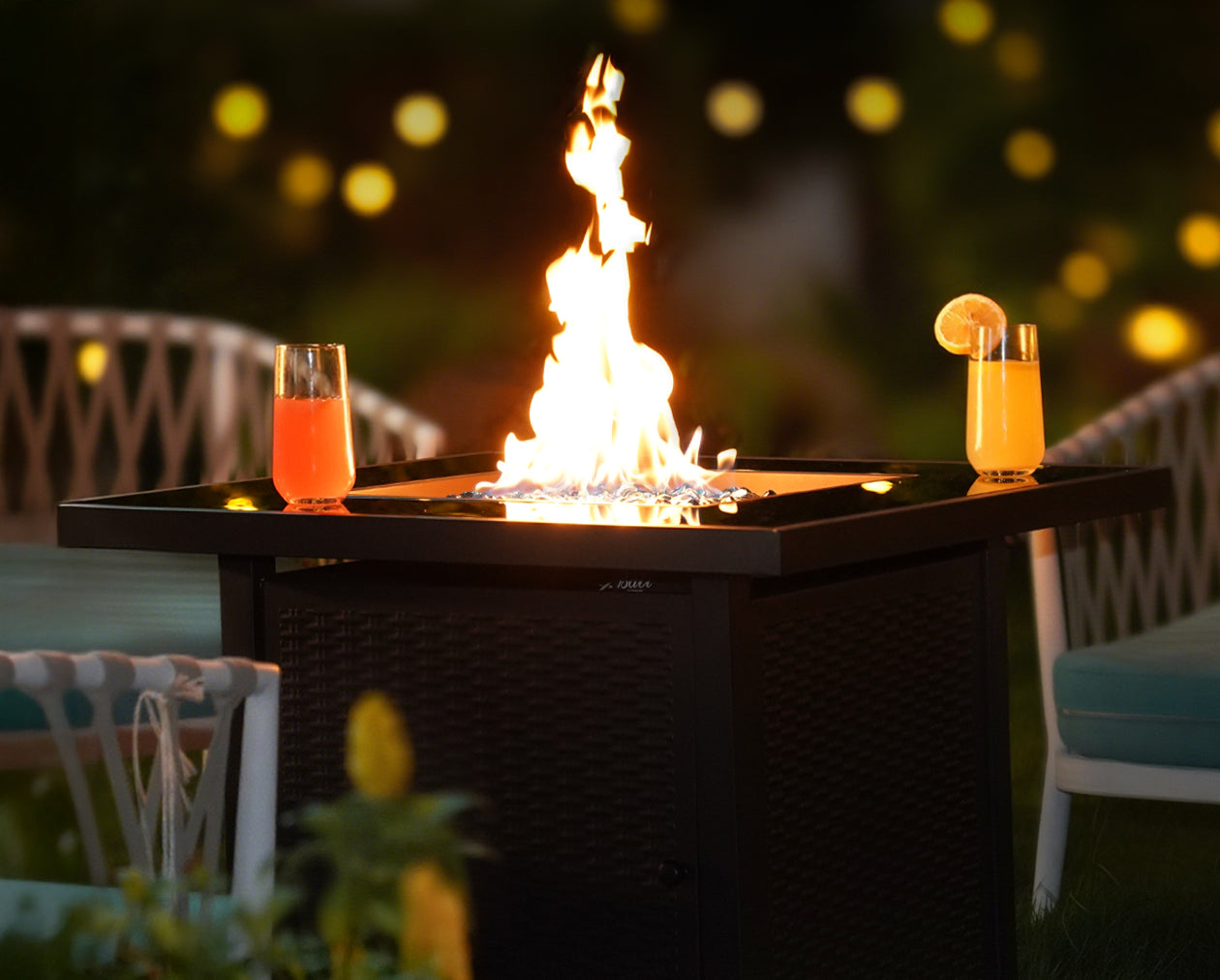

Understanding the Safety Dynamics of Covered Patios
Adding a pergola to a small patio or balcony creates an inviting outdoor room, but it also introduces complex thermodynamic challenges when you introduce a heat source. Unlike open-sky environments, a pergola—even one with slats—changes how heat rises and how air circulates. For homeowners, especially those governed by Home Owners Association (HOA) regulations, understanding the intersection of comfort and fire safety is the first step toward a worry-free outdoor season.
Fire safety is not merely about preventing a spark; it is about managing "radiant heat" and "convective heat." Radiant heat travels in a direct line from the source to your body or the structure, while convective heat is the rising column of hot air. According to the U.S. Fire Administration (FEMA), maintaining proper distance from combustible structures is the most effective way to prevent unintended ignition. This starts with the "10-foot rule"—keeping any fire source at least ten feet away from your main home structure. However, when placing a heater under a pergola, the rules for vertical and horizontal clearance become even more stringent.

The "Flame Tip" Rule: Correcting a Common Measurement Error
One of the most frequent mistakes professional installers observe is how homeowners measure vertical clearance. Most manuals for propane heaters or fire tables provide a clearance requirement (e.g., 6 feet). A common and dangerous error is measuring this distance from the top of the metal heater unit or the burner itself.
In reality, the measurement must be taken from the highest point of the flame. For a 32 Inch Propane Patio Heater, Black, the flame is contained within a glass tube or under a reflector, but the heat column extends significantly higher. For propane fire tables, the flame tip can fluctuate 6 to 12 inches depending on the BTU setting and wind conditions.
If you measure from the burner to a pergola beam and find 4 feet of space, but your flame is 1 foot tall, you only have 3 feet of actual clearance. This "missing foot" is often where structural scorching begins.
Logic Summary: Our safety analysis assumes that heat intensity decreases at an inverse-square rate relative to distance. Measuring from the flame tip ensures the "point of origin" for the highest thermal output is the baseline for all calculations.
Navigating Pergola Roof Types: Slatted vs. Solid
The type of roof on your pergola dictates how much heat becomes trapped against the structure. A solid roof (such as one covered with polycarbonate panels or solid wood) acts as a "heat trap," forcing hot air to mushroom out and linger.
The 50% Air Gap Heuristic
For slatted pergolas, landscape architects often use a specific rule of thumb: the 50% Air Gap. If the total surface area of the slats covers more than 50% of the roof's footprint, you must treat the pergola as a solid roof for safety purposes. This is because the restricted airflow prevents the rapid dissipation of heat.
- Under 50% Coverage: Heat can escape relatively freely. Standard manufacturer clearances typically apply.
- Over 50% Coverage: Heat accumulates. You should increase your vertical clearance by at least 25% beyond the manufacturer’s recommendation.
The "Hand Test" for Real-World Verification
Numbers on a page are a starting point, but environmental factors like humidity and wind change the math. After operating your 32 Inch Propane Patio Heater, Black for 30 minutes under your pergola, perform a manual check. Place your hand on the pergola beam directly above the heater. If the material is uncomfortably warm to the touch, your clearance is insufficient. Heat should feel like a gentle breeze at the beam level, not a hot surface.
Protecting the Ground: Composite Decking and Surface Heat
While most homeowners worry about the roof, the floor is equally vulnerable. Modern composite decking (like Trex or similar brands) and certain pressure-treated woods are highly sensitive to sustained heat.
Composite materials can begin to scorch, warp, or lose structural integrity at temperatures as low as 120°F. This is significantly lower than the ignition point of kiln-dried wood, which is why many homeowners are caught off guard by "heat sagging" under their heaters.
To mitigate this, always use a thermal barrier. A 68x48" Large Grill Mat is designed to withstand temperatures up to 2000°F. While its primary job is catching embers, its layered structure also helps disperse the downward radiant heat from a fire pit or heater base, protecting the expensive composite boards beneath.

Carbon Monoxide: The Invisible Requirement
Any gas-burning appliance, including propane heaters and fire tables, produces Carbon Monoxide (CO). In wide-open spaces, this gas dissipates instantly. However, under a pergola—especially one with "privacy walls" or heavy foliage—CO can accumulate to dangerous levels.
According to the Centers for Disease Control and Prevention (CDC), CO is an odorless, colorless gas that can cause sudden illness or death. This is why "Outdoor Use Only" is a mandatory safety certification. When using a 42 Inch Propane Fire Pit Table, Black under a pergola, you must ensure at least two sides of the structure are completely open to allow for cross-ventilation.
Modeling Note (Reproducible Parameters):
Parameter Value/Range Unit Rationale Min. Vertical Clearance 72 - 96 Inches Based on 40k-60k BTU outputs Max Surface Temp (Deck) 120 °F Warping threshold for composite Min. Air Gap (Slats) 50 % Threshold for convective venting Horizontal Offset 36 Inches Clearance from fabric/curtains CO Ventilation 2 Sides Minimum open sides for safety
Selecting the Right Equipment for Small Spaces
When space is at a premium, the choice between a vertical patio heater and a fire pit table depends on your pergola's height.
Vertical Patio Heaters
A unit like the 32 Inch Propane Patio Heater, Black stands approximately 87 inches tall. It is designed to push heat downward using a reflector cap. This is ideal for pergolas with a height of 10 feet or more. If your pergola is lower than 9 feet, the reflector cap will be too close to the beams, creating a high risk of heat damage.
Fire Pit Tables
For lower pergolas, a 42 Inch Propane Fire Pit Table, Black is often a safer choice. Because the heat source is closer to the ground (approximately 24 inches high), you gain an additional 5 feet of vertical "buffer" zone compared to a standing heater. These tables, such as the 42 Inch Propane Fire Pit Table, Black with its 60,000 BTU output, provide significant warmth while keeping the "flame tip" at a safer distance from the roof structure.
Operational Safety and Maintenance
Even with perfect clearance, safety depends on consistent habits. Following the National Park Service (NPS) guidelines for fire management, even propane units require supervision and proper "extinguishing" protocols.
- Clear the Zone: Ensure no "soft goods" like outdoor curtains, pillows, or hanging plants are within 3 feet of the heater. Wind can blow these into the heat column.
- Ignition Safety: Use the integrated "Push & Turn" systems found on Bali Outdoors products. This ensures a controlled gas flow and reduces the risk of "flash ignition" caused by manual lighting.
- The "Cool to Touch" Rule: Before going inside, turn off the propane at the tank. Wait for the unit to be cool to the touch before covering it. Covering a warm heater can trap residual heat and damage the cover or the unit's finish.
- Ember Awareness: While propane is "cleaner" than wood, the EPA notes that any combustion requires oxygen and produces exhaust. Ensure your burner is free of debris (like spider webs or leaves) that could ignite and create flying embers.
Summary of Clearance Requirements
To ensure your setup is compliant and safe, use the following checklist derived from the Ready.gov Home Fire Safety framework:
- Vertical: Minimum 6 feet from the flame tip to the nearest combustible beam.
- Horizontal: Minimum 3 feet from the edge of the heater to any wall or railing.
- Floor: Use a 68x48" Large Grill Mat if placing on wood or composite.
- Ventilation: Ensure the space is not enclosed on more than two sides.
By prioritizing these methodical safety rules, you can enjoy the warmth of your patio without the anxiety of property damage or regulatory issues. Safety is not a limitation on your comfort; it is the foundation that allows you to relax fully in your outdoor space.
Disclaimer: This article is for informational purposes only and does not constitute professional safety, legal, or engineering advice. Always consult your local fire department, HOA guidelines, and the specific manufacturer’s manual before installing or operating outdoor heating equipment.