
Beyond the Chill: Calculating BTU Needs for Extreme Cold Patios
For homeowners in northern climates, the transition from autumn to winter often marks the end of outdoor relaxation. However, a small patio or balcony can remain a functional sanctuary even in sub-freezing temperatures if you select the correct heating equipment. The challenge lies in moving beyond "guesswork" and using a technical approach to determine heat requirements.
When the mercury drops to 10°F or 20°F, standard calculations for patio heating often fail. This is because most general guides assume a mild evening of 55°F. To ensure your outdoor space remains comfortable, you must understand the relationship between British Thermal Units (BTUs), ambient temperature, and environmental factors like wind chill.
Understanding the BTU: Your Metric for Warmth
A British Thermal Unit (BTU) is a basic measure of thermal energy. Technically, one BTU is the amount of heat required to raise the temperature of one pound of water by one degree Fahrenheit. In the context of patio heaters and fire pits, the BTU rating tells you the total heat output the unit can produce per hour.
For a small patio or balcony, you might assume that any heater will suffice. However, heat dissipates rapidly in open air. Unlike an indoor room where walls trap warmth, an outdoor heater must constantly "fight" the surrounding cold. To find your baseline, we use a standard heating delta (the difference between the current temperature and your target temperature).
Logic Summary: Our analysis of small-space heating assumes a "target comfort zone" of approximately 65°F to 70°F. The following calculations are heuristics designed for quick selection and may vary based on the specific geometry of your balcony and the presence of overhead covers.
The Calculation Framework for Extreme Cold
In a standard climate, a common rule of thumb is 40 BTUs per square foot. However, in extreme cold (below 32°F), this baseline is insufficient. Based on patterns observed from customer support and installation feedback in cold-weather regions, we recommend a more aggressive calculation for "Extreme Cold" scenarios.
Step 1: Calculate the Temperature Rise
Identify the lowest temperature at which you intend to use your patio. If you want to sit outside when it is 20°F and feel like it is 70°F, you need a temperature rise of 50 degrees.
Step 2: Apply the Square Footage Multiplier
For small spaces (under 150 square feet), use the following table to estimate your baseline BTU needs before accounting for wind.
| Patio Size (Sq. Ft.) | Targeted Temp Rise (30°F) | Targeted Temp Rise (50°F) | Typical Product Match |
|---|---|---|---|
| 50 (Small Balcony) | ~15,000 BTUs | ~25,000 BTUs | 15 Inch Column Round Propane Fire Pit |
| 100 (Standard Patio) | ~30,000 BTUs | ~45,000 BTUs | 20 inch Propane Patio Heater, Dark Brown |
| 150 (Large Deck) | ~45,000 BTUs | ~65,000+ BTUs | 42 Inch Propane Fire Pit Table, Black |
Note: These values are estimated ranges based on common practice for unshielded outdoor spaces.
A 20-inch tall propane patio heater in dark brown, featuring a glass tube that displays a spiral dancing flame. The heater is standing on a stone patio during a crisp evening.
The "Wind Chill" Factor: Why 40,000 BTUs Isn't Always Enough
A common mistake is selecting a heater based solely on square footage while ignoring wind. In northern regions, a 10°F evening rarely comes with perfectly still air. Wind displaces heated air instantly, a process known as convective cooling.
Experienced installers in extreme climates suggest adding a 25-50% BTU buffer to your calculated need if your space is exposed to common winds. For example, if your calculation suggests you need 36,000 BTUs, but you live on a high-floor balcony with significant wind exposure, you should look for a unit closer to 50,000 BTUs.
Radiant vs. Convective Heating
Understanding the type of heat is just as important as the BTU count.
- Convective Heat: Warms the air. This is highly inefficient in windy, extreme cold because the warm air is blown away.
- Radiant Heat: Warms objects and people directly through infrared waves. Radiant heaters, such as those found in many propane fire tables and glass-tube heaters, perform significantly better in cold, breezy conditions because the heat "sticks" to you rather than the air.
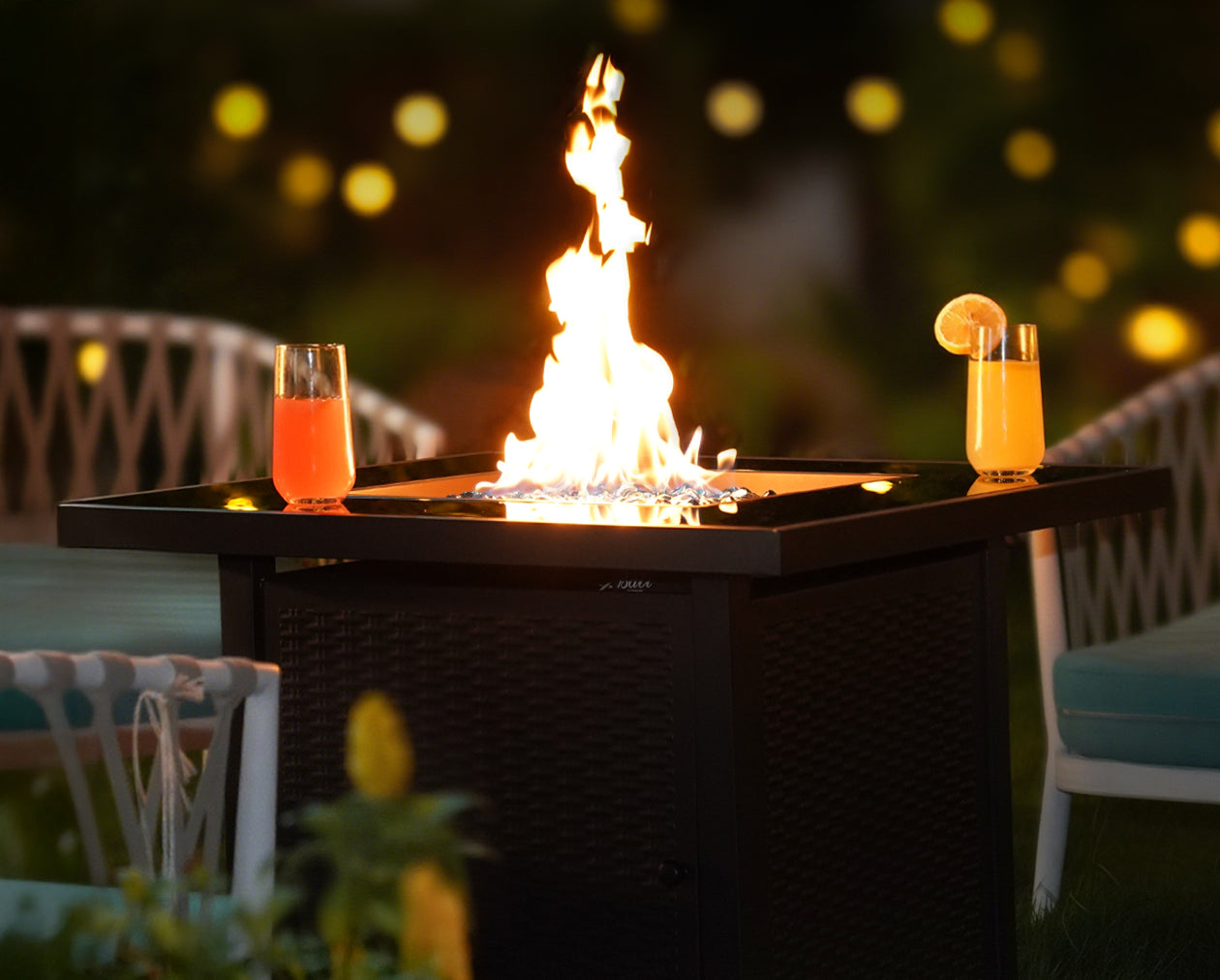
The 42 Inch Propane Fire Pit Table, Black is an example of a high-output unit (50,000 BTU) that provides a large surface area for radiant heat, making it a reliable choice for larger patios facing significant temperature drops.
Technical Challenges in Deep Freeze: The Propane Factor
If you are using propane-based heating, extreme cold introduces two specific mechanical challenges: pressure drop and regulator freeze-up.
- Regulator Freeze-up: In very cold, damp conditions (typically below 20°F), propane regulators are prone to freezing. This happens because the transition of propane from liquid to gas is an endothermic (cooling) process. When the ambient temperature is already low, the regulator can drop below the freezing point of moisture in the air, causing ice to form and the flame to flicker or go out.
- Pressure Loss: Propane stays liquid at very low temperatures. As the tank gets colder, the internal pressure drops, which can lead to a weaker flame.
Expert Insight: To mitigate these issues, keep your propane tank and regulator as dry as possible. Some experienced users in extreme climates keep a spare regulator on hand or use a tank "jacket" to help maintain a more consistent temperature, though you must ensure any cover is specifically designed for safety and ventilation.

Safety Protocols for Small-Space Heating
When dealing with high-BTU appliances in small spaces, safety must be the primary consideration. Strictly adhering to clearance requirements is not optional; it is a necessity to prevent property damage or injury.
The 10-Foot Rule and Clearances
According to the U.S. Fire Administration (FEMA), you should maintain a minimum of 10 feet of distance between any fire source and your home or other structures. For small balconies, this can be challenging. Always consult your product manual for specific "clearance to combustibles" measurements. Typically, a vertical clearance of at least 36 to 48 inches is required above the unit to prevent heat damage to ceilings or overhangs.
Carbon Monoxide (CO) Awareness
It is a critical safety rule: gas-burning appliances are for outdoor use only. Burning propane produces carbon monoxide, an odorless, colorless gas that can be fatal in enclosed spaces. The Centers for Disease Control and Prevention (CDC) emphasizes that you should never use a gas heater or fire pit inside a garage, tent, or enclosed porch. Ensure your balcony has at least two open sides to allow for adequate ventilation.
Proper Maintenance and Storage
In extreme cold, materials can become brittle. Check your hoses for cracks before every use. If you are using a wood-burning fire pit as an alternative, ensure you are following the EPA's Burn Wise guidelines by using only seasoned, dry wood. Wet wood produces excessive smoke and less heat, which is particularly problematic in the dense living environments of small patios or apartment complexes.
Selecting the Right Unit for Your Climate
When choosing between products, consider your specific "environmental stressors."
- For the Wind-Swept Balcony: A tall heater like the 20 inch Propane Patio Heater, Brozne provides 36,000 BTUs of directional heat. Its glass tube design protects the flame from wind, ensuring the heat is distributed in a consistent 5-6 foot radius.
- For the Intimate Small Space: The 15 Inch Column Round Propane Fire Pit offers 26,000 BTUs. While lower in output, its compact 15-inch diameter makes it ideal for very small areas where maintaining a 10-foot clearance from structures is difficult.
- For Maximum Heat Demand: If you are dealing with temperatures consistently below 20°F, the 50,000 BTU output of the 42 Inch Propane Fire Pit Table, Black provides the necessary power to overcome the ambient chill.
Modeling Note: Methods and Assumptions
To provide these recommendations, we used a deterministic parameterized model based on typical residential patio dimensions and standard propane combustion rates.
| Parameter | Value or Range | Unit | Rationale |
|---|---|---|---|
| Ambient Temp | 10 to 40 | °F | Typical "Extreme Cold" usage range |
| Target Temp | 65 to 70 | °F | Standard human comfort threshold |
| Wind Speed | 5 to 15 | MPH | Common winter breeze conditions |
| Propane Burn Rate | ~0.9 to 2.3 | lbs/hr | Based on 20,000 to 50,000 BTU outputs |
| Thermal Efficiency | 60% to 85% | % | Estimated loss due to open-air convection |
Boundary Conditions: This model assumes the user is wearing appropriate winter attire. It may not apply to completely open, high-altitude environments where oxygen levels affect combustion or in areas with wind speeds exceeding 20 MPH, where flame stability becomes the primary concern.
By calculating your specific BTU needs and accounting for environmental variables like wind and regulator performance, you can transform a cold, unused balcony into a comfortable winter retreat. Prioritize high-output units with radiant heat characteristics, and never compromise on the safety clearances required for your specific space.
Disclaimer: This article is for informational purposes only and does not constitute professional safety or engineering advice. Always read your product's specific manual and consult with local fire codes or a certified gas technician before installing or operating outdoor heating appliances. Carbon monoxide is a serious health risk; use gas appliances in well-ventilated outdoor areas only.