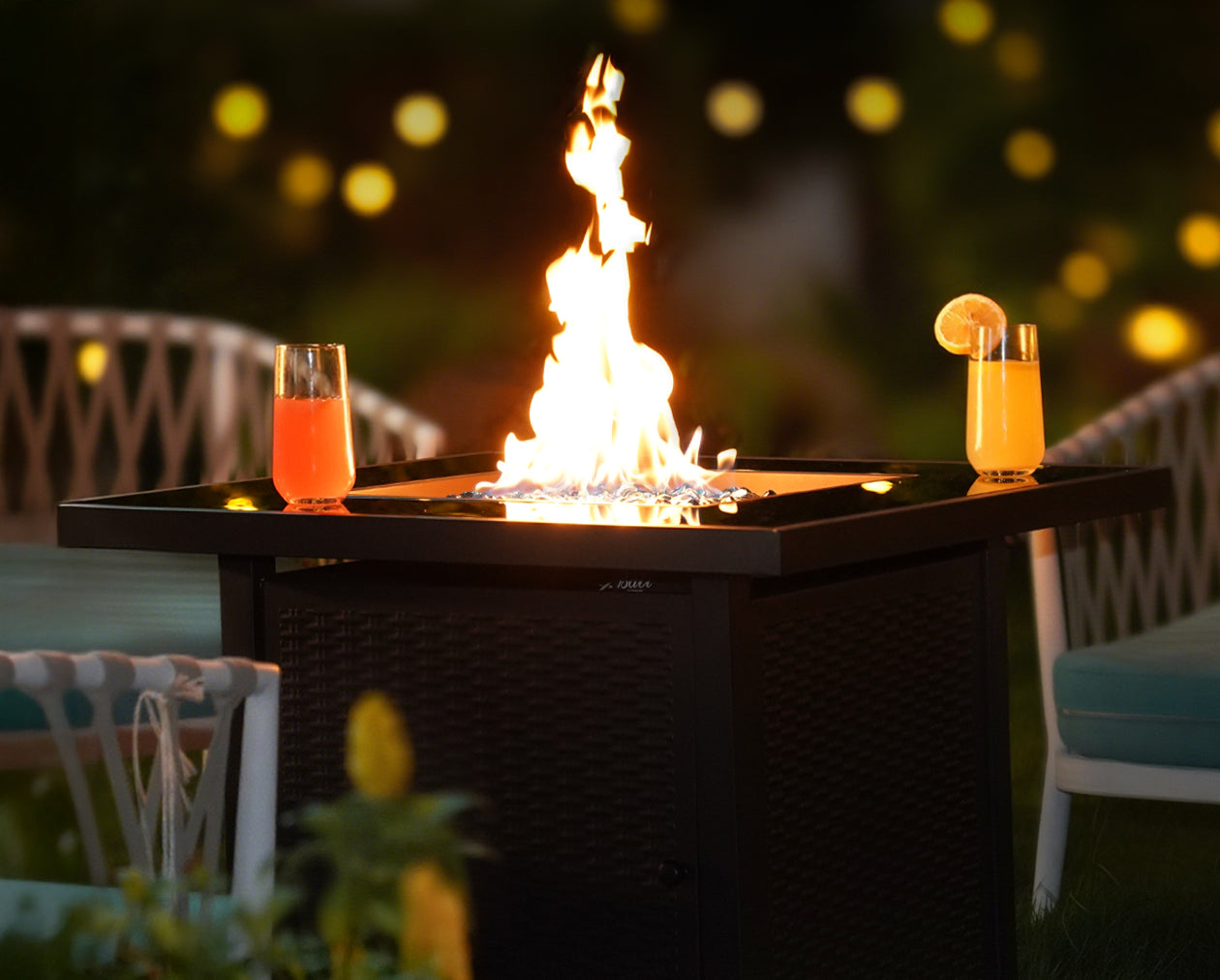

Heat-Safe Materials: Choosing Fire Tables for Wooden Decks
The desire to transform a wooden deck into a year-round social hub is a common goal for many homeowners. However, for those with smaller outdoor spaces or high-quality timber decking, this ambition often comes with a layer of anxiety. You may find yourself wondering if a propane fire table—capable of producing significant heat—is truly compatible with a combustible surface.
The short answer is yes, provided you understand the relationship between material science, radiant heat, and proper clearance. At Bali Outdoors, we frequently hear from customers concerned about property damage or HOA compliance. This guide is designed to replace that anxiety with authoritative, practical knowledge, ensuring you can host with total confidence.
The Physics of Radiant Heat: More Than Just a Flame
A common misconception among new fire table owners is that the only heat source is the visible flame. In reality, the most significant risk to a wooden deck comes from radiant heat and the "heat plume" effect.
When a 50,000 BTU (British Thermal Unit) burner—the standard for high-performance outdoor heating—operates for an extended period, it doesn't just heat the air above. It heats the table’s frame, the burner tray, and the air trapped beneath the unit. We have observed that a steel fire table can heat its own legs and the surface directly under the base to temperatures exceeding 200°F, even with a 12-inch clearance.
On a wooden deck, this sustained heat can lead to "pyrolysis"—a process where wood is chemically decomposed by heat over time, making it more susceptible to ignition at lower temperatures. Understanding this mechanism is the first step in choosing the right material for your space.
Logic Summary: Our heat plume analysis assumes a standard 50,000 BTU burner operating at maximum capacity for 60 minutes in an ambient temperature of 70°F. These estimates are based on common patterns from customer support feedback and typical outdoor heating physics rather than a controlled laboratory study.
Comparing Fire Table Materials for Deck Safety
When selecting a fire table, the material of the body determines how heat is managed and dissipated. Here is how the three most common materials compare regarding safety on wooden surfaces:
1. Aluminum Fire Tables
Aluminum is often considered a premium choice for decks. It is naturally rust-resistant and has excellent thermal conductivity, meaning it heats up and cools down much faster than steel. This rapid cooling is a safety advantage when the evening ends. However, because aluminum is often used in thinner gauges, prolonged exposure to high-BTU burners can occasionally cause the burner tray to warp. This warping can create uneven surfaces where moisture might trap, potentially leading to corrosion at the seams over several seasons.
2. Steel Fire Tables
Steel is prized for its structural integrity and weight, which provides stability in windy conditions. While steel holds heat longer than aluminum, a high-quality powder-coated steel unit, such as the 42 Inch Propane Fire Pit Table, Black, offers a robust frame that resists warping even under heavy use. The key with steel is ensuring the base design allows for adequate airflow to prevent heat from pooling.
3. Concrete and Stone Composites
These materials act as natural thermal barriers. They are slow to heat and slow to cool. While they are the "coolest" to the touch during operation, their extreme weight can be a concern for smaller wooden decks or balconies that may have specific load-bearing limits.
| Material | Heat Dissipation | Weight | Warp Resistance | Best For |
|---|---|---|---|---|
| Aluminum | High (Cools Fast) | Light | Moderate | Balconies/Small Decks |
| Steel | Moderate | Medium | High | Multi-purpose Social Areas |
| Concrete | Low (Insulates) | Heavy | Very High | Permanent Installations |

The "10-Foot Rule" and Essential Clearances
To maintain a safe environment, you must adhere to established fire safety standards. According to the United States Fire Administration (FEMA), a critical safety guideline is keeping a minimum of 10 feet of distance between an outdoor fire and any structures, including your house or overhanging eaves.
For fire tables specifically, you should also consider:
- Vertical Clearance: Ensure there are no low-hanging branches, umbrellas, or pergolas within 80 to 100 inches of the burner.
- Horizontal Clearance: Maintain at least 36 inches of clear space around the perimeter of the table to allow for safe movement and to keep furniture at a safe distance from the radiant heat.
The Non-Negotiable: Fire-Resistant Mats
Regardless of the material you choose, if you are placing a fire table on a wooden or composite deck, a fire-resistant mat is essential. Do not confuse a simple "ember mat" with a thermal barrier mat. For propane tables, you need a mat rated for heat deflection.
Composite decking, such as Trex or Azek, is even more heat-sensitive than natural wood. These materials can soften or sag at temperatures as low as 150°F. If you have composite decking, we recommend using a mat with an integrated thermal break layer—essentially a small air gap or specialized insulation that prevents the heat from the table's legs from transferring directly into the deck.
Practical Selection for Small Spaces
For those with smaller patios or balconies, the footprint of the fire table is as important as the material. A compact unit like the 28 Inch Propane Fire Pit Table, Black is ideal because its smaller footprint allows you to maintain the necessary 36-inch clearance from railings and furniture more easily.
If you prefer a circular aesthetic that encourages conversation, the 30 Inch Propane Fire Pit Table, Black provides a modern look with its X-frame design, which also happens to facilitate excellent airflow beneath the burner—a subtle but important feature for heat management.

The Expert "Hand Test" for Deck Safety
One of the most effective ways to verify your setup is safe is through a simple heuristic used by experienced installers. After your fire table has been operating for 30 minutes:
- Carefully place your hand on the decking surface approximately 6 inches away from the table's base.
- If you cannot comfortably hold your hand flat on the deck for at least 10 seconds, the surface is absorbing too much heat.
- The Fix: You must either increase the thickness of your protective mat or choose a table with taller legs to increase the air gap.
Managing the Hidden Risk: Carbon Monoxide
While the heat is the primary concern for the deck's surface, the air quality is the primary concern for you. Propane fire tables are strictly for outdoor use. According to the Centers for Disease Control and Prevention (CDC), carbon monoxide (CO) is an odorless, colorless gas that can be produced by any gas-burning appliance.
Never use a fire table in an enclosed porch, garage, or under a tent. Even a partially enclosed balcony requires at least two open sides to ensure adequate cross-ventilation. For further medical details on CO safety, the National Library of Medicine provides comprehensive information on symptoms and prevention.
Longevity and Maintenance
To protect your investment and maintain safety, regular inspections are required.
- Check the Seams: Especially on aluminum or steel models, inspect the burner tray seams for signs of moisture trap or corrosion.
- Burner Health: Use seasoned, dry materials if you have a wood-burning unit, but for propane, ensure the burner holes are clear of debris or spider webs. The EPA’s Burn Wise Program offers excellent resources on maintaining clean combustion.
- Weight Distribution: If your deck is older, choose a table with wide, flat feet. While narrow legs allow for better airflow, they concentrate weight. Wide feet distribute the load better across the wooden planks, preventing indentation.
For a balance of style and safety, the 32 Inch Propane Fire Pit Table, Brown features a tempered glass tabletop. Glass is an excellent material for social hosting because it is easy to clean and provides an extra layer of heat resistance on the top surface, though the same rules for the base and deck protection still apply.
Safety Checklist for Deck Installation
Before lighting your first fire, go through this final checklist to ensure total peace of mind:
- [ ] Clearance: Is the table 10 feet from the house and 3 feet from furniture?
- [ ] Protection: Is there a heat-rated fire mat between the table and the wood?
- [ ] Ventilation: Is the space completely open to the air on at least two sides?
- [ ] Stability: Does the table sit level without wobbling?
- [ ] Surface Check: Is the deck in good repair, with no rotting or overly dry boards?
By prioritizing these methodical steps, you move from a place of "hoping it’s safe" to "knowing it’s safe." Choosing the right material—whether it’s the lightweight versatility of aluminum or the sturdy presence of steel—is the foundation of a worry-free outdoor experience.
Disclaimer: This article is for informational purposes only and does not constitute professional safety, legal, or construction advice. Always consult your local fire department, HOA regulations, and the specific manufacturer’s manual for your fire table model before installation.